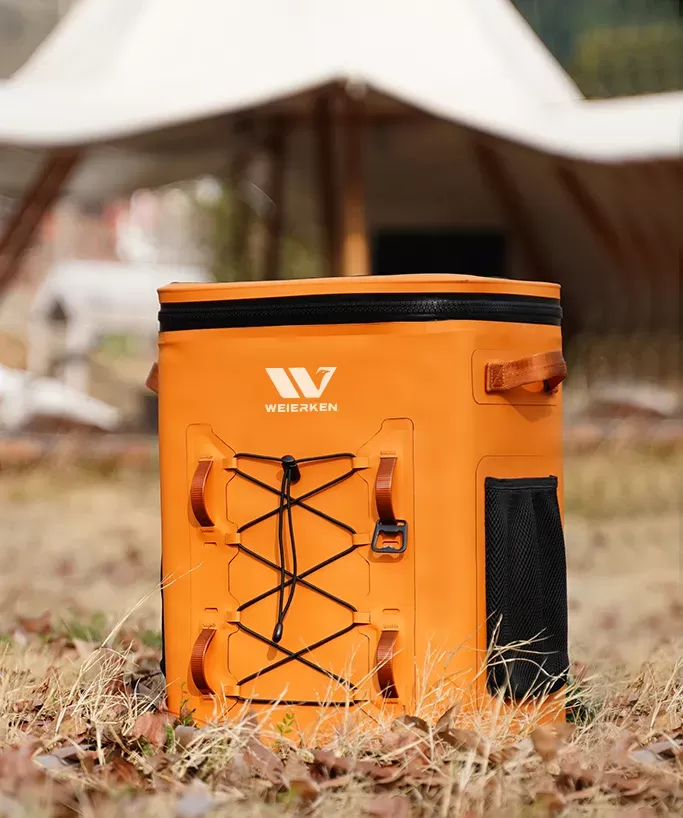

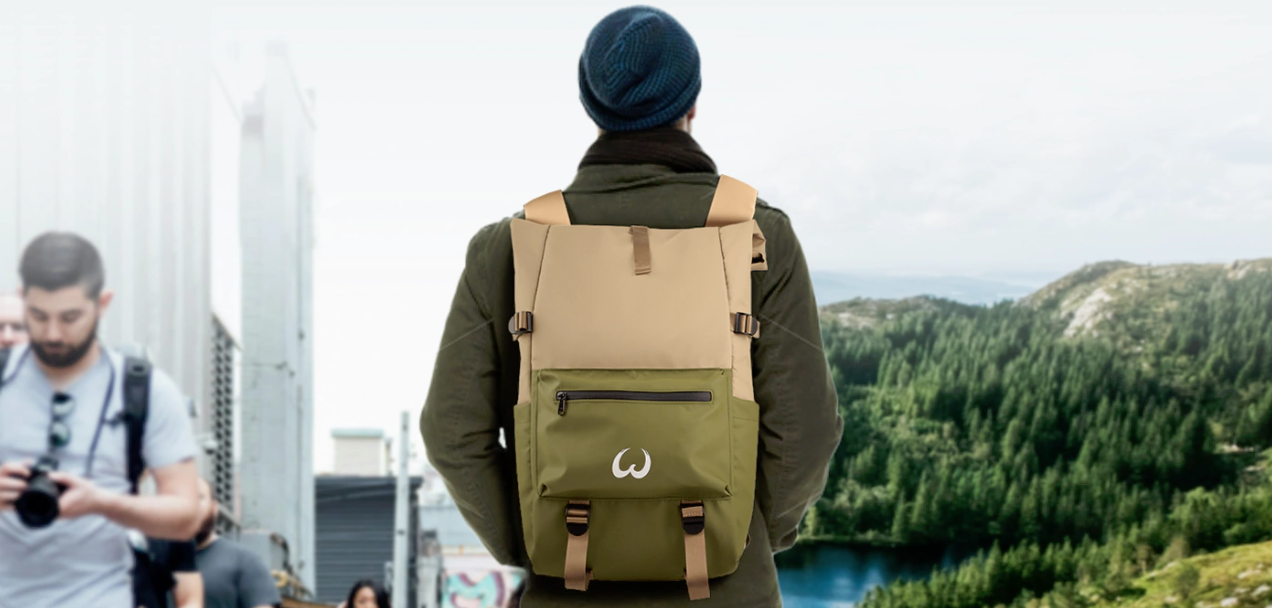
Selecting an optimal fabric specification and structural design is the most critical decision in commercial bag development. For brand managers, procurement directors, and importers, executed technical planning directly dictates product durability, margin performance, and end-user satisfaction. Partnering with an experienced polyester bag odm allows enterprises to leverage advanced material science, streamlined supply chains, and precise manufacturing execution. As an established authority in custom gear development, weierken integrates engineering-grade synthetic textiles with rigorous quality control to deliver high-performance luggage, backpacks, and technical bags.
The Strategic Value of Custom Polyester Bag ODM Development
Executing a custom polyester bag odm program provides strategic advantages over off-the-shelf procurement. Polyester (polyethylene terephthalate) remains the global standard for commercial bag manufacturing due to its inherent mechanical properties and supply chain stability. Derived upstream from Purified Terephthalic Acid (PTA) and Mono-ethylene Glycol (MEG), polyester raw material pricing remains highly stable compared to natural fibers or specialty nylons.
Key strategic advantages of custom ODM polyester bag engineering include:
Dimensional Form Retention: Polyester fibers exhibit high initial modulus, resisting elongation, shrinkage, and permanent deformation under sustained static loads.
Chemical and UV Resistance: The molecular structure of polyester yields strong chemical stability, preventing polymer degradation from ambient moisture, mild acids, and direct ultraviolet exposure.
Cost-to-Performance Efficiency: Mature mass-production techniques in key manufacturing hubs drastically reduce unit costs as order volumes scale, offering exceptional margin flexibility.
Superior Sublimation and Dye Receptivity: Smooth filament surface structures accept high-definition thermal transfer printing and screen printing with precise colorfastness and sharpness.
Technical Fabric Metrics: Denier, Density, and Weave Construction
Denier (D) measures the mass in grams per 9,000 meters of yarn, serving as the primary indicator of fiber thickness and structural weight. Selecting the correct denier and weave construction is essential to meeting specific tensile and weight requirements.
Denier Selection Framework
210D to 300D Polyester: Lightweight, fine-filament fabrics designed primarily for internal lining panels, rain covers, and packable drawstring bags where weight minimization is paramount.
420D to 600D Polyester: The industry standard for commercial daypacks, laptop bags, and casual travel gear. 600D Oxford fabric balances high tear resistance with manageable material costs.
900D to 1200D Polyester: Heavy-duty, high-density textiles engineered for severe mechanical abrasion, outdoor travel luggage, tool bags, and tactical applications.
1680D Ballistic Polyester: Thick basket-weave polymer construction offering maximum puncture resistance and structural rigidity for premium commercial gear.
Structural Weave Variations
Oxford Weave: A modified plain weave that creates a smooth, flat surface. Combined with back-coatings, Oxford fabric serves as a highly versatile base material for mass production.
Ripstop Grid Architecture: Incorporates reinforced high-tenacity yarns at set intervals (e.g., 5mm x 5mm grid pattern). This structure contains accidental punctures, preventing small tears from propagating under tension.
Performance Coatings: PU, PVC, and TPU Lamination Benchmarks
Uncoated woven polyester fabric provides base structural strength but lacks sufficient water resistance and dimensional stiffness. Applying back-coatings transforms raw textile into functional weather-resistant barriers.
The choice of coating directly impacts tensile strength, hydrostatic head (waterproofing), and product lifespan:
Uncoated 600D Polyester: Yields a baseline tensile strength of 20 N to 25 N; highly permeable to water.
PU (Polyurethane) Coating: Single or double PU applications provide a hydrostatic resistance between 800 mm and 3,000 mm H₂O. PU coating increases fabric tensile strength to 30 N–40 N while maintaining flexibility and low-temperature crack resistance.
PVC (Polyvinyl Chloride) Backing: Forms a rigid, non-porous layer boosting hydrostatic resistance to 10,000 mm–20,000+ mm H₂O and tensile strength to 40 N–55 N. While highly cost-effective, PVC adds overall product weight.
TPU (Thermoplastic Polyurethane) Lamination: The premium standard for extreme environments. TPU offers 10,000 mm to 20,000+ mm H₂O waterproofing and withstands over 100,000 flex cycles without chalking or peeling—compared to 3,000–10,000 flex cycles for standard PU. TPU remains flexible down to -40°C and is free of plasticizers and chlorine.
Comparative Engineering: Polyester vs. Nylon vs. Canvas
Selecting the correct material requires evaluating trade-offs across cost, weight, and environmental performance. Below is a direct comparison between polyester and alternative commercial textiles:
Polyester vs. Nylon: Nylon 6 and Nylon 6,6 exhibit superior tensile strength and abrasion resistance, making them ideal for high-altitude outdoor gear. However, polyester provides superior UV resistance, lower water absorption (hydrophobic properties), clearer print resolution, and a 20% to 40% lower raw material cost structure.
Polyester vs. Cotton Canvas: Cotton canvas delivers a natural aesthetic but is heavy, absorbs moisture readily, and requires chemical treatments to prevent mildew. Polyester replicates structural durability at a fraction of the weight, offering inherent moisture resistance and far greater cycle life in transit.
Polyester vs. Non-Woven Polypropylene: Non-woven fabrics offer low short-term costs but degrade rapidly under shear stress. Woven polyester provides high reusability and heavy load-bearing capabilities.
Sustainable ODM Sourcing: Integrating Recycled Polyester (rPET)
Regulatory frameworks such as the EU Carbon Border Adjustment Mechanism (CBAM) and corporate ESG requirements make sustainable sourcing a business priority. A forward-thinking polyester bag odm program must offer verified low-carbon material alternatives.
Recycled Polyester (rPET) is manufactured by mechanically shredding post-consumer PET bottles into flakes, melting them into chips, and re-extruding them into filament yarn. This closed-loop process delivers distinct operational advantages:
Carbon Offset: Reduces product carbon footprint by 30% to 70% compared to virgin petrochemical extraction.
Parity in Mechanical Performance: High-grade rPET matches virgin polyester in tensile strength, abrasion resistance, and dye uptake.
Traceability & Compliance: Fully certified through the Global Recycled Standard (GRS) and OEKO-TEX Standard 100, ensuring complete supply chain transparency and zero toxic chemical residue.
Key Parameters for Sourcing from a Qualified Polyester Bag ODM Factory
Translating a tech pack into a market-ready commercial product requires strict factory auditing standards. When evaluating a potential manufacturing partner like weierken, procurement teams should audit the following structural and operational parameters:
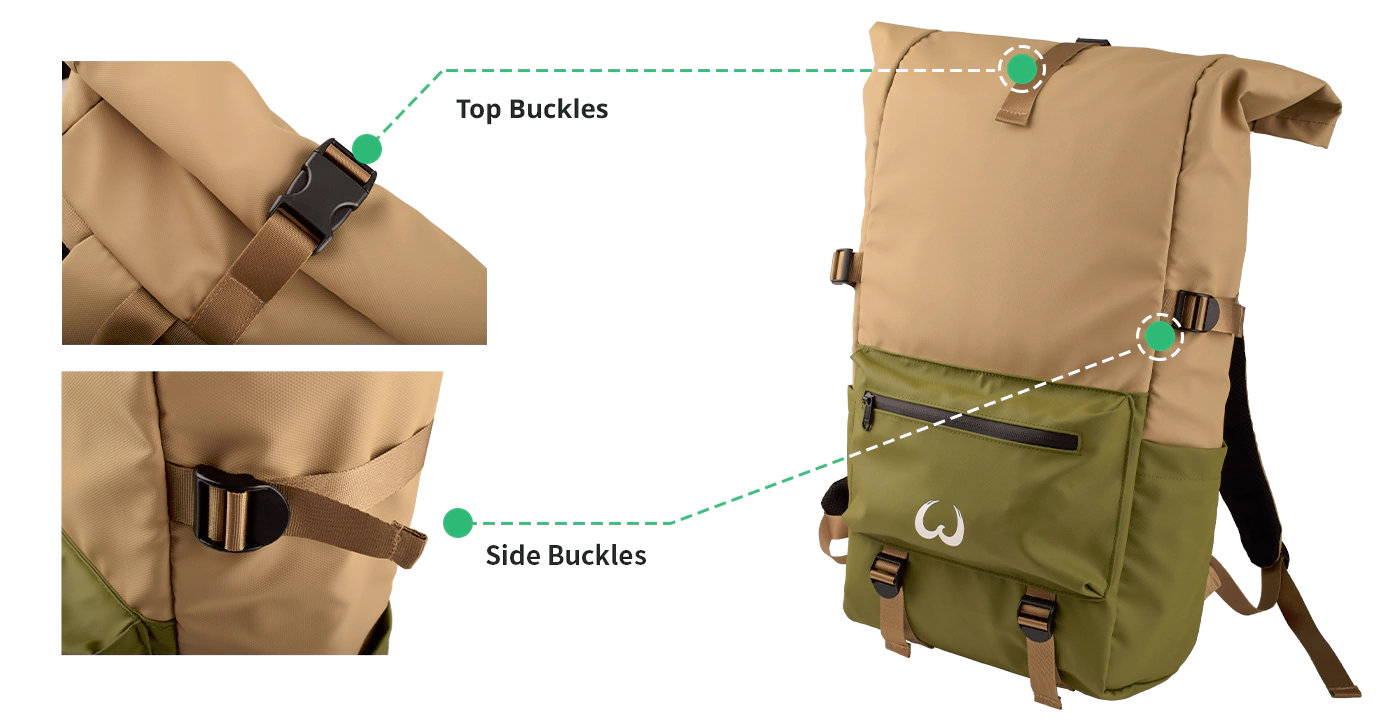
Seam Shear Strength & Stitch Density: Ensure high-stress points utilize a minimum stitch density of 6 to 8 stitches per inch (SPI) with high-tenacity bonded polyester thread.
Bartack Reinforcement: Verify that load-bearing junction points—such as shoulder strap connections and handle anchors—incorporate automated box-x or high-density bartack stitching.
Coating Adhesion Testing: Confirm the factory executes peeling tests to ensure PU/PVC coatings do not delaminate under humidity or repeated flexing.
Prototyping Precision: Assess the ODM's rapid-sampling capabilities, CAD pattern making, and material optimization to reduce waste during full-scale cutting runs.
Frequently Asked Questions
Q: What is the main difference between 600D PU polyester and 600D PVC
polyester?
A: 600D PU utilizes a liquid polyurethane coating brushed
onto the backside of the fabric, retaining softness, breathability, and
flexibility at low temperatures. 600D PVC uses a thicker plasticized PVC layer
heat-laminated to the fabric, yielding higher waterproofing and structural
rigidity at a lower cost, but adding significant weight.
Q: How does Denier rating affect the Minimum Order Quantity (MOQ)
during custom ODM production?
A: Standard deniers like 300D and 600D
in stock colorways typically carry lower MOQs because suppliers maintain massive
raw yarn inventory. Custom Pantone-dyed fabrics or specialized weaves (like
1680D ballistic or custom ripstop grids) require dedicated dye lots, raising the
fabric mill's minimum yardage requirement.
Q: Can rPET (recycled polyester) pass standard chemical compliance
tests for North America and Europe?
A: Yes. High-quality rPET
certified under GRS and OEKO-TEX Standard 100 fully complies with REACH, RoHS,
and California Proposition 65 requirements, guaranteeing freedom from heavy
metals, phthalates, and banned azo dyes.
Q: Why does polyester hold sublimation prints better than nylon or
cotton?
A: Sublimation dyes convert into gas under high heat and
bond directly with synthetic polymer fibers. Polyester fibers disperse disperse
dyes uniformly at high temperatures, sealing the print inside the polymer
matrix. Cotton lacks polymer bonding sites, while nylon can yellow under the
high heat required for thermal transfer.
Q: How do TPU-laminated polyester bags maintain complete air- and
water-tight seams?
A: Unlike standard sewn seams that create needle
punctures, TPU-laminated polyester allows for high-frequency (RF) or hot-air
wedge welding. Heat melts the TPU film along seam overlaps, fusing the fabric
panels into a seamless, completely waterproof bond.
Initiate Your Custom ODM Manufacturing Program
Developing a commercial bag line requires balancing technical fabric specifications, structural integrity, and scalable cost models. As a specialized engineering partner, weierken provides comprehensive polyester bag odm services—from initial tech-pack development and rapid prototyping to full-scale automated manufacturing and GRS-certified sourcing.
Contact our technical engineering team today to review your project specifications, request material sample swatches, or obtain an accurate bill-of-materials quotation for your next production run.