
Water sports brands face a tough market heading into 2026. Standard dry bags overflow current retail channels, causing price wars and compressed profit margins.
At the same time, commercial rafting operators and adventure enthusiasts demand better gear. Common complaints include leaky waterproof zippers, uncomfortable shoulder straps, and environmental concerns over toxic PVC materials.
To win market share, outdoor brands must update their product lines now. Early product development is essential. Partnering with experienced manufacturers like Weierken gives brands access to modern production techniques and advanced material sourcing before competitors catch up.
This guide breaks down the core technical shifts driving 2026 water sports gear development and explains how to implement them through custom ODM manufacturing.
The 2026 Market Shift in Water Sports Equipment
The water sports industry is expanding beyond basic seasonal tourism. Modern paddle sports, white-water kayaking, and extreme canyoning demand high-performance equipment.
Off-the-shelf catalog products no longer satisfy professional guides or experienced consumers. Buyers expect technical reliability, smart storage solutions, and eco-friendly construction.
Working with a dedicated rafting bag odm specialist allows your brand to develop customized gear from scratch without bearing all the technical R&D burdens internally.
Regulatory Compliance: Strict European and North American environmental rules are forcing brands away from standard PVC.
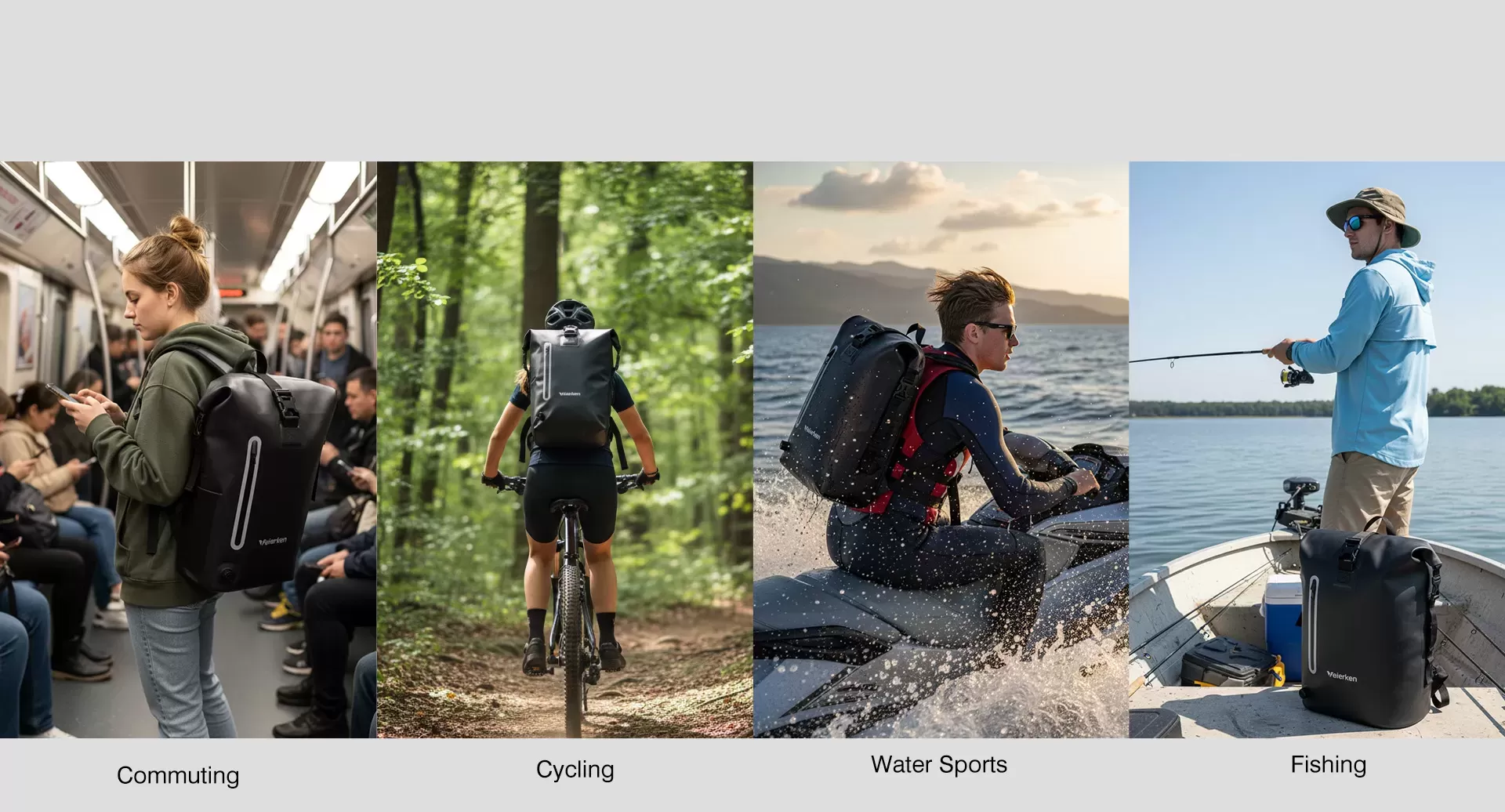
Functional Multi-Use: Users want a single bag that works on river rafts, ocean kayaks, and overland hiking trails.
Extreme Durability: Severe weather and rough terrain require higher tear resistance and absolute submersion protection.
Trend 1: Bio-Based TPU and Eco-Performance Materials
Environmental responsibility is shifting from a marketing gimmick to a hard retail requirement. Traditional polyvinyl chloride (PVC) is rapidly losing market share across Western markets due to toxic plasticizers and recycling hurdles.
By 2026, premium outdoor brands will fully transition toward non-toxic, sustainable composite fabrics that withstand brutal outdoor conditions.
Replacing PVC with Bio-TPU and rPET
Thermoplastic Polyurethane (TPU) has set the gold standard for high-end dry bags. However, next-generation trends point directly toward Bio-based TPU and GRS-certified recycled polyester (rPET) backings.
Bio-TPU utilizes plant-based feedstocks like cornstarch or castor oil. It reduces carbon emissions during raw material production while maintaining superior abrasion resistance.
PFAS-Free Coatings: Elimination of toxic forever chemicals in water-repellent surface treatments.
Cold-Crack Resistance: Bio-TPU remains flexible down to -30°C, unlike standard PVC which stiffens and cracks in cold water.
Reduced Chemical Odor: Non-toxic formulations eliminate strong chemical fumes common in standard dry storage gear.
Weierken's Eco-Material ODM Capabilities
As a leading eco-friendly waterproof backpack supplier, Weierken maintains strong relationships with certified fabric mills. We source certified GRS rPET fabrics and integrate bio-based TPU laminations directly into our production lines.
Our engineering team assists brands in choosing ideal fabric weights. We balance lighter deniers for quick commercial runs with heavy 840D or 1680D nylon bases for heavy-duty commercial rafting duffels.
This technical support ensures your custom product complies with REACH, RoHS, and California Proposition 65 standards without sacrificing durability.
Trend 2: IPX8 Air-Tight Protection and Advanced Welding
Standard roll-top closures work well for splash protection. However, high-volume white-water rafting involves intense river waves, gear tie-downs, and total capsizing risks.
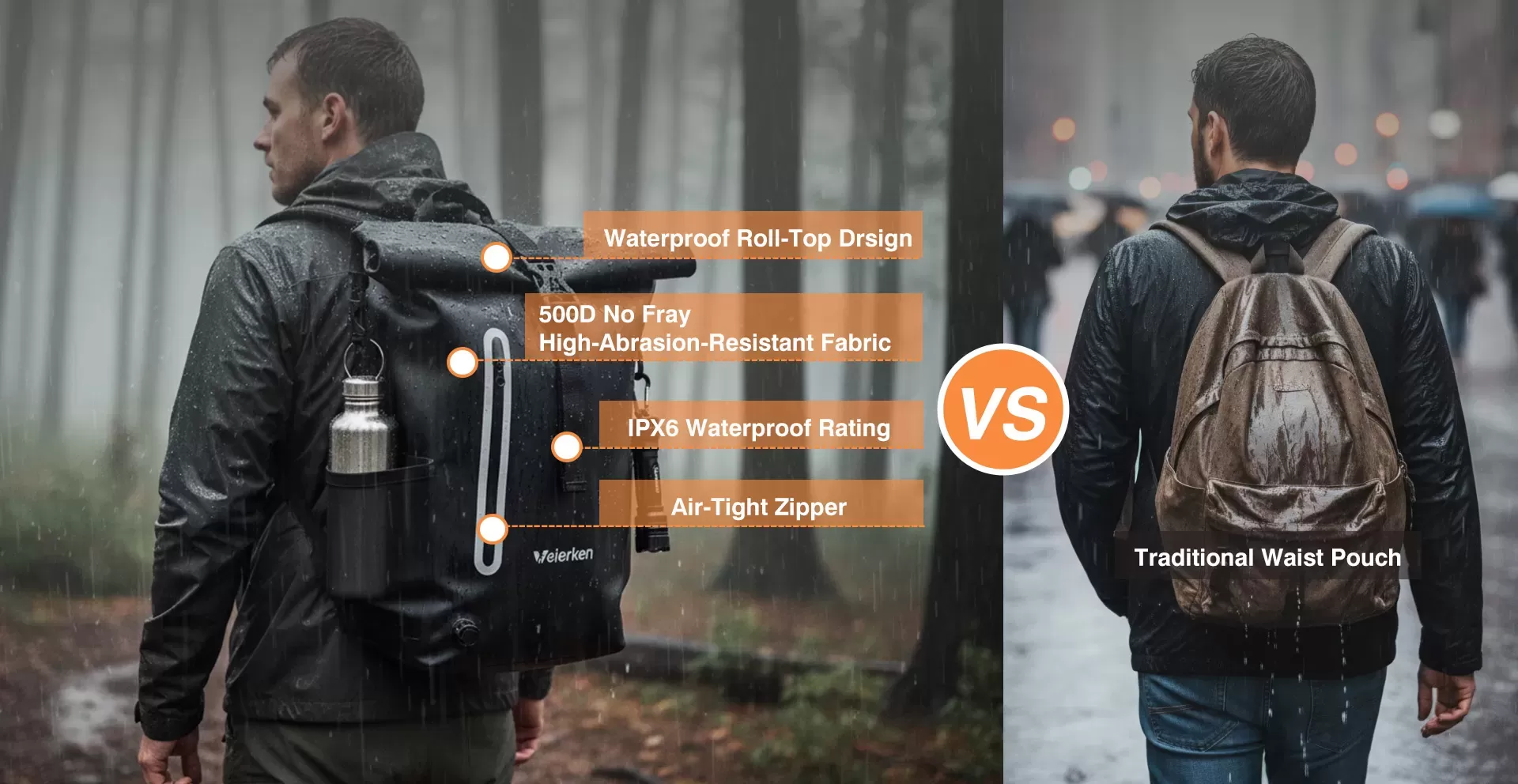
The 2026 market demands verified IPX8 submersion protection combined with dynamic air pressure management.
Beyond Basic Roll-Tops: Hybrid Airtight Systems
Modern commercial dry bags are adopting hybrid closure systems. These designs pair heavy-duty roll-top tops with industrial waterproof zippers and dual pressure-relief valves.
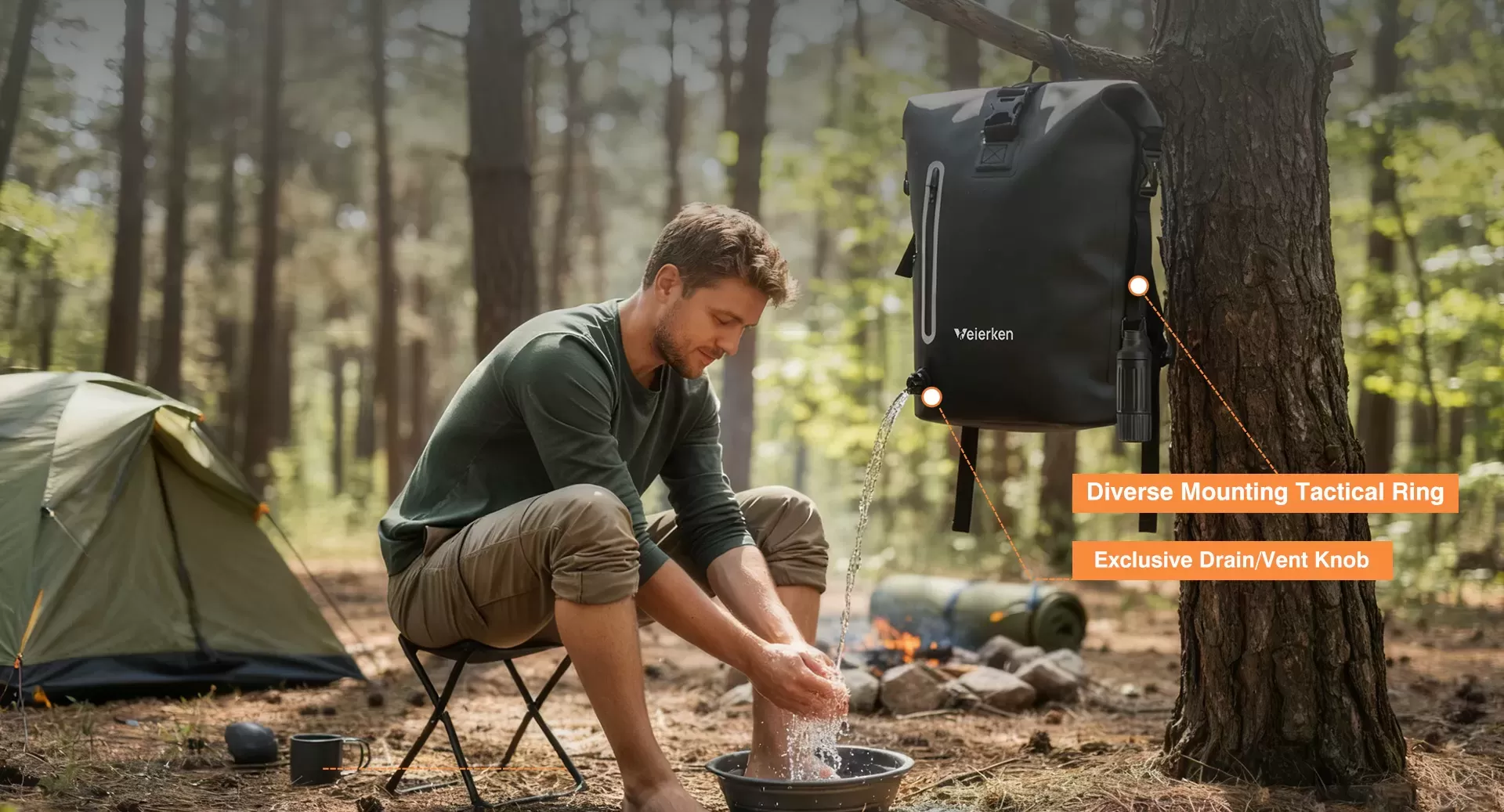
An integrated pressure valve allows users to purge trapped air for compact packing inside tight kayak hatches. Alternatively, users can inflate the bag to convert it into a buoyant floating rescue device during emergency river flips.
Airtight Zippers: Precision-molded tooth structures prevent liquid penetration even under continuous water pressure.
Inflation/Deflation Valves: Easy-twist air valves give users complete control over internal bag volume.
Corner Stress Distribution: Reinforced stress points stop material fatigue near zipper terminals and seam intersections.
High-Frequency Welding Precision
Stitching creates needle holes that compromise dry bags. Reliable waterproof manufacturing relies heavily on high-frequency (HF) welding and hot-air seam taping.
As an established high frequency welding dry bag manufacturer, Weierken utilizes automated HF welding machines that fuse TPU layers at a molecular level.
This process creates seamless, uniform bonds across complex geometric shapes. It eliminates needle punctures and ensures total structural integrity during heavy river impacts.
Trend 3: Modular Ergonomics and Cross-Category Functionality
Paddlers rarely stay on the water the entire day. They haul heavy gear from vehicles down steep, muddy riverbanks to reach launch points.
Traditional rafting duffels feature flat webbing handles that cut into hands during long carries. The future of river bags relies on ergonomic support systems combined with modular storage components.
Ergonomic Heavy-Load Support Systems
2026 product designs will feature ergonomic harness systems that transform river duffels into true trekking backpacks.
These systems feature contoured EVA foam shoulder straps, breathable mesh back panels, and load-lifter straps that stabilize heavy gear on uneven terrain.
Detachable Straps: Quick-release buckles allow users to remove shoulder straps completely before securing bags to raft frames.
Laser-Cut MOLLE Loops: Waterproof attachment points let paddlers secure throw ropes, carabiners, or GPS trackers externally.
Dual Dry/Wet Compartments: Internal TPU dividers keep dirty boots and damp neoprene isolated from dry thermal layers.
Integrated Cooler Modules for Multi-Day Trips
Cross-category design is growing rapidly in the outdoor equipment industry. Water sports enthusiasts love products that perform multiple roles on river expeditions.
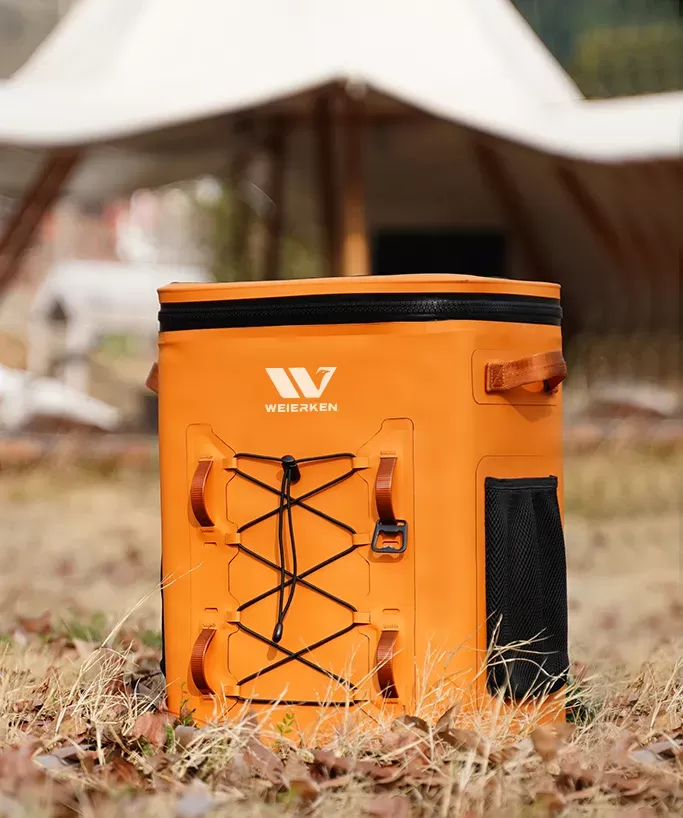
Leveraging specialized experience across both high-performance cooler bags and camping gear production, Weierken offers integrated modular solutions for the ultimate TPU rafting duffel bag ODM projects.
We build removable closed-cell NBR foam insulation inserts that slide directly into dry duffle chambers. This allows a single bag to transition seamlessly from a gear dry sack to a cold storage cooler on multi-day river trips.
Trend 4: Minimalist Aesthetics and Invisible Safety Features
Visual trends for 2026 favor clean, clutter-free designs. High-end consumers prefer subtle earth tones, sleek matte finishes, and quiet branding over loud neon graphics.
However, water sports safety cannot be sacrificed for visual design. The solution lies in invisible safety integration.
Functional Minimalist Styling
Modern consumers want technical gear that looks stylish in urban settings while performing flawlessly in wilderness conditions.
Sleek dark olive, sand, matte black, and storm gray colorways are replacing traditional harsh industrial colors.
Tone-on-Tone Branding: Subtle screen prints and debossed logos replace large, bright brand graphics.
Streamlined Hardware: Custom-molded lightweight aluminum hardware replaces cheap plastic buckles.
Clean Exterior Profiling: Recessed pockets and flush-fit valves prevent snagging on raft ropes and river branches.
Embedded Navigation and Emergency Features
Safety elements can be cleverly built into structural bag components without ruining clean design lines.
Safety features engineered directly into modern bag components include:
Retro-Reflective Accents: Dark reflective coatings remain stealthy by day but shine brightly under flashlight beams at night.
Integrated Whistles: Emergency signaling whistles molded directly into sternum strap buckles.
Touchscreen TPU Windows: Clear, highly sensitive TPU pockets allow paddlers to check phone maps without exposing electronics to water.
Why Early ODM Collaboration Matters for 2026 Launch Success
Designing a reliable waterproof bag requires careful engineering, custom tooling, and extensive testing cycles. Waiting until mid-2025 to start your 2026 development cycle risks production delays and missed retail deadlines.
Partnering early with a proven manufacturing team streamlines product development from original concept to final delivery.
Weierken applies over 20 years of technical manufacturing expertise to help outdoor brands develop custom products. Our internal R&D team assists clients through every stage of development:
Pattern & Tech Pack Creation: Converting hand sketches into precise 3D patterns and CAD cutting files.
Rapid Prototyping: Creating physical functional samples within days for field testing and buoyancy verification.
Pressure & Hydrostatic Testing: Conducting rigorous leak tests in specialized pressure chambers to guarantee IPX8 ratings.
Scalable Production Lines: Maintaining strict quality control across high-volume production runs.
Frequently Asked Questions (FAQ)
1. What is the difference between OEM and rafting bag odm services?
OEM (Original Equipment Manufacturer) production means the factory builds a bag based entirely on your complete design specs and tech packs. ODM (Original Design Manufacturer) services mean the manufacturer handles structural engineering, material selection, pattern development, and functional design based on your general product ideas and target market requirements.
2. Why switch from traditional PVC to TPU for custom waterproof rafting bag projects?
TPU (Thermoplastic Polyurethane) offers far better tear strength, superior abrasion resistance, and remains flexible in freezing temperatures. It contains no toxic phthalates or heavy metals, making it far easier to sell in European and North American markets that restrict hazardous materials.
3. How does high-frequency welding guarantee an IPX8 waterproof rating?
High-frequency welding uses electromagnetic energy to melt overlapping thermoplastic layers together at a molecular level. This creates a solid, continuous bond without needle holes, glue, or physical stitches, preventing water from penetrating under high pressure.
4. Can we customize modular attachments and cooler compartments in dry duffels?
Yes. Our ODM capabilities allow us to design custom detachable shoulder harnesses, internal padded divider walls, laser-cut MOLLE systems, and removable closed-cell foam cooler liners built specifically for your bag dimensions.
5. What is the standard lead time for prototyping and mass production with Weierken?
Concept design and prototype sample creation typically takes 7 to 14 days depending on material availability and pattern complexity. Once samples are approved, mass production generally requires 35 to 45 days, depending on order volume and custom material requirements.
6. What quality control tests are performed on finished waterproof bags?
Every production batch undergoes strict quality control protocols. These include hydrostatic head pressure tests, continuous air inflation leak checks, seam pull-strength stress tests, and zipper submersion trials to ensure complete waterproof reliability.
Build Your Next-Gen Water Sports Line Today
The water sports market is evolving quickly. Gear brands that invest early in sustainable materials, IPX8 airtight technology, and practical modular design will stand out on store shelves in 2026.
Don't let outdated designs hold your brand back. Partner with an experienced manufacturer that understands technical waterproof gear engineering.
Contact the Weierken technical development team today to discuss your vision, review custom material samples, and request a detailed quote for your upcoming product line.