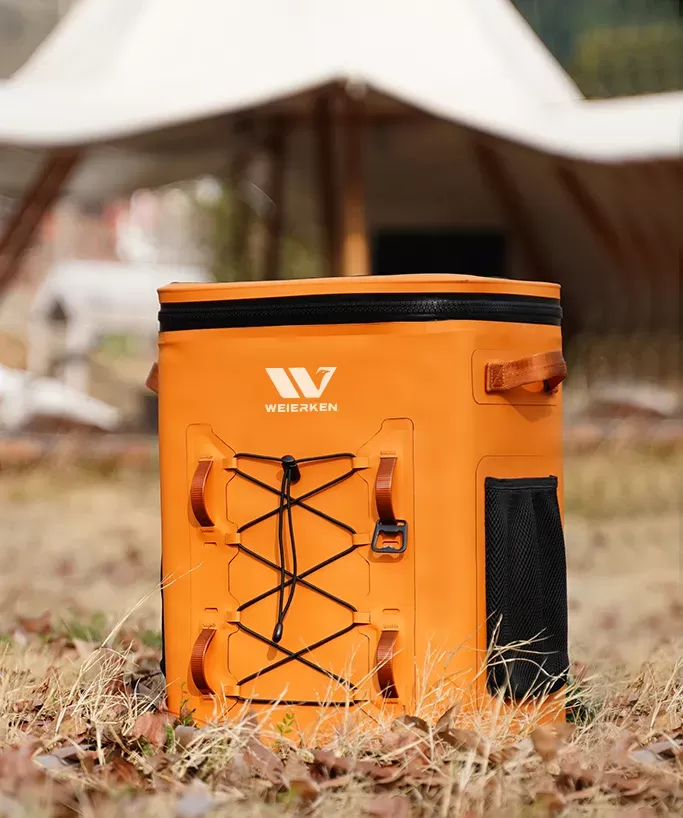

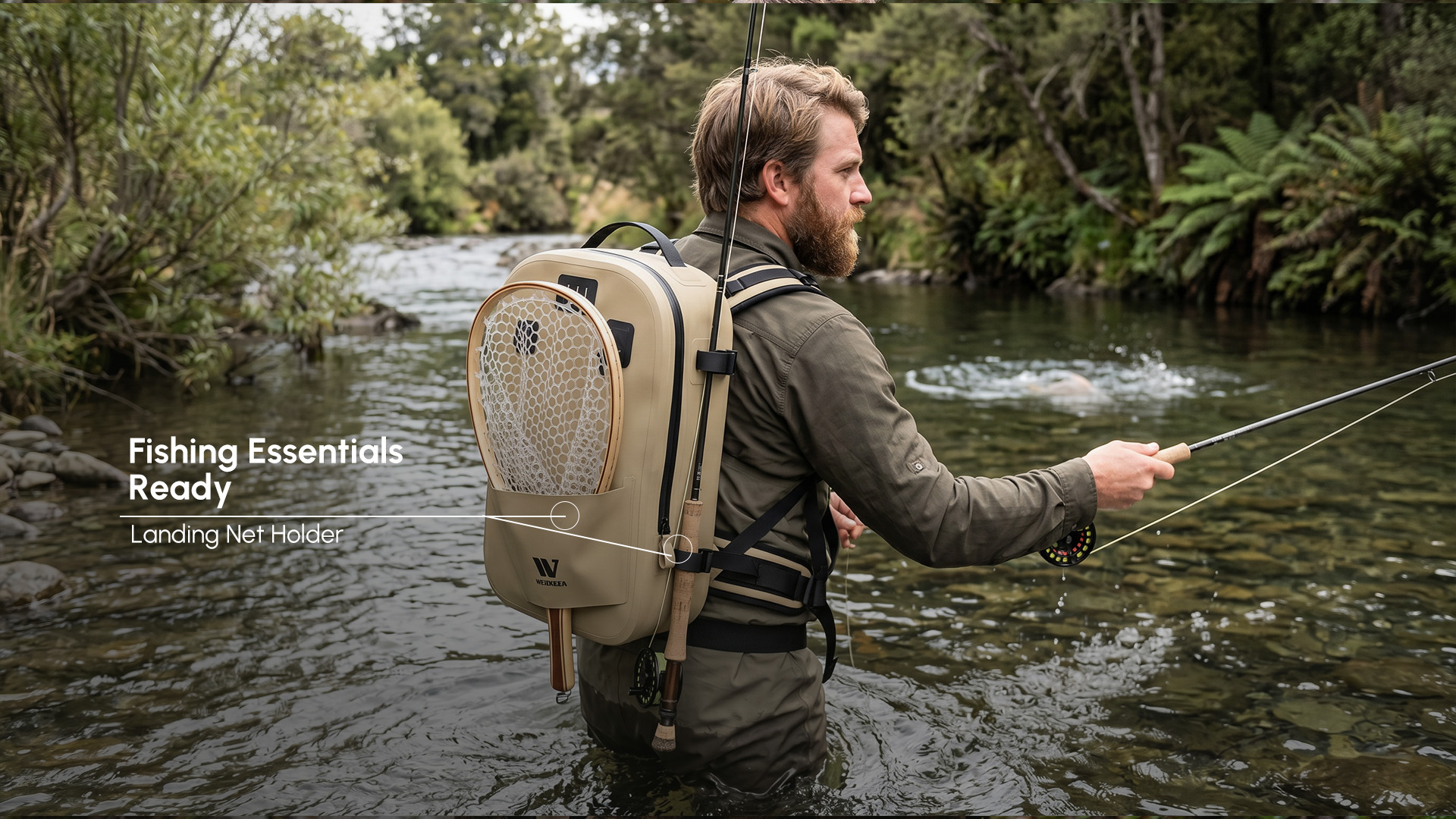
Tackle storage systems have come a long way over the past few years. What used to be a simple box with a few dividers has turned into a full-fledged equipment management platform. Anglers today demand more — they want systems that adapt to different fishing styles, weather conditions, and even their evolving gear collections. For B-brand procurement teams, this shift creates both challenges and opportunities. Choosing the right OEM partner is no longer just about price per unit. It's about future-proofing your product line.
Weierken has been watching these shifts closely. With years of experience in private label tackle storage systems, Weierken's engineering team has tracked how consumer behavior, retail requirements, and material science are converging in 2026. This article outlines six major trends that will define the category this year. Whether you're sourcing for a North American chain or a European DTC brand, these directions will shape your next purchase order.
Let's break them down — from modular standardization to smart integrations — and see what they mean for your supply chain.
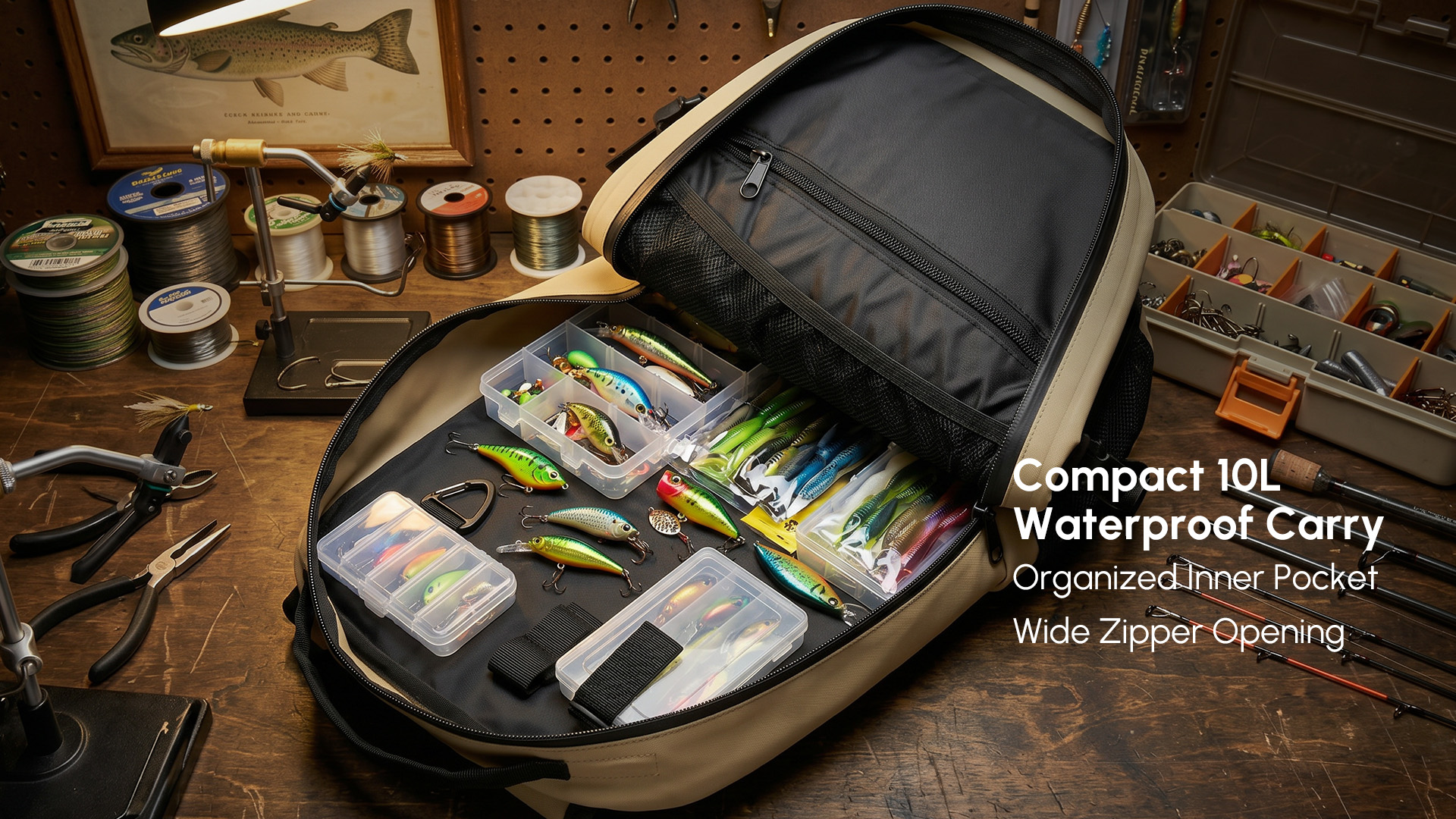
1. Modular Design and Standardization – Moving from Fixed Storage to Free
Combination
Fixed-structure tackle boxes are fading. In 2026, anglers expect a system that grows with them. A single platform should handle bass fishing, fly fishing, kayak trips, and ice fishing — just by swapping modules.
MOLLE Compatibility Becomes Industry Standard
MOLLE (Modular Lightweight Load-carrying Equipment) is no longer just for tactical gear. Major tackle storage systems now adopt the 1-inch (25mm) webbing spacing, letting users attach pouches, tool holders, and bait boxes onto vests, backpacks, or boat mounts.
This shift means your OEM supplier must meet strict manufacturing tolerances. Webbing stitching strength must hold at least 15kg per attachment point. Spacing tolerance? Within ±1mm. Miss that, and modules won't swap correctly. Your "modular" system becomes a collection of mismatched pieces.
Weierken's production lines now include dedicated MOLLE stitching stations with real-time tension monitoring. This ensures every private label tackle storage systems order meets interchangeability standards out of the box.
Quick-Detach (QD) Systems Gain Traction
Anglers switch between wading, boat fishing, and bank fishing within hours. Quick-detach buckles let them move entire storage modules from belt to backpack to kayak in one motion. No weaving straps, no hassle.
But QD components face harsh conditions. Salt spray, freezing temperatures, and constant impact. Requirements now sit at 96+ hours of ASTM B117 salt spray resistance. Buckles must also survive repeated flexing at -20°C without cracking.
For brands sourcing private label tackle storage systems, these specs are non-negotiable. Test reports should accompany every sample shipment.
2. Lightweight Material Revolution – Cutting Weight without Losing Durability
Hiking to remote fishing spots is part of the experience. Every extra gram on your back reduces comfort. In 2026, lightweight construction isn't premium — it's baseline.
Fabric Technology Moves Fast
1000D nylon is giving way to 500D–840D high-tenacity nylon with ripstop grid structures. These fabrics maintain tear strength above 200N while shedding 20%–30% of fabric weight. Abrasion resistance actually improves in many cases.
TPU composite ultra-light fabrics are entering the OEM space. Compared to traditional PVC-coated materials, they're about 40% lighter while matching or exceeding waterproof ratings.
Bio-based nylon — made partly from castor oil and other plant sources — is moving from niche to scale. Prices are approaching petroleum-based alternatives. For brands with sustainability goals, this offers a dual benefit: lower carbon footprint and lighter end products.
Internal Padding Gets an Upgrade
Traditional EVA foam dividers are being replaced by lightweight honeycomb PP boards and laser-cut high-density PE foam. Same thickness, 25% less weight. These materials also resist moisture absorption and mildew growth.
Clear TPU bait boxes are overtaking rigid plastic cases. They're lighter, more transparent, and stay flexible in cold weather. Anglers can quickly spot their lures without opening every compartment.
Weierken's material lab now offers side-by-side comparisons of these options for every private label tackle storage systems project. Brands can test feel, weight, and durability before committing to production.
3. Waterproofing and Moisture Protection – From Splash-Resistant to Submersion-Ready
Kayak fishing, wading, and stand-up paddleboarding are more popular than ever. Gear gets fully submerged. DWR coatings don't cut it anymore. IPX4 to IPX6 ingress protection is the new entry-level standard.
Waterproof Zippers Go Mainstream
By 2026, waterproof zippers are standard across all tiers, not just premium SKUs. Minimum rating: IPX5 (resistant to low-pressure water jets).
Zipper head salt spray resistance has jumped from 72 to 96 hours. Coastal anglers expect smooth operation after a full season in salt air. This isn't a bonus feature — it's an expectation.
Seam Sealing Is No Longer Optional
Stitched seams leak. That's a fact. High-frequency welding and fully taped waterproof seams are now mandatory on all critical areas — bottom panels, zipper surrounds, and strap attachment points.
Rigid bait boxes are shifting to one-piece injection molding. This eliminates seam leakage entirely. Molds are more expensive upfront, but the reliability payoff is substantial.
Drainage Systems Become a Subtle Necessity
Even with good waterproofing, water finds its way inside during wet landings. Hidden drainage ports at the lowest point of the pack are becoming standard. Open them to drain, close them to keep dust and debris out.
These ports should include stainless steel mesh filters to prevent hooks, swivels, and small parts from escaping. No one wants to lose a $20 lure through a drain hole.
Weierken's engineering team integrates these drainage solutions into the mold design phase. For private label tackle storage systems clients, this means no extra assembly steps — the drainage is built in from the start.
4. Sustainable Materials and Compliance Certifications – From "Nice to Have" to "Must Have"
Major retailers — Bass Pro Shops, Cabela's, REI, Decathlon — are tightening their vendor requirements. GRS certification, REACH compliance, and carbon footprint data are moving from voluntary to mandatory for shelf placement.
rPET and Recycled Materials Reach Price Parity
GRS-certified recycled polyester fabric costs have dropped roughly 30% since 2023. The price gap with virgin materials is now negligible. Expect rPET to dominate mainstream private label tackle storage systems by late 2026.
Recycled plastic bait boxes (from post-consumer PP or PE) are entering mass production. Transparency and impact resistance now closely match virgin resin.
Bio-based zippers and buckles — made partly from plant-derived polymers — will appear in mid-tier and premium OEM lines. They offer a tangible differentiator for brands targeting eco-conscious consumers.
Full Traceability and ESG Data Become Retailer Demands
A GRS certificate alone isn't enough anymore. Retailers want full material traceability reports — from raw material sources to production energy use, water consumption, and estimated carbon footprint. Data must be verifiable.
By 2026, tackle storage systems with carbon footprint labels or environmental scores will get preferred shelf placement. Some retail chains are making this a condition for onboarding new suppliers.
Weierken has implemented digital tracking across its entire supply chain for private label tackle storage systems orders. Clients receive a full sustainability data package alongside their shipment — ready for retailer audits.
5. Smart Integration and Accessory Ecosystems – Storage as the Gear Hub
In 2026, tackle storage systems are evolving beyond containers. They're becoming command centers for your entire fishing setup — with dedicated spaces for electronics, power management, and modular expansion.
Electronics Storage Gets Purpose-Built Compartments
More systems now include USB cable pass-through ports and waterproof electronic compartments for phones, GPS units, and fish finder displays.
These compartments require at least 5mm of EVA foam padding for impact protection. Cable management clips prevent damage to charging ports during storage and transit.
Some higher-end systems now integrate power bank mounting straps, so anglers can charge devices without having the battery loose inside the main compartment.
Expansion Rails Move Toward Universal Compatibility
External mounting rails let users attach accessory pouches, plier holders, scissors sheaths, and water bottle cages. In 2026, these rails are shifting from brand-proprietary to open standards.
Consumers prefer systems that work with accessories from multiple brands. OEMs that adopt common interface specifications will win more contracts. Proprietary locking mechanisms that force brand loyalty? Those are falling out of favor.
For private label tackle storage systems buyers, this means specifying interface standards early in the design phase. Weierken offers a range of rail configurations and can adapt to most common attachment patterns.
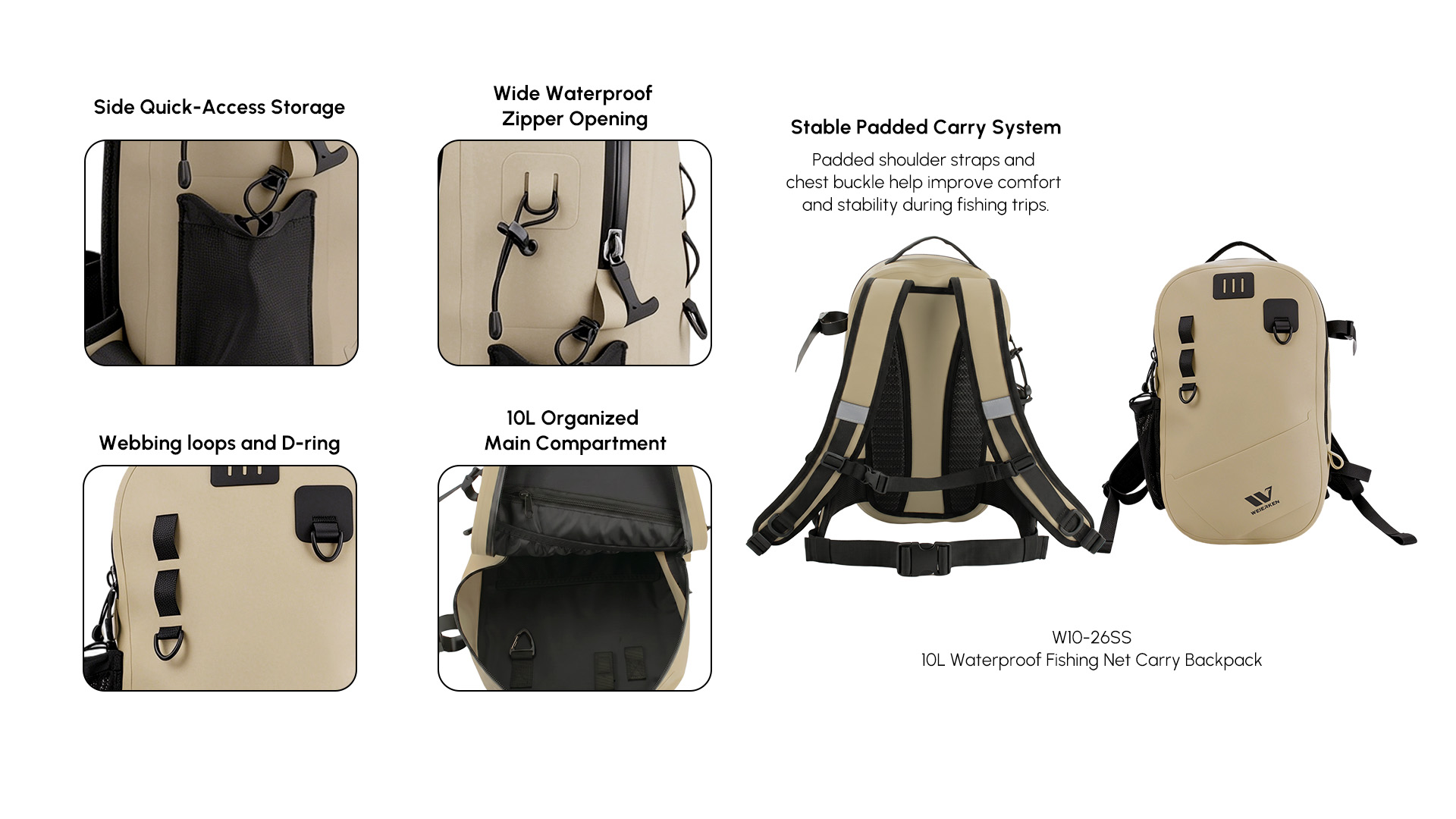
6. Deep Private Label Customization – From Logo Swaps to Brand-Defined Systems
The old model of "pick a mold, add your logo" is dead. In 2026, private label means full brand expression — from color systems and fabric textures to module configurations and unboxing experiences.
Brand-Specific Colors and Tactile Finishes
More OEM projects now specify custom dye lots to match brand VI colors across nylon, polyester, and TPU materials. Off-the-shelf color swatches don't cut it anymore.
Fabric surface treatments — brushed, coated, embossed, quilted — create distinct hand-feel and visual identity. The same base fabric can look and feel completely different with the right post-processing. Brands are leveraging this for differentiation.
Module Configurations Based on Target Use Cases
Brands no longer accept "standard" feature sets. They want module combinations tailored to their core audience — saltwater vs freshwater, pro vs weekend angler, North American vs European markets.
Minimum order quantities for custom module configurations are dropping. In 2026, many OEMs accept 1,000–1,500 units per configuration, down from 3,000+ just two years ago. This opens up customization for mid-tier brands.
Packaging and Unboxing as Brand Differentiation
Private label projects now regularly include custom packaging — biodegradable PE bags, recycled paper boxes, tape-free seals, brand story cards, and QR codes linking to video instructions.
Unboxing experiences drive organic social media reach, especially for DTC brands. A well-designed package can generate more user-generated content than the product itself. Savvy brands are investing accordingly.
Weierken offers end-to-end packaging design services for private label tackle storage systems. From structural engineering to graphic design and sourcing, everything is handled in-house.
Frequently Asked Questions
Q1: What does "private label tackle storage systems" mean in the context of OEM manufacturing?
A1: In OEM manufacturing, private label tackle storage systems refer to products designed and produced by a factory but sold under a retailer's or brand's own name. The OEM partner handles engineering, material sourcing, and production, while the brand controls the design specifications, colorways, and packaging. In 2026, this goes beyond logo placement — it includes material selection, module configurations, and sustainability features tailored to the brand's audience.
Q2: How do I verify if an OEM supplier can meet MOLLE tolerance standards for modular tackle systems?
A2: Request a dimensional report on their MOLLE webbing spacing. The 1-inch (25mm) pitch must hold ±1mm tolerance across all rows. Also ask for pull-test data — each stitch point should withstand at least 15kg without deformation. Reputable suppliers like Weierken provide these reports with every sample submission. If a supplier hesitates or offers "approximate" tolerances, consider that a red flag.
Q3: What waterproof rating should I specify for 2026 private label tackle storage systems?
A3: For 2026, specify at least IPX5 for the main compartments and IPX4 for accessory pockets. If your target audience includes kayak or wading anglers, consider IPX6 for critical gear compartments. Also require ASTM B117 salt spray testing at 96 hours minimum for all zippers and buckles. These specs ensure performance in real-world saltwater and freshwater environments.
Q4: Are sustainable materials like rPET and bio-based nylon durable enough for heavy-duty fishing use?
A4: Yes. rPET fabrics with GRS certification now match or exceed the abrasion and tear strength of virgin polyester. Bio-based nylons (partially derived from castor oil) are approaching the tensile strength of conventional nylon 6,6. The key is verifying the specific material grade and testing reports. Weierken's lab data shows bio-based options performing within 5% of petroleum-based equivalents in cycle testing.
Q5: What's the typical MOQ for custom module configurations in 2026?
A5: The industry trend is downward. Many OEMs now accept 1,000–1,500 units per custom configuration, compared to 3,000+ in 2024. This applies to changes in divider layouts, pocket counts, and material combinations. However, if you require unique injection molds for custom shell designs, MOQs may remain higher due to tooling costs. Always discuss modularity options early — some suppliers offer tooling-sharing programs to reduce initial investment.
Final Thoughts
The tackle storage market in 2026 rewards brands that act on these trends early. Modular designs, lightweight materials, waterproof integrity, sustainability compliance, smart integration, and deep customization aren't future concepts — they're present-day buyer expectations.
Weierken's OEM division has invested heavily in each of these areas. From MOLLE-certified stitching lines to in-house sustainability tracking, the manufacturing setup is built for 2026 requirements. For buyers evaluating private label tackle storage systems, the real question isn't whether to adapt — it's which partner can execute across all six directions at once.
Whether you're launching a new private label line or refreshing an existing catalog, start these conversations now. The suppliers who move fast on these trends will define the category for the next few years.
Ready to develop your 2026 private label
tackle storage systems lineup?
Talk to Weierken's OEM team. Request
material samples, test reports, and customization options tailored to your
brand.