

A simple roll-top design is no longer enough to stand out in the competitive bag market. While the classic roll-top closure offers great water resistance and expandable volume, consumers now expect specialized features. They want bags tailored for specific activities like daily commuting, bike touring, or extreme outdoor adventures.
Developing these specialized lines requires close collaboration with experienced roll top bag manufacturers. Working with a dedicated production partner allows you to resolve design flaws, source functional fabrics, and build a high-performance product catalog. Weierken provides brands with direct access to modern technical sewing and welding processes to solve these exact design challenges.
This article analyzes four custom manufacturing solutions that can help your brand meet consumer demands and avoid common quality complaints.
Solution 1: Extreme Outdoor Weatherproofing – Seamless RF Welding
For paddleboarding, kayaking, and outdoor expeditions, simple water resistance is not enough. Heavy rain and wave splashes will eventually penetrate sewn seams. Brands positioning themselves in this market require absolute waterproof construction.
The Technology of RF Welding
While standard sewing machines puncture fabrics, a specialized waterproof roll top bag factory uses Radio Frequency (RF) welding. This process uses electromagnetic energy to heat and fuse TPU or heavy-duty PVC fabrics together. It creates a molecular bond that keeps water out completely, even under temporary immersion.
Seam-Taping Alternatives
For lighter nylon or polyester bags, manufacturers can apply a hot-melt polyurethane seam tape over standard stitching. This seals out water without adding the extra weight of heavy PVC or TPU laminates, making it perfect for lightweight hiking packs.
Integrating Airtight Zippers
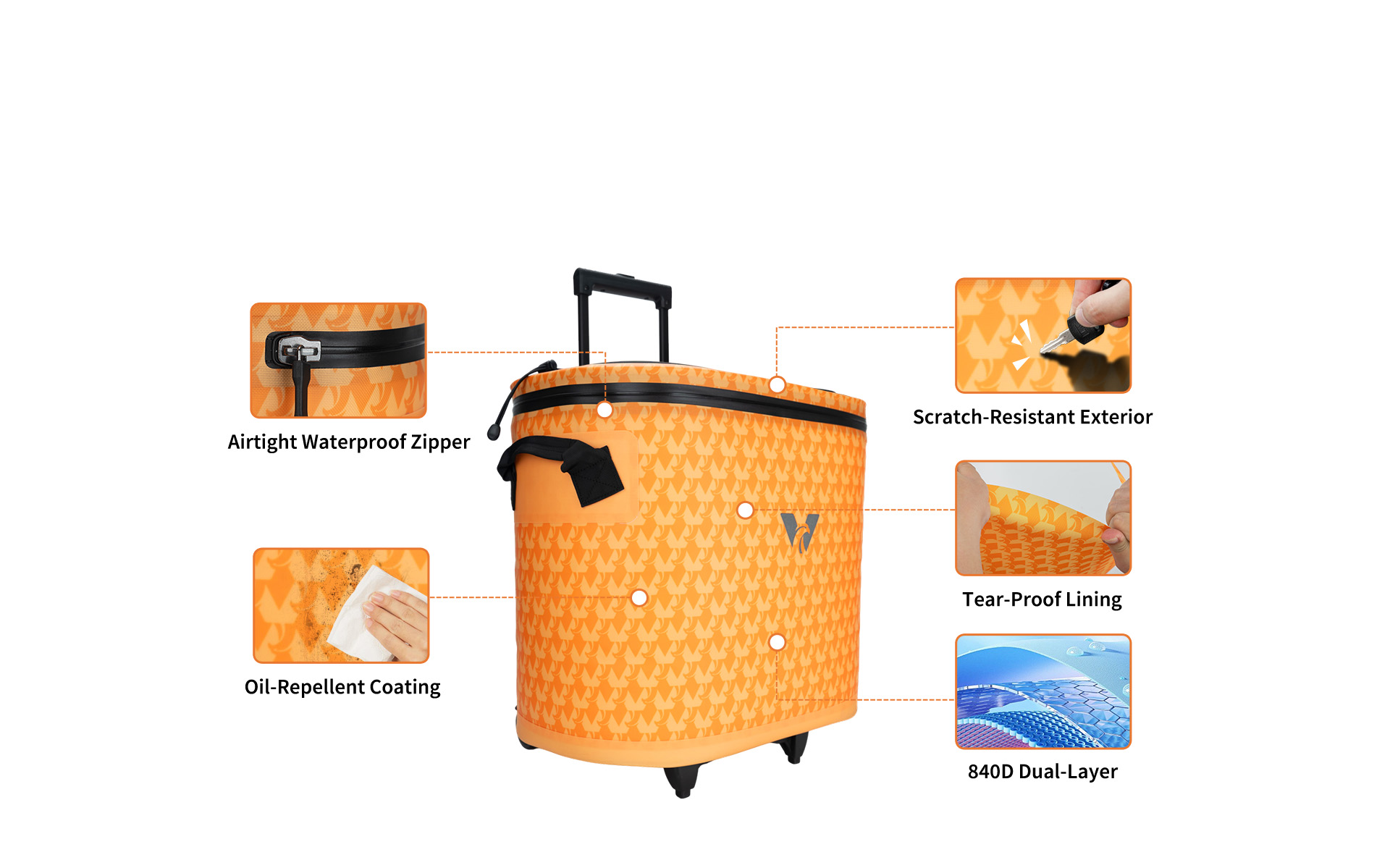
To create a premium OEM roll top dry bag, factories can combine the roll-top closure with an IPX7-rated airtight zipper. This ensures the bag remains completely dry inside, even if it accidentally drops into deep water or floats downstream during a river crossing.
Solution 2: Urban Commuting & Business Travel – Smart Compartments
Traditional roll-top bags are often criticized for being "black holes" where small items get lost at the bottom. To appeal to urban professionals, your custom roll top backpack needs a more organized internal structure.
Quick-Access Side Zippers
Experienced roll top bag manufacturers solve this access issue by adding water-resistant side or back zippers. This allows commuters to quickly grab their keys, phone, or passport without unrolling the entire main compartment every time.
Suspended Laptop Sleeves
Laptops need protection from ground impacts when the bag is set down. Factories can install a suspended sleeve that keeps the device hovering above the bottom panel. This sleeve should be padded with high-density EVA foam and lined with soft scratch-resistant fleece.
Premium Magnetic Buckles
To appeal to high-end buyers, swap out traditional plastic side-release buckles for German-designed Fidlock magnetic fasteners. These buckles snap shut automatically using magnetic force and open smoothly with a simple slide, improving the user experience.
Solution 3: Professional Cycling & Bikepacking – Ergonomic Mounting
Bikepacking and motorcycle touring require secure mounting systems and excellent ergonomic support to prevent rider fatigue during long journeys. The bags must remain stable under heavy vibration.
Ergonomic Back Panels
Long rides require excellent airflow against the rider's back. Factories can integrate 3D mesh panels and compression-molded EVA foam backings to distribute weight evenly, reduce pressure points, and prevent sweat accumulation.
Three-Point Mounting Systems
For bike-mounted panniers or handlebar bags, the factory must design reinforced webbing systems with heavy-duty hook-and-loop straps or metal rack clips. This three-point attachment ensures the bag remains stable over rough gravel and dirt trails.
High-Visibility Safety Prints
Safety is a priority for night commuters and touring cyclists. Manufacturers can print wide-angle 3M reflective patterns onto the side and front panels, improving visibility in low-light conditions without compromising the bag's design.
Solution 4: ESG & Sustainability – GRS Certified Eco-Friendly Materials
Many consumer brands face growing pressure to meet strict Environmental, Social, and Governance (ESG) standards, especially when exporting to European and North American markets. Sustainable sourcing is key to capturing these consumers.
Certified Recycled Fabrics
High-quality factories should source Global Recycled Standard (GRS) certified fabrics, such as RPET (recycled polyester from plastic bottles) or recycled nylon. These fabrics offer the same durability and tear resistance as virgin materials.
PFC-Free DWR Coatings
Traditional water-repellent treatments contain fluorocarbons that harm the environment. Modern manufacturers apply PFC-free Durable Water Repellent (DWR) coatings to protect the environment while maintaining reliable splash-proof performance.
Eco-Friendly Hardware and Packaging
Sourcing managers can specify buckles made from ocean-bound plastics or recycled nylon. Additionally, shipping bags in fully biodegradable starch bags instead of traditional polybags helps reduce plastic waste across your supply chain.
Evaluating Sourcing Partners & Supply Chain Metrics
Before signing a manufacturing contract, you must verify that your manufacturer can deliver consistent quality during mass production. Sourcing managers should look for specific laboratory testing standards and flexible supply chain terms.
| Quality Test | Test Method | Target Standard for Roll-Top Bags |
|---|---|---|
| Drop Test | Loaded bag dropped onto concrete | No seam failure or buckle breakage from 1.2 meters |
| Zipper Fatigue | Reciprocating machine test | Smooth operation after 5,000 open/close cycles |
| Abrasion Resistance | Martindale friction method | No fabric punctures after 20,000 cycles |
| Tensile Strength | Pulling force applied to straps | Handle stitching withstands up to 50 kg of load |
Prototyping Lead Times and MOQs
Developing a custom pattern typically takes 10 to 15 days. This includes constructing paper patterns, sourcing matching fabrics, and assembling the first physical prototype.
Because high-frequency welding machines require dedicated tooling setups, standard production MOQs for welded bags usually start at 500 units per style. For sewn bags, MOQs can be more flexible, sometimes starting at 300 units
Building a successful roll-top bag requires finding the right balance of technical performance, materials, and specialized features. Whether you need seamless RF welding, commuter-friendly pockets, bike-mounting systems, or sustainable GRS fabrics, working with a specialized factory is essential.
As professional roll top bag manufacturers, Weierken helps outdoor, commuting, and cycling brands develop durable, custom bag designs. We provide expert OEM and ODM services to support your product development from initial sketch to final quality control. Contact our team today to request a quote or order a sample.
Frequently Asked Questions
1. What is the difference between sewn seam-taped bags and RF-welded bags?
Sewn seam-taped bags are lighter and allow for more complex pockets, but they are only splash-proof. RF-welded bags fuse the fabric together without stitches, creating a completely waterproof seal that can survive quick submersions and heavy wave spray.
2. Can we add a laptop compartment to a fully waterproof dry bag?
Yes. We can design a removable padded laptop sleeve that attaches to the inside of the dry bag using hook-and-loop strips or snaps. This protects your electronics while maintaining the bag's waterproof exterior.
3. What is the average MOQ for custom roll-top backpacks?
Our standard MOQ for custom welded dry bags is 500 units per style. For sewn roll-top backpacks, we can offer more flexible MOQs starting at 300 units, depending on the complexity of the design and fabric availability.
4. What certified recycled fabrics do you offer?
We offer GRS-certified recycled polyester (RPET) and recycled nylon. These materials are paired with TPU coatings and PFC-free water repellents to ensure the entire bag meets eco-friendly and sustainable sourcing standards.
5. How long does the prototyping process take?
The prototyping process typically takes 10 to 15 days. This includes pattern creation, material sourcing, logo printing, and an initial quality check before we ship the sample to you for final approval.