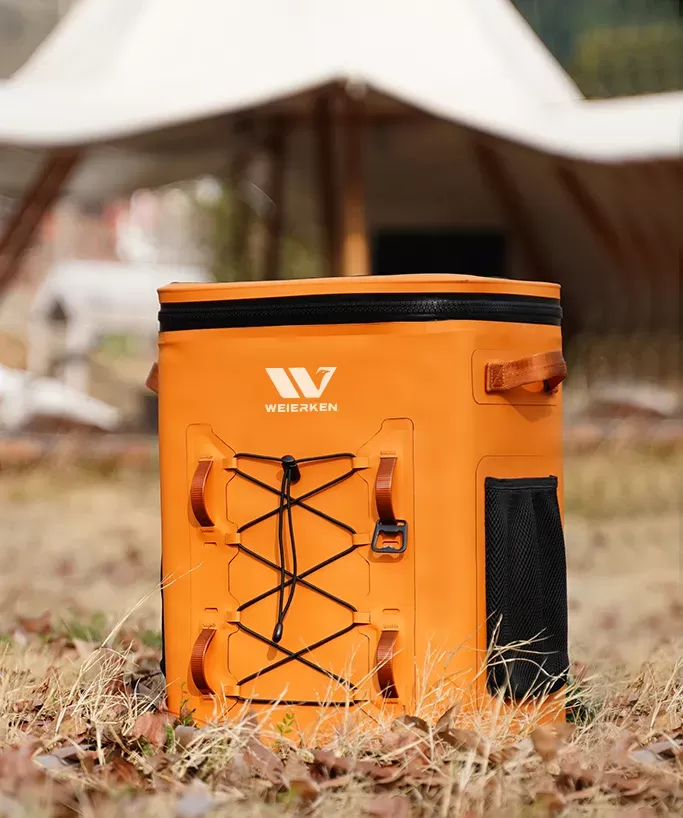

For outdoor brands, retail buyers, and promotional gift sourcing agents, selecting the right portable cooler tote maker is a critical decision. A single leaking cooler bag can damage your brand reputation, lead to negative customer reviews, and increase your return rates. Ice melts, seams split, and zippers seep. These are common points of failure that cause product returns.
To ensure your products remain competitive in a crowded market, your manufacturing partner must implement modern sealing methods. At Weierken, we believe that understanding the manufacturing process helps B2B buyers make informed purchasing decisions. Here are four essential leakproof technologies that a qualified portable cooler tote maker should use during production.
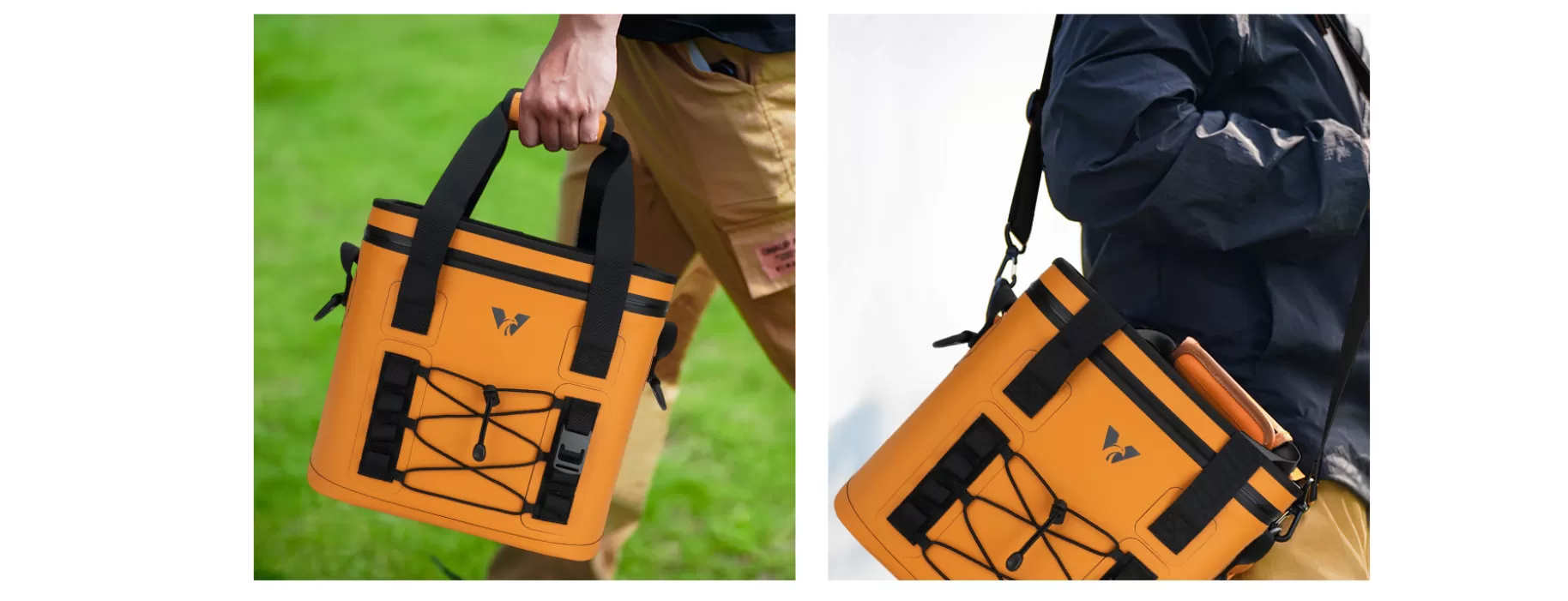
1. High-Frequency (RF) Welding Instead of Sewing
Traditional sewing relies on needles and threads to join pieces of fabric. While this method is cost-effective, it leaves hundreds of micro-holes along the seams. Even if a manufacturer applies waterproof seam tape to the interior, these taped seams often peel over time under the stress of heavy ice loads, folding, and temperature fluctuations.
How RF Welding Works
A reliable portable cooler tote maker uses Radio Frequency (RF) welding, also known as high-frequency welding. This technology does not rely on external heat. Instead, it applies high-frequency electromagnetic energy to the joint area. This energy causes the molecules of thermoplastic materials (such as TPU or heavy-duty PVC) to agitate and fuse together under pressure.
Molecular Fusion: The two fabric panels become a single, continuous piece of material.
No Needle Holes: Eliminating needles means there are no physical holes for water to escape.
High Tensile Strength: Welded seams are often stronger than the surrounding fabric, preventing blowouts under heavy loads.
B2B Procurement Considerations
When auditing a potential portable cooler tote maker, ask to see their RF welding machinery. Confirm if they weld both the main body and the inner liner. Seamless construction is highly recommended for high-end TPU coolers, while stitched seams with taped backings are generally reserved for lower-budget PEVA models.
2. Airtight Zippers and Molded Zipper Garages
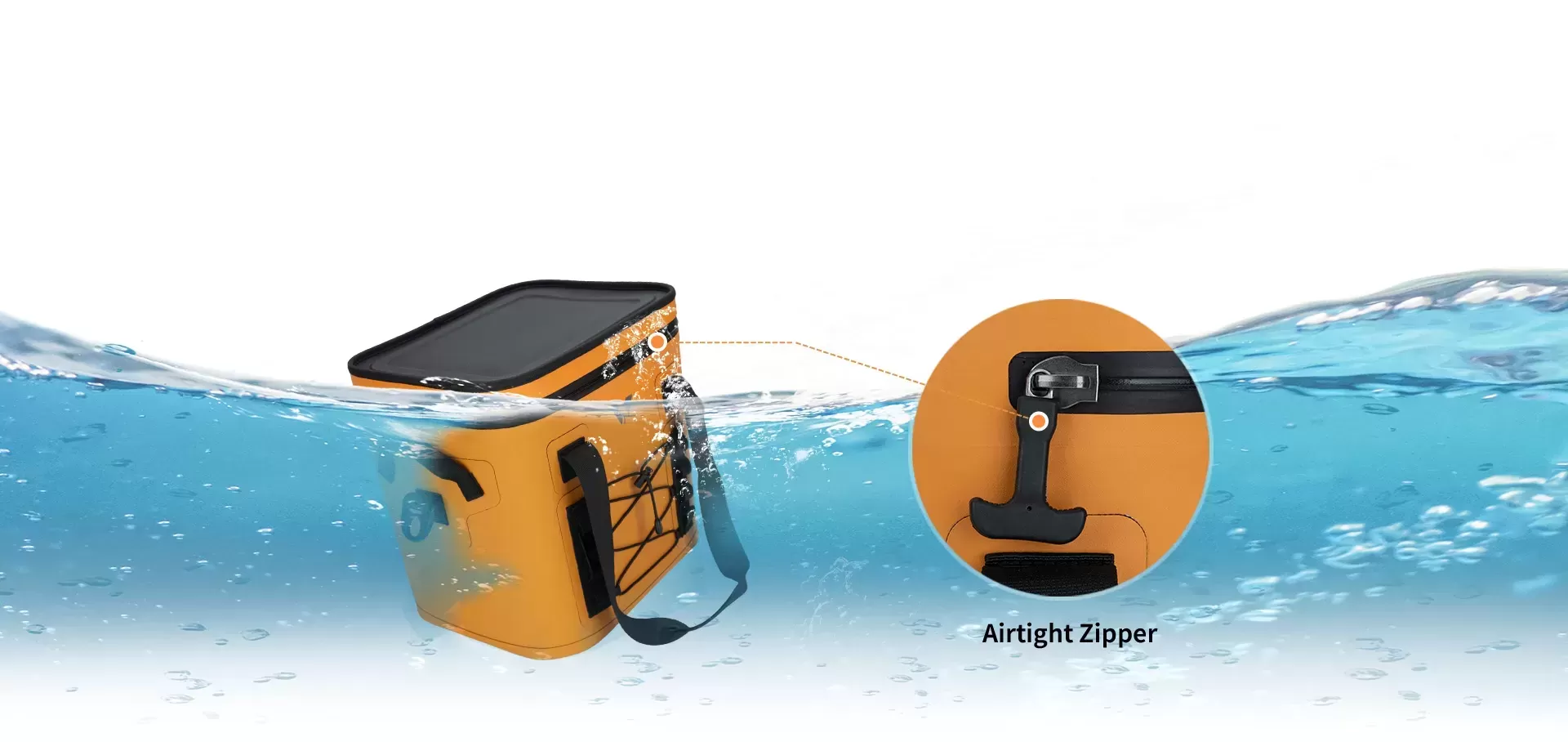
The zipper is the most vulnerable point on any soft cooler. Standard nylon coil zippers cannot stop melted ice from seeping through when the cooler tilts or tips over in a car trunk. Water finds the path of least resistance, which is usually the spacing between the zipper teeth.
How Waterproof Zipper Systems Work
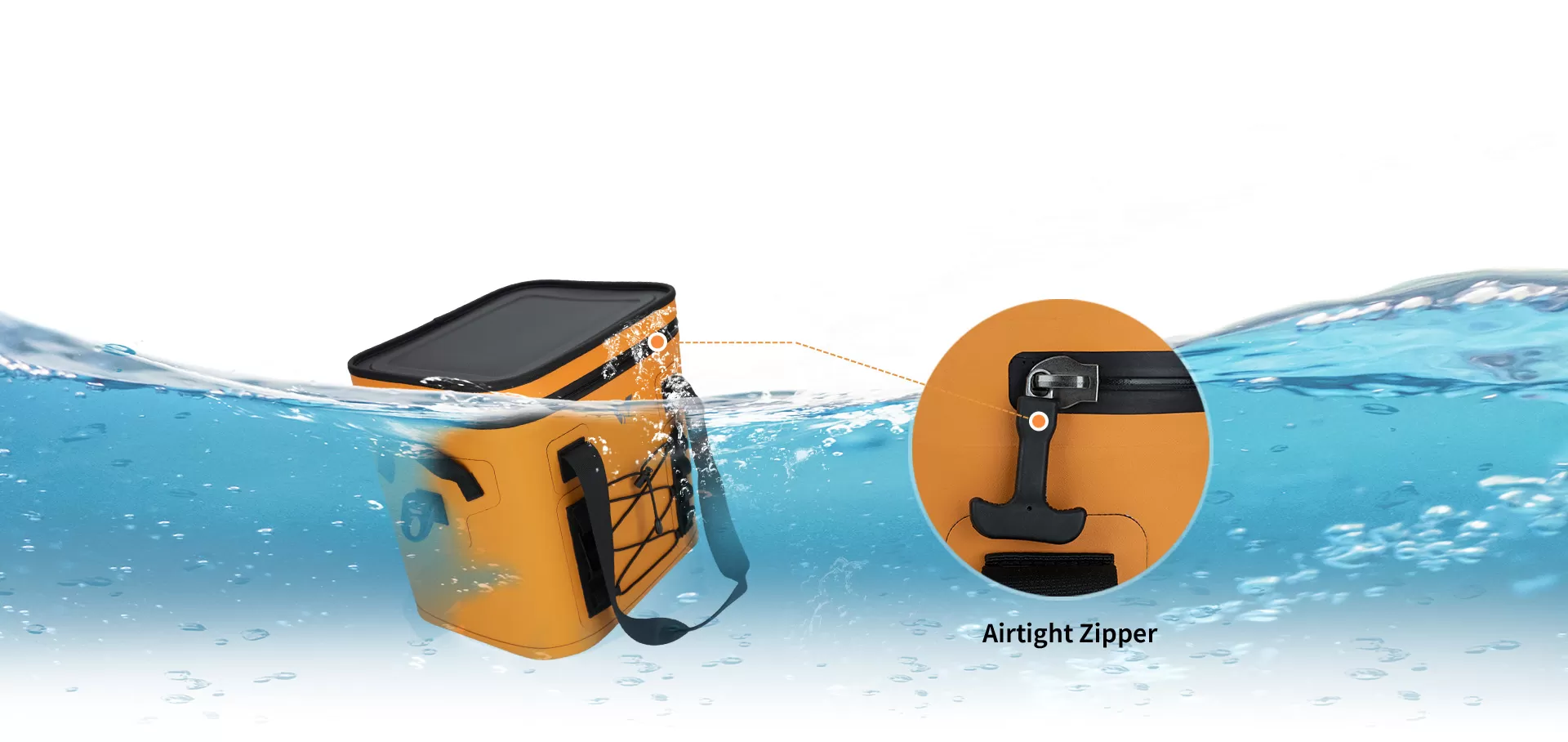
Quality soft-sided coolers feature specialized airtight or water-resistant zippers. These zippers are coated with a layer of Thermoplastic Polyurethane (TPU). The coating compresses tightly when closed, forming a barrier against water. To seal the small gap at the end of the zipper track, a professional portable cooler tote maker integrates a "zipper garage." This molded pocket houses the zipper pull when fully closed, stopping leaks at the terminal point.
At Weierken, we analyze zipper durability and sealing performance through repeated pressure testing. This ensures that the closure mechanism holds back water even when the bag is upside down.
TPU Sealing Teeth: The coated teeth interlock to form a physical wall against liquid.
Zipper Garage Pocket: A small, molded end-cap covers the tiny opening left by the zipper slider.
Pulling Loops: Since airtight zippers have higher resistance, heavy-duty pull loops are needed to make opening and closing easier for consumers.
B2B Procurement Considerations
Airtight zippers are stiff by design. Your manufacturing partner must balance sealing performance with user convenience. We recommend requesting zipper cycle test reports to confirm how many open-and-close cycles the zipper can withstand before the TPU coating begins to degrade.
3. One-Piece Molded Food-Grade TPU/PEVA Liners
The inner liner directly holds your ice, drinks, and food. The material choice and assembly method of this liner determine the baseline leakproof capability of the cooler bag. If the liner fails, the insulating foam will absorb water, leading to mold and unpleasant odors.
How One-Piece Molded Liners Work
Instead of sewing flat sheets of PEVA together, an advanced portable cooler tote maker uses three-dimensional molding. Using heat and pressure, they shape a single sheet of food-grade TPU or PEVA into a tub-like liner. Because the bottom has no seams, there are no joints that can pull apart when the cooler is filled to maximum capacity.
Seamless Bottom: A solid, molded base liner has zero joints at the critical bottom edges.
Food-Safe Materials: TPU and PEVA are free from chlorine and phthalates, meeting international food contact regulations.
Thick Barrier Layer: Liners with a thickness of 0.3mm to 0.5mm offer high puncture resistance against sharp ice corners or can tabs.
B2B Procurement Considerations
As a quality-focused portable cooler tote maker, Weierken advises buyers to ask for official FDA, LFGB, or REACH test certificates for the liner material. Using certified materials ensures compliance in major consumer markets and protects your brand from regulatory issues.
4. Reinforced Molded Bases and Structural Support
When a cooler tote is fully loaded with drinks, ice, and personal gear, gravity concentrates the weight at the very bottom. If the base lacks structure, the fabric sags. This sagging puts continuous tension on the lower seams, leading to early failure and leaks.
How Molded Bases Prevent Seam Strain
Experienced manufacturers design soft coolers with compression-molded EVA bases. This semi-rigid bottom plate helps the bag keep its shape when empty or full. More importantly, it raises the welded seams slightly off the ground. This design prevents the welded joints from rubbing directly against rough surfaces like gravel, concrete, or sand.
Raised Seams: Keeping the welded joints above the ground protects them from abrasion.
Self-Standing Design: A structured base keeps the cooler upright, reducing the chances of accidental spills.
Shock Absorption: The thick EVA base cushions the cooler when it is dropped onto hard surfaces, protecting both the inner contents and the liner.
B2B Procurement Considerations
Evaluate your supplier’s prototyping and molding capabilities. Ask if they can customize the bottom base with your brand logo. A custom-molded base not only improves leak protection but also adds a premium look that supports higher retail pricing.
Summary and Sourcing Checklist
When sourcing soft cooler bags, look beyond the unit price. High-quality construction techniques directly affect customer satisfaction and return rates. Before signing a manufacturing contract, request the following documents from your supplier:
Seam Pull-Test Reports: To verify the strength of the RF welded seams.
Hydrostatic Pressure Certifications: To confirm how much water pressure the liner can withstand.
Raw Material Test Certificates: Showing compliance with FDA, LFGB, and RoHS standards.
Working with a dedicated portable cooler tote maker like Weierken helps ensure that your products meet strict quality guidelines. We focus on durable, functional designs that help outdoor brands and retailers grow their market share.
Are you looking to develop a reliable, leakproof soft cooler line for your brand? Contact our team today to discuss your specifications, request samples, or get a detailed quotation.
Frequently Asked Questions
1. Why do cheap sewn soft coolers always leak?
Sewn coolers use traditional sewing needles that pierce the waterproof fabric, creating thousands of microscopic holes. While manufacturers try to seal these holes with interior adhesive tape, the tape often peels away after regular folding, carrying weight, and exposure to moisture. This allows melted ice to seep through the seams.
2. What is the difference between PEVA and TPU liners?
PEVA is lightweight, flexible, and economical, making it popular for promotional or budget-friendly cooler bags. TPU is more durable, offers superior abrasion and puncture resistance, and withstands low temperatures without cracking. TPU is the standard choice for premium, heavy-duty soft coolers.
3. How does a portable cooler tote maker test for leaks?
Manufacturers use several testing methods. The inflation test involves filling the sealed cooler with air and submerging it in water to look for bubbles. The static water test involves filling the cooler with water and letting it sit on dry paper for 24 to 48 hours to check for damp spots. Some factories also use hydrostatic pressure testers on the fabric and seams.
4. Why are airtight zippers stiff, and can this be fixed?
Airtight zippers are stiff because their teeth are coated with a thick layer of TPU to block water. This friction is necessary for a secure seal. To make them easier to slide, manufacturers supply a small tube of silicone lubricant. Applying lubricant along the zipper teeth periodically keeps the movement smooth.
5. What is the minimum order quantity (MOQ) for RF-welded coolers?
RF-welded coolers require specialized tooling, molds, and setups, which usually leads to a higher MOQ than standard sewn bags. Typically, a professional portable cooler tote maker will require an MOQ of 500 to 1,000 pieces per color, depending on the complexity of the design and the availability of the materials.