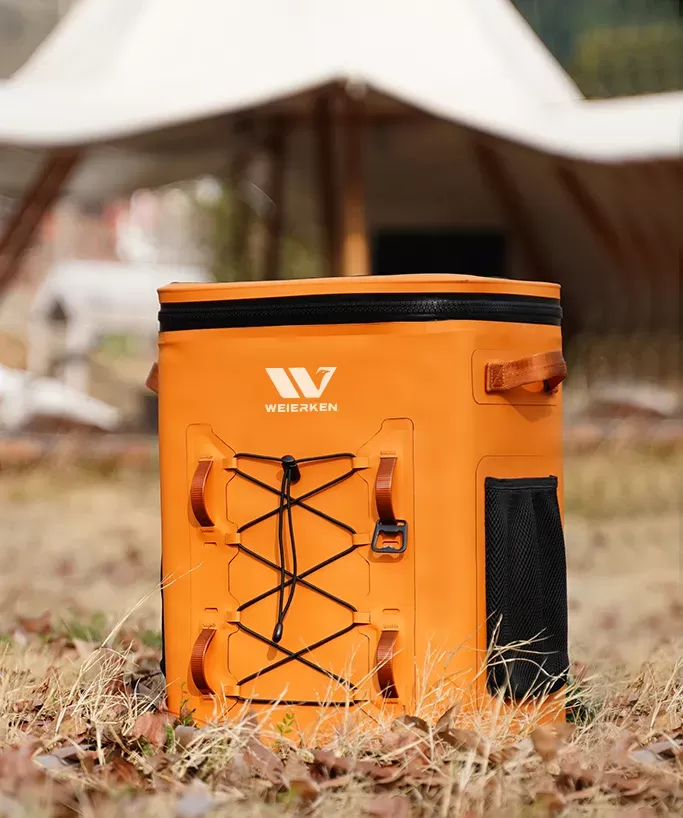

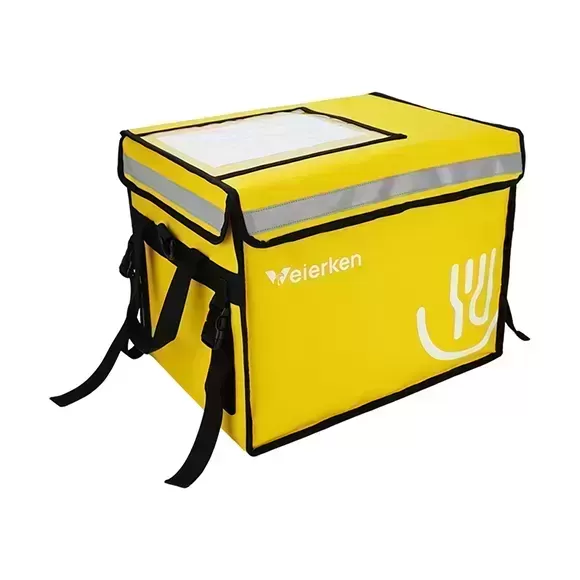
Finding a reliable logistics partner involves more than checking prices. For businesses handling fresh food and groceries, the delivery bag is the most critical touchpoint between your business and the end customer. A weak bag leads to damaged goods, ruined meals, and unhappy clients.
Many procurement managers now turn to specialized manufacturers to build heavy-duty gear. As a professional produce delivery bag maker, Weierken understands that commercial delivery bags must survive harsh, daily abuse. Standard consumer backpacks simply do not hold up under these conditions.
Before you sign your next manufacturing contract, you need to know if your supplier can actually deliver. Asking these seven critical questions will help you evaluate a prospective PVC tarpaulin backpack maker and protect your investment.
1. What Is Your Direct Experience as a Produce Delivery Bag Maker?
Do not assume that a factory capable of making school backpacks can manufacture commercial-grade delivery gear. Commercial delivery requires specific structural engineering that standard bag makers rarely understand.
A true produce delivery bag maker designs products with spatial efficiency and load distribution in mind. Fresh vegetables, fruits, and dairy require structured compartments to prevent bruising. Ask the factory about their history with commercial clients.
Have they manufactured for major food delivery platforms or third-party logistics firms?
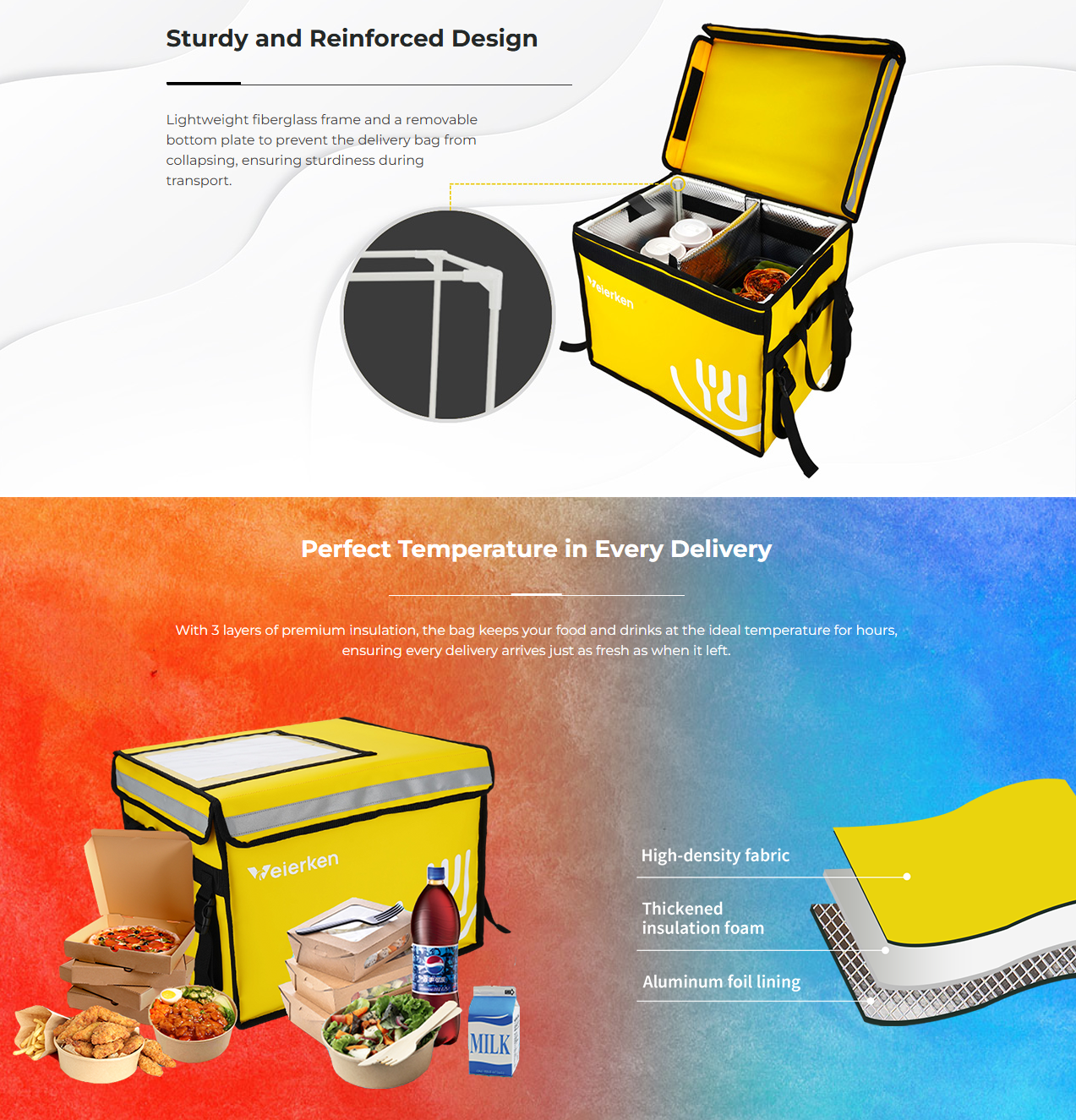
Do they understand how to integrate rigid internal support systems, such as fiberglass rods or lightweight PP boards?
Can they provide physical samples of past commercial delivery projects?
Reviewing their past work gives you immediate insight into their manufacturing capabilities. If their portfolio only contains cosmetic lifestyle bags, they may struggle with the technical demands of commercial utility gear.
2. How Do You Reinforce Major Load-Bearing Areas?
Commercial delivery couriers carry heavy loads, often ranging from 10 to 15 kilograms per trip. They constantly lift, drop, and pull their bags by the straps and top handles. This repetitive stress causes cheap stitching to fail rapidly.
A reliable commercial delivery bag factory does not rely on simple, single-line stitching. They employ specific reinforcement techniques at stress points where the shoulder straps and handles meet the main bag body.
Bar-Tack Stitching: High-density zigzag sewing that reinforces high-stress joints.
Double-Stitch Patterns: Dual rows of heavy-duty nylon thread to provide backup strength.
Internal Backing Plates: Placing PP or metal washers inside the fabric layers to distribute pull forces over a larger surface area.
Ask the manufacturer to explain their reinforcement process in detail. If they cannot specify their stitching standards, their bags may tear under real-world conditions within a few weeks of deployment.
3. Do Your Insulation and Lining Materials Meet Food-Safety Standards?
When delivering fresh groceries, food safety is a primary concern. Condensation, spilled liquids, and organic residue are inevitable inside a delivery backpack. The lining material must be safe for food contact and incredibly easy to clean.
Your produce delivery bag maker should offer high-grade thermal insulation materials. Ask them about the exact composition of their inner lining. Standard options include aluminum foil, PEVA, and TPU.
At Weierken, we prioritize materials that resist bacterial growth and odor buildup. Our designs focus on seamless, heat-sealed interior linings. This prevents liquids from seeping into the foam insulation core, making sanitization simple for your fleet drivers.
Does the lining material comply with non-toxic and food-contact safety standards?
Is the insulation thick enough to maintain temperatures during a 45-minute delivery window?
Can couriers wipe the interior clean with standard sanitizing sprays without degrading the material?
4. What Brands and Grades of Zippers Do You Use?
The zipper is almost always the first point of failure on a high-use delivery bag. When a zipper breaks, the entire bag becomes useless, regardless of how strong the PVC fabric is. Couriers open and close these bags dozens of times a day, often in a hurry.
Inquire about the hardware brands the factory sources. Reputable makers use trusted brands like YKK or SBS. For rainy climates, they should recommend water-resistant zippers with polyurethane coatings to keep moisture out.
Additionally, ask if the factory conducts zipper cycle tests. A durable custom insulated backpack should use heavy-duty plastic molded zippers (such as #10 size) rather than small coil zippers. Molded zippers resist dirt and debris much better, preventing teeth misalignment over long-term use.
5. Do You Join the PVC Tarpaulin with High-Frequency Welding or Sewing?
PVC tarpaulin is a popular material for delivery bags because of its strength and water resistance. However, how the factory joins the panels together determines the bag's waterproof capabilities. There are two primary assembly methods: sewing with seam tape, or high-frequency (RF) welding.
If you need a bag that is completely waterproof, high-frequency welding is the industry standard. This process uses electromagnetic energy to fuse the PVC sheets together at a molecular level, creating a single, seamless piece of material.
| Feature | Sewn & Seam Taped | High-Frequency (RF) Welded |
|---|---|---|
| Waterproof Level | Water-resistant (minor leaks possible at seams) | 100% Waterproof (completely sealed seams) |
| Durability | Good (dependent on thread strength) | Excellent (seams are as strong as the fabric) |
| Cost | Generally lower initial cost | Higher tooling cost for specialized molds |
Make sure to ask your potential PVC tarpaulin backpack maker which technology they use. For heavy rain and wet environments, choosing RF welding prevents water from leaking through needle holes and damaging the dry goods inside.
6. How Do You Keep Reflective Strips and Logos From Peeling Off?
Couriers frequently work at night or during dark, rainy afternoons. Reflective safety strips are vital for protecting your riders on busy city streets. Additionally, your brand logo printed on the bag serves as a mobile billboard for your business.
Cheap printing and low-grade reflective tapes peel off quickly when exposed to UV rays, rain, and cold temperatures. Ask the factory about their application methods.
Do their reflective materials meet international visibility standards, such as EN ISO 20471?
Do they heat-transfer the reflective strips directly onto the PVC, or are they stitched on?
What type of printing ink do they use for your company logo? (Silk-screen, UV, or heat transfer?)
A professional factory will recommend screen printing with specialized inks designed to bond permanently with PVC surfaces, ensuring your brand looks clean and professional for months to come.
7. What Are Your MOQs and Lead Times for Custom Designs?
B2B procurement usually requires custom dimensions. Your bags must fit the specific racks, motorcycles, or e-bikes your couriers use. This means you will likely need custom prototypes before starting mass production.
Ask the factory about their Minimum Order Quantity (MOQ) for both stock colors and custom Pantone matching. Generally, using standard fabric colors allows for lower MOQs, while custom-dyed PVC requires larger production runs.
Clarify their timeline for sample creation and mass production. A reliable partner should provide clear milestones for design approval, sample testing, raw material sourcing, and final assembly. This ensures your delivery fleet is equipped on schedule.
Choosing the right produce delivery bag maker requires looking past the lowest price estimate. By focusing on structural integrity, insulation standards, zipper durability, and seam-joining methods, you protect your fleet from operational delays and high replacement costs.
At Weierken, we pride ourselves on manufacturing durable, custom delivery solutions that meet the practical needs of modern logistics. Our team balances technical expertise with clear, reliable communication to support your business goals.
Are you planning your next fleet upgrade or launching a new delivery service? Contact our team today to discuss your specifications, request samples, or receive a detailed quotation for your project.
Frequently Asked Questions
1. Why is PVC tarpaulin the preferred material for delivery backpacks?
PVC tarpaulin is highly durable, puncture-resistant, and naturally waterproof. Unlike standard nylon, you can wipe it clean easily, and it holds its shape well under heavy loads. This makes it ideal for protecting fresh produce from external weather conditions.
2. What is the average lifespan of a commercial delivery backpack?
Under daily commercial use, a well-made bag from an experienced produce delivery bag maker typically lasts between 9 to 18 months. Lifespan depends on load weight, handling care, weather exposure, and the quality of components like zippers and straps.
3. Can we order a single sample to test with our delivery riders first?
Yes. Reputable manufacturers encourage sample testing. Producing a prototype allows your riders to test the ergonomics, sizing, and thermal retention in real-world conditions before you commit to a bulk production run.
4. How do you keep cold items cold and hot items hot in the same bag?
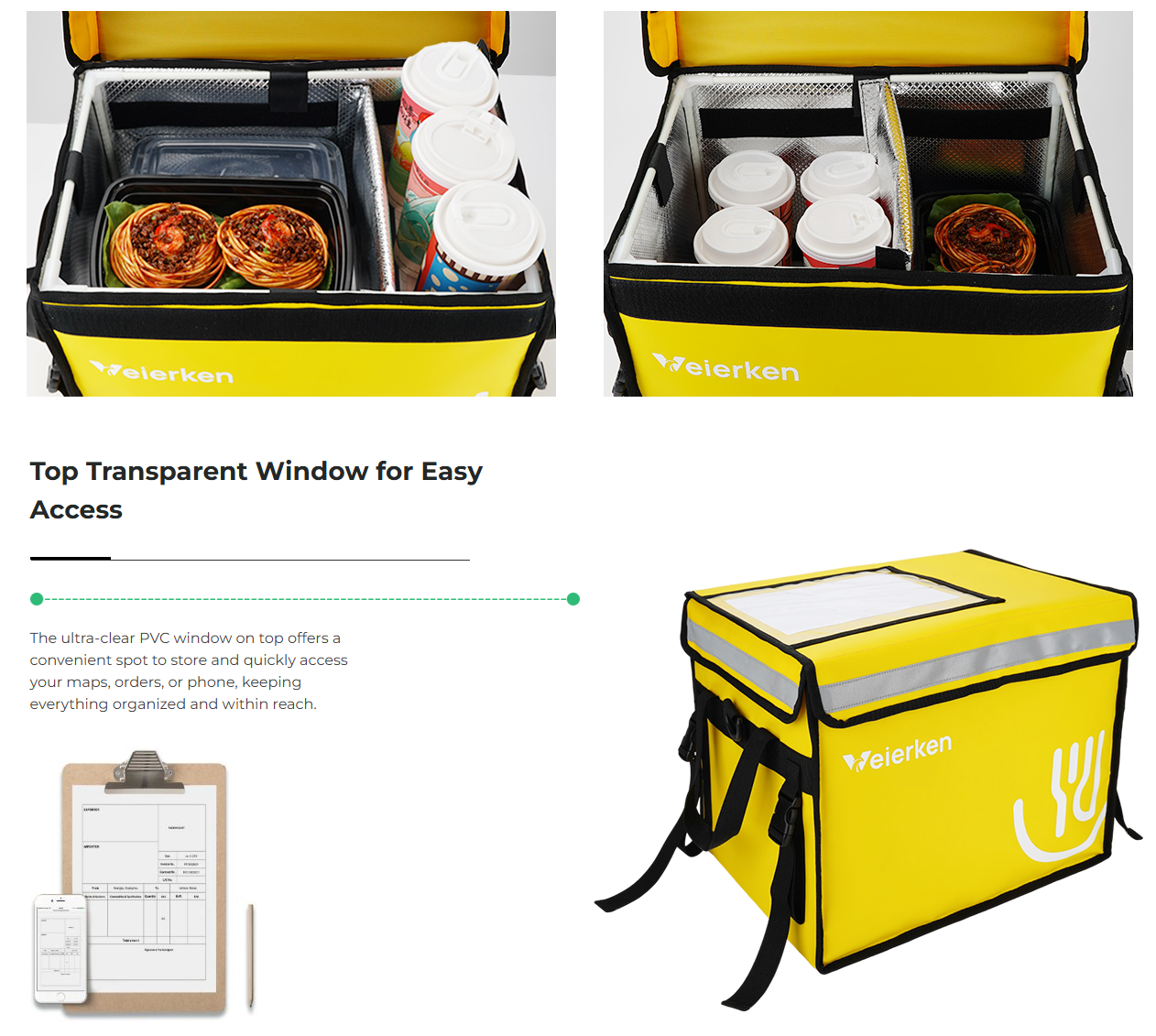
Experienced manufacturers design bags with adjustable, insulated interior dividers. These partitions use thick foam cores and hook-and-loop fasteners, allowing couriers to create separate thermal zones within a single backpack.
5. What is the typical MOQ for a custom-sized delivery bag?
MOQs vary depending on the level of customization. For bags using standard material colors and existing molds, MOQs often start around 500 pieces. If your project requires unique custom-molded parts or custom-dyed fabric, the MOQ may be higher.