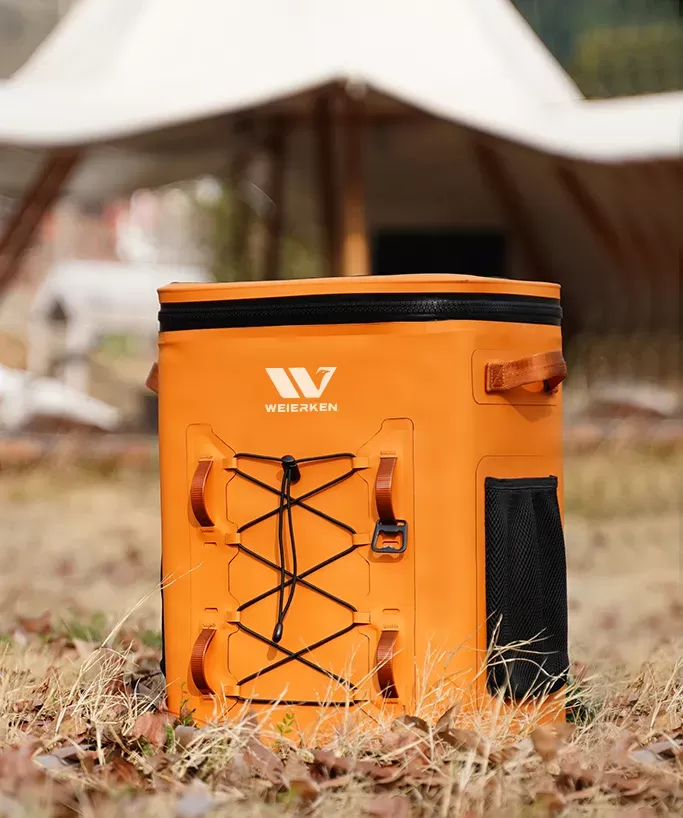

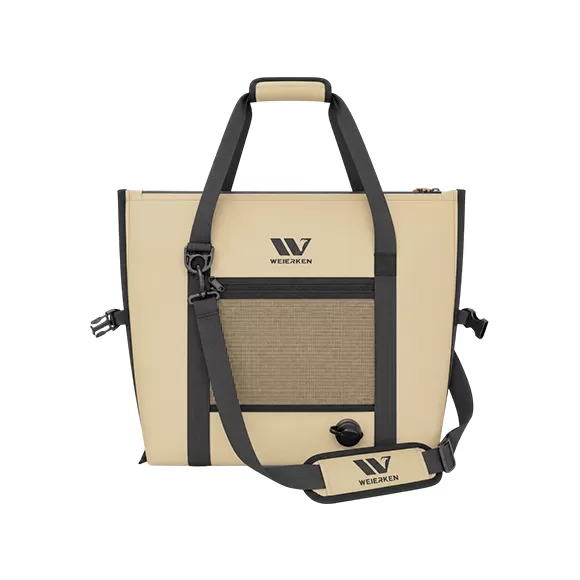
In the sportfishing and commercial marine sector, a leaking catch bag creates an immediate product disaster. When melted ice and pungent fish blood seep onto a customer's yacht deck or into the cargo area of their vehicle, brand trust disappears. High return rates, negative e-commerce reviews, and warranty claims quickly follow.
Traditional cut-and-sew manufacturing cannot handle this challenge. Standard needle stitching creates thousands of micro-perforations in the fabric. Under hydrostatic pressure from gallons of sloshing ice slurry, traditional taped seams inevitably separate and leak.
A certified leakproof catch bag supplier must move beyond standard sewing. True waterproof integrity requires fusion at the polymer chain level. At Weierken, our engineering teams build heavy-duty marine kill bags using advanced thermal, dielectric, and ultrasonic bonding technologies. Below, we break down the four critical sealing technologies your manufacturing partner must master, along with practical factory audit criteria.
[Request a Factory Direct Quote & Sealing Technology Whitepaper]
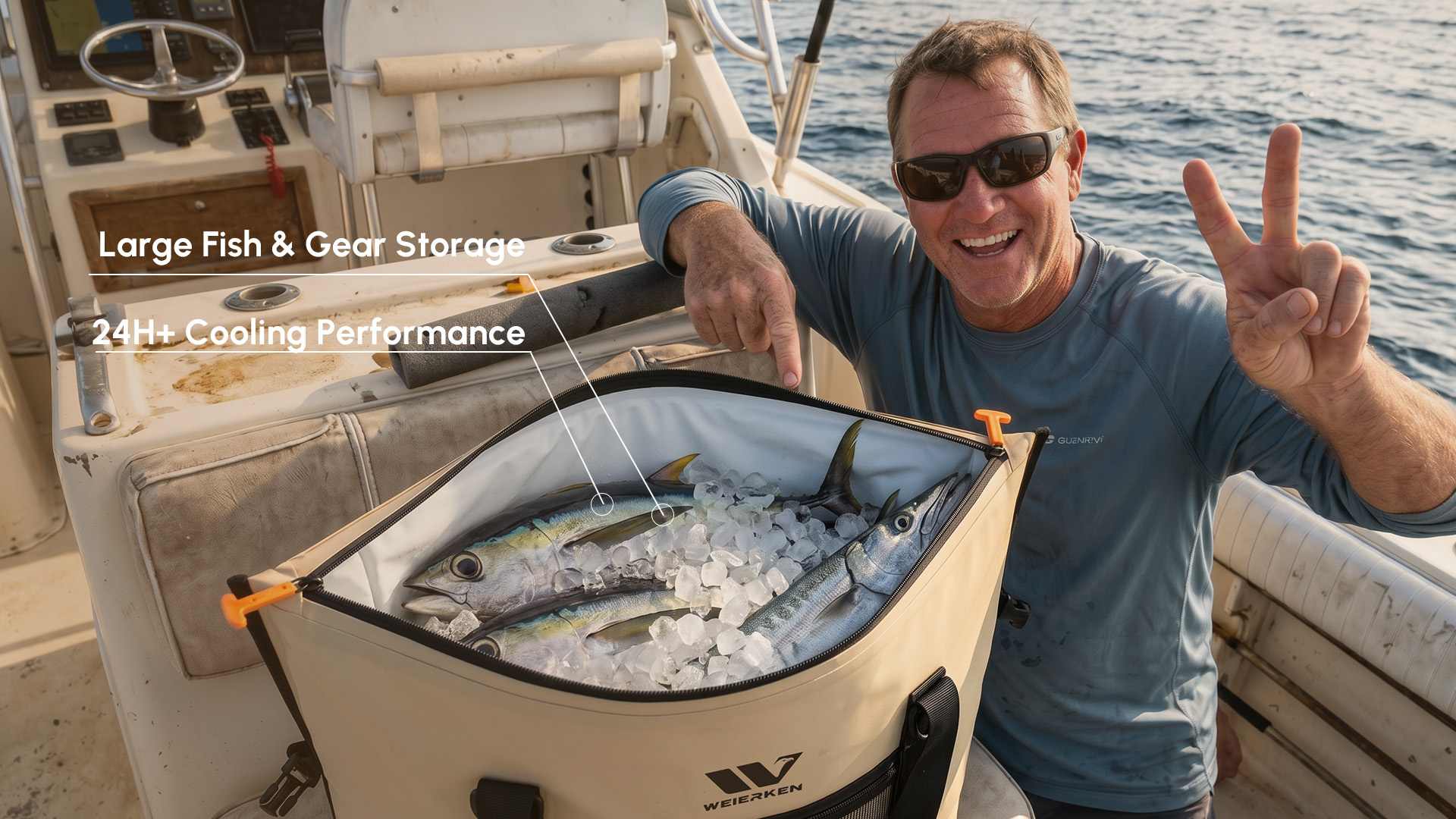
1. High-Frequency / Radio Frequency (RF) Dielectric Welding
High-Frequency (HF) or Radio Frequency (RF) dielectric welding represents the gold standard for fusing thermoplastic fabrics like PVC and TPU. Instead of applying external heat, RF welding excites the polar molecules within the material using a high-frequency electromagnetic field (typically 27.12 MHz).
This molecular oscillation generates rapid internal friction. Under mechanical clamp pressure from precision tooling dies, the polymer layers melt and fuse into a singular, monolithic bond.
Key Manufacturing Advantages
Zero Needle Perforations: RF welding creates a continuous molecular seam without punching holes through the waterproof membrane.
Superior Seam Strength: A properly executed RF weld delivers tensile and shear strength that exceeds the raw parent fabric itself.
Aesthetic Consistency: Tooling fixtures deliver clean, flat seam lines without messy glue overruns or burned textile edges.
What B2B Buyers Must Inspect
When evaluating an RF welded catch bag OEM, examine their equipment floor. Large marine kill bags measuring 120cm to 200cm require automated, long-bed travelling RF welding machines. Manual, short-bar welders force operators to reposition the fabric repeatedly, creating inconsistent weld overlaps that fail under load.
Ensure the supplier uses digital process monitors for power output, dwell time, and pneumatic clamp pressure. If the factory runs uncalibrated machinery, they risk "cold welds" that pull apart under stress or "over-burns" that thin the fabric barrier.
2. Hot Air and Hot Wedge Seamless Seam Taping
While flat linear panels bond smoothly on standard RF presses, three-dimensional kill bag designs feature complex structural corners, triangular end-caps, and gusseted expandable bases. Hot air and hot wedge seam technologies provide the dexterity needed to seal these complex transitions.
Hot air welding directs precisely metered, superheated air between moving fabric layers or beneath a technical sealing tape, while motorized pressure rollers compress the joint immediately. Hot wedge welding utilizes a heated solid metal blade pulled between the fabric sheets before roller compression.
Key Manufacturing Advantages
Seamless 3D Geometry: Allows continuous sealing around box corners, gusseted bottoms, and curved side walls without bunching.
Secondary Fail-Safe Reinforcement: Factories apply heavy-gauge TPU or rubberized seam tape over primary internal joints to provide double-barrier leak protection.
High Peel Resistance: Creates an impenetrable seal against continuous hydrostatic pressure from internal liquids.
What B2B Buyers Must Inspect
Request standard peel-strength test reports from your supplier's Quality Control lab. A marine-grade taped seam should achieve a peel adhesion rating greater than 50 N/cm. Look for continuous hot-wedge lines without bubbling, lifting edges, or thermal discoloration along structural base joints.
3. Airtight Zipper Thermal Lamination and Encapsulated End-Stops
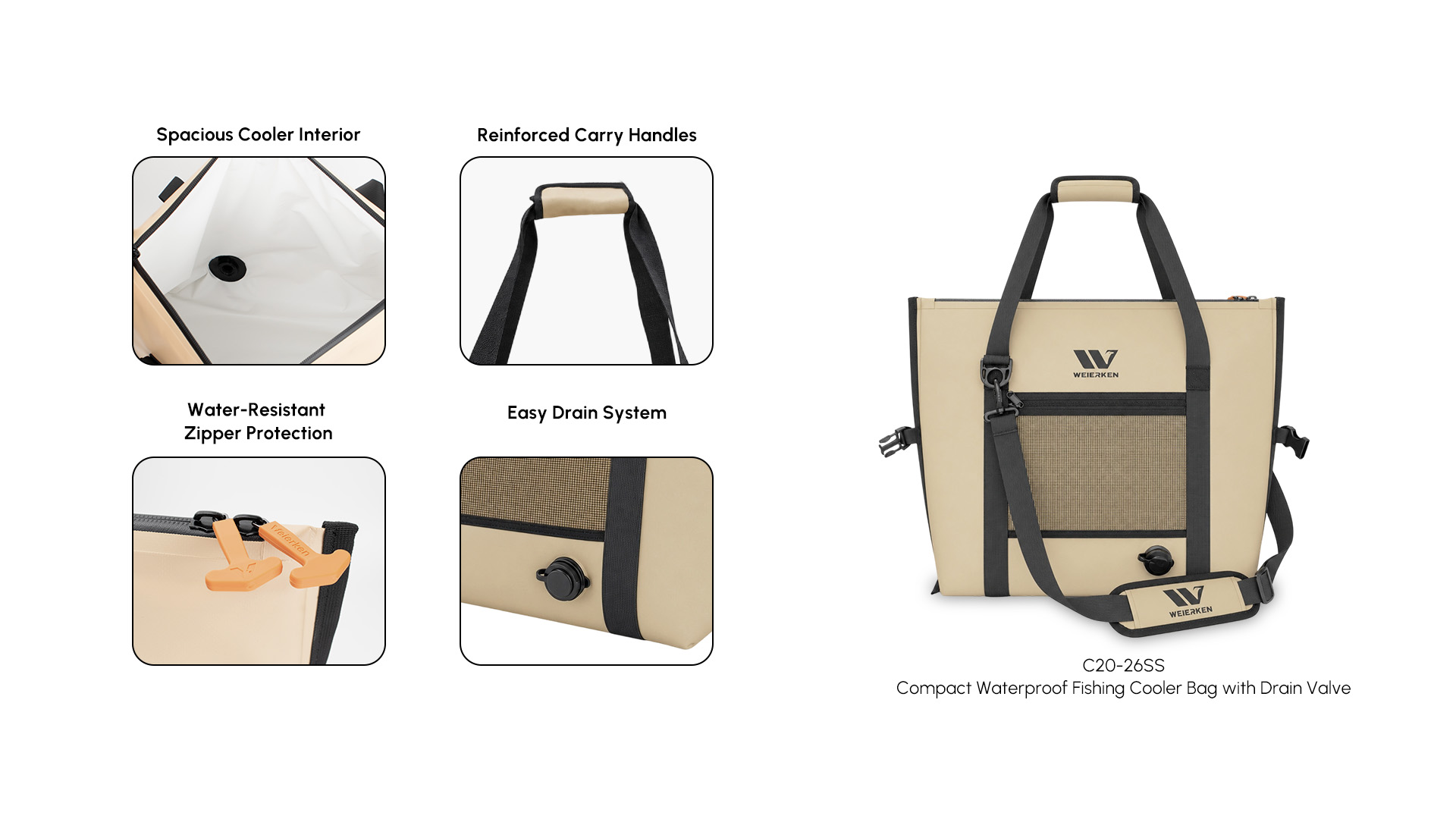
The top opening represents the primary point of failure for soft-sided fish kill bags. Standard water-resistant coil zippers will leak within seconds if the bag tips over on a boat deck. A commercial-grade kill bag requires a pressure-tested, IPX7 or IPX8 rated airtight hydro-lock zipper.
Securing an airtight zipper to a heavy-duty kill bag shell requires specialized thermal lamination tooling rather than conventional edge binding. The zipper chain itself features vulcanized TPU teeth molded onto a polyurethane-coated fabric tape, which fuses directly to the bag envelope.
Key Manufacturing Advantages
360-Degree Fluid and Odor Containment: Prevents ice-melt leakage even when the cooler bag is turned upside down or stacked horizontally during transport.
Molded Injection End-Stop Seals: The terminal end of the zipper path is encapsulated in a molded polyurethane dock to eliminate the gap where slider tracks traditionally weep fluid.
Gas-Tight Pressure Retention: Traps cold air inside the insulation chamber while keeping warm ambient air out, extending ice retention past 48 to 72 hours.
What B2B Buyers Must Inspect
Audit how the factory balances airtight hermetic sealing with user operation. Airtight zippers require specific lubricant application and slider calibration. Ask the marine fish bag manufacturer for cycle-test data (minimum 2,000 pulls without tooth separation) and verify that the zipper perimeter survives high-load diagonal pull tests.
4. Ultrasonic and RF Welded Drain Valve Integration
Anglers need to drain melted brine and wash down the interior without turning a heavy 100-pound bag upside down. However, installing a drain plug is a major structural risk if done incorrectly. Traditional factories simply punch a circular hole and secure the valve with plastic washers and screws, which loosen and crack over time.
An experienced airtight waterproof fish kill bag factory uses custom-machined ultrasonic or RF horn dies to permanently fuse the nylon or TPU valve flange directly to the wall of the bag.
Key Manufacturing Advantages
Integrated Flange Welds: The drain valve housing becomes a solid part of the composite wall, eliminating mechanical joint failure.
High Torque and Shear Resistance: Heavy catches sliding against the inner spigot will not twist, bend, or dislodge the welded housing.
Low-Temperature O-Ring Sealing: Industrial-grade screw caps feature captive fluororubber or silicone O-ring gaskets that maintain a compression seal in freezing conditions.
What B2B Buyers Must Inspect
Check the factory's destructive torque-testing protocol. The drain valve assembly must withstand high rotational and impact force without delaminating the surrounding composite fabric. Inspect the interior transition to ensure it sits flush with the base liner, allowing complete liquid drainage without pooling.
B2B Buyer's Audit Guide: How to Verify True Leakproof Performance
Never rely solely on digital factory presentations or marketing claims. When sourcing commercial fishing cooler bag wholesale orders, verify your supplier's physical quality assurance protocols across four standard tests.
1. 100% Inflation Submersion Testing (Bubble Leak Test)
Top-tier factories do not rely on random batch checks for airtight products. Every single finished unit should be inflated to 2.0 - 3.0 PSI, sealed, and submerged in an illuminated inspection water tank. Any micro-fissure or seam defect produces visible air bubbles instantly.
2. Hydrostatic Head Pressure Testing
Seams must withstand heavy internal water pressure. A certified hydrostatic tested fish bag supplier should verify that both raw fabric and welded joints resist over 10,000mm to 20,000mm of hydrostatic water column pressure without moisture transmission.
3. Loaded Drop and Dynamic Stress Testing
Fill a sample bag to maximum volume with ice water and weighted dummy loads (100+ lbs). Drop the bag from a height of 1 meter onto a hard surface. The RF welds, bottom seams, and welded handle anchors must absorb the kinetic shock wave without tearing or bursting.
4. Regulatory and Environmental Certifications
To avoid severe regulatory fines in North American and European markets, confirm your manufacturing partner provides authentic test reports for:
FDA 21 CFR 177.2600 & 177.1520: Non-toxic food contact compliance for fresh fish storage.
California Proposition 65: Non-detectable levels of regulated phthalates (DEHP, DBP, BBP, DINP) and lead.
REACH & RoHS: European chemical safety compliance for all external plastics, TPU films, and hardware.
ISO 9001 & BSCI Audits: Certified quality management systems and ethical workplace standards.
Frequently Asked Questions (FAQ)
Q1: Why is RF welding superior to standard stitching with seam tape?
Stitching pierces the fabric with thousands of holes that expand when pulled under heavy loads. Seam tape applied over thread can dry out, crack, or peel after repeated exposure to saltwater and organic acids. RF welding bonds the base textiles together at the molecular level, creating a permanent, unified seal that cannot peel or delaminate.
Q2: Can Weierken manufacture custom-branded fish kill bags with customized valve and zipper placements?
Yes. Weierken provides full OEM and ODM services. Our engineering team designs custom high-frequency tooling dies to place hydro-lock zippers, quick-drain valves, pressure release valves, and reinforced tie-down anchor points anywhere on the bag structure according to your CAD specifications.
Q3: What is the primary difference between TPU and PVC sealing in factory production?
PVC welds easily across a broader temperature and frequency window, making it highly cost-effective for large commercial bags. TPU requires tighter thermal control, precise dielectric settings, and specialized tooling, but it yields a much lighter, more flexible bag that remains supple at -30°C and is inherently food-grade safe.
Q4: How do you prevent handles from ripping away from welded catch bags under heavy loads?
We do not sew handles directly into single-layer shell material. We weld reinforced TPU or PVC mounting pads to the outer skin, sandwiching structural webbing underneath. For heavy-capacity models, the webbing harness wraps completely around the base of the bag, transferring the load through the continuous bottom cradle rather than the top welds.
Q5: What is the typical production lead time for sample development and bulk OEM orders?
Custom tooling and physical sample prototyping typically require 10 to 15 business days. Once client approvals, seal pressure testing, and BOM confirmations are complete, mass production lead times generally range between 35 and 45 days depending on batch volume and zipper hardware inventory.
Q6: Does Weierken perform leak testing on every unit before bulk shipment?
Yes. Weierken implements a multi-stage Quality Control workflow. Every airtight catch bag undergoes a 24-hour pressure holding test and tank immersion inspection before passing final packaging inspection. We record pressure metrics to maintain full batch traceability.
Partner with a Certified Leakproof Catch Bag Supplier
Preventing marine cooler bag leaks requires engineering discipline, precision tooling, and strict quality control. As a specialized leakproof catch bag supplier, Weierken helps outdoor and fishing brands build high-performance, watertight products that protect brand reputation.
Whether you need commercial offshore kill bags, portable kayak cooler storage, or premium DTC soft coolers, our team provides the design expertise, RF tooling capacity, and compliance certifications your brand requires.
Eliminate Seam Failures in Your Catch Bag Product Line
Speak directly with our marine manufacturing engineers. Request factory audit documentation, inspect our material swatch cards, and get a fast OEM/ODM quote.