

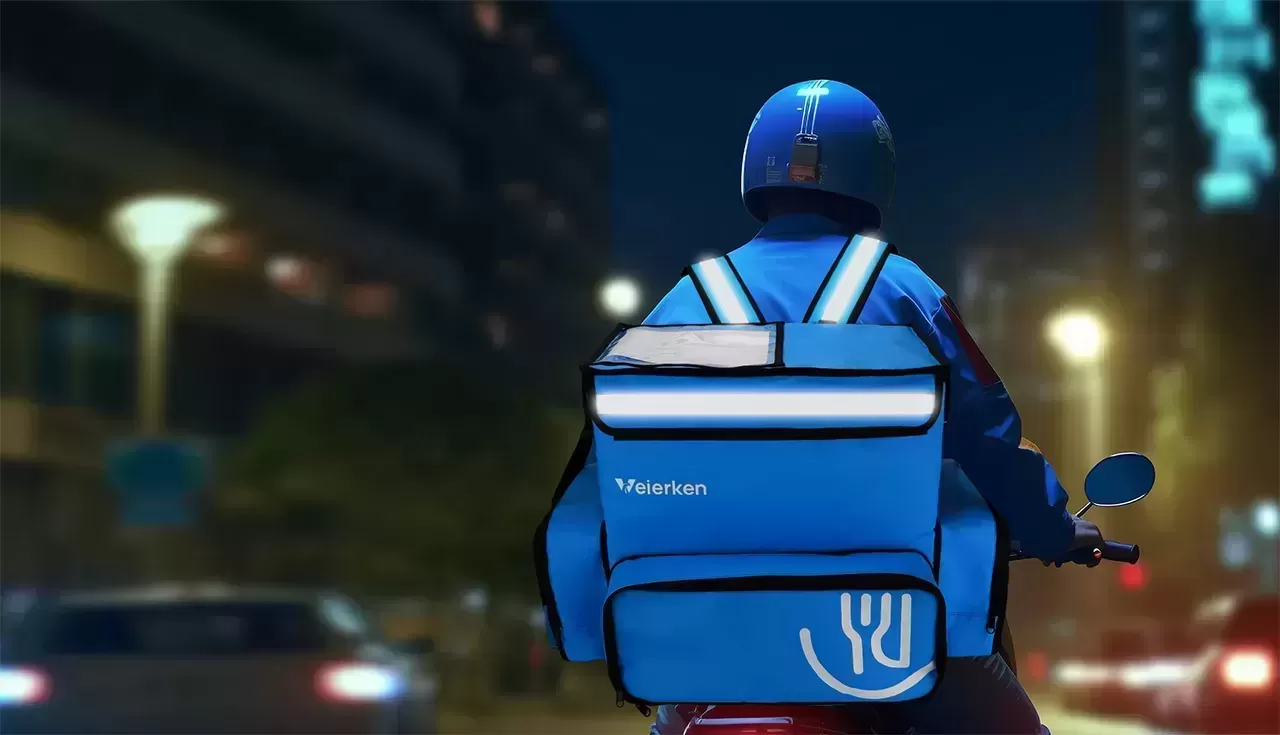
Food delivery is a demanding business. The delivery bag is not just a carrier; it is a critical touchpoint between your kitchen and your customer's dining table. If a bag fails, the food arrives cold, drinks spill, and riders suffer from unnecessary back strain.
When sourcing bulk bags, working with a professional restaurant delivery bag maker like weierken helps you address these practical challenges before production begins. Standard off-the-shelf bags rarely fit the exact needs of a busy fleet. Customization is often necessary to protect your food quality and your bottom line.
Here are five essential design features you should discuss with your manufacturing partner to ensure your investment pays off in daily operations.
1. Modular Internal Partitioning & Temperature Separation
A common mistake in delivery logistics is packing cold and hot items together. Placing a chilled soda next to a hot pizza ruins both items. When discussing your custom food delivery backpack design, ask about adjustable, insulated dividers.
Flexible interior layouts allow riders to adapt the bag's space for different order sizes. This prevents small orders from sliding around during transit.
Key Modular Features to Request:
Hook-and-Loop T-Dividers: Heavy-duty velcro strips allow riders to create custom compartments horizontally or vertically.
Insulated Thermal Barriers: Thick foam-filled boards lined with reflective foil prevent heat transfer between adjacent chambers.
Spill-Resistant Cup Holders: Integrated, collapsible loops or foam inserts keep beverage containers upright on bumpy roads.
By defining these spatial needs early, your restaurant delivery bag maker can source the right internal materials. Proper partitions reduce food damage, keeping customer satisfaction scores high.
2. Ergonomic Harness Systems & Vehicle Mounting Units
Rider fatigue directly impacts delivery times and staff retention. If your team delivers on foot or by bicycle, a heavy, poorly balanced bag causes physical strain. For motorized fleets, secure mounting is critical for road safety.
Your manufacturer should offer options that accommodate both carrying methods. The bag must remain stable, whether on a rider's back or strapped to a vehicle frame.
At weierken, we focus on balancing load distribution to make long shifts manageable for delivery personnel.
Ergonomic and Mounting Specifications:
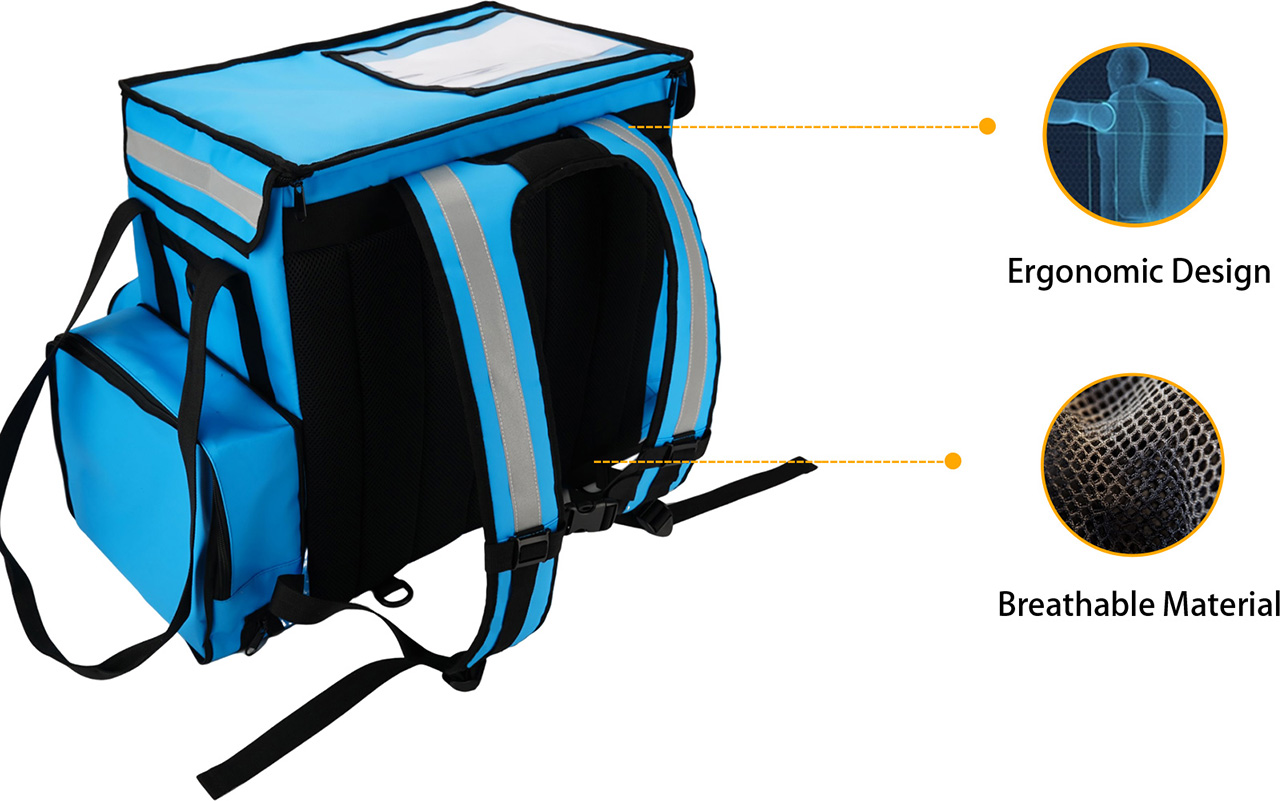
S-Curve Shoulder Straps: Contoured, padded straps distribute weight evenly across the shoulders rather than pulling on the neck.
3D Breathable Mesh Panels: Raised mesh padding on the back panel promotes airflow, keeping riders cool in hot weather.
Chest and Waist Buckles: Adjustable straps secure the bag close to the body, preventing shifting during sharp turns.
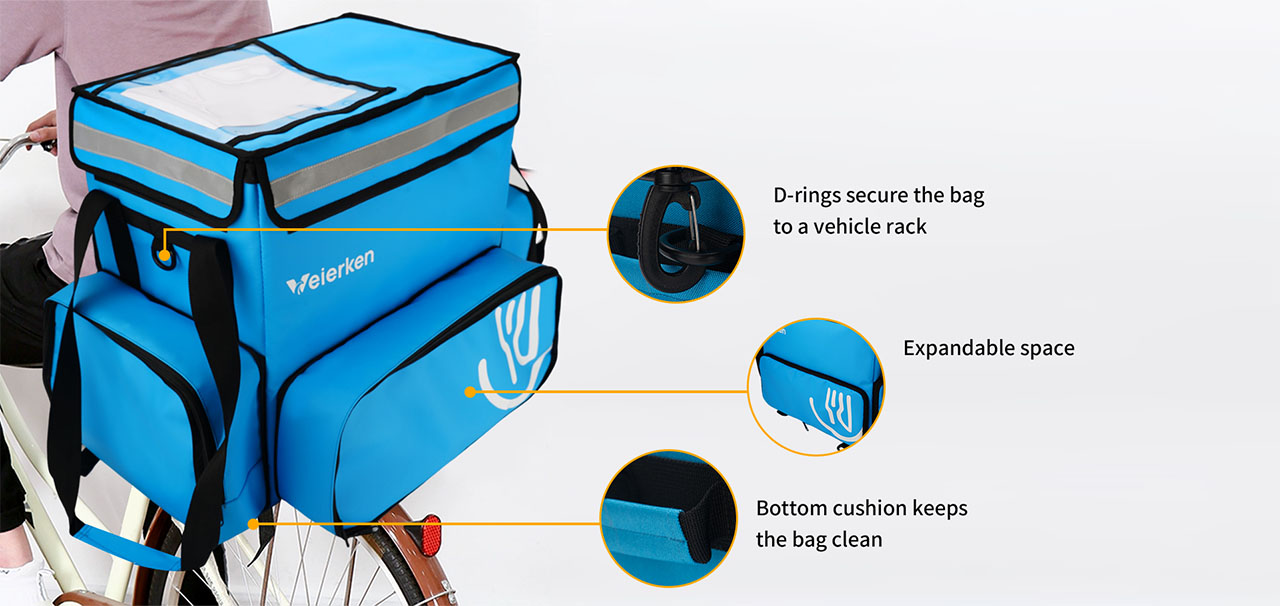
Motorcycle D-Rings and Straps: Heavy-duty metal D-rings sewn into the base allow easy integration with a motorcycle delivery box design or rack.
Discussing these ergonomic details ensures your bags are practical for daily, multi-hour use across your entire fleet.
3. Secure Closures & Quick-Access Mechanisms
Every second counts during a delivery run. A delivery rider might open and close a bag dozens of times a day. The closure system must be fast to operate, yet secure enough to prevent heat loss.
Different delivery models require different closure styles. High-volume, short-distance runs benefit from fast-opening options, while long-distance routes require maximum thermal sealing.
Choosing the Right Closure Design:
Heavy-Duty Two-Way Zippers: Look for large-gauge, water-resistant zippers (such as YKK or equivalent) with pull tabs that can be operated while wearing gloves.
Industrial Magnetic Closures: Excellent for fast-paced operations where zippers might wear out quickly. Magnets snap shut automatically.
Dual-Opening Access: Ask your insulated food delivery bag supplier about bags that open from both the top and the front. This lets riders retrieve items from the bottom without unpacking the entire bag.
A balanced mix of commercial zippers and magnetic flaps often provides the best compromise between thermal efficiency and speed of use.
4. All-Weather Safety & High-Visibility Materials
Delivery riders face unpredictable outdoor environments. Rain, snow, and low-light conditions present hazards. Your delivery bags should serve as protective gear for both the food and the rider.
High-quality exterior fabrics keep moisture out, while bright reflective elements keep your staff visible to motorists during evening deliveries.
All-Weather Protective Features:
Waterproof Tarpaulin or 500D PVC: These robust materials resist water penetration and are easy to wipe clean after exposure to road grime.
360-Degree Reflective Strips: High-grade retroreflective tape should be sewn onto the front, sides, and shoulder straps to ensure visibility from all angles.
Protective Rubber Feet: Molded plastic or rubber pads on the bottom of the bag prevent wear when placed on wet concrete or asphalt.
Incorporating these commercial delivery bag features protects your inventory from water damage and supports rider safety during bad weather.
5. Smart Technology Integration & Heating Elements
For premium food brands or long-distance catering, passive insulation may not be enough. Active heating systems are becoming more common in modern delivery fleets.
Discussing smart integrations with your restaurant delivery bag maker can help you stay ahead of competitors. These features require specialized wiring and battery compartments.
Manufacturers like weierken can integrate hardware options that maintain food temperatures for extended periods.
Smart Design Additions:
Carbon Fiber Heating Pads: Built-in heating elements that plug into a 12V motorcycle outlet or a portable power bank to actively warm the interior.
External Battery Pockets: Dedicated, weatherproof compartments to house external power banks safely away from food moisture.
External Order Sleeves: Transparent, waterproof PVC pockets on the exterior for quick receipt reading without opening the bag.
While these features increase initial production costs, they significantly extend your delivery radius and help maintain food quality over longer distances.
Comparing Delivery Bag Customization Options
To help you prepare for your meeting with a manufacturer, here is a quick comparison of standard versus customized design choices:
| Design Aspect | Standard Off-the-Shelf Bags | Custom-Engineered Bags |
|---|---|---|
| Insulation | Single-layer foam, basic foil lining. | Multi-layer EPE foam with dual thermal zones. |
| Mounting | Basic shoulder straps only. | Integrated D-rings, reinforced base plates, and vehicle straps. |
| Durability | Lightweight polyester, standard zippers. | Waterproof PVC tarpaulin, reinforced stitching, and industrial zippers. |
| Safety | Minimal reflective piping. | 360-degree high-visibility tape and bright brand coloring. |
Frequently Asked Questions
What is the typical lifespan of a custom commercial delivery bag?
A well-constructed bag made from 500D PVC or heavy-duty tarpaulin typically lasts between 12 to 18 months under daily commercial use. Lifespan depends on care, cleaning frequency, and weather exposure.
Can a restaurant delivery bag maker match our brand colors exactly?
Yes. Manufacturers can source materials matching specific Pantone colors for bulk orders. This ensures your delivery fleet aligns with your brand identity.
How do I clean and sanitize these bags between shifts?
Bags designed with smooth PVC or TPU interiors can be wiped down with mild sanitizer spray and a damp cloth. Avoid submerging bags in water or using harsh bleach solutions, which can degrade the thermal lining.
What is the minimum order quantity (MOQ) for custom bag designs?
MOQs vary depending on the complexity of the design and material availability. Most commercial manufacturers require a minimum of 100 to 500 units for fully customized runs, though smaller sample runs can sometimes be arranged.
Is active heating safe for transport in rain?
Yes, provided the electrical components, connections, and power banks are housed in designated, water-resistant compartments. Always discuss waterproof certifications for electrical parts with your supplier.
Ready to Build Your Custom Delivery Fleet?
Choosing the right design features saves operational costs and keeps your food tasting as intended. Working with a dedicated partner ensures your fleet is equipped with durable, practical tools.
At weierken, we assist businesses in designing custom thermal transport solutions tailored to their delivery models. We help you balance insulation, rider comfort, and brand visibility.
Contact our design team today to request a quote or discuss your project specifications.
Request a Custom Bag Design Consultation