
Fabric tears and split seams account for more than 40% of product returns in the technical bag industry. When a shoulder strap rips on a remote trail or a seam bursts during a delivery run, the brand takes a direct hit in warranty claims and negative reviews.
Heading into 2026, outdoor enthusiasts, tactical operators, and daily commuters all demand the same thing: lighter gear that refuses to break. Meeting this demand requires more than basic high-denier polyester. It demands technical textiles that resist sharp punctures, harsh abrasion, and heavy dynamic stress.
At Weierken, we work directly with product managers and sourcing directors to solve these structural weaknesses. This technical guide breaks down five key fabric breakthroughs that set the standard for high-performance bag design in 2026.
1. UHMWPE Grid-Stop Fabrics
Ultra-High-Molecular-Weight Polyethylene (UHMWPE)—commonly known under trade names like Dyneema or Spectra—remains the gold standard for strength-to-weight performance. Instead of constructing an entire pack out of solid UHMWPE, modern fabric mills weave a grid of UHMWPE fibers into a lightweight nylon or polyester base.
This grid-stop structure stops small punctures from spreading into catastrophic tears. If a sharp rock punches through the base nylon, the tear immediately hits the high-tensile UHMWPE thread and stops.
Key B2B Advantages:
Maximum Tensile Strength: Offers up to 15 times the strength of steel per weight unit.
Weight Reduction: Allows brands to reduce total pack weight by 20% to 35% without sacrificing tear limits.
Ideal Applications: Ultra-light alpine backpacks, technical hiking packs, and cut-resistant anti-theft travel gear.
As an experienced UHMWPE ripstop bag factory partner, Weierken helps brands select the right grid density (e.g., 210D Ripstop with 200D UHMWPE reinforcement) to match specific weight and budget targets.
2. GRS-Certified High-Tenacity Recycled Ripstop Nylon
Sustainability targets are no longer optional for major bag brands. However, early recycled fabrics often lacked the tensile strength of virgin materials. In 2026, new spinning techniques allow us to utilize 100% GRS (Global Recycled Standard) certified Recycled Nylon 6,6 yarn without dropping tear resistance.
By pairing high-tenacity recycled fibers with a 3D diamond grid weave, mills produce textiles that withstand severe pulling forces while meeting corporate ESG standards.
Key B2B Advantages:
ESG Compliance: Fully traceable supply chain with clear GRS certification documentation for retail compliance.
Enhanced Wear Properties: Diamond ripstop geometry distributes stress multidirectionally rather than along a single axis.
Ideal Applications: Premium eco-friendly outdoor packs, high-end commuter backpacks, and professional cycling gear.
Using these recycled textiles allows brands to capture sustainability-minded buyers while keeping warranty claim rates below 0.5%.
3. TPU Laminated Heavy-Duty Textiles
Traditional PU (Polyurethane) coatings degrade, flake, and lose waterproof integrity over time. Heavy-duty TPU (Thermoplastic Polyurethane) lamination fuses a thick, flexible membrane directly onto high-density base fabrics like 840D or 1680D nylon.
This lamination creates a composite fabric that resists sharp punctures, chemical exposure, and constant mechanical flexing. More importantly, it allows manufacturers to replace sewn seams with high-frequency (HF) welded seams.
Key B2B Advantages:
100% Waterproof & Tear Resistant: Eliminates needle holes that typically act as initial tear points.
Abrasion Resistance: Smooth exterior surface slides over rough asphalt and jagged gravel without fraying.
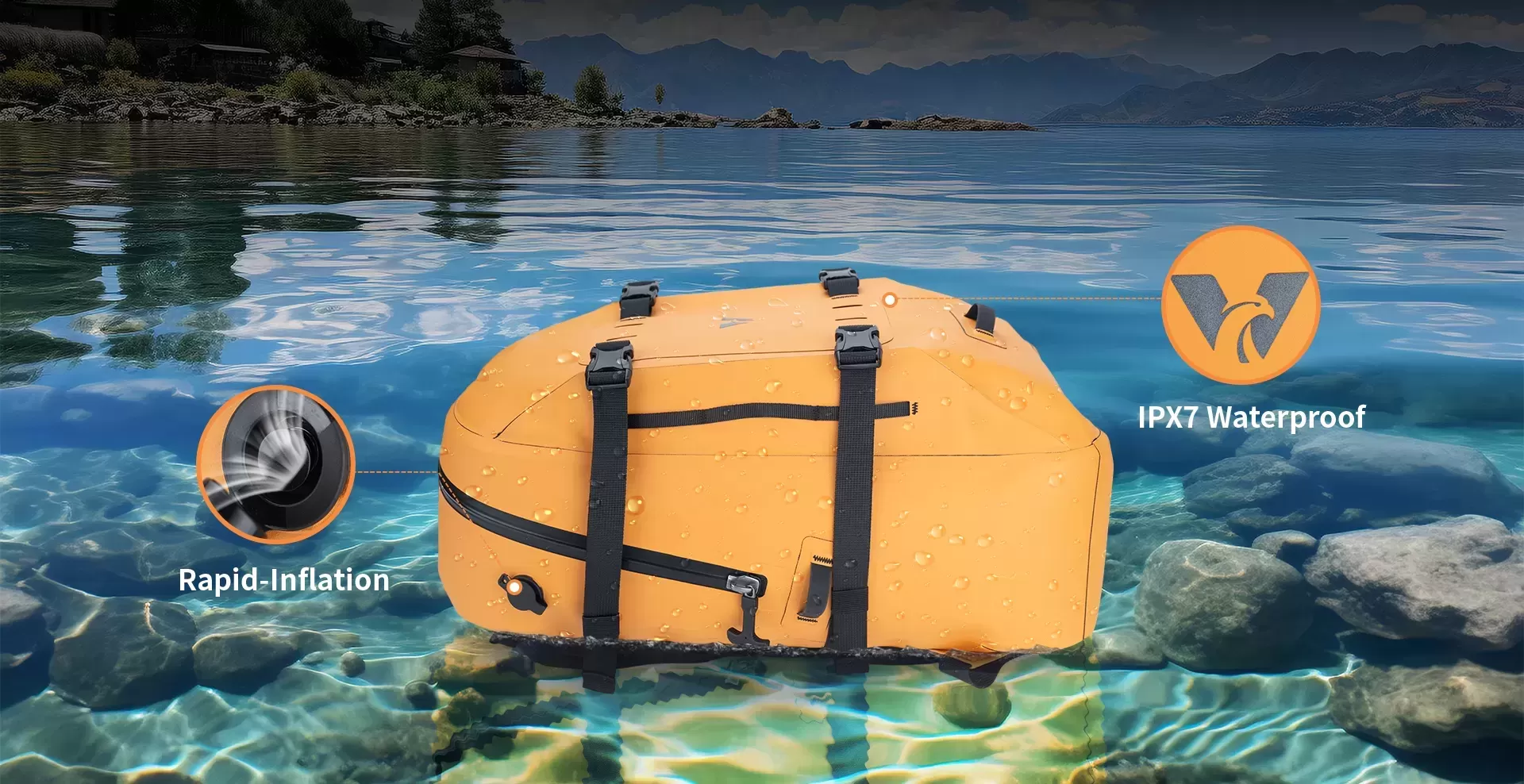
Ideal Applications: Commercial delivery bags, dry sacks, motorcycle saddlebags, and extreme-weather gear.
When engineering an odm tear proof bag for extreme wet conditions, TPU lamination delivers structural strength that stitched fabrics simply cannot match.
4. Self-Healing Nano-Coated Fabrics
A common headache for lightweight travel gear is puncture damage from keys, needles, or sharp thorns. Even a tiny hole can spread under heavy load. Self-healing textiles solve this issue through an advanced nano-coating technology.
The fabric utilizes a high-friction double-sided coating. When a thin object pierces the weave, it pushes the threads aside rather than breaking them. By rubbing the damaged area with your fingers for a few seconds, the generated friction heat allows the fibers to slide back into their original position, sealing the hole.
Key B2B Advantages:
Unique Retail Hook: Gives sales teams a compelling, hands-on product demonstration feature.
Extended Product Lifecycle: Prevents micro-punctures from expanding into full fabric tears under load.
Ideal Applications: Packable daypacks, ultralight rain covers, and minimalist urban bags.
This technology gives lightweight travel brands a sharp competitive edge in saturated retail spaces.
5. Aramid (Kevlar) Hybrid Weaves
For tactical, military, and industrial gear, standard nylon falls short against sharp metal edges, concrete surfaces, and blade threats. Aramid fibers, such as Kevlar, woven directly into heavy polyester or nylon matrices provide maximum structural defense.
These hybrid textiles absorb extreme friction and resist cutting, making them ideal for heavy-duty applications where bag failure is not an option.
Key B2B Advantages:
Extreme Cut & Slash Resistance: Protects internal contents against accidental cuts and deliberate theft attempts.
Thermal Stability: Resists melting or weakening when exposed to high friction or warm surfaces (such as motorcycle exhausts).
Ideal Applications: Military backpacks, law enforcement kit bags, tactical tool holsters, and riding gear.
As a heavy duty ODM bag factory, we recommend aramid blends specifically for wear zones like bag bottoms, tool pockets, and reinforced side panels.
ODM Engineering & Craftsmanship: Beyond the Fabric
Buying top-tier fabric is only half the battle. If a factory uses standard needles, low-tensile thread, or poor seam geometry, even a 1000D Kevlar fabric will fail at the stress points.
To turn raw material into a reliable product, Weierken applies precise manufacturing protocols during the production stage:
High-Density Bartacking
Stress points—such as shoulder strap attachments, top handles, and webbing loops—must feature dense bartack stitching. We utilize automated bartacking machines to ensure exact stitch counts and tension on every production run.
German Needles and Bonded Nylon Threads
Standard sewing needles create oversized holes in coated fabrics, weakening the surrounding material. We use specialized Groz-Beckert needles paired with heavy-duty bonded nylon or polyester threads. Bonded threads do not fray or unravel under intense dynamic load.
RF and Hot-Air Welding
For TPU-laminated fabrics, our production lines utilize High-Frequency (HF) welding units. Thermal bonding fuses fabric layers together at a molecular level, creating a seam that is often stronger than the surrounding base material.
Testing Standards and Quality Control with Weierken
Brands cannot afford to guess fabric performance. We conduct rigorous laboratory testing on incoming textile batches before cutting a single panel of fabric.
Our quality control teams rely on standardized international testing protocols:
ASTM D1424 (Elmendorf Tear Test): Measures the force required to propagate a single-rip tear in woven fabrics using a falling-pendulum apparatus.
ISO 13937: Evaluates tear properties across warp and weft directions under controlled tension.
ASTM D5034 (Grab Test): Determines the breaking force and elongation of heavy technical textiles.
With over 20 years of manufacturing expertise, Weierken operates 80,000 square meters of production space across China and Cambodia. This dual-base manufacturing strategy allows global brands to optimize shipping schedules, manage tariff exposure, and scale mass production without compromising product quality.
Build Your Next High-Performance Pack Line
Creating a successful product line for 2026 requires matching advanced technical textiles with precise manufacturing craftsmanship. A well-built odm tear proof bag lowers warranty claims, strengthens brand reputation, and preserves profit margins.
Whether you need a custom durable backpack supplier or an experienced technical factory to bring your design specs to life, Weierken delivers the engineering support and production scale your brand requires.
Ready to elevate your gear line? Contact the expert team at Weierken today to request fabric swatches, technical spec sheets, or a competitive production quote for your 2026 designs.
Frequently Asked Questions (FAQ)
1. What is the typical lead time for manufacturing a custom ODM tear proof bag?
Sample development and fabric sourcing generally take 2 to 3 weeks. Once samples and material specifications are approved, mass production typically takes 35 to 45 days, depending on material availability and order volume.
2. How do you verify fabric tear strength before full-scale manufacturing starts?
We test raw materials using standardized testing methods, including the ASTM D1424 Elmendorf Tear Test and ASTM D5034 Grab Test. We supply detailed lab testing reports for your review prior to mass cutting.
3. Can GRS-certified recycled fabrics achieve the same durability as virgin nylon?
Yes. High-tenacity Recycled Nylon 6,6 utilizes refined polymer spinning techniques that deliver tensile strength and abrasion resistance comparable to virgin nylon while meeting full GRS sustainability standards.
4. Why does Weierken operate manufacturing bases in both China and Cambodia?
Our dual-facility structure offers flexibility. Our China facility excels at complex R&D, rapid sampling, and specialized material sourcing. Our Cambodia plant provides scalable mass production with favorable tariff structures for shipments entering US and European markets.
5. What is the Minimum Order Quantity (MOQ) for custom high-tensile fabric production?
Standard fabric options usually require an MOQ of 500 to 1,000 units per style. For custom-dyed or specialty textiles (such as custom UHMWPE weaves), MOQs typically start at 1,000 to 2,000 units depending on raw material requirements.