Shipping fresh or frozen seafood requires more than just a box. It demands a high-performance thermal barrier that guarantees temperature stability, structural integrity, and food safety. When you request a price estimate from a seafood thermal bag fabricator, you might notice significant variations in cost. These differences are rarely arbitrary. They reflect specific choices in materials, engineering, and compliance that directly impact the safety of your perishable cargo.
Understanding these variables helps you make informed purchasing decisions. It allows you to balance budget constraints against the risk of spoilage. At weierken, we believe in transparency. We want our clients to understand exactly what they are paying for and why certain specifications carry a higher price tag. This guide breaks down the five critical factors that determine the cost of your thermal packaging.
1. Insulation Material Grades and Technical Specifications
The primary function of any cooler bag is temperature retention. However, not all insulation is created equal. The type, density, and thickness of the core material are the most significant cost drivers in your quote.
Core Insulation Choices
A standard seafood thermal bag fabricator will typically offer a range of insulation cores.
- PE Foam (EPE): This is the industry standard for short-haul transport. It is cost-effective and flexible. However, to maintain frozen temperatures for longer periods, the thickness must increase significantly, which adds bulk.
- EVA Foam: Slightly more expensive than PE, EVA offers better durability and structural support, often used in reusable bags.
- High-End Solutions (VIP & PCM): For high-value seafood requiring 48-72 hours of temperature control, manufacturers may suggest Vacuum Insulation Panels (VIP) or Phase Change Materials (PCM). These technologies offer superior thermal efficiency but come with a much higher raw material cost compared to standard foams.
Reflection and Sealing Technology
Insulation thickness is only half the battle. The ability to reflect radiant heat is equally important.
- Aluminum Foil Quality: High-grade aluminum composite films resist tearing and reflect heat better than cheap, metalized plastics.
- Thermal Bridging: A professional seafood thermal bag fabricator pays close attention to the edges. Preventing “thermal bridges” (where heat bypasses insulation) requires complex manufacturing techniques. This includes offsetting seams or using continuous insulation layers, which increases labor time and cost.
2. Material Safety, Waterproofing, and Durability Requirements
Seafood is a unique cargo. It is wet, heavy, and susceptible to bacterial growth. Consequently, the materials used must be far more robust than those used for delivering pizza or dry goods.
Food-Grade Inner Linings
Direct contact with food demands strict compliance. The inner layer of your bag must meet FDA (USA), EU 10/2011, or GB 4806 standards.
- Certified Materials: Sourcing certified food-grade films costs more than using general industrial plastics.
- Safety Assurance: Using non-compliant materials risks chemical migration into the seafood, leading to potential recalls and legal issues. A reputable seafood thermal bag fabricator will never compromise on this, even if it raises the base price.
Waterproof and Leak-Proof Construction
Seafood packages often contain melting ice or saline water. A standard stitched bag will leak, damaging delivery vehicles and other cargo.
- Welding Technology: To ensure a 100% waterproof seal, manufacturers use High-Frequency (HF) welding or heat sealing instead of sewing needles. This process creates a watertight bond between TPU or PVC coated fabrics.
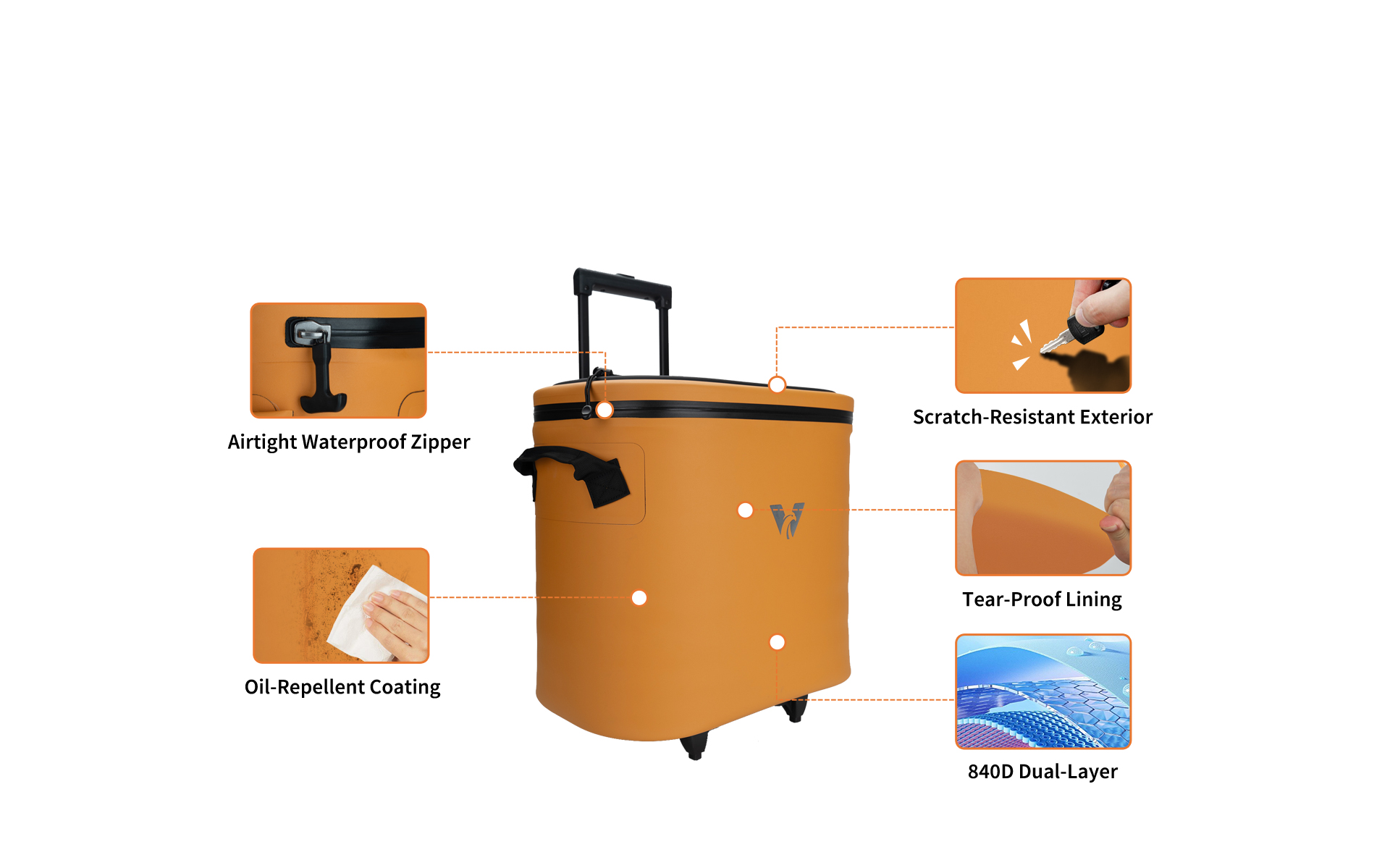
- Waterproof Zippers: Standard zippers are permeable. Airtight and watertight zippers are specialized components that significantly add to the unit cost but are essential for a custom insulated seafood bag.
Corrosion Resistance and Sanitation
Seawater and fish blood are corrosive. The interior material must resist degradation from salts and fats. Furthermore, the lining needs to be smooth and easy to wipe down to prevent bacterial buildup. Specialized coatings that resist hydrolysis and abrasion add to the material expense but extend the lifespan of reusable bags.
3. Structural Design and Functional Adaptability
Designing for seafood is an engineering challenge. The bag must hold substantial weight without tearing and may need specific features to manage liquid runoff.
Load Bearing and Reinforcement
A bag filled with fish and ice is incredibly heavy. A cheap bag will fail at the handles or the bottom seam.
- Reinforced Stitching: Your quote often includes costs for “bar-tacking” (reinforced stitching) at stress points.
- Bottom Support: Inserting rigid boards or double-layering the bottom panel prevents sagging and bursting.
- Heavy-Duty Webbing: Handles must go all the way around the bag (box stitching) rather than just being attached to the top edge. This uses more webbing material and labor.
Drainage and Sealing Systems
Some logistics models require the ability to drain melted ice water without opening the main seal.
- Drainage Valves: Installing a waterproof valve adds component costs and assembly steps.
- Roll-Top Closures: For maximum thermal sealing, a roll-top design (like a dry bag) is often superior to zippers, but it requires more fabric and precise manufacturing.
Customization and Sizing
Standard sizes are cheaper because molds and cutting dies already exist. However, seafood often ships in specific Styrofoam boxes or plastic crates.
- Custom Dimensions: Tailoring the bag to fit a specific crate ensures no wasted space and better thermal performance. Brands like weierken excel at this type of customization.
- Add-ons: Features like document pockets for shipping manifests, internal dividers, or color-coded handles for logistics sorting all contribute to the final price.
4. Compliance Certification and Testing Costs
When you work with a professional seafood thermal bag fabricator, you are paying for verification. You need proof that the bag performs as promised and meets legal standards.
Mandatory and Voluntary Certifications
- Environmental Compliance: Exporting to Europe often requires REACH or RoHS compliance to prove the absence of harmful chemicals like heavy metals or phthalates.
- Social Responsibility: Large buyers often demand BSCI or Sedex audits to ensure ethical labor practices. The cost of maintaining these certifications is indirectly reflected in the manufacturing overhead.
Performance Testing Expenses
How do you know the bag keeps fish frozen for 24 hours? You test it.
- Thermal Chamber Testing: Running validation tests (such as ASTM D3103) in a climate-controlled chamber takes time and equipment.
- Physical Stress Tests: Drop tests, vibration tests, and handle jerk tests ensure the physical durability of the bag.
- Lab Fees: While some manufacturers have internal labs, third-party verification adds a distinct line item to the development cost, which is usually amortized over the order quantity.
5. Order Scale, Supply Chain, and Manufacturing Models
The final factors influencing your quote are commercial rather than technical. The economics of manufacturing rely heavily on scale and raw material markets.
MOQ and Customization Levels
- Economy of Scale: A seafood thermal bag fabricator operates more efficiently with larger runs. Setting up production lines, mixing chemical dyes, and calibrating welding machines takes time. High MOQs (Minimum Order Quantities) lower the unit price.
- Startup Costs: For OEM/ODM projects, there are one-time costs for printing plates (for your logo) and cutting molds. If you order 500 bags, these costs are significant per unit. If you order 50,000, they are negligible.
Raw Material Volatility
Many thermal materials, specifically PE and EVA foams, are petrochemical derivatives. Their prices fluctuate with the global oil market. A quote valid today might change next month if crude oil prices spike. Additionally, logistics for importing specialized barrier films can impact the final cost.
The Expertise Premium
There is a difference between a general bag maker and a specialized seafood thermal bag fabricator.
- Risk Reduction: An experienced manufacturer anticipates failure points that a generalist would miss. They know how to prevent leaking seams and how to optimize insulation thickness.
- Quality Control: Strict QC processes reduce the rate of defective products. While the upfront unit price might be slightly higher, the “Total Cost of Ownership” is lower because you face fewer product losses and customer claims.
Summary: Value Over Price
When analyzing a quote, it is vital to look beyond the bottom line. A lower price often means thinner insulation, non-food-grade linings, or weak handles that snap under load. In the seafood industry, product spoilage costs far more than the difference in packaging price.
At weierken, we help you navigate these trade-offs. We provide detailed specifications so you know exactly how your budget is being utilized to protect your product. By balancing thermal performance with structural durability, we ensure your seafood arrives as fresh as when it left the water.
If you are looking for a partner who understands the intricacies of the cold chain, we are ready to assist.
Ready to secure your seafood supply chain?
Contact our engineering team today for a consultation and a detailed quote tailored to your shipping requirements.
Frequently Asked Questions (FAQ)
1. Why is the quote from a specialized seafood thermal bag fabricator higher than a general bag supplier?
A specialized seafood thermal bag fabricator uses specific materials that resist saltwater corrosion, comply with food safety standards (FDA/EU), and utilize waterproof welding technologies. General bag suppliers often use standard stitching and non-food-grade materials, which can lead to leakage and contamination, risking your expensive seafood product.
2. Can I use standard PE foam for frozen seafood transport?
It depends on the duration of transit. Standard PE foam is excellent for short distances or cool storage. However, for frozen seafood requiring 24-48 hours of protection, a professional fabricator may recommend high-density EPE, thicker layers, or even combining foam with reflective aluminum layers to ensure the temperature stays below critical limits.
3. What is the difference between sewing and high-frequency welding in thermal bags?
Sewing involves needles puncturing the fabric to create seams, which creates thousands of tiny holes where water can leak out and air can enter. High-Frequency (HF) welding fuses the thermoplastic materials (like TPU or PVC) together at a molecular level. This creates a completely airtight and watertight bond, which is essential for wet seafood environments.
4. Does adding a custom logo affect the cost of the thermal bags?
Yes. Adding a logo involves printing costs. The price depends on the number of colors in your design and the printing method used (screen printing vs. digital transfer). Additionally, there is usually a one-time setup fee for creating the printing plates or screens, which is amortized over the total quantity of your order.
5. How do I determine the right insulation thickness for my seafood shipments?
You don’t have to guess. A reliable seafood thermal bag fabricator can help you calculate this based on your payload mass, the amount of coolant (ice/gel packs) you use, the ambient temperature of the shipping route, and the required duration. We can also perform thermal simulation testing to validate the thickness before mass production.