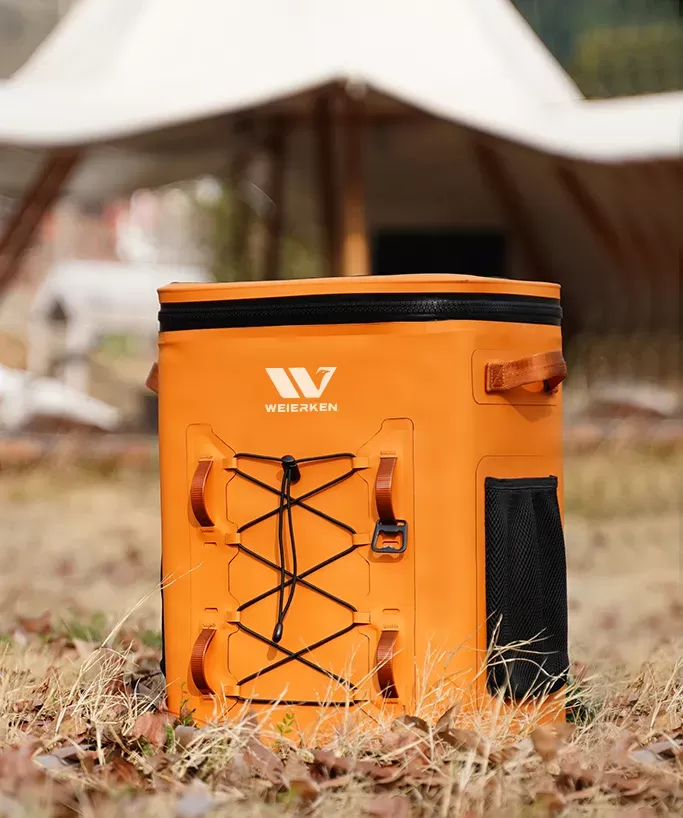

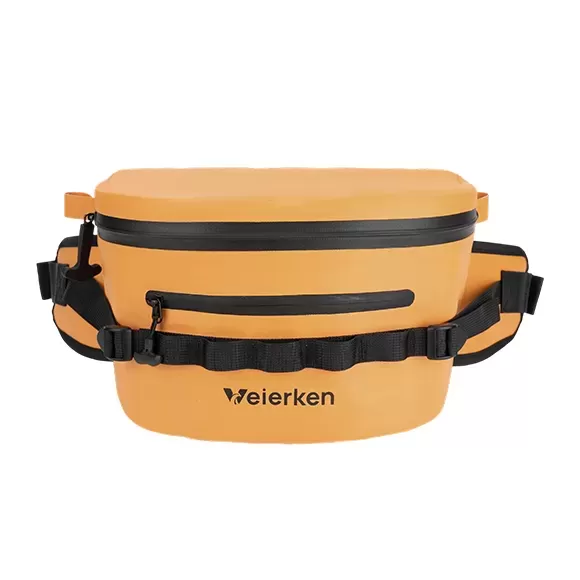
Fishing gear has one of the highest return rates in the outdoor industry. Not because the "functions" are missing, but because the details fail. Zippers freeze. Fabrics peel. Fish odors soak into the lining. Straps snap mid-cast.
I have spent over a decade in outdoor supply chain management. I have seen brand owners focus only on price and lead time when sourcing custom fish cooler bag orders. Then, after-sales costs eat their profits alive. I always tell them: "The real quality of a fishing bag hides in salt spray tests, the foam core, and the drain hole. Not in the sample room lighting."
Today, I break down five core features that truly determine product lifespan and repeat orders. Take this checklist to your factory audit. Or add these as technical clauses in your next contract.
1. Salt Spray Resistance: The First Line of Defense
Saltwater, fish blood, and freshwater mix create a corrosive cocktail. It destroys ordinary bags faster than any hiking or city-use scenario. Many brands receive beautiful first samples, only to face flood of complaints three months later. Zippers lock up. Buckles crumble. White powder (hydrolysis) appears along the seams.
This isn't a manufacturing defect. It's a design flaw that ignored the marine environment.
Zipper and Hardware Salt Spray Standards for OEM Fishing Bags
Standard coated zippers start rusting and jamming after just 72 hours in salt spray conditions. A durable custom fishing accessory bag requires waterproof zippers. The zipper head and puller must pass ASTM B117 salt spray testing for a minimum of 96 hours. The industry baseline is 72 hours, but we set 96 hours because one coastal season exposes gear far longer than you think.
Regular nylon or plastic buckles quickly become brittle under salt attack and cold temperatures. We specify impact-resistant POM (polyoxymethylene) that survives repeated bending at -20°C without cracking.
Thread is where seasoned buyers look first. Cotton-core polyester thread rots in seawater. It easily snaps between your fingers. High-tenacity bonded nylon or polyester threads provide hydrolysis resistance. Seam strength stays consistent over time.
Weierken's approach: We send every batch of zippers and buckles to a CNAS-accredited lab for a 96-hour salt spray test, followed by 5,000 open-close cycles. One rust spot or jam, and the whole batch goes back. I have visited too many factories that write "salt spray testing" in their PPT but never actually run it. Our lab data is our promise to clients.
2. Cold Retention and Food-Safe Liners: Keeping the Catch Fresh
Anglers invest in your bag for one core reason: to bring home ice-fresh fish after hours on the water. Poor cold retention means soft, smelly flesh. Negative reviews will inevitably read "worse than a foam box." On top of that, the liner touches fish that people eat. Food safety is a legal baseline.
Insulation Core Density and Thickness for Cooling Duration
Low-density EPE foam (used by many budget factories) fails after just 4 to 6 hours at room temperature. High-density PU integral foam, with a minimum thickness of 20mm and density ≥40kg/m³, maintains ice-cold conditions for 8 to 12 hours even in 30°C+ heat.
Here is a common industry trap: Some manufacturers use scrap EPE pieces to mimic whole-sheet foam. You can only spot this by cutting the core open. We recommend adding a "core sample retention" clause in your contract. This ensures transparency and accountability.
Food-Grade Liners and Sealed Construction for Freshness
The inner lining must be food-grade PEVA or TPU. It should be BPA-free and pass FDA or EU food contact standards. If this fails, the fish absorbs plastic odors. A "plastic-tasting fish" PR crisis is something you do not want.
The lid requires a continuous sealing gasket and an inner insulation flap. Without these, cold air escapes, cutting cooling efficiency by nearly 30%.
The bottom drain hole is a thoughtful detail many brands overlook. Melted ice water pools inside if not drained, softening the fish and adding unnecessary weight. Our design uses a rotating sealing drain plug—open it to drain, twist it closed to keep things watertight.
Weierken's approach: Every insulation core batch spends 8 hours in a 35°C heat chamber. If the cooling curve falls short, the entire batch is scrapped. No compromise. Our food-grade liners are third-party tested for REACH compliance (all 181 substances). This costs more upfront, but it saves a fortune in after-sales headaches. The math works.
3. Abrasion-Resistant Fabrics and Load-Carrying Comfort
Fishing bags never see flat, clean store shelves. They get dragged across boat decks, scraped against sharp reef rocks, snagged on bushes, and tossed onto sandy beaches. Weak fabrics mean "hole photos" start arriving in your inbox within two months of shipping.
Denier Rating and Bottom Reinforcement Standards for OEM Bags
Outer fabric must be at least 840D high-tenacity nylon or 1000D PVC-coated mesh. Tear strength should meet ≥250N (ASTM D2261).
Fabric needs to pass 500 hours of QUV accelerated weathering. Ask yourself: how many hours does your bag sit on a boat deck under direct sunlight every day? Now multiply that by three months.
Reinforced double-layer bottoms with anti-slip pads are non-negotiable. In our returns analysis, 70% of all damages occur at the bottom or bottom corners. That padding isn't decorative—it protects your profit margin.
Backpack System and Quick-Access Design for Fishing Bags
Fishing bags typically carry 10 to 15kg of load. The shoulder straps must feature S-shaped ergonomics and thick, breathable mesh back padding. Otherwise, anglers endure red, aching shoulders after just 30 minutes of walking.
A sternum strap secures the bag and stops annoying sway. On slippery rocks or wet shorelines, bag movement not only tires you out but also increases the risk of falls.
Side or top quick-open openings let anglers grab pliers or phones without removing the bag. This saves critical seconds when a fish strikes.
Weierken's approach: For every new design, we have factory workers load 15kg of sand into the bag and walk two kilometers around the factory grounds. No shoulder pain, no wobbling—only then does it pass. You cannot measure comfort with a sensor, but the human body knows.
4. Dry-Wet Separation and Smart Storage Zones
The biggest functional contradiction in a fishing bag is the coexistence of wet and dry items. Wet fish, ice, and bait sit alongside dry phones, car keys, wallets, spare hooks, and sunscreen. Mix them together, and you get water-damaged electronics, bait-scented keys, and rusted metal. That terrible experience happens only once—and the user never buys from your brand again.
Waterproof Compartments and Tool Organizer Layouts in OEM Bags
The main compartment should have a wide opening for easy loading of whole fish and ice packs. The interior surface must be smooth for quick cleaning.
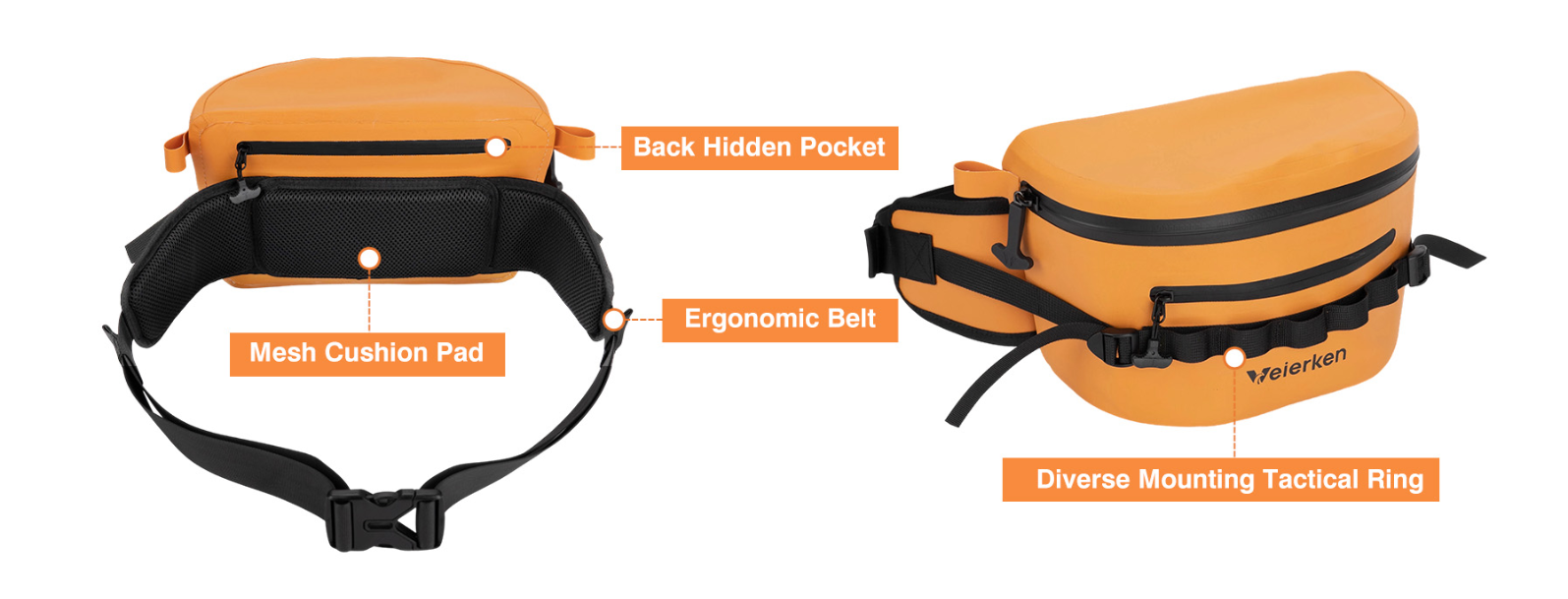
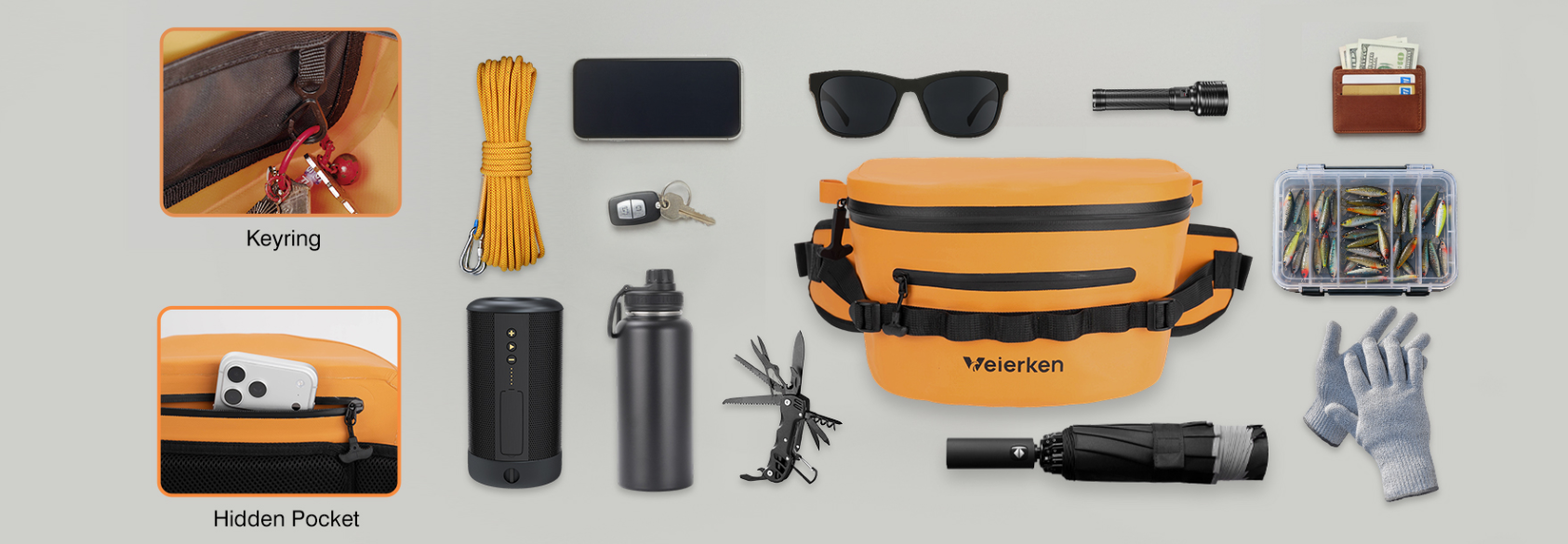
A fully waterproof independent pocket sits on the front or top, secured with a waterproof zipper. This pocket protects phones, keys, and wallets. Even if the main chamber leaks, this compartment stays bone-dry.
Mesh side pockets handle wet bait, landing nets, or water bottles. They allow airflow and water drainage, preventing foul odors from building up.
Front tool organizer panels feature multiple slip pockets for pliers, clippers, lighters, and sunscreen. These small, high-use items stay accessible without digging through the main compartment.
External attachment points (D-rings or MOLLE webbing) let anglers clip on nets, gloves, or extra water bottles.
Weierken's approach: We run a "zone logic audit" during the structural design phase. We simulate the angler's full journey—from leaving home to returning—and ensure every storage zone serves a distinct purpose without overlap. Planning this upfront costs a fraction of fixing a missing pocket after production.
5. Brand Logo Detailing and Compliance Certifications
A fishing bag is a functional tool, but for your brand, it is also a moving billboard. Every appearance on a boat, at the shore, in a pickup truck, or in a social media post communicates your brand's quality. A reliable OEM partner should help you solidify that soft value—not just stamp your logo on and call it done.
Logo Techniques: Screen Printing, Embroidery, and Heat Transfer
Screen printing offers low cost and works well for large color blocks—just check adhesion on PVC or TPU coatings.
Heat transfer handles fine details and gradients, though it wears faster than embroidery under rough use.
Embroidery delivers a premium 3D look with high durability, making it ideal for woven labels or mesh fabrics, but avoid overly dense patterns.
Hot stamping (foil) or laser engraving works best for high-end collections or minimalist logos, providing a metallic finish or permanent etched marking.
We recommend specific techniques based on fabric type and usage scenarios, rather than simply executing whatever the client asks for. The wrong technique will make your logo fade into obscurity after just two months of sea sun exposure. Brand recognition hits zero.
Export Compliance: BSCI, GRS, REACH Certifications
Major international fishing retailers and online platforms now enforce strict supply chain compliance. Holding BSCI, GRS, REACH, SEDEX, and ISO 9001 certifications is no longer a bonus—it is a baseline requirement for shelf access.
GRS certification allows you to use rPET recycled fabrics and display eco-labels.
BSCI and SEDEX are mandatory for European retailers conducting factory audits.
REACH ensures all chemical substances remain within safety limits.
Weierken's approach: We go beyond just providing certificate copies. We supply full material traceability reports and estimated carbon footprints. This gives your brand genuine, data-backed stories for ESG communications—not just slogans. From eco-hang tags to biodegradable packaging and recycled content labels, we handle the details so your brand speaks with authenticity.
Conclusion: Five Features, One Complete Package
A truly durable custom fish cooler bag must simultaneously deliver salt spray resistance, reliable cold retention, rugged fabric and carrying comfort, intelligent dry-wet organization, and strong brand detailing. Cutting corners on any one feature just to win on price will cost you far more in returns and reputation.
Weierken has specialized in outdoor and fishing bags for nearly two decades. We partner with over 2,000 brands worldwide. Our production network includes three self-owned factories across China and Cambodia, spanning 80,000+ square meters, with 3,000+ skilled workers. Our CNAS-accredited lab and international certifications back every order. We embed these five features into our "Quality Standard Operating Procedure" for every fishing bag project—they are never optional add-ons.
If you are developing a fishing product line or searching for a long-term OEM partner, I invite you to reach out. We will begin with a simple Product Requirement Checklist and walk through every detail together. That way, after your shipment leaves the dock, you spend your time growing your business—not answering complaint calls.
Frequently Asked Questions
Q1: What is the minimum order quantity (MOQ) for custom fishing
accessory bags from Weierken?
A1: Our MOQ typically starts at 500
pieces per design, but we can be flexible for initial trial orders or new brand
collaborations. We discuss your sales forecast and adjust the production plan to
balance cost-efficiency and inventory risk. Contact us with your specific
volume, and we will work out a sensible arrangement.
Q2: Can you match a specific Pantone color for our brand logo on the
fishing cooler bag?
A2: Yes. We match any Pantone color for both
fabric dyeing and logo applications. We provide lab dips and physical color
swatches for your approval before mass production. Our color management system
ensures batch-to-batch consistency, so your brand identity remains uniform
across all production runs.
Q3: How long does the entire sample development and production cycle
take?
A3: For a standard custom fish cooler bag, sample development
takes 15 to 20 days. Production lead time ranges from 30 to 45 days after sample
approval, depending on order size and material availability. We offer
accelerated timelines for urgent projects—just let us know your required
delivery date, and we will map out a feasible schedule.
Q4: Does Weierken offer design assistance if we only have a concept
sketch?
A4: Absolutely. Our in-house design team helps translate
rough sketches or mood boards into detailed technical drawings, 3D renderings,
and production-ready specifications. We guide you on material selection,
construction methods, and functional improvements. We treat your concept as our
own, refining it until it is both manufacturable and market-ready.
Q5: What warranties or after-sales support do you provide for custom
fishing accessory bags?
A5: We offer a one-year manufacturing
warranty covering seam failures, zipper defects, and material lamination issues
from normal use. We also provide a spare parts kit (buckles, zipper sliders, and
repair patches) with every bulk order. If a structural issue arises, we work
with you to resolve it quickly—replacement, repair, or credit—so your end
customers stay satisfied.