

Operating in harsh marine environments leaves no room for compromise. Saltwater, continuous ultraviolet exposure, heavy mechanical strain, and unpredictable weather quickly destroy low-grade gear.
When a customer encounters a leaking seam, a corroded zipper, or fabric breakdown at sea, the consequences go beyond minor inconvenience. Brands suffer costly product returns, bad reviews, and permanent reputation damage.
For sourcing managers and brand owners, choosing the right manufacturing partner is vital. At Weierken, we build high-performance waterproof gear designed to endure severe oceanic conditions.
Evaluating an odm sea bag vendor requires clear technical criteria. Below are the five non-negotiable quality standards your manufacturing partner must meet to deliver reliable marine-grade products.
1. Marine-Grade Fabric & Environmental Durability
The foundation of any heavy-duty odm sea bag rests on its primary fabric. Conventional PVC fabrics degrade quickly under intense sunlight, turn brittle in cold weather, and release toxic environmental pollutants.
Modern commercial buyers favor high-tenacity TPU (Thermoplastic Polyurethane) composite fabrics, specifically 840D and 1000D nylon bases. TPU offers distinct performance advantages over older materials:
Hydrolysis Resistance: Prevents fabric coatings from breaking down or feeling sticky after prolonged exposure to water.
Cold-Crack Resistance: Remains soft and pliable in temperatures well below freezing without cracking along fold lines.
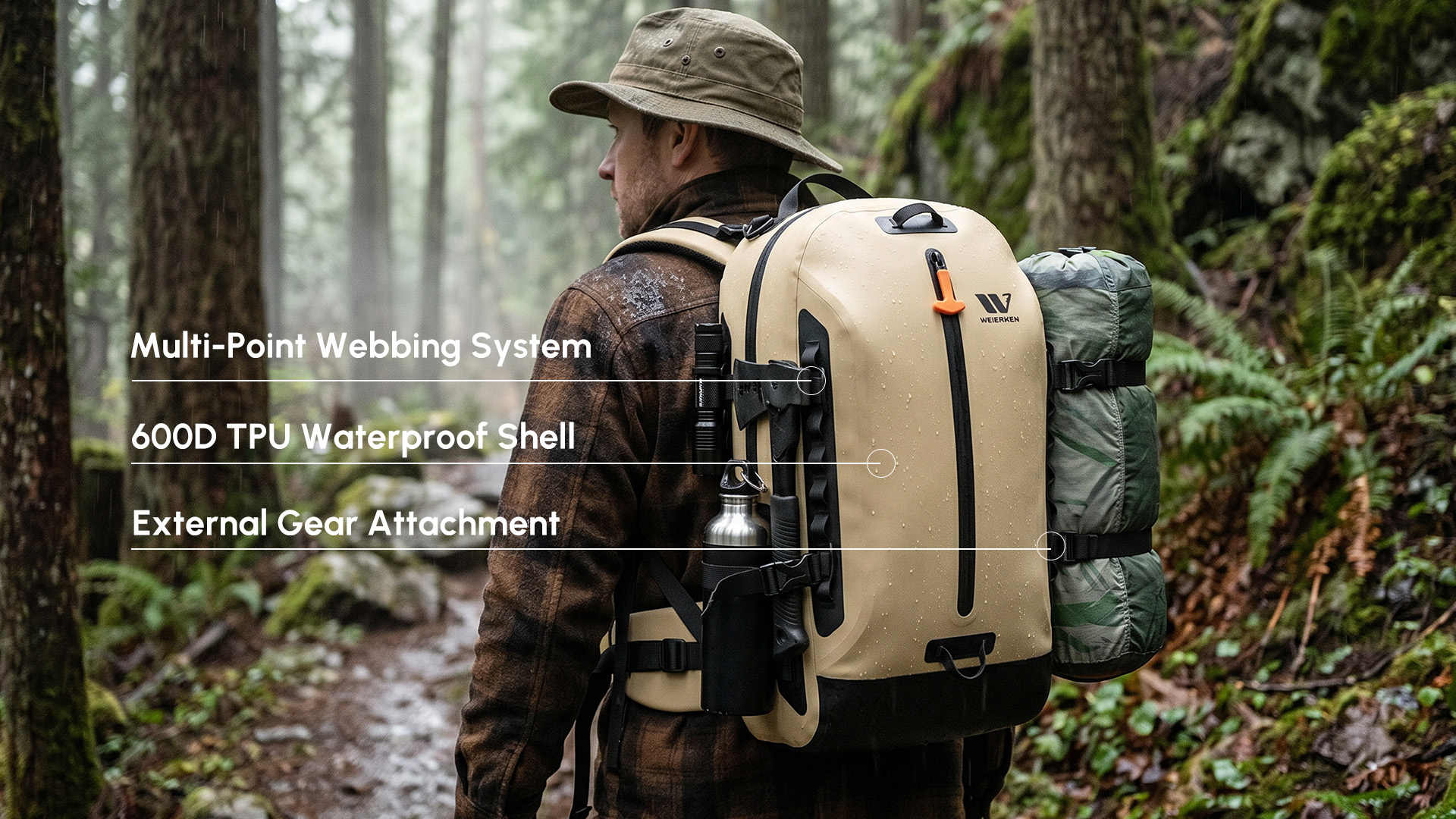
UV Stabilization: Resists fading, chalking, and structural weakening caused by relentless ocean sunlight.
Abrasion Endurance: Withstands sliding across sharp fiberglass decks, rocky shores, and metal gunwales.
Sustainability plays a growing role in modern marine apparel and gear. High-end brands increasingly request GRS-certified (Global Recycled Standard) eco-friendly TPU fabrics. Utilizing recycled materials helps brands meet environmental goals while maintaining rugged performance.
2. High-Frequency (RF) Seamless Welding Integrity
Standard needle stitching creates thousands of tiny puncture holes in fabric. While seam tape offers short-term protection, it quickly peels away under constant saltwater immersion and heavy dynamic stress.
A professional waterproof sea duffel factory relies on High-Frequency (RF) Welding rather than traditional sewing for structural seams. High-frequency electromagnetic waves fuse thermoplastic layers at the molecular level, creating a single unified bond.
Understanding the difference between seam construction methods is vital for sourcing teams:
Traditional Stitching & Taping: Cost-effective for lightweight rainwear, but fails under heavy water pressure or submersions.
Hot-Air Taping: Good for light outdoor packs, but adhesive tapes degrade when exposed to tropical heat and salt moisture.
RF Seamless Welding: Fuses fabric walls together. The seam becomes as strong as—or stronger than—the surrounding fabric itself.
To verify weld integrity, every production batch must undergo rigorous tensile strength testing. A properly welded seam should withstand loads over 30kg without splitting, securing an IPX7 or IPX8 submersible waterproof rating.
3. Salt-Spray & Corrosion-Resistant Hardware Specifications
Ocean water accelerates metal oxidation rapidly. Standard brass or basic steel sliders corrode within days when exposed to sea spray, freezing locked and rendering the bag unusable.
Every component on an odm sea bag—including buckles, D-rings, air valves, and zipper tracks—must withstand marine conditions. Top-tier manufacturers enforce a strict 96-hour Salt Spray Test (ASTM B117) for all exposed hardware.
Critical hardware specifications include:
Airtight Zippers: Precision-engineered tooth designs coated with waterproof films prevent water ingress even under full immersion.
POM Buckles: High-density Polyoxymethylene (POM) plastic buckles offer impact resistance and zero risk of salt corrosion.
Marine Grade 316 Stainless Steel: Reserved for specialized heavy-load attachment points requiring maximum tensile strength.
Recessed Inflator/Deflator Valves: High-grade TPU air valves allow users to vent excess air or blow air in for added buoyancy.
4. Heavy-Duty Ergonomics & Stress-Point Reinforcement
Marine duffels and dry backpacks carry heavy loads across docks, boats, and rough terrain. Poor weight distribution or weak strap connections lead to quick seam tear-outs and user discomfort.
An experienced custom marine bag manufacturer designs reinforced load distribution systems into the bag body. Sewing straps directly into thin waterproof fabric causes premature structural failure.
Instead, technical design protocols demand dual-layer support strategies:
High-Frequency Welded Patches: Anchoring points welded with thick TPU reinforcement patches distribute pull forces across a wide surface area.
Bar-Tack Stitching on Load Belts: Load-bearing webbing receives box-x and bar-tack stitching over secondary structural layers before final seam sealing.
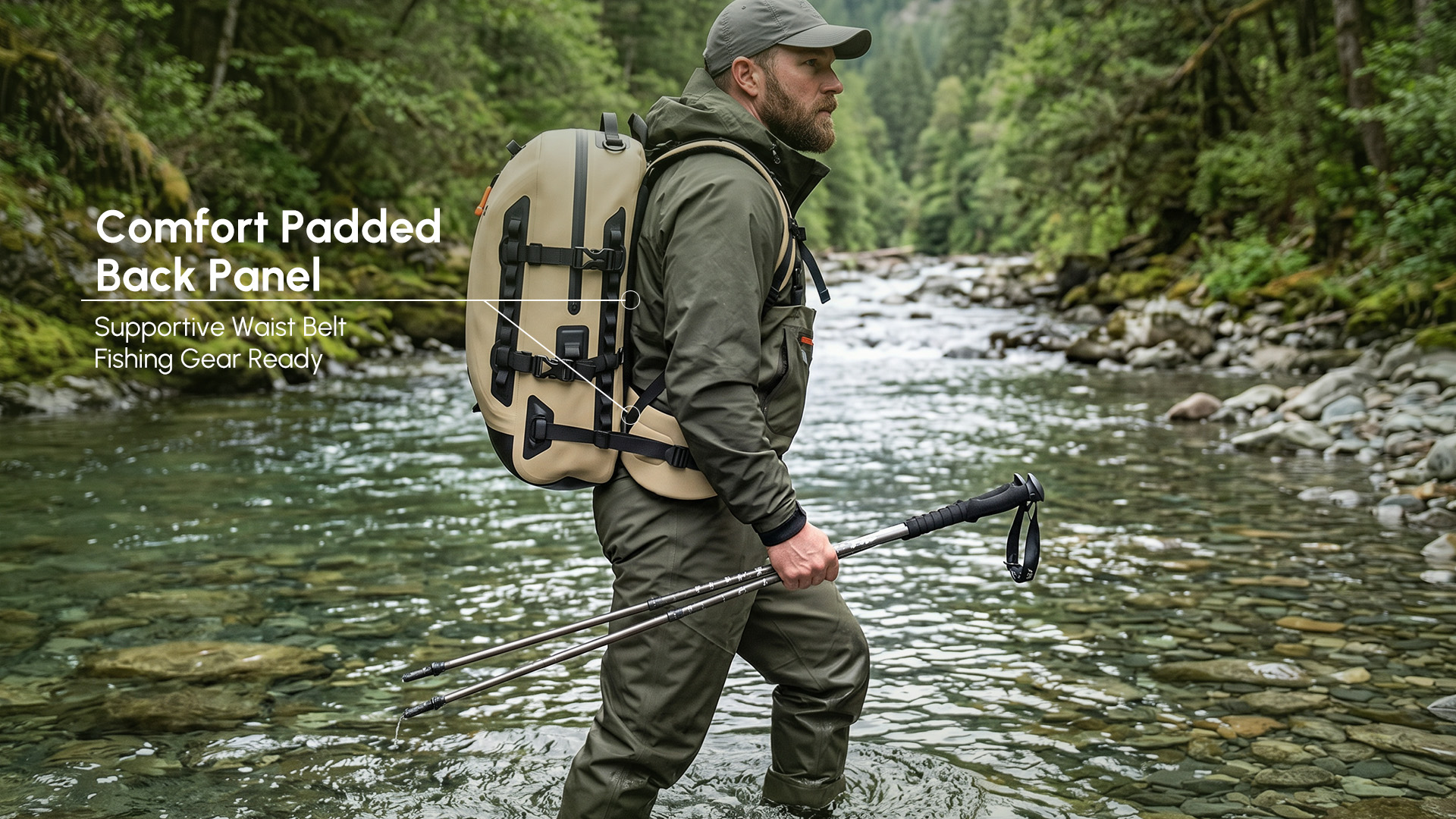
Non-Absorbent Ergonomic Padding: Shoulder straps and back panels utilize closed-cell EVA or EPE perforated foam that refuses to absorb water or add extra weight.
These structural details ensure comfortable transportation during long expeditions without sacrificing watertight security.
5. Rigorous Factory Quality Control & In-House Testing Protocols
Superior design blueprints mean little without reliable factory-floor execution. A professional heavy-duty dry bag wholesale manufacturer maintains a dedicated, fully equipped internal laboratory to test raw materials and finished goods.
Prior to shipment, finished bags must clear a multi-stage inspection process:
100% Inflation & Pressure Testing: The bag is inflated with compressed air and monitored for pressure drops over 24 hours to detect micro-leaks.
Water Submersion Testing: Fully loaded bags undergo total water immersion testing to confirm IPX7/IPX8 performance.
Drop Testing: Fully packed bags are dropped from set heights onto hard surfaces to evaluate seam and buckle impact strength.
Zipper Fatigue Testing: Reciprocating mechanical rigs pull zippers back and forth thousands of times to verify slider durability.
Working with a factory that implements 100% total inspection routines ensures that every unit leaving the assembly line performs perfectly in the field.
Weierken: Your Trusted Partner for Custom ODM Sea Bag Manufacturing
Building high-grade marine dry gear requires technical knowledge, specialized equipment, and years of hands-on production experience. Since 2006, Weierken has delivered reliable waterproof bag solutions for global brands, tactical teams, and outdoor equipment distributors.
When you partner with Weierken for your odm sea bag line, you gain distinct operational advantages:
20 Years of Manufacturing Expertise: Deep domain experience in high-frequency welding, technical fabric sourcing, and extreme-weather gear construction.
Robust Global Manufacturing Footprint: Operating 3 self-owned production facilities across China and Cambodia spanning over 80,000 square meters with 3,000 skilled workers.
Tariff Savings Advantages: Our Cambodia manufacturing base provides advantageous duty rates for North American and European buyers, optimizing your supply chain costs.
Rapid R&D and Prototyping: Dedicated engineers transform concept sketches into physical samples quickly, shortening your product launch cycles.
Proven Quality Leadership: trusted strategic partner to more than 2,000 global brands who depend on our zero-defect quality control systems.
Build Your Next Marine Line with Weierken
Designing and producing an exceptional odm sea bag requires strict attention to detail across every stage of production. From marine-grade TPU selection and high-frequency welding to salt-spray resistant hardware and 100% pressure testing, uncompromising quality builds customer trust and protects your bottom line.
Are you looking for a proven OEM/ODM partner capable of building heavy-duty waterproof gear for your brand? The technical team at Weierken is ready to help bring your designs to market.
Frequently Asked Questions (FAQ)
1. What is the minimum order quantity (MOQ) for custom ODM sea bag production?
Our standard MOQ for custom odm sea bag manufacturing typically starts at 500 to 1,000 pieces per style, depending on fabric customizer requirements, colors, and hardware specifications. Contact our sales team to discuss scalable production options tailored to your order volume.
2. What is the difference between TPU and PVC materials for marine dry bags?
TPU (Thermoplastic Polyurethane) offers superior cold-crack resistance, higher environmental sustainability, better UV stability, and longer lifespan without hydrolysis. PVC is cheaper initially, but it degrades faster under saltwater and sun exposure, becomes brittle in cold weather, and poses environmental disposal challenges.
3. How do you ensure that every custom ODM sea bag is completely waterproof?
We use High-Frequency (RF) welding technology to fuse fabric seams without needle holes. Additionally, we conduct a 100% inflation pressure test on our production lines, holding compressed air inside the bags for 24 hours to ensure zero pressure loss or micro-leaks before packing.
4. Can Weierken assist with customized brand logos and technical packaging?
Yes. As a full-service ODM/OEM manufacturer, we provide custom screen printing, reflective transfers, molded rubber badges, branded zipper pulls, hangtags, and retail-ready packaging customized to your brand guidelines.
5. What tariff advantages does your Cambodia manufacturing base offer?
Our Cambodia facility helps overseas buyers mitigate trade tariffs and import duties applicable to Chinese exports. Shipping directly from Cambodia offers significant cost savings for major North American and European brands looking to optimize landed goods costs.
6. How long does it take to sample and produce a custom ODM sea bag order?
Initial design concepts and prototype samples generally take 7 to 14 days once design specs are confirmed. Bulk mass production typically takes 35 to 45 days after sample approval and deposit confirmation, depending on order complexity and total quantity.