
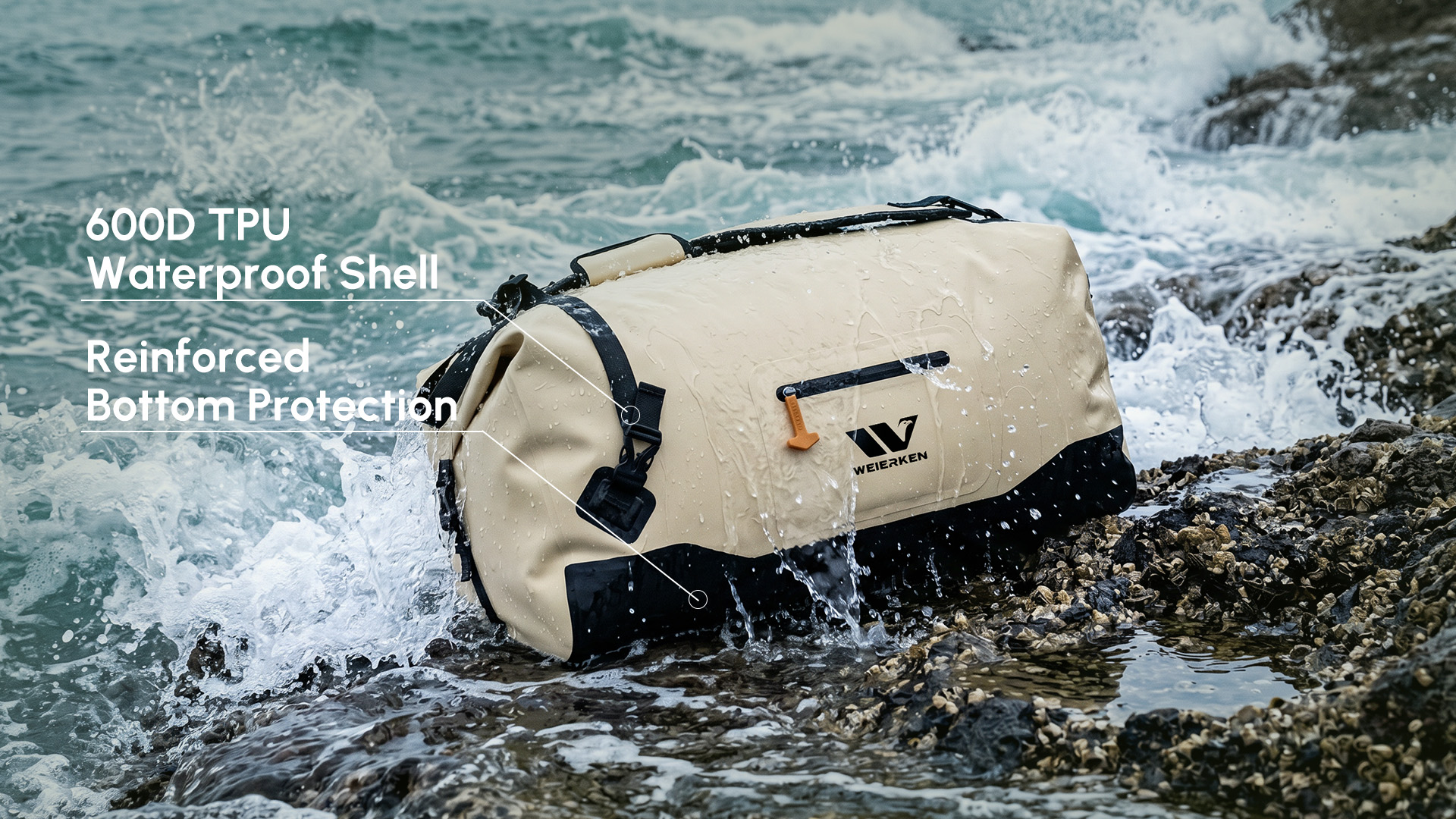
Saltwater ruins ordinary outdoor gear. High humidity, harsh UV rays, and heavy sea spray break down weak seams and cheap fabrics within weeks.
When a waterproof sea duffel fails at sea, the consequences are immediate. Gear gets soaked, electronic equipment breaks, and brand reputations suffer heavy damage.
For sourcing managers and procurement teams, sourcing a reliable odm sailing bag requires looking far beyond surface aesthetics. You need a factory partner that designs for harsh oceanic conditions.
Professional marine brands do not just buy finished goods. They invest in rigorous quality control, specialized material engineering, and dependable supply chains.
At Weierken, we build ocean-ready bags designed to endure severe marine exposure. This guide outlines the exact production and quality standards you must demand from your factory partner in 2026.
5 Core Quality Standards for Your ODM Sailing Bag
Evaluating a custom marine bag manufacturer requires clear benchmarks. Here are the five non-negotiable technical standards every high-performance sailing bag must meet.
Standard 1: Marine-Grade Fabric & Eco-Durability
Traditional PVC fabrics degrade quickly under intense sun exposure. They stiffen in cold weather, crack over time, and pose environmental recycling challenges.
Modern marine brands rely on 840D or 1000D TPU-laminated (Thermoplastic Polyurethane) nylon fabrics. TPU offers superior resistance to hydrolysis, UV rays, and abrasion while staying flexible in freezing temperatures.
Key material selection criteria include:
High Tear Resistance: Premium TPU nylon withstands sharp boat hardware and rough deck surfaces.
Anti-Hydrolysis Properties: The material will not peel or become sticky after long exposure to moisture.
Sustainable Materials: Global buyers now demand eco-friendly choices. We support Global Recycled Standard (GRS) certified recycled TPU nylon fabrics to lower environmental impact.
Choosing TPU over cheap PVC protects your brand from high warranty return rates and aligns with global sustainability mandates.
Standard 2: High-Frequency / RF Welding Integrity
Standard needle stitching creates thousands of tiny holes in fabric. Waterproof coatings cannot save a bag if the needle holes tear under pressure.
A true waterproof sea duffel factory relies on High-Frequency (RF) welding and hot-air seam taping. RF welding uses electromagnetic energy to fuse TPU layers at the molecular level, creating a solid, permanent bond.
We enforce strict structural weld benchmarks:
Seamless Waterproofing: Welded joints achieve IPX7 or IPX8 submersion ratings, keeping contents dry even when fully submerged.
Tensile Strength Testing: Welded seams must withstand over 30kg of pull force without splitting.
Stress Load Distribution: Weld geometry spreads interior pressure evenly across stress zones.
Proper welding ensures that heavy equipment will not blow out the seams during transit.
Standard 3: Salt-Spray Corrosion Resistance
Ocean air carries salt that corrodes standard metal zippers and buckles rapidly. A single frozen zipper renders a sailing bag useless.
Every piece of hardware on a marine-grade bag must pass strict anti-corrosion protocols before entering assembly.
Hardware requirements for marine use:
Airtight Hydro-Zippers: Toothless or TPU-coated airtight zippers block pressurized water and resist salt buildup.
96-Hour Salt-Spray Test: All metal components, pull tabs, and metallic snaps must show zero rust or pitting after 96 hours of salt fog exposure.
High-Impact POM Buckles: Polyoxymethylene (POM) plastic buckles handle extreme loads and resist salt degradation better than standard nylon buckles.
Without salt-tested hardware, gear simply will not survive a full season on the open water.
Standard 4: Ergonomics & Heavy-Duty Load Reinforcement
Sailing duffels carry heavy gear across wet, unstable decks. Carrying comfort and structural reinforcement are essential design factors.
Weight must distribute evenly across the user's shoulders, while handle attachments must sustain intense lifting forces.
Critical structural design elements include:
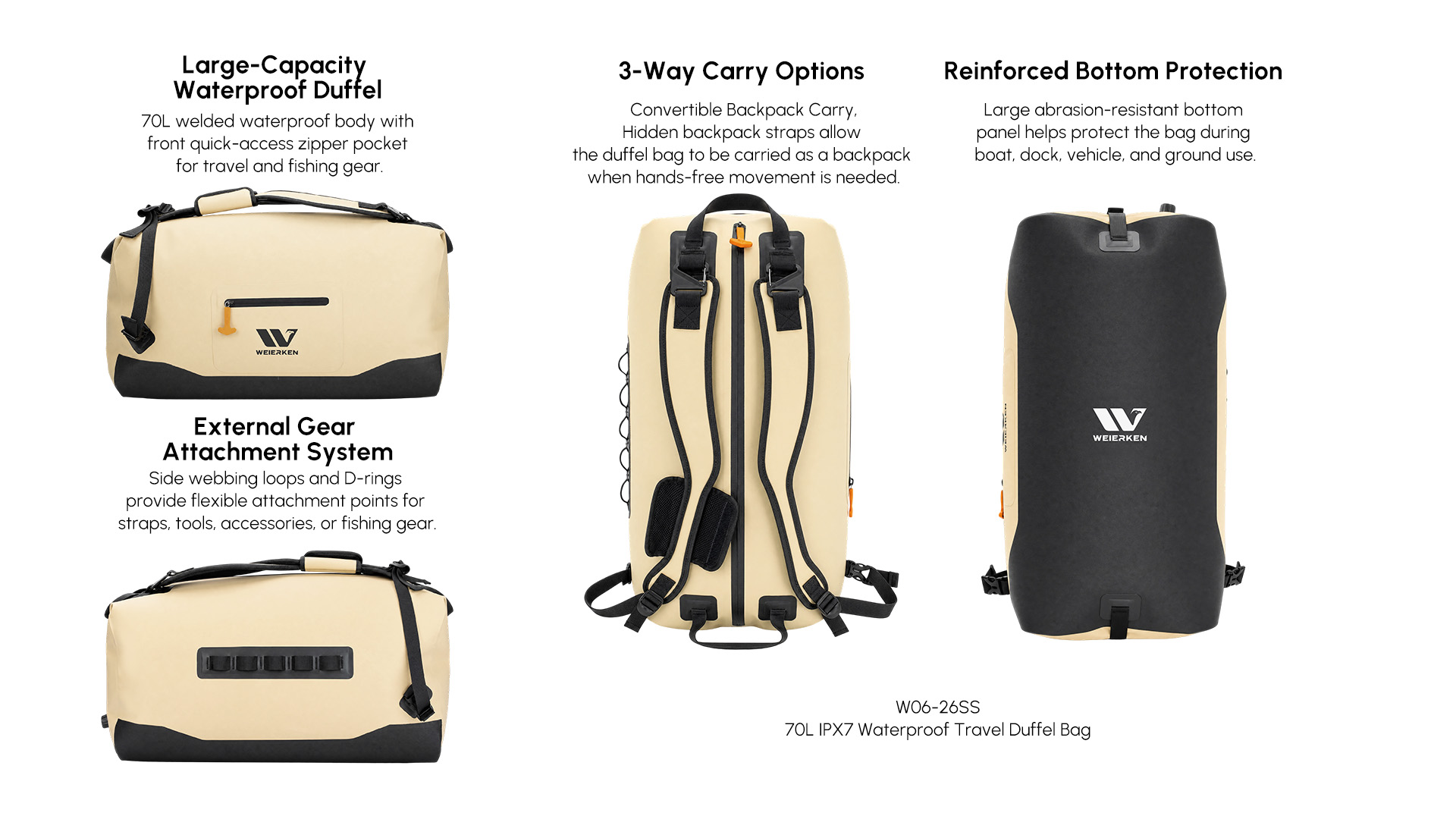
Reinforced Stress Points: Handle attachment sites feature welded patch overlays or dense bar-tack stitching on double-layered bases.
Non-Absorbent Padding: Shoulder straps and back panels use closed-cell EVA or EPE perforated foam that will not absorb water or add weight.
Ergonomic Haul Handles: Strategic side and end handles allow quick grabbing during sudden boat movement.
Strong load-bearing design reduces user fatigue and prevents accidental drops in high-risk environments.
Standard 5: Rigorous Factory QC & Testing Protocols
Promising quality is easy; proving it requires dedicated testing facilities. A qualified heavy-duty dry bag wholesale partner operates an in-house laboratory to test every production lot.
Essential factory quality control steps include:
100% Inflation Pressure Testing: The factory inflates sealed bags to check for micro-leaks along seams and zipper tracks over 24 hours.
Drop Impact Testing: Fully loaded bags drop repeatedly from set heights onto concrete to ensure seams hold.
Zipper Reciprocating Endurance Test: Zipper mechanisms undergo thousands of open-close cycles under tension to verify long-term durability.
At Weierken, our standardized testing protocols stop defective units before they ever reach a shipping container.
Weierken: Your Trusted ODM Sailing Bag Manufacturing Partner
Finding a factory that balances raw technical capability with international export experience can be difficult. Weierken fills that gap for major global brands.
With 20 years of dedicated manufacturing experience since 2006, we specialize in high-durability waterproof bags, tactical dry packs, and marine gear.
Our manufacturing network provides massive strategic advantages to global buyers:
Multi-Region Footprint: We operate 3 self-owned production bases in China and Cambodia spanning over 80,000 square meters.
Skilled Workforce: More than 3,000 trained production workers handle large-scale volume orders efficiently.
Tariff Optimization: Our Cambodia production hub offers significant tariff savings for North American and European buyers, lowering your total landed cost.
In-House Design & R&D: Our specialized R&D team turns your concept sketches into functional, market-ready prototypes in days.
Over 2,000 global brands trust our factory network to build their most critical product lines. We deliver high production output without compromising quality standards.
Secure Your Marine Supply Chain for 2026
Building a successful ocean gear line requires zero compromise on materials, welding integrity, hardware selection, and quality testing.
Standard outdoor bags fail in marine environments. Selecting an experienced ODM partner protects your brand name, reduces warranty claims, and satisfies demanding end-users.
Are you looking for a proven factory to manufacture your next custom odm sailing bag lineup?
Contact the expert engineering team at Weierken today. Request a product consultation, discuss tariff-saving production options, or order your custom sample package now.
Frequently Asked Questions (FAQ)
1. What is the standard MOQ for a custom ODM sailing bag order?
Our standard Minimum Order Quantity (MOQ) typically starts at 500 to 1,000 pieces per style, depending on fabric customisation, color choices, and hardware specifications. We also offer flexible support for established brands testing new market lines.
2. How does Weierken test the waterproof integrity of sea bags during production?
We use a multi-stage testing protocol. Raw seams undergo hydrostatic pressure tests. Before packing, finished airtight bags undergo a 100% inflation retention test for 24 hours to ensure zero pressure drop across seams and zippers.
3. What are the main benefits of using TPU over PVC for marine dry bags?
TPU provides significantly better UV resistance, stays flexible in freezing temperatures, and offers superior abrasion resistance compared to PVC. It is also lighter, non-toxic, anti-hydrolysis, and more eco-friendly, making it ideal for premium gear brands.
4. Can you manufacture sailing bags using recycled or GRS-certified fabrics?
Yes. Weierken supports sustainable manufacturing practices. We offer Global Recycled Standard (GRS) certified recycled TPU nylon and eco-conscious TPU coatings that meet strict REACH and RoHS compliance standards for EU and US markets.
5. How does ordering from your Cambodia factory benefit Western buyers?
Our Cambodian production facilities allow international buyers to optimize import tariff structures compared to direct exports from China. This provides major duty savings for bulk orders entering the United States and European Union markets.
6. What is the typical lead time for custom samples and mass production?
Custom prototype samples generally take 7 to 12 working days depending on structural complexity. Once you approve the final sample, full-scale mass production typically takes 35 to 45 days.