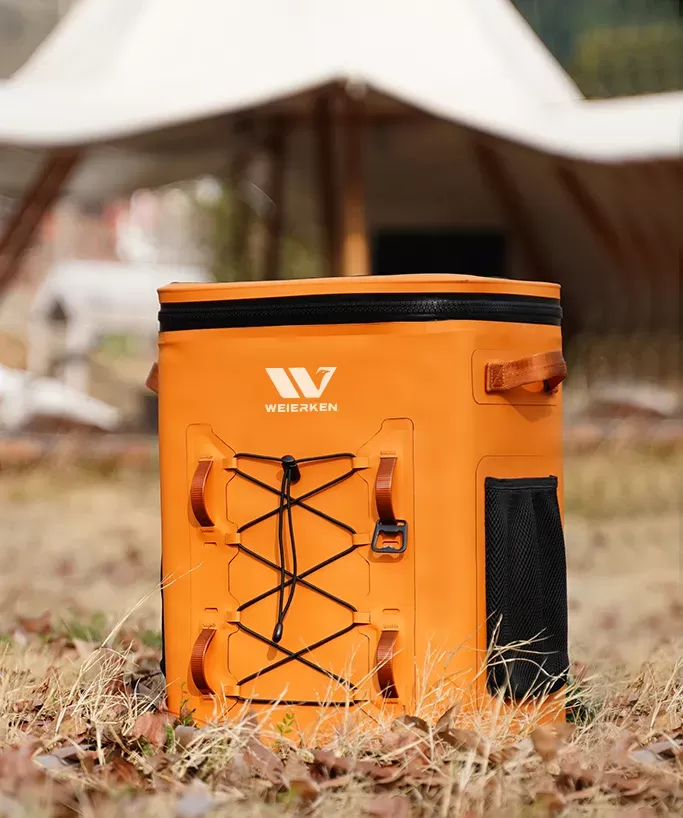

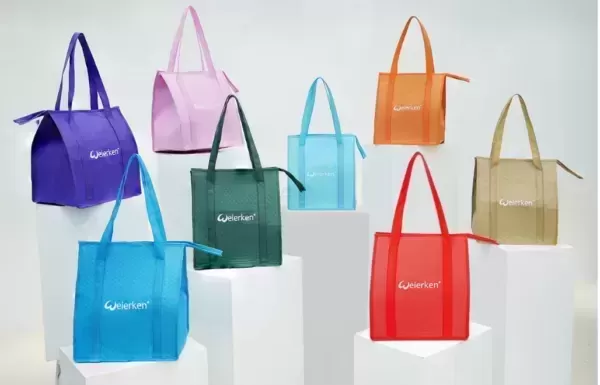
B2B buyers face growing challenges in sourcing insulated packaging. Supermarket chains, delivery services, and food brands need more than just transactional manufacturers. They require structured manufacturing partners who understand logistics, compliance, and material science.
Choosing a professional reusable thermal bag maker helps streamline this process. Experienced partners, such as Weierken, provide comprehensive private label services that transform simple coolers into functional, brand-aligned marketing tools. This article breaks down five essential private label services you should expect from a manufacturing partner.
1. Material Customization & Eco-Friendly Options
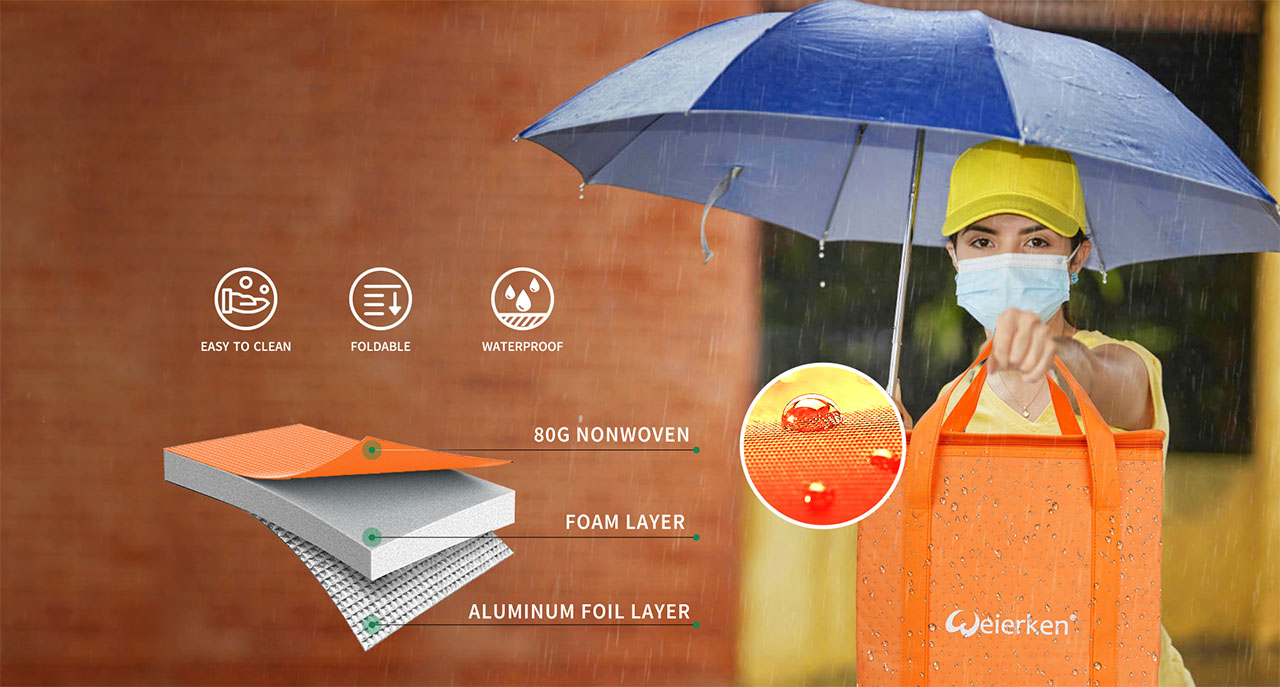
Environmental regulations continue to tighten globally. Many regions now restrict single-use plastics, forcing businesses to find compliant alternatives. An experienced eco friendly thermal bag manufacturer helps you choose raw materials that meet these regional laws without sacrificing performance.
Exterior fabrics determine the bag's durability and visual appeal. You can select from several sustainable and heavy-duty options:
rPET (Recycled Polyethylene Terephthalate): Made from recycled plastic bottles, perfect for circular economy initiatives.
Non-woven Polypropylene (NWPP): A cost-effective, recyclable option suitable for high-volume retail giveaways.
Canvas and Cotton: Highly durable, natural fibers that provide a premium, organic look.
Oxford Polyester: Excellent tear resistance, ideal for professional food delivery setups.
The interior insulation layer controls temperature retention. Standard builds feature expanded polyethylene (EPE) foam cores paired with reflective aluminum foil. For enhanced cooling or easier cleaning, food-grade PEVA linings offer excellent moisture resistance.
Sourcing materials with certified credentials protects your brand's integrity. Working with a partner who offers Global Recycled Standard (GRS) and OEKO-TEX certified fabrics ensures your packaging aligns with global green standards.
Need to compare material textures and thicknesses? Contact our engineering team for a material sample swatch to find the right fit for your brand.
2. Structural Design & Functional Engineering
Standard retail cooler bags often fail under daily wear. Common issues include structural collapse, broken zippers, and liquid leakage. A technical reusable thermal bag maker resolves these pain points through engineered structural design.
Liquid containment remains a primary concern for seafood distributors and grocery delivery networks. Traditional sewing creates needle holes that allow melted ice to leak. High-frequency seamless hot-pressing solves this problem by fusing internal linings together, creating a completely watertight barrier.
Heavy loads also put stress on joints. Manufacturers use specific structural reinforcements to distribute weight safely:
X-Stitching: Cross-stitched box patterns reinforce the handle-to-body attachments.
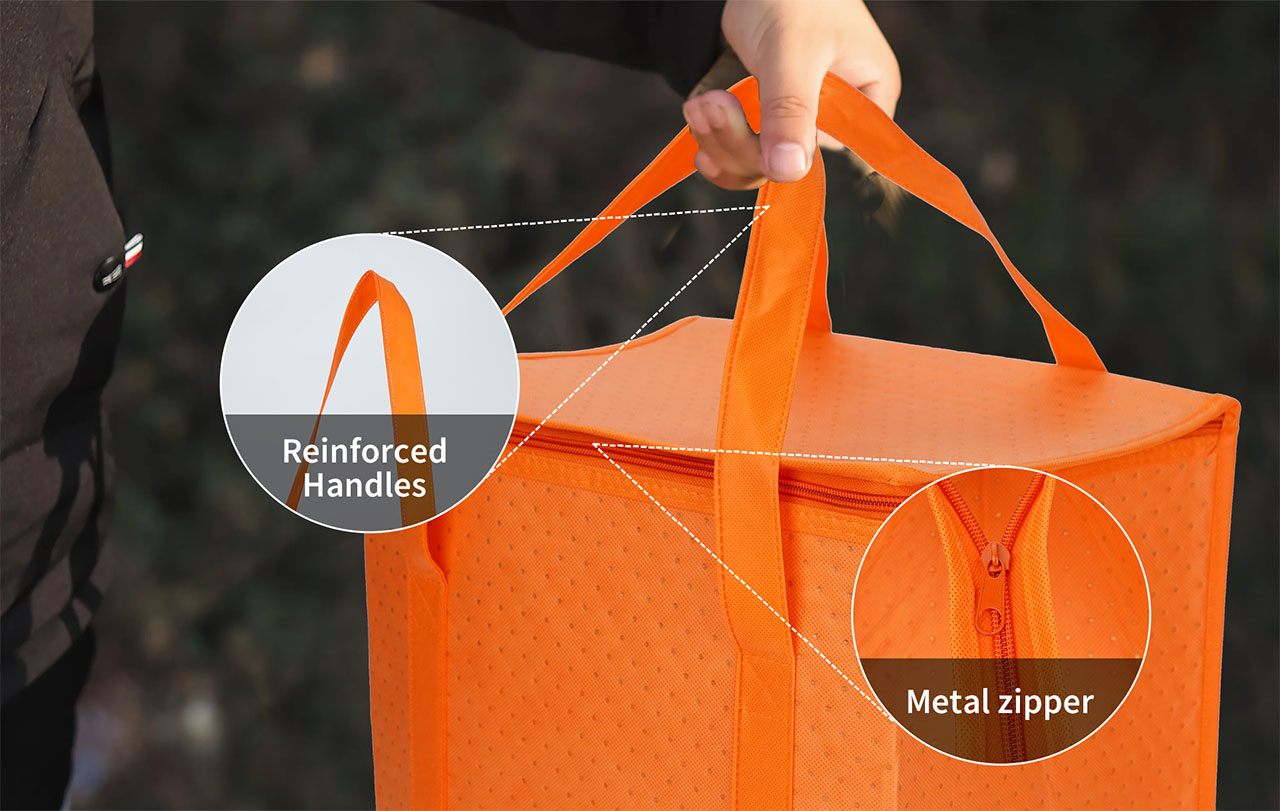
Wrap-around Handles: Webbing straps that run completely under the bag's bottom prevent tearing under heavy loads.
Removable Base Boards: Rigid PP or cardboard inserts keep the bag upright, protecting delicate food containers.
Functional additions improve the end-user experience. Consider adding adjustable shoulder straps, external mesh pockets for utensils, dual-slide zippers, or collapsible buckles for flat storage. Customization allows you to adapt the bag's shape to fit specific lunch boxes, pizza boxes, or grocery containers.
Do you have a unique product dimension to accommodate? Request a structural design consultation with our technical team today.
3. Versatile Branding & Printing Technologies
Insulated bags function as mobile billboards for food delivery networks and grocery chains. Selecting the right printing technique ensures your brand assets remain crisp and vibrant after months of outdoor exposure. Weierken assists brand managers in selecting the most appropriate method for their specific artwork.
Different logo designs and production budgets require different printing techniques:
Silk-screen Printing: Best for simple, solid-color logos. It offers high ink opacity and low production costs on medium runs.
Heat Transfer Printing: Ideal for multi-color designs, gradients, and photographic artwork on small surface areas.
Gravure Lamination: Excellent for full-coverage, high-resolution graphics. The design is printed on a thin film first, then laminated to the base fabric, providing moisture and scratch protection.
Color consistency represents a key part of corporate identity. A reliable private label cooler bag supplier must support the Pantone Matching System (PMS). This standard ensures your brand colors match exactly across different production batches and fabric types.
Unsure which printing technology fits your logo design? Submit your artwork to our design team for a free technical compatibility review.
4. International Compliance Testing & Quality Assurance
Importing commercial packaging carries strict regulatory risks. Materials in contact with food must meet domestic chemical safety standards. Working with an audited manufacturer reduces legal liabilities and protects consumer health.
Interior liners must be certified safe for direct contact with food. This means verifying that materials are BPA-free and comply with regulations like the FDA, LFGB, or REACH. These certifications prove the plastic liners will not leach harmful substances under warm temperatures.
Factory operational standards also matter to modern B2B buyers. Sourcing from facility networks that undergo regular independent audits provides supply chain security:
BSCI & SEDEX: Confirm ethical labor practices, safe working conditions, and environmental compliance.
ISO 9001: Verifies the presence of a structured quality management system across the production line.
A rigorous quality control process minimizes defective batches. Standard protocols include inline metal detection to locate broken needles, static load-bearing tests to verify handle strength, and zipper endurance testing to confirm long-term functionality.
Do you require specific compliance certificates for your local market? Ask our compliance officer for our latest testing reports and certificates.
5. Flexible MOQ & Low-Risk Supply Chain Support
Procurement teams need to balance purchase costs with inventory risks. Rigid manufacturing minimums often prevent brands from testing new product concepts. Flexible ordering structures help businesses manage cash flow while maintaining reliable product flow.
A tiered Minimum Order Quantity (MOQ) structure helps bridge this gap. For standard, pre-made fabric colors, lower MOQs allow businesses to run regional test campaigns. For fully custom, high-volume orders, choosing a heavy duty thermal bag wholesale program optimizes unit pricing.
The pre-production phase requires careful verification to avoid costly errors:
Digital Prototyping: Virtual mockups allow quick visual adjustments to layout and colors.
Physical Pre-production Samples: Hands-on testing of materials and insulation performance before committing to volume production.
Logistical support should extend beyond the factory floor. Experienced suppliers handle barcode labeling (FNSKU), carton marking, and pallet packaging compliant with Amazon FBA warehouses. They also coordinate shipping terms like FOB, CIF, or DDP to simplify customs clearance for international buyers.
Planning your next seasonal campaign? Inquire about our tiered MOQ programs and current production lead times.
Frequently Asked Questions
1. What is the typical lead time for custom private label orders?
Production timelines vary depending on design complexity. Generally, digital layout approval takes 2-3 days, physical prototyping takes 7-10 days, and mass production takes 25-35 days after sample approval. Weierken provides structured scheduling to help you meet seasonal launch dates.
2. Can you manufacture bags that keep food hot instead of cold?
Yes. The thermal physics are similar for both requirements. Thick EPE foam layers act as an insulation barrier, while reflective aluminum inner linings bounce radiant heat back toward the food. This dual-action system works to keep warm items hot and cold items chilled.
3. How do you ensure the handles won't rip on a heavy duty thermal bag wholesale order?
We reinforce high-stress areas by sewing handles down the sides and underneath the base of the bag, rather than just stitching them to the top rim. Additionally, we use box-cross (X-stitching) techniques and heavy-duty polyester threads to handle higher weight capacities.
4. What is the difference between PEVA and Aluminum Foil linings?
Aluminum foil offers excellent heat reflection and is very cost-effective. However, PEVA is thicker, offers better waterproofing, and is easier to wipe clean. PEVA is often the preferred choice for premium custom insulated grocery bags bulk orders due to its durability and soft texture.
5. Are your manufacturing facilities audited for social compliance?
Yes. We undergo regular third-party audits, including BSCI and ISO 9001. We believe ethical labor practices and structured quality management systems are essential to maintaining long-term partnerships with global brands.
Partner with a Reliable Reusable Thermal Bag Maker
Sourcing your thermal packaging does not have to be complicated. By focusing on customized materials, reliable engineering, clear branding, and certified compliance, Weierken supports your brand at every step of the supply chain. We deliver reliable, high-performance bags tailored to your specific logistical and environmental requirements.
Let us help you design your next custom insulated bag. Contact our sales department to discuss your target specifications, order volumes, and delivery timelines.
Request a Custom Quote Today
Send your specifications to our team. We will review your requirements and provide a detailed quotation within 24 business hours.