

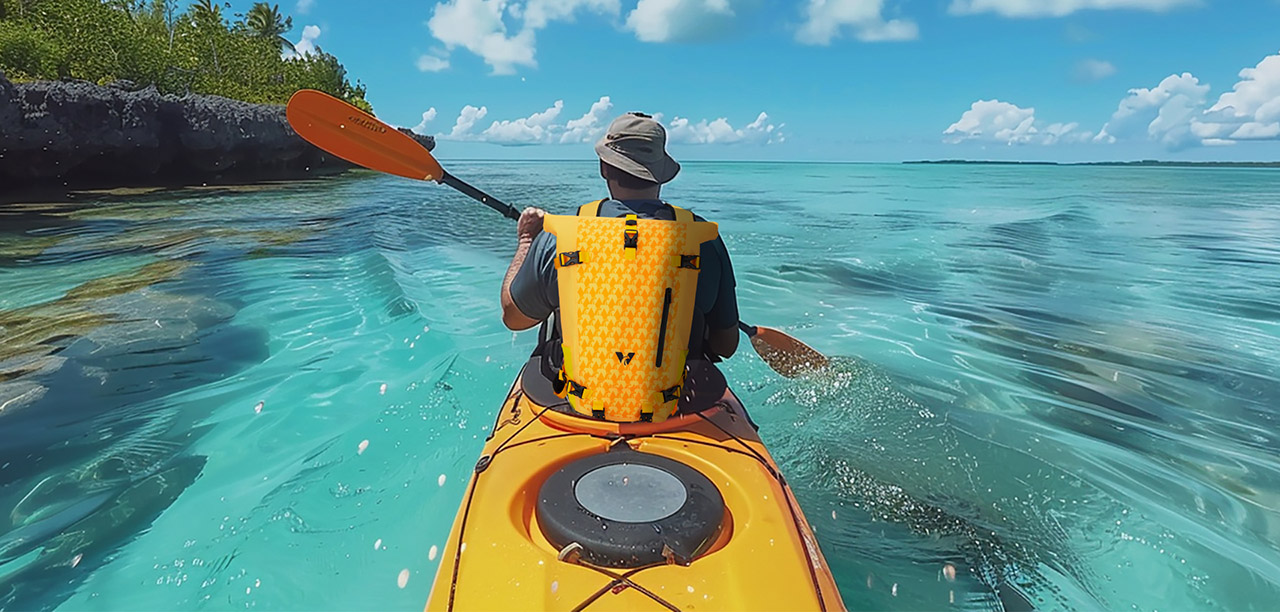
In the private label sailing backpacks market, quality is not a bonus. It is a survival line. Anyone who has spent time on a boat knows the marine environment is relentless. Salt-laden wind, unshaded UV, sudden downpours, and repeated wet-dry cycles. A poorly made backpack can show zipper seizure, seam powdering, or strap detachment within two weeks.
Choosing a private label factory goes far beyond evaluating samples and negotiating prices. You are betting on their entire quality system to withstand these extreme conditions. Weierken has been in the bag manufacturing business since 2006. We run three self-owned factories in China and Cambodia, covering over 80,000 square meters with 3,000+ workers. We have served more than 2,000 global brands. Here is our honest take: whether a sailing backpack survives at sea depends on whether the factory has ingrained the following five quality gates into its daily operations.
Raw Material Traceability and Incoming Inspection
The backpack's origin decides its fate. All durability starts with fabrics and trims. A regular backpack might tolerate a stiff zipper once in a while, but a sailing backpack cannot. Salt spray accelerates metal corrosion. UV embrittles ordinary polyester. Seawater immersion makes cheap coatings bubble and peel.
So the first thing to examine is how the factory treats every incoming batch of materials. Fabric performance must be verified on-site. Do not rely solely on supplier data sheets. Check the factory's actual incoming quality control (IQC) records.
Key Material Checks
Fabric verification: For waterproof polyester, nylon, or TPU-coated fabrics, confirm the weight, hydrostatic pressure (minimum 10,000 mm), tear strength, and colorfastness. Request the last three months of IQC reports. Look for records of rejected batches and how they were handled.
Hardware salt spray testing: Zippers (prefer YKK waterproof grade), metal buckles, and eyelets must pass at least 48 hours of neutral salt spray tests. Many factories cut costs with ordinary electroplated parts – those show rust spots within a week at sea, and zipper sliders lock up completely.
Traceability system: Each material batch must have clear labels – supplier name, batch number, arrival date – and be recorded in the ERP system. If a finished product issue emerges, you can quickly pinpoint the exact batch and act.
At Weierken, every factory has an independent IQC lab. We test each batch of waterproof fabric for water entry pressure. All metal hardware goes through the salt spray cabinet. Non-conforming materials are returned immediately. We do not compromise on this.
Real-Time Process Inspection
Stop defects before they multiply. Qualified materials are only the start. On the production line, a slight stitch pitch deviation, a weak heat-seal strip, or a missing bartack can become catastrophic failures during use. The purpose of in-process inspection is simple: catch problems before they become batch-level disasters.
Critical Control Points
SOP compliance: Sailing backpacks have three vulnerable areas: waterproof zipper heat-pressing (or hot-air welding), the adhesion strength of backing tapes, and reinforcement bartacks at stress points. In-process inspectors should randomly pull work-in-progress items.
Measurement and testing: Measure stitch pitch (typically 8 to 10 stitches per inch), verify heat-seal tape width (at least 20 mm), and perform peel tests to ensure tape adhesion meets specifications.
First-article inspection: Before any batch goes into mass production, the first finished piece must undergo full dimension and functional checks. Only after sign-off can production start. Review first-article records for completeness.
Operator self-inspection: Ask line workers: "What counts as good, and what counts as bad?" If they cannot answer or lack visual standards, quality becomes luck. Trained workers with clear reference samples are more reliable than any instrument alone.
Weierken assigns dedicated IPQC staff to every production line. They perform full-process inspections every two hours and record data in real time. We also implement a three-level check system – operator self-check, next-station cross-check, and professional inspector final-check – ensuring each process handover is clean.
Finished Goods Sampling and AQL Standards
The mandatory "hard check" before shipment. Production completion does not mean boxes are ready to go. For private label sailing backpacks, the contract should specify sampling according to internationally accepted AQL (Acceptable Quality Limit) standards. The bag industry commonly uses AQL 1.5 for major defects and 4.0 for minor defects, with inspection level II. This provides a fair, standardized measure for both parties.
Inspection Checklist
Appearance and workmanship: Under a standard lightbox (minimum 1000 lux), inspect each sample for symmetry, skipped stitches, broken threads, bubbles or lifting in heat-seal tape, zipper smoothness, and buckle locking function.
Functional testing:
Load test – add 1.5 times the rated capacity and shake vertically 500 times, checking that handle and strap attachments show no loosening.
Waterproof test – simulate heavy rain with a 30-minute spray, place absorbent paper inside; any dampness disqualifies the product.
Zipper endurance – open and close 500 cycles without jamming or damage.
Packaging and labeling: Hang tags, washing instructions, stickers, and carton marks must match the brand's approved specifications exactly. One wrong label can trigger a retail rejection for the entire shipment.
Weierken strictly follows ANSI/ASQ Z1.4 (equivalent to MIL-STD-105E) for finished goods sampling. We document every batch with photos and data. More importantly, we provide clients with a detailed inspection report package – defect descriptions, types, and percentages – so even if you cannot be present on-site, you have full visibility into actual quality.
Reliability Testing Under Extreme Conditions
Simulate the sea in the lab. Routine inspections only catch surface issues. The hidden weaknesses of sailing backpacks often surface only under extreme stress. A forward-thinking brand owner will require third-party or in-house lab test reports that replicate harsh marine conditions.
Essential Test Protocols
UV aging: Does the fabric fade, become brittle, or lose strength after prolonged sunlight? Request QUV accelerated aging test reports (minimum 500 hours).
Seawater + salt spray combined: Soak finished backpacks in artificial seawater and then place them in a salt spray chamber, simulating real onboard environments to verify the anti-corrosion ability of zippers, buckles, webbing, and coatings.
Tear and burst strength: Use a universal tensile machine to measure tear propagation resistance and burst pressure – critical for snagging on reef edges or crushing under gear.
Dynamic load endurance: Under full load, the handle and strap attachment points undergo repeated tensile tests, typically requiring 500 cycles with a 15 kg dynamic load without abnormality.
Weierken operates its own reliability lab, equipped with universal tensile machines, salt spray chambers, QUV aging units, and water spray testers. Every new sailing backpack model must complete a full "marine-grade" test suite before mass production. No data means no release – we never gamble with our clients' market reputation.
Social Responsibility and Sustainability
Invisible quality beneath the surface. Today's European and American buyers and end consumers ask more than "does it work." They also ask: does the factory treat its workers fairly? Are emissions and chemicals controlled? Can materials be recycled? These factors directly determine whether your private label product can enter mainstream retail channels.
Compliance and Certifications
Labor and social audits: Does the factory hold SA8000, BSCI, or SMETA audits? Are there any cases of child labor, forced labor, or discrimination? Are working hours and wages reasonable? Many large retailers consider BSCI or SMETA reports mandatory.
Chemical management: Do waterproof coatings, dyes, and adhesives contain restricted substances like PFOA, PFOS, or phthalates? Require REACH or RoHS test reports for fabrics and trims.
Sustainable materials: Does the factory use recycled polyester or solvent-free hot-melt adhesives? Does it hold GRS (Global Recycled Standard) certification?
Weierken's factories are BSCI and GRS certified. Our R&D teams integrate sustainable thinking from the design phase – simplifying patterns to reduce waste, using recyclable packaging, and actively developing bio-based and recycled material solutions. This helps brand partners stay ahead on environmental and social governance.
Long-Tail Keywords and Industry Context
If you are sourcing private label sailing backpacks, you might also search for white label marine backpacks, custom logo waterproof sailing bags, or OEM boat backpack supplier. You may need bulk order sailing backpack with salt spray resistance or factory direct private label waterproof rucksack. Each term points to the same practical concerns – material integrity, hardware durability, and transparent quality processes. Weierken addresses these directly through our five-gate system, supported by documented test data and third-party certifications.
Selecting a private label sailing backpack supplier is not about a glossy sample or a low price. True quality assurance comes from a complete operational system: incoming control, in-process inspection, finished goods sampling, extreme testing, and social compliance. Every gate must withstand scrutiny and external challenges.
Weierken does not see itself as a mere contract manufacturer. We act as your quality extension team. Whether you prefer a remote virtual factory tour or an on-site visit to our production bases, we welcome your verification of these five gates in our daily practice. The sea offers no leniency to "almost" products. Only backpacks that pass every quality checkpoint can earn genuine trust for your brand in rough waters.
Frequently Asked Questions
Q1: What is your standard MOQ for private label sailing backpacks?
Our standard MOQ is 500 pieces per design for full customization, including custom fabrics, colors, hardware, and brand logos. For open-mold patterns with simple logo changes, we can accommodate smaller quantities. We also offer sample runs for prototyping. Share your estimated volume and we will propose a tailored plan.
Q2: Can you replicate a design from a sample we provide?
Yes, we offer reverse engineering services. We will analyze the sample's construction, materials, and hardware, then provide a detailed BOM and cost estimate. We also suggest improvements to enhance durability or reduce production costs, all while respecting your intellectual property.
Q3: Do you offer drop-shipping or fulfillment services?
We focus on bulk manufacturing and do not operate a drop-shipping service. However, we can coordinate with your designated logistics provider or forwarder. We also offer DDP shipping to many regions, handling customs clearance and duties so you receive the order at your warehouse with minimal administrative burden.
Q4: What is your typical lead time for a 20-foot container order?
Lead time ranges from 35 to 55 days after final sample approval and material procurement. This depends on fabric availability and production complexity. We reserve dedicated production lines for confirmed orders to ensure schedule stability. Expedited service is available for urgent projects.
Q5: How do you handle warranty claims or quality disputes?
We assign a dedicated after-sales team to each client. For substantiated quality issues, we cover repair, remake, or compensation costs, depending on the agreement. We also set aside a quality assurance fund for each project. Our typical response time for major complaints is within 48 hours.
Q6: Are your materials and production processes eco-friendly?
We hold GRS, BSCI, and REACH certifications. We offer recycled polyester fabrics and solvent-free adhesive options. Our factories use water-based printing and energy-efficient equipment. We can also develop customized sustainable material packages to meet your brand's environmental targets.
Q7: Can I visit your factory or arrange a third-party audit?
Yes. We welcome scheduled visits to our China and Cambodia plants. For remote due diligence, we provide live video walk-throughs, production data, and quality records. We also cooperate with SGS, TÜV, and other independent auditors for on-site inspections.
Request a quote today and let Weierken secure your private label sailing backpack quality.