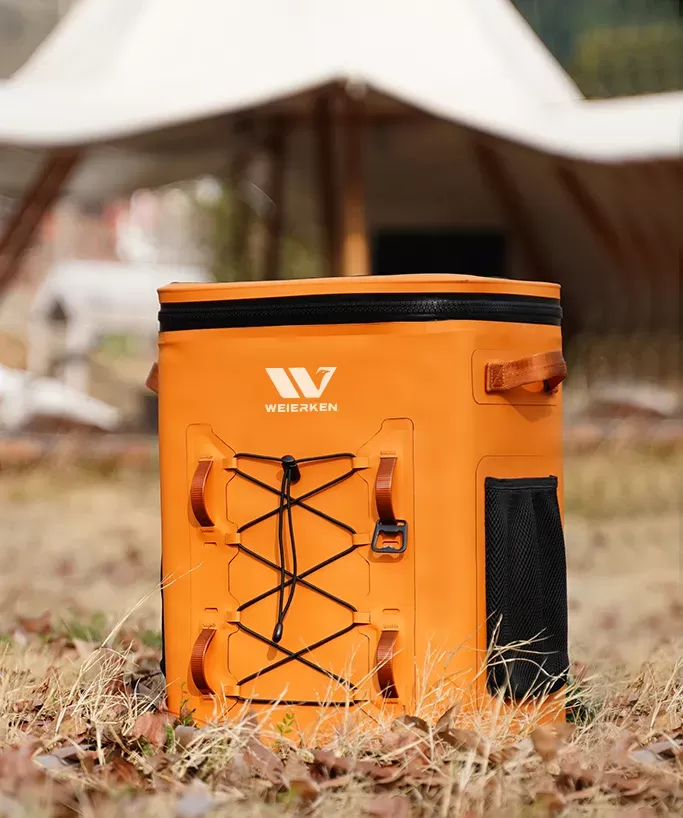

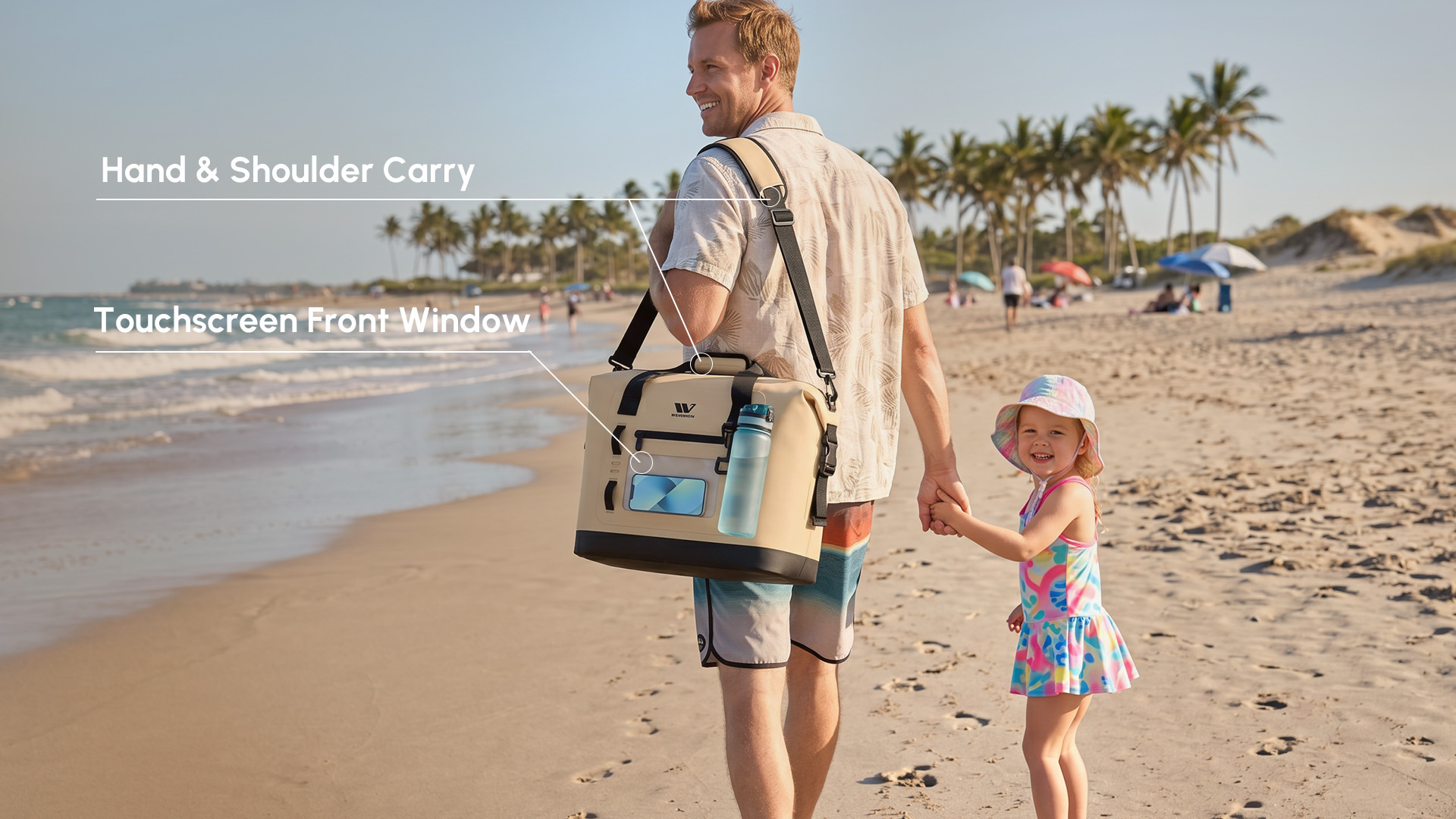
As the 2026 sailing season approaches, outdoor distributors and brand owners are finalizing their product lines. Among all categories, the waterproof sailing duffel stands out for its high unit value and strong functional appeal. It is a B2B sourcing hotspot. But behind the simple word "waterproof" lies a wide gap in material technology and supply chain resilience.
Weierken has nearly 20 years of manufacturing experience. We have seen how a wrong OEM choice can lead to full-container returns and brand damage. Before you hit the "order" button, run these 8 core questions past your potential supplier. These questions cut through marketing language and reveal the real product quality and factory capability.
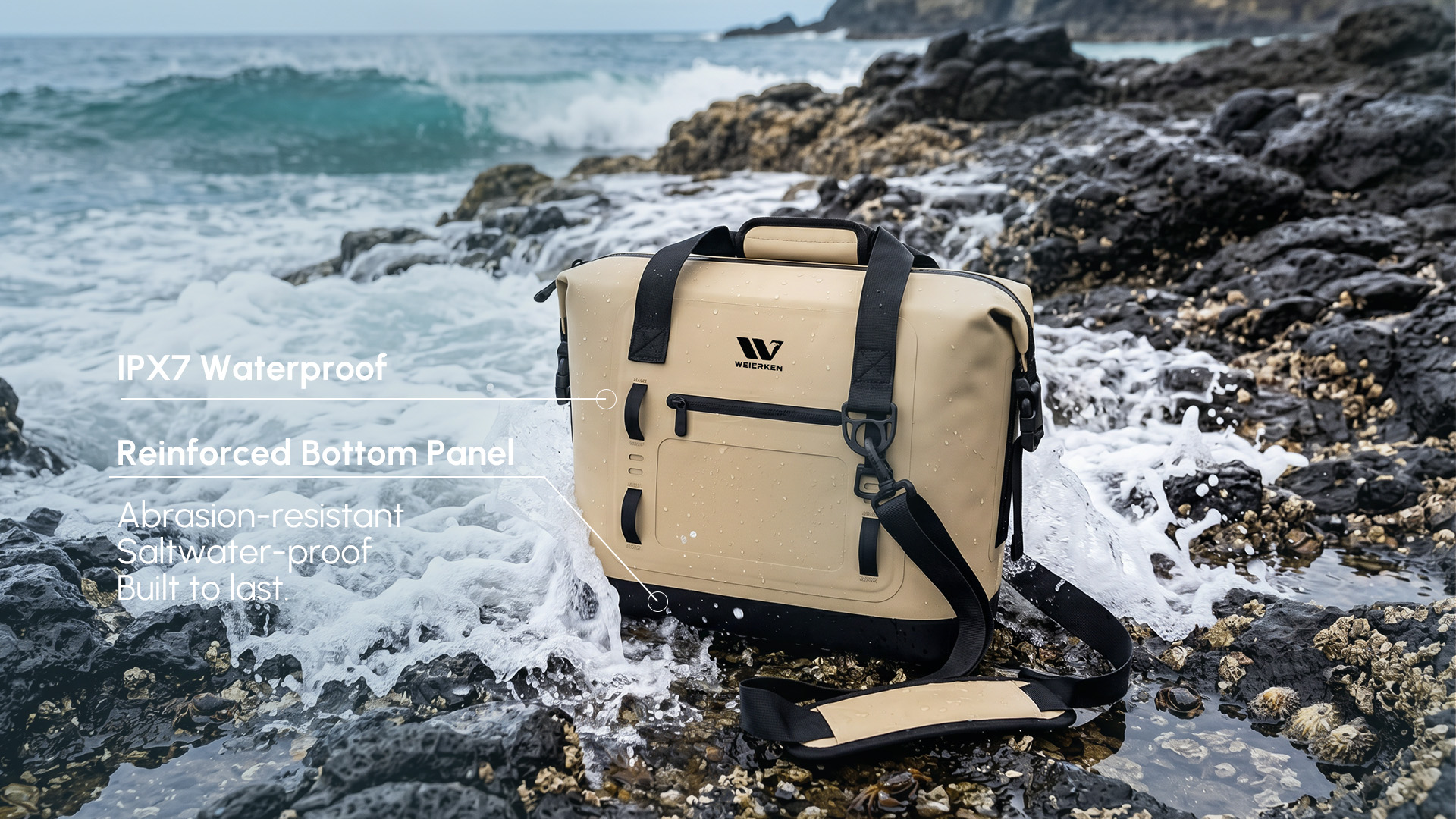
Question 1: What exactly does "waterproof" mean in your specification – DWR, water-resistant, or fully waterproof (IPX rated)? What test standard applies?
This is the most common and dangerous misunderstanding. Many factories label DWR-coated items as "waterproof." In sailing scenarios, bags face wave splashes and deck puddles. Ask for specific hydrostatic pressure test data (in mm/H₂O) or IPX ratings. A genuine sailing duffel should reach at least 10,000 mm water column, and the zippers must be waterproof airtight types, such as YKK waterproof zippers.
At Weierken, our lab runs full fabric tests. Every duffel marked "waterproof" passes rigorous pressure testing to stay dry in rough seas. We use true waterproof constructions—TPU/PEVA coatings or laminated membranes—not cheap surface treatments.
Question 2: How do you prevent corrosion on zippers, buckles, and metal parts in humid salt-spray environments?
Fabric integrity is only half the battle. Saltwater attacks metal hardware, and that is the second leading cause of product failure. Poor zippers can rust and seize within a week of salt spray testing.
Check if hardware undergoes 48- or 72-hour neutral salt spray tests. Ask about zipper slider materials—high-density resin or anodized aluminum are preferred. Weierken follows "marine-grade" standards for all trims. Our metal buckles pass 72-hour salt spray tests, and we partner with top-tier zipper brands or equivalent custom-made options. This ensures accessory life matches fabric life.
Question 3: Beyond seam taping, how do you handle the "needle hole" weak point?
Every stitched seam leaves needle holes. Internal taping alone cannot stop water intrusion under pressure—capillary action pulls water through those tiny openings.
Ask about their joining methods. The best approach uses weld-bonding or high-frequency welding to eliminate needle holes entirely. If sewing is unavoidable, do they use swelling threads (which expand when wet) and apply three-layer seam tape? Weierken recommends seamless welding for sailing duffels. For structures that require stitching, we use German-made swelling threads and apply strict secondary heat-pressing tape over every seam.
Question 4: For large orders (e.g., 20,000+ pieces), what is your average lead time, and where are your production bottlenecks?
Sailing duffels involve complex processes. During peak seasons, many factories overbook and delay shipments. With 2026 logistics still unpredictable, lead time is a lifeline.
Ask about raw material procurement cycles—especially waterproof fabrics and custom-molded buckles—and current factory loading. Request a clear capacity plan. Weierken operates three self-owned factories in China and Cambodia, totaling over 80,000 square meters with 3,000+ skilled workers. We reserve dedicated production lines for VIP clients. Monthly capacity is robust enough for urgent orders. Even for complex ODM projects, our flexible scheduling protects delivery dates.
Question 5: Do you offer material customization, or only stock fabrics? Can you develop exclusive colors or functional composite materials?
Brand differentiation starts with the fabric. If every factory uses the same few stock materials, price wars become inevitable. Confirm whether the factory has in-house R&D for custom weaves, high-visibility colors, or antimicrobial liners—not just cutting stock rolls.
Weierken's R&D department supports custom development from yarn sourcing. Whether you need lighter CORDURA blends or bio-based waterproof membranes, we complete fabric sampling within 6 to 8 weeks.
Question 6: What "open-mold" or semi-finished solutions do you have ready for quick OEM branding for the 2026 season?
Full mold development costs time and money. Reviewing the factory's existing pattern library can drastically cut development expenses and speed up market entry.
Ask to see their white-label samples. Good factories offer dozens of proven size variants that have already survived field testing. Weierken maintains a large pattern database. For sailing duffels, we keep 5 to 8 popular open-mold designs (30L to 150L) that support fast logo changes and color swaps, helping you launch in spring 2026 without delay.
Question 7: How do you quantify quality control? Do you accept third-party factory audits or 100% inspection?
Sailing duffels are high-value durable goods. Even a 1% defect rate becomes a serious customer complaint at retail level. Ask about their AQL (Acceptable Quality Limit) standard. Request records of destructive tests—drop tests with weighted loads, repeated flexing, etc.
Weierken operates a Six Sigma quality system, a practice we have maintained for over 2,000 global brand partnerships. We set five inspection checkpoints from fabric intake to finished packing. We welcome SGS, TÜV, or any international third-party auditors for on-site inspections or full lot checks. Transparency builds trust.
Question 8: How do you handle after-sales complaints—such as batch-level leaking or seam separation? Do you maintain a quality reserve fund?
This question tests the factory's long-term commitment. Many small workshops disappear after receiving final payment. Clarify the warranty period (typically 1 to 3 years) and the resolution process—repair, remake, or compensation.
Weierken treats every complaint as improvement input. We set aside a quality assurance fund for each project. We respond to major quality issues within 48 hours. Our two-decade history shows that solving existing client problems matters more than chasing new ones.
Long-tail Keywords and Industry Terms in Context
When you search for a waterproof sailing duffel OEM, you might also look for a marine duffel bag manufacturer, custom waterproof holdall producer, or sailing gear OEM supplier. You may need bulk waterproof duffel with salt-spray resistance or OEM sailing bag with RF welded seams. These terms reflect real procurement priorities. Weierken addresses each one directly—through material science, welding alternatives, and transparent quality reporting.
Sourcing Is About Partnership, Not Just Price
Choosing an OEM partner for waterproof sailing duffels means selecting a comprehensive service provider. You need material science, precision manufacturing, and supply chain management all in one. Weierken has delivered end-to-end solutions for global brands since 2006. We hope these 8 questions serve as a practical checklist for your 2026 sourcing decisions.
Take the next step. Contact Weierken for our latest 2026 sailing collection catalog or to schedule a live virtual factory walk-through.
Frequently Asked Questions
Q1: What MOQ do you require for a custom waterproof sailing duffel?
Our standard MOQ is 500 pieces for fully customized designs (size, color, hardware, branding). For open-mold options with logo changes, we accept lower quantities. We also offer sample runs for testing. Contact us with your target volume and we will propose a flexible plan.
Q2: Can you produce duffels with roll-top closures and backpack-style straps?
Yes. We have extensive experience with hybrid designs. You can combine roll-top waterproof seals with padded shoulder straps, haul handles, and compression straps. Our pattern library includes multiple closure and carry system options. We can also develop custom strap geometries for your specific user group.
Q3: What is the typical shelf life of your waterproof coating under UV exposure?
Our standard PVC and TPU formulations include UV stabilizers. Under QUV accelerated testing (ASTM G154), we retain over 85% of breaking strength after 1,500 hours. In real-world tropical routes, you can expect 5 to 8 years of reliable service. We can also apply additional UV-protective topcoats for extended outdoor storage.
Q4: Do you provide design assistance for first-time brand owners?
Absolutely. Our in-house design team works with you from concept to production. We offer 3D sketches, material recommendations, and structural analysis. We help you avoid common pitfalls like improper pocket placement or weak stress points. This service comes as part of our OEM/ODM partnership.
Q5: How do you handle shipping for urgent orders?
We maintain buffer stocks of key materials and offer expedited production for confirmed orders. For air freight or express shipping, we coordinate with our logistics partners to provide competitive rates and real-time tracking. We also offer DDP door-to-door service to simplify customs clearance.
Q6: Are your materials REACH and GRS certified?
Yes. We hold REACH, GRS, BSCI, SEDEX, and ISO 9001 certifications. We can supply compliance documents for your target markets. If you need rPET or bio-based materials, we have ongoing programs to source and test those options. Just specify your requirements during the inquiry phase.
Q7: Can I visit your factory or audit remotely?
Yes. We welcome physical visits to our China and Cambodia facilities. For remote audits, we provide live video walk-throughs, real-time production data, and quality records. We work with third-party auditors like SGS and TÜV to facilitate independent inspections.
Request a quote and start your 2026 sourcing with confidence.