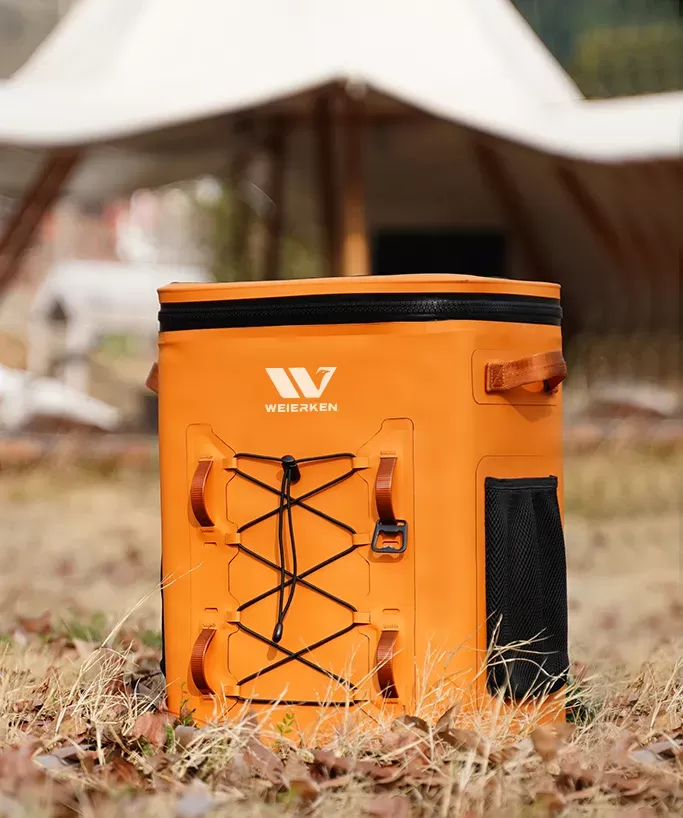

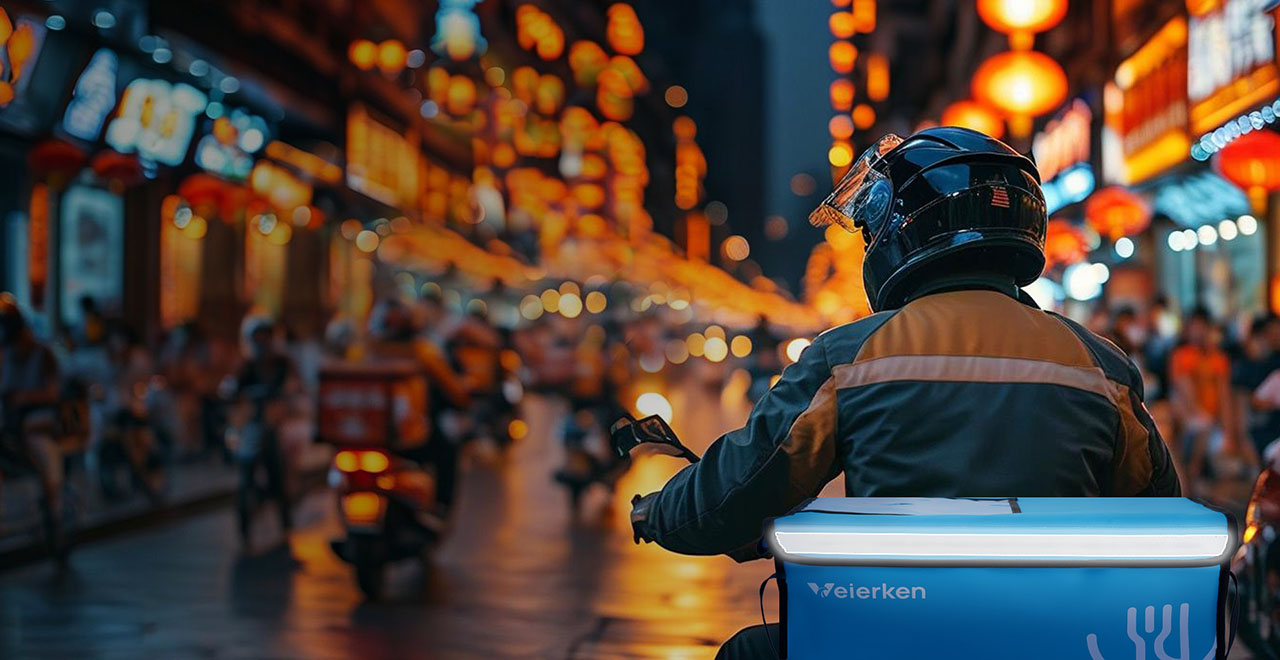
Sourcing insulated bags in large quantities involves certain business risks. Many B2B buyers experience a common problem: the initial golden sample looks excellent, but the final bulk shipment arrives with weak stitching, failing zippers, or poor thermal retention. When you buy thousands of units, even a small defect rate can disrupt your distribution and hurt your bottom line.
To secure your supply chain, you must evaluate potential manufacturing partners based on clear, measurable metrics. Working with a reliable bulk insulated bag maker ensures that your technical requirements are met consistently from the first unit to the last. Established manufacturers, such as Weierken, follow structured production workflows to maintain these standards across every production run. Here are the five quality standards you should look for during your selection process.
1. Material Specification Transparency & Thermal Performance
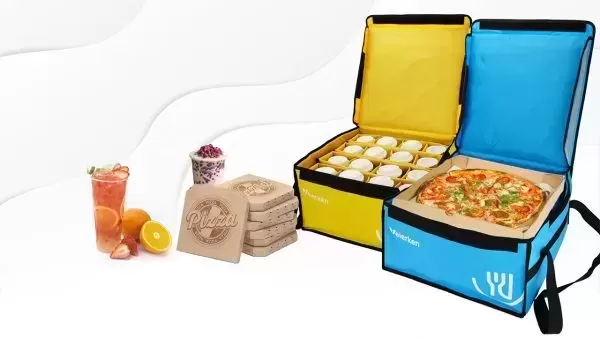
Low-end factories often lower their prices by using low-density recycled foam or thinner outer fabrics. A professional bulk insulated bag maker will always provide a detailed material specification sheet. They do not hide behind vague terms like "insulated lining" or "heavy-duty fabric." Instead, they specify the exact denier of the yarn and the density of the foam insulation.
When you evaluate materials, check for high-performance components that match your specific industry needs. For example, food delivery requires different insulation compared to pharmaceutical transport or grocery retail. Your supplier should offer a clear choice of raw materials to achieve the target thermal efficiency.
Always review these critical material specifications before placing an order:
Outer Fabric: Heavy-duty, tear-resistant materials like 600D or 900D Oxford polyester, heavy-duty TPU, or eco-friendly RPET fabric.
Insulation Layer: High-density Expanded Polyethylene (EPE) foam or Polyurethane (PU) foam with a thickness ranging between 5mm and 10mm.
Interior Lining: High-grade TPU insulated lining or thick PEVA. These materials keep contents cool and prevent condensation from seeping into the insulation.
A transparent materials policy guarantees that your bags maintain reliable leakproof thermal insulation under everyday working conditions.
2. Advanced Sealing and Leakproof Craftsmanship
How a bag is put together determines how long it will last in the field. Traditional sewing needles puncture the inner lining, leaving small holes. When ice melts inside a stitched bag, water quickly seeps through these needle holes, ruining the insulation and causing external leaks.
A top-tier custom insulated cooler bag factory solves this issue by using advanced assembly methods. They invest in specialized machinery that seals the interior lining without using needles. This creates a solid, continuous barrier that holds liquids reliably.
Look for these assembly techniques during your factory evaluation:
High-Frequency Heat-Sealing: This process uses electromagnetic energy to weld PEVA or TPU liners together, creating a 100% leakproof seam.
Strap Reinforcement: Carrying handles and shoulder straps must feature "X-Box" cross-stitching or metal rivets at all major stress points.
Industrial-Grade Zippers: Look for heavy-duty, water-resistant zippers that open and close smoothly without catching on the inner lining.
Heavy stress-point reinforcement prevents handles from ripping when the bag is loaded to its maximum weight capacity.
3. Strict International Compliance & Factory Audits
For corporate brands and international buyers, regulatory compliance is a major priority. Importing bags that fail local safety tests can lead to customs delays, expensive fines, or product recalls. A reliable manufacturer must prove they operate an ethical, clean, and compliant facility.
Before partnering with a supplier, ask for copies of their latest factory audits and material safety certificates. A reputable wholesale thermal bag manufacturer will have these documents readily available. They should also be familiar with the import standards of your target market.
A compliant manufacturer should meet the following global standards:
Social Responsibility Audits: The facility should be a BSCI certified bag maker or hold equivalent Sedex (SMETA) compliance.
Quality Management Systems: The factory should operate under verified ISO9001 factory standards to ensure structured production processes.
Chemical & Food Safety: All interior materials must be certified BPA-free, lead-free, and compliant with FDA or REACH standards.
Verifying these certificates early protects your business from legal risks and ensures your products are safe for daily food contact.
4. Consistent Mass Production Quality & AQL Standards
Making a single perfect sample is relatively straightforward. Maintaining that same level of quality across a run of 10,000 bags requires disciplined quality control. A dependable bulk insulated bag maker uses strict inspection methods at every stage of production.
Rather than relying on a final quick check before shipping, a professional factory integrates quality checks directly into the assembly line. This helps catch minor issues before they become widespread problems.
At Weierken, we manage production quality using a multi-step inspection framework:
In-Line Quality Control (IPQC): QC inspectors check the fabric cutting, sewing accuracy, and heat-sealing parameters on the live production line.
AQL Sampling Standards: The factory should inspect final batches using international Acceptable Quality Limit (AQL 2.5/4.0) standards.
Performance Testing: Randomly selected finished bags undergo load-bearing pull tests, zipper cycle tests, and water leakage checks.
A structured mass production QC system ensures that the bags delivered to your warehouse match the approved prototype in every detail.
5. Professional OEM/ODM Design and Engineering Support
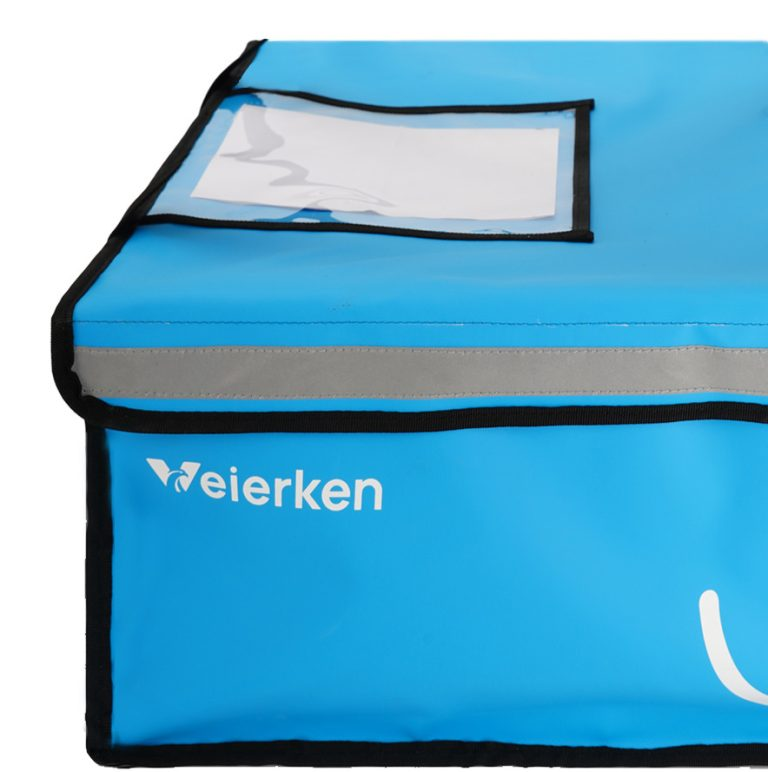
B2B buyers often need custom modifications to fit specific food trays, medical containers, or retail displays. A basic trading company can only sell you standard designs. In contrast, a capable bulk insulated tote bags supplier offers in-house engineering and design support.
Experienced design engineers can suggest smart modifications that improve performance while reducing production costs. They can also optimize the bag's dimensions to help you save on international shipping fees.
A strong manufacturing partner supports your business with these engineering capabilities:
Rapid Prototyping: The ability to turn your design concepts or 2D drawings into physical, functional samples within 3 to 5 business days.
Space-Saving Designs: Engineering collapsible or flat-folding structures that reduce shipping volume and warehouse storage space.
Component Optimization: Helping you choose cost-effective material combinations that meet your thermal requirements without exceeding your budget.
A manufacturer with real engineering expertise helps turn your product ideas into practical, durable transport solutions.
Frequently Asked Questions
Q1: Why is heat-sealing better than traditional stitching for insulated liners?
Stitching punctures the liner, creating tiny holes where liquid can escape and heat can enter. High-frequency heat-sealing melts the liner edges together to form a seamless, waterproof barrier. This ensures the bag remains leakproof and retains its internal temperature more effectively.
Q2: What is the benefit of sourcing from a BSCI certified bag maker?
A BSCI certification proves that the factory meets international labor laws, provides safe working conditions, and pays fair wages. Sourcing from an audited facility protects your brand's reputation and ensures compliance with ethical sourcing policies.
Q3: What thickness of foam insulation should we choose for commercial food delivery?
For standard food delivery, an EPE foam thickness of 5mm to 8mm is usually sufficient. For long-distance transport, professional catering, or cold-chain logistics, we recommend using 8mm to 10mm high-density foam for better thermal performance.
Q4: How do AQL 2.5 and AQL 4.0 standards protect bulk buyers?
The Acceptable Quality Limit (AQL) is an industry-standard sampling method. AQL 2.5 sets a strict limit on major defects (such as broken zippers or leaks), while AQL 4.0 covers minor cosmetic issues. This statistical approach ensures your bulk order meets agreed quality levels before leaving the factory.
Q5: Can you optimize the bag structure to reduce our ocean freight costs?
Yes. Experienced design engineers can create collapsible patterns. This allows the insulated bags to pack flat for transit, maximizing the number of units per shipping container and significantly lowering your logistics costs.
Inquire with Our Team
Finding a dependable supplier does not have to be a difficult process. At Weierken, we focus on delivering reliable manufacturing, clear communication, and consistent quality control for every bulk order. Whether you are launching a new product line or upgrading your current delivery fleet, we are ready to assist you.
We invite you to reach out to our team to discuss your project requirements, request a custom sample, or receive a detailed production quote. Let us help you build durable transport solutions for your business.