
For food brands, online delivery platforms, and fresh grocery enterprises, a delivery bag is not just a tool to keep food warm. It is a direct extension of your brand image and a critical touchpoint in the customer experience. Choosing the wrong carrier can lead to lukewarm meals, spilled liquids, and ruined reputations.
Selecting the right production partner directly impacts your daily operational costs and customer satisfaction ratings. Experienced suppliers like weierken work closely with brands to ensure their delivery gear meets practical, real-world demands.
When you evaluate a potential takeout insulated bag maker for your bulk procurement needs, we suggest focusing on these five core performance standards.
1. Material Safety and Compliance Standards
Food delivery bags experience high humidity and heat cycles daily. Hot food releases steam inside the bag, which can cause low-quality materials to leach chemical odors or toxins. Therefore, material safety is your absolute first check.
Verify the Inner Liner Material
Ensure the manufacturer uses a certified, non-toxic lining that does not emit odors when exposed to heat. Common industry standard materials include:
Food-grade aluminum foil liner: Excellent for heat reflection and easy to wipe clean.
PEVA (Polyethylene Vinyl Acetate): A chlorine-free, eco-friendly plastic liner that offers solid waterproofing.
TPU (Thermoplastic Polyurethane): Highly durable, flexible, and resistant to oil and grease.
Check Food-Contact Certifications
A reputable food delivery bag manufacturer must provide valid test reports. Ask if their materials comply with local and international food contact regulations. Look for certifications such as FDA, LFGB, REACH, or RoHS. Compliance protects your brand from legal risks and ensures smooth customs clearance during international shipping.
Sanitization and Cleaning Capability
Delivery bags require daily sanitizing to prevent mold and bacterial growth. The inner lining must withstand chemical sanitizers without peeling, cracking, or losing its reflective coating over time.
2. Thermal Performance and Testing Capabilities
The primary function of any delivery container is to slow down temperature loss. A professional takeout insulated bag maker does not rely on guesswork; they use concrete test data to prove insulation efficiency.
Insulation Core Thickness and Density
Ask about the middle insulation layer. Most high-performance bags use EPE foam insulation (Expanded Polyethylene) or high-density pearl cotton. For standard 30-minute deliveries, a 5mm foam thickness is usually sufficient. For longer transits or frozen food deliveries, look for thickness levels between 8mm and 10mm to maintain the cold chain.
Air-Tightness and Closure Engineering
Heat escapes quickly through small gaps. Examine how the manufacturer seals the zipper areas and seams. Flaps over zippers, magnetic closures, and heat-sealed interior seams help trap hot or cold air far better than basic stitched edges.
Request Temperature Retention Curves
Before committing to a high-volume order, ask the thermal delivery bag supplier if they conduct formal thermal tests. A professional factory should provide a temperature retention test chart. This data shows exactly how many degrees the internal temperature drops over 30, 45, or 60 minutes in a controlled environment. This helps you select a cost-effective material thickness for your specific delivery radius.
3. Structural Durability and Load-Bearing Design
The delivery environment is harsh. Couriers constantly open and close bags, pull straps, toss containers onto delivery bikes, and stack bags on top of each other. Weak construction results in split seams and broken handles within a few weeks of active field use.
At weierken, we focus on balancing structural integrity with lightweight materials to ensure delivery personnel can operate comfortably and safely throughout their shifts.
Stitching Reinforcement Techniques
Inspect the high-stress areas like the handle attachments and shoulder strap anchors. The manufacturer must use nylon thread and apply cross-stitching reinforcement (often called X-box stitching). This technique distributes weight evenly across the fabric panel, preventing the handles from ripping away under load.
Hardware and Zipper Durability
Zippers are often the first component to fail. Ensure the manufacturer uses thick, industrial-grade nylon zippers or waterproof zipper tracks. They should glide smoothly without catching. If you use Velcro closures, check the cycle life rating to ensure they do not lose grip after repeated use.
Physical Load-Testing Data
A reliable supplier of heavy-duty delivery bags should perform load-bearing tests. Ask if they run static and dynamic weight tests. For commercial use, a standard food delivery bag should support at least 10kg to 15kg of weight without sagging at the base or deforming the overall structure.
4. Customization Capabilities and Design Flexibility
No two food delivery operations are identical. A pizza chain requires different interior dimensions and structural support than a boba tea brand or a fresh seafood delivery company.
OEM and ODM Design Experience
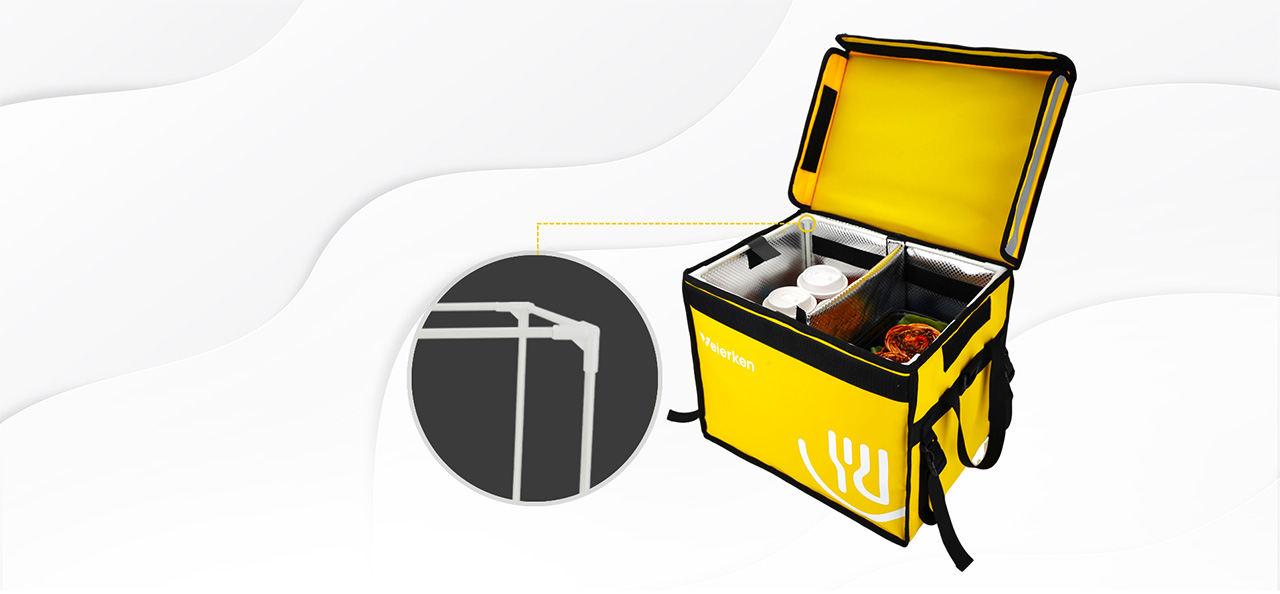
Your chosen takeout insulated bag maker must offer professional design services. They should easily translate your mockups into functional physical prototypes. Ask if they can build custom interior organization systems, such as:
Removable hook-and-loop dividers to separate hot and cold items.
Elastic cup holders or built-in beverage racks to prevent spills during transport.
External receipt pockets, transparent order windows, and key clip loops.
High-Fidelity Branding and Printing
Your delivery fleet is a moving billboard. The manufacturer must offer precise, durable printing options like silk-screen printing, heat transfer, or rotogravure printing. The ink must withstand UV exposure, heavy rain, and physical abrasion without fading or cracking. When ordering bulk insulated bags, color consistency across different production batches is vital for maintaining your corporate visual identity.
5. Supply Chain Stability and Production Capacity
The food service sector experiences sudden seasonal demand spikes and promotional peaks. Your supplier must possess the manufacturing scale to deliver consistent quality on tight schedules.
Scalable Production Lines
Inquire about the factory's monthly output capacity and their scheduling flexibility. If you run a large promotion and need 5,000 units quickly, can they adjust their production lines without compromising on quality? A stable insulated food carrier wholesale supplier will have established raw material networks to buffer against sudden supply shortages.
Strict Quality Control (QC) Systems
Check if the factory operates under a certified quality management system, such as ISO 9001. A reliable manufacturing process includes distinct inspection stages:
Incoming raw material inspection (fabric, foam, lining, zippers).
In-line inspections during the cutting and sewing processes.
Final visual and functional checks on 100% of finished goods before packaging.
This systematic approach reduces the defect rate and saves you from dealing with faulty equipment in the field.
Choosing a Reliable Partner
Partnering with the right takeout insulated bag maker helps safeguard your food quality and improves customer loyalty. By checking material safety, heat retention data, structural durability, customization options, and factory capacity, you can make a secure procurement decision.
As an experienced manufacturer in this space, weierken is committed to delivering practical, durable, and fully compliant delivery solutions for brands worldwide. We design our commercial catering bags to meet the daily challenges of the modern delivery industry.
Are you ready to upgrade your food delivery equipment? Contact our team today to request a quote or discuss your custom design requirements with our product specialists.
Frequently Asked Questions
1. What is the most durable material for the exterior of a delivery bag?
Most commercial delivery bags use high-denier polyester or nylon fabrics, such as 600D, 1000D, or 1680D Oxford cloth. These fabrics offer high resistance to tears, abrasions, and water, making them ideal for daily outdoor use in various weather conditions.
2. Can I get a custom size tailored to our specific delivery containers?
Yes. A professional takeout insulated bag maker can customize the internal dimensions, shelf dividers, and pocket placements to fit your specific food trays, pizza boxes, or beverage cups perfectly, ensuring minimal movement during transit.
3. What is the typical Minimum Order Quantity (MOQ) for custom insulated bags?
MOQ requirements vary depending on the level of customization and the specific materials needed. Generally, custom orders start around 500 to 1,000 units. For standard, ready-to-ship designs with simple logo printing, the MOQ is usually lower.
4. How do you prevent internal condensation from making food soggy?
To reduce steam buildup, manufacturers can integrate small ventilation eyelets or use breathable, moisture-wicking materials in specific areas of the bag. This allows excess steam to escape while retaining the bulk of the thermal heat.
5. How do you verify that the inner lining is truly food-safe?
You should request official testing reports from recognized testing agencies like SGS, Intertek, or TÜV. These reports verify that the plastic or aluminum foil lining does not contain heavy metals, BPA, phthalates, or other harmful chemicals that could migrate into food.