
Delivery backpacks are the quiet workhorses of the modern gig economy. They protect food temperature, prevent beverage spills, and keep riders comfortable during long shifts. If a bag fails, customer satisfaction drops immediately, and food portals lose money.
Off-the-shelf bags rarely fit the unique needs of different food platforms, climates, and cuisines. A standard backpack cannot carry hot pizzas and ice cream at the same time. This is why brands require custom development from an experienced manufacturer.
When selecting a delivery backpack maker, you need a partner who offers deep customization. Industrial suppliers like weierken help logistics platforms design durable, weather-resistant bags that keep food intact and help riders work efficiently.
1. Custom Thermal Insulation & Temperature Control Solutions
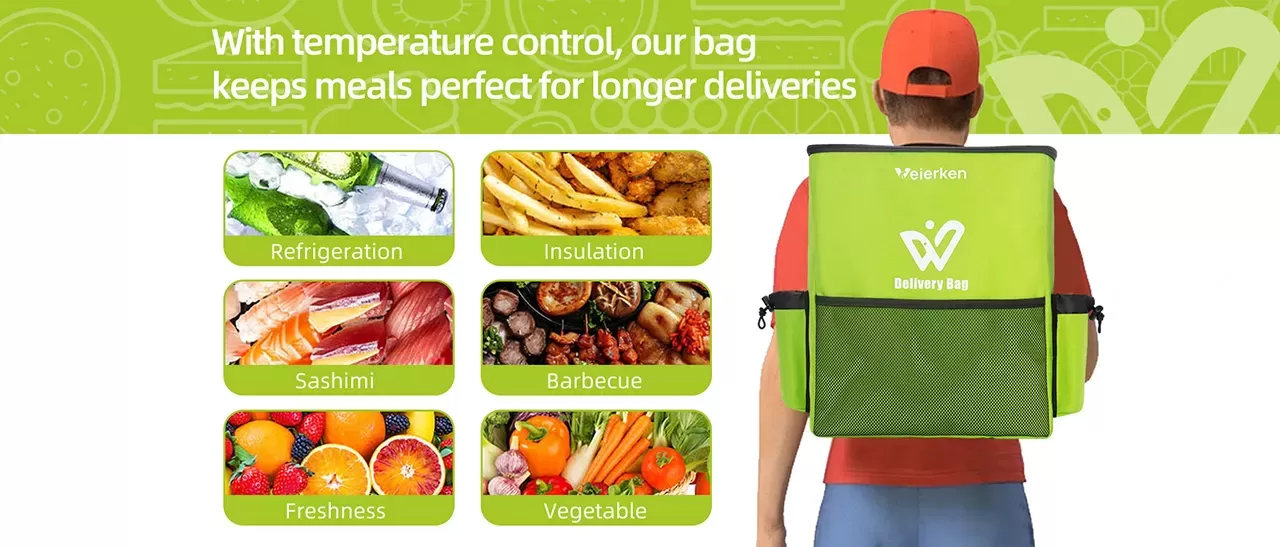
Food temperature is the most critical metric for any food delivery platform. Hot meals must stay above 60°C to prevent bacterial growth, while cold drinks must remain chilled. A standard lining cannot handle both requirements simultaneously.
A reliable insulated food delivery bag factory offers advanced thermal barriers. You should ask for customized insulation layers based on your local climate and primary food types. Common options include double-sided aluminum foil, thick Expandable Polyethylene (EPE) foam, and rigid polyurethane panels.
Make sure your supplier can provide the following thermal customizations:
Dual-Zone Dividers: Insulated, removable panels using strong Velcro to separate hot pizzas from iced drinks.
Integrated Heating Elements: 12V or USB-powered heating pads built into the bottom liner for long-distance deliveries.
Ice Pack Pockets: Heavy-duty mesh pockets designed specifically to hold commercial gel packs for ice cream transport.
2. Advanced Weatherproofing & Material Durability Engineering
Delivery riders face harsh outdoor environments every day. They ride through torrential rain, intense sunlight, and heavy winter snow. Cheap fabrics degrade quickly, leading to water leaks and unhappy customers.
Your delivery backpack maker must use industrial-grade materials built for outdoor exposure. The outer shell needs high tear strength and must repel water completely. Look for fabrics like 500D or 1000D PVC tarpaulin and double-sided TPU-coated nylon.
To ensure total weatherproofing, ask your supplier about these structural details:
Seamless Welding: Using high-frequency welding instead of traditional stitching on outer seams to prevent water entry.
Waterproof Zippers: Specifying polyurethane (PU) coated zippers or wide rain flaps that shed water during heavy downpours.
Molded Protective Bases: Hard plastic feet or thick rubberized bottom panels that protect the fabric when riders place the bag on rough concrete.
3. Ergonomic Load-Distribution & Rider Comfort Customization
Riders often carry loads weighing up to 15 kilograms for hours at a time. Poor backpack design causes muscle fatigue, back pain, and unsafe riding postures. Comfort directly impacts rider retention and delivery times.
A professional custom delivery backpack OEM prioritizes ergonomic design. The backpack must distribute weight evenly across the rider’s hips rather than pulling down solely on their shoulders.
Ensure your production specifications include these comfort-focused features:
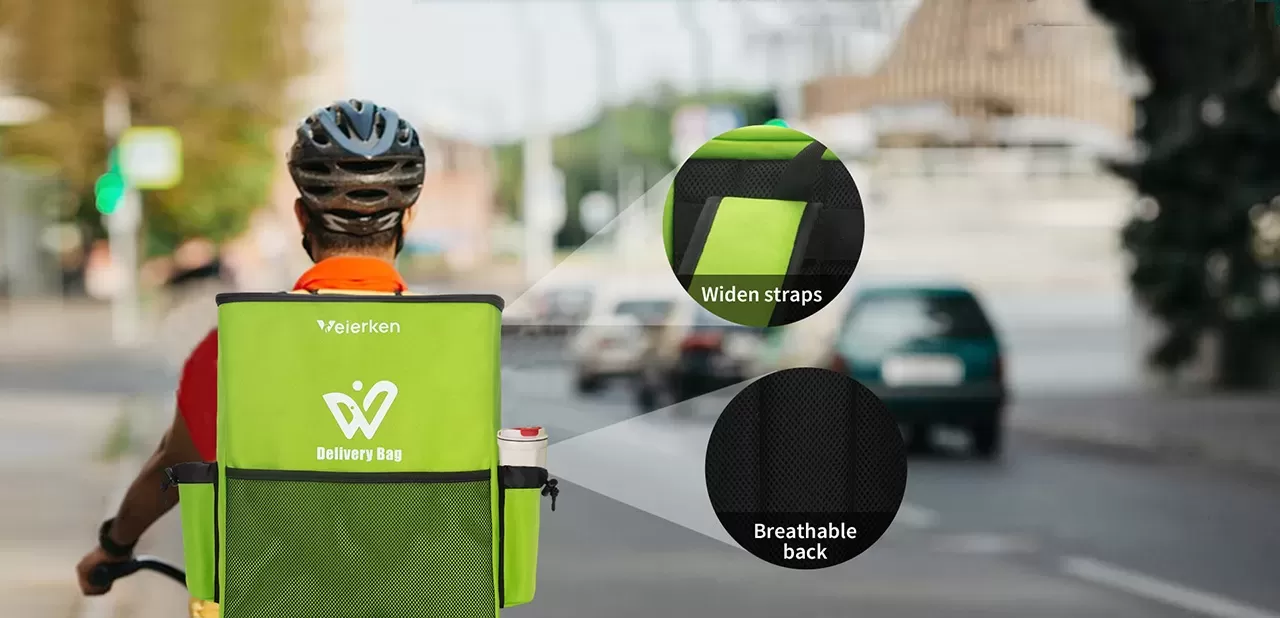
Thick S-Shaped Shoulder Straps: Wide, high-density EVA foam straps that prevent chafing and distribute pressure.
Adjustable Harness Systems: Sternum straps and padded hip belts that keep the heavy pack secure during fast motorcycle turns.
3D Mesh Back Panels: Multi-layered, channeled mesh padding that promotes airflow and keeps the rider’s back cool.
Dual-Use Mounting Systems: Heavy-duty metal D-rings and buckle straps that let riders securely mount the bag to a scooter rack.
Comparison of Common Delivery Bag Materials
Selecting the right fabric is a balance between weight, cost, and weather resistance. Use this table to understand the trade-offs before starting mass production.
| Material Type | Water Resistance | Abrasion Resistance | Weight Factor | Best Use Case |
|---|---|---|---|---|
| 500D PVC Tarpaulin | Excellent (Waterproof) | Very High | Heavy | Heavy rain regions, rough daily use |
| TPU Coated Nylon | Excellent (Waterproof) | Extremely High | Medium-Light | Premium brands, electric bicycle riders |
| 1680D Oxford (PU Backed) | Moderate (Water-resistant) | High | Medium | Dry climates, budget-friendly fleets |
4. Modular Interior & Collapsible Structural Design
The items a rider carries change with every order. One trip might involve six large cups of bubble tea, while the next order is a family-sized pizza box. Fixed interior spaces lead to tipped cups and damaged food packaging.
Your thermal delivery bag manufacturer should provide modular interior options. Flexible spaces keep items secure during transport. Furthermore, empty bags should not waste valuable storage space when not in use.
Discuss these space-saving and modular structural options with your OEM partner:
Adjustable Cup Holders: Modular foam inserts with customizable holes to hold drinks of various diameters upright.
Collapsible Frame Construction: Removable fiberglass poles or folding plastic walls that allow the bag to collapse flat.
Reduced Freight Costs: Collapsible bags take up 60% less volume during ocean shipping, saving your brand thousands in logistics costs.
5. High-Visibility Safety Systems & Brand Identity Integration
Delivery riders work through busy city traffic, often late into the night. Visibility is a matter of life and safety. At the same time, every bag serves as a moving billboard for your platform's brand.
Reliable manufacturers, such as weierken, balance safety requirements with clean brand aesthetics. We use high-grade reflective materials that remain bright even in poor weather conditions.
Ask your supplier to integrate these safety and branding options:
360-Degree Reflective Piping: High-grade micro-prismatic tape visible from all angles under headlight glare.
Active LED Warning Systems: Rechargeable, built-in LED light strips that flash to keep riders safe during night shifts.
Interchangeable Advertising Windows: Transparent PVC sleeves on the sides of the bag, allowing you to slide in temporary promotional posters.
Durable Branding Prints: High-definition silkscreen printing or UV-resistant transfers that will not peel or fade under UV sunlight.
Summary of Key OEM Selection Criteria
To help you choose the right partner for your project, here is a quick summary checklist to use during your initial supplier calls:
Does the factory have experience manufacturing bulk delivery backpacks for international brands?
Can they provide third-party lab certificates for waterproof ratings and insulation efficiency?
Do they offer customizable internal divider systems using food-safe, wipe-clean liners?
Are they capable of producing collapsible frames to help you optimize shipping container space?
Frequently Asked Questions
What is the minimum order quantity (MOQ) for custom delivery backpacks?
The standard MOQ for custom delivery bags typically ranges between 500 and 1,000 units per design. This depends on the specific fabrics, custom colors, and unique tooling required for your project.
How long does food stay hot inside a professional delivery backpack?
Using a premium 8mm EPE foam insulation layer combined with a reflective aluminum lining, a professional bag can keep hot food above safe temperatures for up to 2 to 3 hours.
Are PVC materials safe for carrying food containers?
Yes, provided the interior liner uses food-grade materials. Most high-quality bags use food-safe aluminum foil, PEVA, or TPU on the inside, keeping the industrial PVC fabrics restricted to the external shell.
Can a custom delivery backpack OEM design a bag that mounts to both bicycles and motorcycles?
Yes. Experienced manufacturers design dual-purpose mounting systems. These include quick-release buckles, heavy-duty straps, and metal mounting plates that attach securely to standard motorcycle cargo racks.
How do collapsible delivery bags save on shipping costs?
By shipping the bags flat-packed, you dramatically reduce the volume of the cargo. A single shipping container can hold up to three times as many collapsed bags compared to pre-assembled, rigid-frame bags.
Partner with an Experienced Delivery Bag Expert
Developing a high-performance delivery bag requires precise engineering, durable materials, and a clear understanding of rider ergonomics. Partnering with a skilled manufacturer ensures your fleet stays safe and your food arrives in perfect condition.
Whether you need to upgrade your current logistics fleet or design a brand-new model from scratch, the team at weierken is ready to assist you. Contact us today to discuss your technical specifications and request a sample.