Transporting fresh catch from the ocean to the consumer is a race against time and temperature. In the seafood industry, a slight deviation in the cold chain can result in spoilage, rejected shipments, and significant financial loss. The packaging you choose is the first line of defense. Consequently, selecting the right seafood cooler bag fabricator is not just a purchasing decision; it is a strategic move to protect your brand’s reputation.
Many buyers assume all insulated bags are created equal. This is a costly mistake. Seafood presents unique challenges—heavy loads, melting ice, saltwater corrosion, and strict hygiene requirements—that generic cooler bags cannot handle. At weierken, we understand that the difference between a successful delivery and a spoiled cargo often lies in the engineering behind the bag.
To help you navigate the supplier market, we have compiled five critical tips for evaluating a manufacturer. These guidelines will ensure you partner with a fabricator capable of meeting the rigorous demands of the global seafood trade.
1. Strictly Review Material Safety and Food-Grade Compliance
The most fundamental requirement for any seafood packaging is safety. Since the inner lining of the bag may come into direct contact with fresh fish, shrimp, or shellfish, the chemical stability of the material is non-negotiable.
Mandatory Food Contact Certifications
A professional seafood cooler bag fabricator must prove that their materials are chemically inert. You should not rely on verbal assurances. Instead, demand to see valid documentation for Food Contact Materials (FCM).
- FDA Compliance: For the US market, materials must meet FDA 21 CFR standards.
- EU Standards: European exports require compliance with LFGB or EU Regulation No 10/2011.
- GB 4806: If you are operating in or sourcing from China, this national standard is mandatory for food safety.
The manufacturer must demonstrate that their liners, insulation foams, and even the adhesives used do not release harmful substances. There should be zero risk of heavy metals or plasticizers migrating into your food products.
Advanced Traceability and Eco-Friendly Options
For premium markets, basic compliance is often just the starting point. Top-tier suppliers can provide a complete chain of custody for their raw materials.
- Material Sourcing: Ask the seafood cooler bag fabricator where they buy their TPU or PVC films. Reliable manufacturers buy from certified chemical giants, not the open spot market.
- Sustainability: As environmental regulations tighten, ask about PFC-Free (perfluorinated compound-free) waterproofing agents.
- Recyclability: Some fabricators now offer liners made from biodegradable or recyclable polymers. Checking for these options shows if the supplier is forward-thinking and ready for future regulatory shifts.
2. Evaluate Insulation Performance with Data, Not Assumptions
“Thick insulation” is a vague marketing term. In the cold chain, performance must be quantifiable. A competent seafood cooler bag fabricator relies on data to justify their product design.
Demand Third-Party Testing Reports
Do not accept a bag based solely on its appearance. You need proof of how it performs under stress. Request insulation test reports based on recognized standards like ASTM D3103.
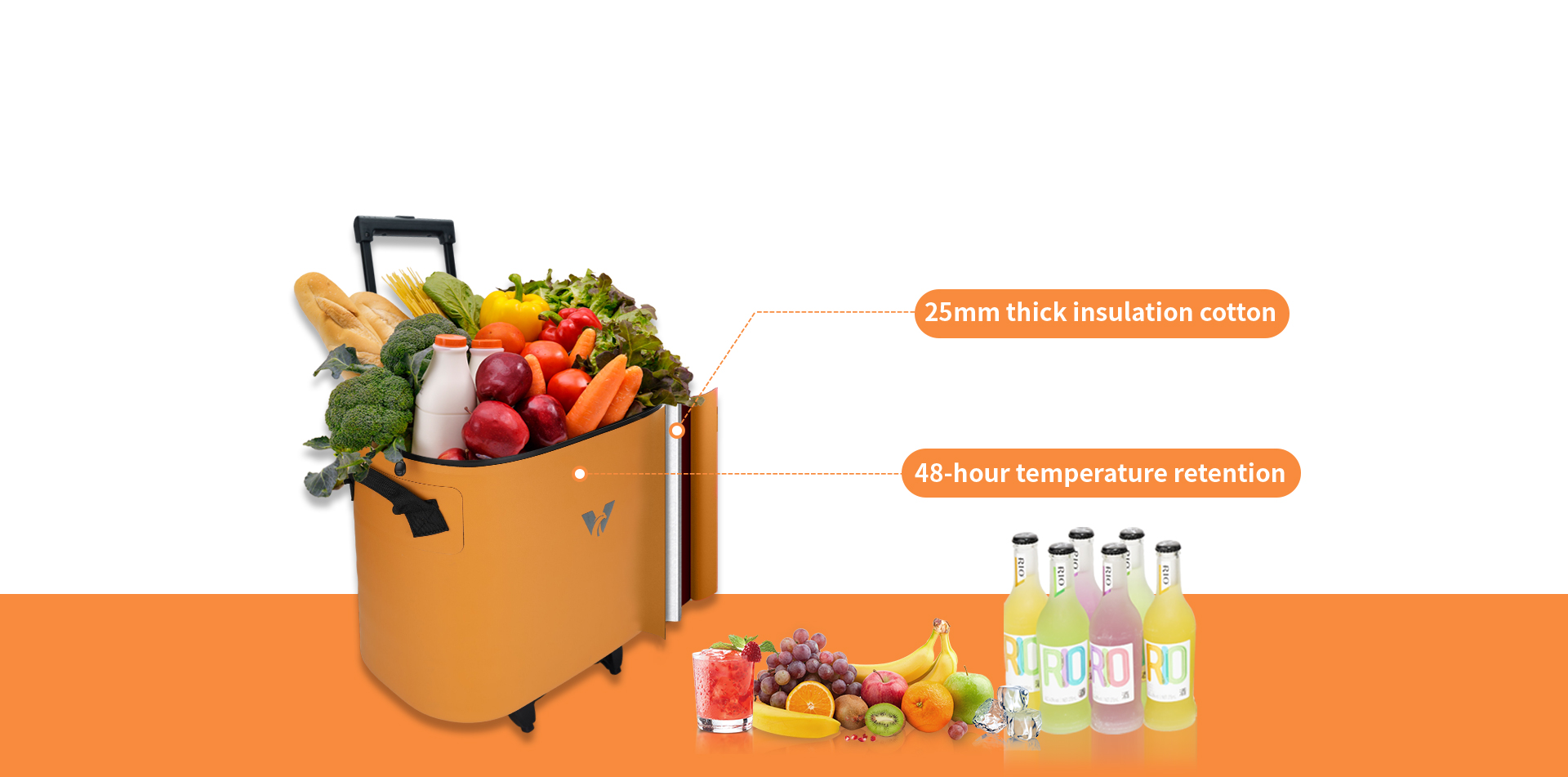
- Temperature Curves: Look for data showing the internal temperature over time (e.g., 24, 48, or 72 hours).
- Critical Zones: The data should demonstrate the bag’s ability to maintain the critical 0-4℃ zone in high ambient temperatures (e.g., 35℃).
- Real-World Simulation: Laboratory conditions are perfect, but the real world is not. Ask if the fabricator has conducted tests simulating solar radiation or humidity changes.
Analyzing Structure for Thermal Stability
A bag is a system. Even the best foam will fail if the design allows air exchange. When evaluating a sample from a seafood cooler bag fabricator, look for specific thermal engineering features.
- Seal Integrity: Check the closure mechanism. High-performance bags often use a combination of zippers and wide Velcro flaps, or roll-top designs, to prevent air exchange.
- Reflective Barriers: Does the design incorporate radiant barrier films to block heat transfer?
- Gap Analysis: Inspect the corners. Poorly made bags often have gaps in the insulation layer at the seams, creating “thermal bridges” where heat rushes in. A quality manufacturer uses continuous insulation techniques to eliminate these weak points.
3. Inspect Durability and Professional Craftsmanship
Seafood is heavy, wet, and messy. A standard stitched bag will absorb water, leak, and eventually rot. To handle the rigors of the supply chain, you need a seafood cooler bag fabricator that utilizes industrial-grade construction methods.
Waterproof and Leak-Proof Construction
The most common failure point in seafood bags is the seam.
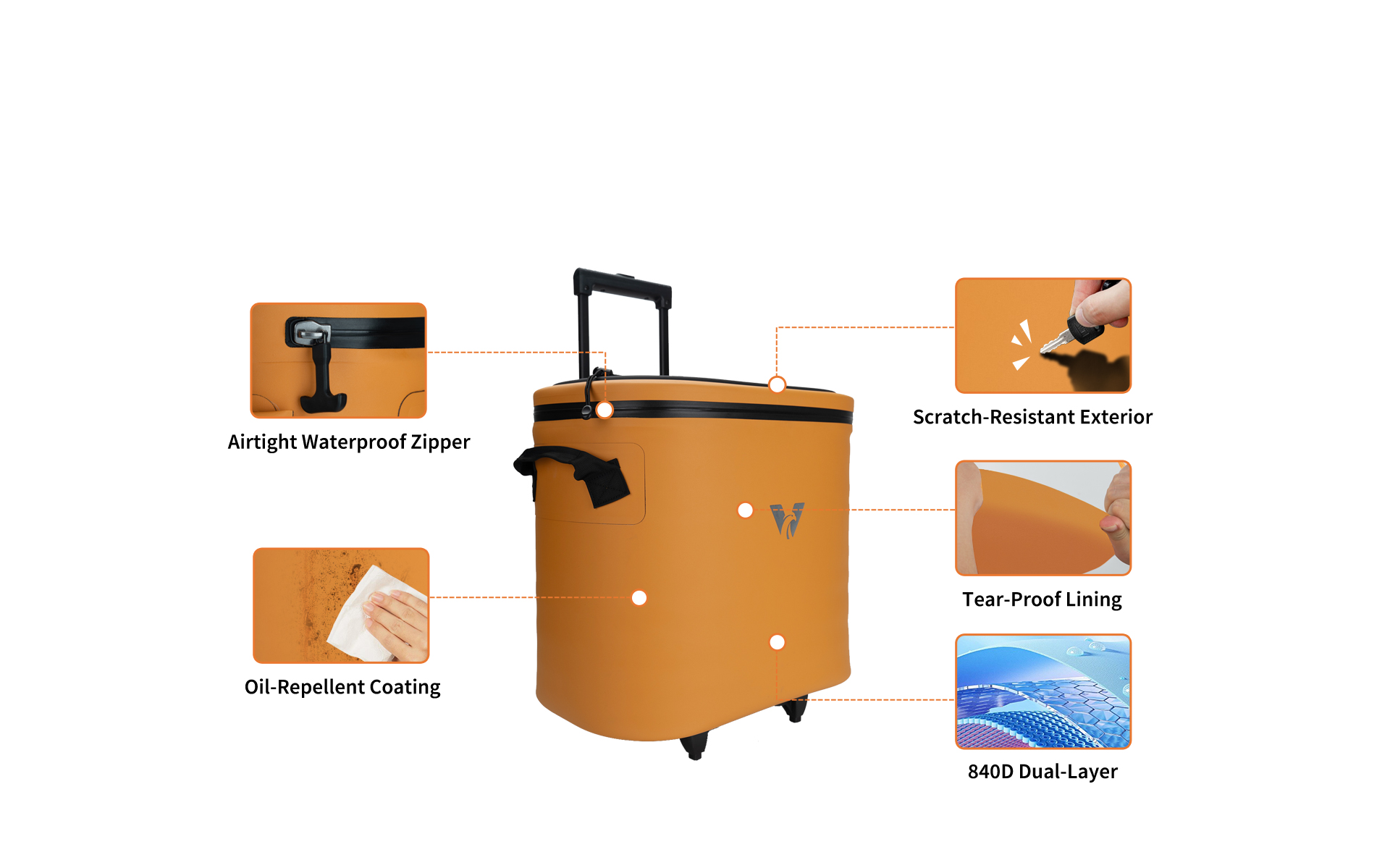
- High-Frequency Welding: The best bags are not sewn; they are welded. High-Frequency (HF) welding fuses the thermoplastic layers together, creating a seamless, airtight bond.
- No Needle Holes: Sewing creates thousands of tiny holes. Even with seam tape, these eventually leak. A specialized seafood cooler bag fabricator will prioritize welding technologies to ensure absolute containment of melting ice and fish fluids.
- Waterproof Zippers: Verify that the zippers are airtight and waterproof (similar to those used in diving gear) rather than water-repellent zippers used in apparel.
Load-Bearing and Physical Stress Testing
A bag full of ice and tuna can weigh over 50kg. The handle attachment points are critical.
- Wet Load Testing: Ask the supplier if they test their bags while wet. Nylon webbing behaves differently when saturated.
- Dynamic Testing: The seafood cooler bag fabricator should perform jerk tests (rapid lifting) and drop tests to ensure the handles won’t rip off during rough handling at the dock or loading bay.
- Reinforcement: Look for box-stitching or welded reinforcement patches at all high-stress points.
Hygiene and Ease of Cleaning
Fish blood and slime are breeding grounds for bacteria. The interior must be designed for sanitation.
- Smooth Surfaces: The lining should be non-porous and smooth to prevent residue buildup.
- Mold Resistance: Ask if the materials have anti-fungal treatments.
- Cleaning Protocol: The bag should withstand harsh cleaning agents and high-pressure washing without delaminating. This durability is vital for reusable assets in a closed-loop supply chain.
4. Confirm Customization and Cold Chain Solutions Experience
Every logistics network is unique. A generic size might result in wasted truck space or shifting cargo. A versatile seafood cooler bag fabricator offers ODM (Original Design Manufacturer) services to tailor the product to your operations.
ODM/OEM Service Capabilities
You need a partner who can adapt to your specifications.
- Dimensional Fit: Can they size the bag to fit perfectly inside your standard plastic crates or Styrofoam boxes?
- Functional Add-ons: Do they offer customization options like drainage valves for melted ice? Can they add internal dividers to separate different species?
- Identification: Can they integrate clear pockets for shipping manifests or color-coded handles to help your logistics team sort shipments quickly?
Industry-Specific Experience
Experience matters. A factory that primarily makes lunch bags will not understand the nuances of cold chain logistics.
- Problem Solving: A seasoned seafood cooler bag fabricator like weierken can anticipate problems you might miss. For example, we know that stacking heavy bags requires reinforced side walls to prevent collapse.
- Case Studies: Ask for examples of previous work in the fresh food or pharmaceutical sectors. Suppliers with a track record in these high-stakes industries are more likely to deliver reliable products.

5. Verify Quality Control Systems and Supply Chain Reliability
The final tip involves looking behind the scenes. A prototype might be perfect, but can the seafood cooler bag fabricator reproduce that quality 10,000 times?
End-to-End Quality Control
Quality must be managed at every stage.
- IQC (Incoming Quality Control): How do they check the raw rolls of fabric and foam before production starts?
- IPQC (In-Process Quality Control): Do they have inspectors on the line checking weld strength and dimensions during manufacturing?
- FQC (Final Quality Control): A reputable manufacturer will have a dedicated area for final inspection, checking for leaks, zipper function, and aesthetic defects.
- Site Visits: If possible, visit the factory or hire a third-party auditor. Seeing the QC process in action is the best verification.
Capacity and Supply Chain Stability
Seafood demand is often seasonal. You need a partner who can ramp up production when the catch is good.
- Production Capacity: Ensure their daily output matches your peak requirements.
- Material Stock: Does the seafood cooler bag fabricator keep a safety stock of raw materials? This buffers against supply chain disruptions and price spikes in the petrochemical market.
- Transparent Contracts: Your agreement should clearly define acceptance standards (such as AQL – Acceptable Quality Limits) and liability for defects. A transparent partner is willing to put these guarantees in writing.
Selecting a seafood cooler bag fabricator is a process that requires due diligence. It involves digging deeper than the price tag to understand the materials, engineering, and quality systems that support the product. A bag that fails during transit costs far more than the savings gained from a cheap supplier.
By focusing on food safety compliance, verified thermal performance, robust waterproofing, customization capability, and strict quality control, you can secure a supply chain partner that adds value to your business.
At weierken, we pride ourselves on meeting these high standards. We combine advanced insulation technology with rugged construction to ensure your seafood arrives fresh, safe, and ready for market.
Looking for a reliable partner for your cold chain packaging?
Contact our team today to discuss your project requirements and request a quote.
Frequently Asked Questions (FAQ)
1. Why is a specialized seafood cooler bag fabricator better than a general bag factory?
A general bag factory typically uses standard sewing techniques and materials designed for dry goods. A specialized seafood cooler bag fabricator understands the specific challenges of salt corrosion, heavy wet loads, and thermal retention. They use specialized food-grade materials and high-frequency welding to create leak-proof, durable containers that generic factories cannot replicate.
2. What is the difference between sewn and welded seams in seafood bags?
Sewn seams involve needles puncturing the fabric, creating thousands of tiny holes that allow water to leak out and bacteria to enter. Welded seams (created via High-Frequency or Heat Welding) fuse the materials together at a molecular level. This creates a completely waterproof and airtight seal, which is essential for maintaining hygiene and preventing leaks in seafood transport.
3. Can you customize the size of the cooler bags to fit our existing crates?
Yes. A professional seafood cooler bag fabricator offers ODM/OEM services. We can design bags specifically to fit inside your existing plastic totes, Styrofoam boxes, or pallet configurations. This maximizes space efficiency in your trucks and ensures the bags stack securely.
4. What certifications should I ask for regarding material safety?
You should request valid test reports for Food Contact Materials (FCM). Depending on your market, this includes FDA 21 CFR (USA), Regulation (EU) No 10/2011 (Europe), or GB 4806 (China). These certificates prove that the inner lining does not leach harmful chemicals into your seafood.
5. How do I know how long the bag will keep my seafood frozen?
Don’t guess—ask for data. Reputable manufacturers provide thermal test reports based on standards like ASTM D3103. These reports show the internal temperature curve over time under specific ambient conditions. We can also help you calculate the necessary insulation thickness and coolant ratio (ice/gel packs) to meet your specific transit duration targets.