


Transporting seafood is a race against time and temperature. Whether you are moving whole fish, chilled fillets, or live shellfish, the integrity of your packaging defines your success. A standard insulated bag won’t survive the weight of melting ice and sharp fins. This is why choosing a specialized seafood thermal bag factory is a critical business decision.
Weierken has spent years navigating the complexities of thermal logistics. We understand that a bag is not just a container; it is a vital part of the cold chain. When you are looking for a heavy-duty cooler bag maker, you need a partner who understands the harsh reality of the seafood industry.
The following five tips will help you separate professional manufacturers from low-quality workshops, ensuring your inventory remains fresh and your brand reputation stays intact.
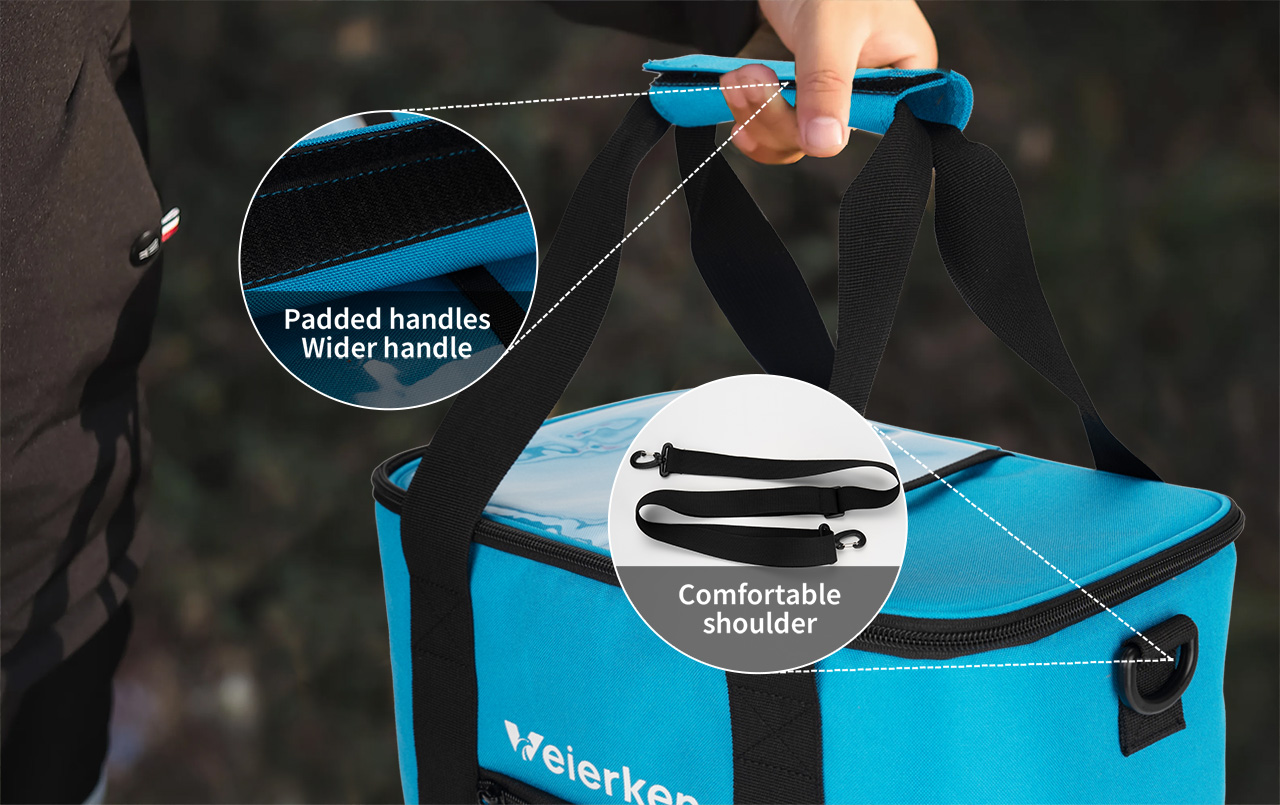
Tip 1: Evaluate Load-Bearing and Structural Durability
Seafood is dense. When you add layers of crushed ice or gel packs, the total weight increases significantly. Many generic bags fail at the seams or handles during the first use. When vetting a seafood thermal bag factory, you must interrogate their structural engineering.
Reinforcement at Stress Points
Standard stitching is insufficient for heavy-duty applications. Look for a factory that utilizes:
- Box-X Stitching: This pattern reinforces the areas where handles meet the bag body.
- Triple-Needle Reinforcement: Extra security for side seams that endure outward pressure from bulky contents.
- High-Tenacity Webbing: The straps should be rated for weights exceeding 50 lbs (23 kg).
Bottom Support Systems
A bag that sags at the bottom is prone to tearing. A professional heavy-duty cooler bag maker will offer options for rigid base inserts or cross-stitched bottom supports. Ask the factory for a static load-pull test report. This document proves the bag can hold a specific weight for an extended period without failure. Weierken prioritizes structural integrity because we know that a broken handle in a busy dock is more than an inconvenience—it’s a safety hazard and a loss of cargo.
Tip 2: Insist on Seamless Heat-Pressing Technology
In the seafood trade, leaks are unacceptable. Traditional sewing uses needles that create thousands of microscopic holes. These holes allow fish juices, blood, and melted ice to seep through. This creates hygiene issues and ruins the thermal barrier.
High-Frequency (HF) Welding
The gold standard for a leakproof fish bag wholesale provider is high-frequency welding. This process uses electromagnetic energy to fuse the internal liner panels into a single, cohesive unit.
- Physical Bond: The seam becomes as strong as the material itself.
- 100% Liquid Tight: There are no holes for water to escape or for bacteria to hide.
- Enhanced Insulation: By eliminating seam gaps, you prevent cold air from escaping, which extends the thermal window.
TPU vs. PVC Linings
Ask if the factory uses TPU (Thermoplastic Polyurethane) or PVC. TPU is generally preferred for seafood. It remains flexible in freezing temperatures and offers higher puncture resistance against sharp crab shells or fish bones. When you consult a seafood thermal bag factory, confirm they have the machinery to perform these specialized welds consistently.
Tip 3: Verify Insulation Density and Food-Grade Safety
A thick bag is not always a warm bag. The performance depends on the density of the insulation material and its ability to reflect radiant heat.
High-Density Foam Options
Professional factories use specific foam types tailored to the cold chain:
- EPE (Expanded Polyethylene): A common, effective choice for short-term transport.
- EVA (Ethylene Vinyl Acetate): Offers better flexibility and bounce-back than EPE.
- IXPE (Irradiated Cross-Linked Polyethylene): High-density foam that provides superior thermal resistance in a thinner profile.
FDA and LFGB Certifications
Since the interior comes into contact with food, the materials must be safe. A reputable seafood thermal bag factory must provide proof of FDA approved cooler bags. This ensures the PEVA or aluminum foil lining does not contain phthalates, heavy metals, or BPA. Weierken rigorously tests every material batch to ensure they meet international safety standards for food contact. If a factory cannot produce a recent test report, they are not a reliable partner.
Tip 4: Assess Customization for Cold Chain Logistics
Every seafood operation has unique logistics. A “one-size-fits-all” approach leads to wasted space and decreased efficiency. The best factories offer extensive OEM and ODM services to fit your specific workflow.
Dimensions and Compatibility
You may need a custom ice bag for seafood that fits perfectly inside a standard European crate or a specific fish tray. Reducing the “dead air” inside a bag significantly improves ice retention.
- Top-Loading Designs: Best for large, whole fish.
- Drainage Valves: For long-haul transport, you may need a reinforced valve to drain excess meltwater without opening the main compartment.
- UV-Resistant Exteriors: If your bags will sit on a sunny dock, the outer material must be treated to prevent degradation and heat absorption.
A top-tier seafood thermal bag factory will work with your logistics team to design a bag that optimizes your storage and transport cycles. This level of customization is what Weierken provides to our global clients, ensuring the bag works with your business, not against it.

Tip 5: Audit Production Consistency and Certifications
Buying a single sample is easy. Manufacturing 5,000 bags with the same level of quality is where many factories fail. Production consistency is the hallmark of a professional operation.
Industrial QC Standards
Before signing a contract, check the factory’s certifications. Look for:
- BSCI or Sedex: This ensures ethical manufacturing and standardized management.
- ISO 9001: Proves they have a documented quality management system.
- In-Line Inspection: Ask how they monitor the welding machines. If the pressure or frequency fluctuates, the seams will fail.
Prototype to Mass Production
A dedicated seafood thermal bag factory should have a clear protocol for pre-production samples. They should provide a “Golden Sample” that serves as the benchmark for the entire run. At Weierken, we perform mid-term inspections on every batch to ensure the heat-press pressure and stitching tension remain constant from the first bag to the last.
Summary: Building a Reliable Cold Chain
Choosing a seafood thermal bag factory is about managing risk. By focusing on load-bearing durability, seamless welding, and certified food safety, you protect your product and your profit margins. Do not be swayed by the lowest price alone. A bag that leaks or tears on its first day is the most expensive bag you can buy.
Focus on technical specifications. Demand certifications. Test the prototypes under real-world conditions. When you follow these five tips, you find a manufacturing partner who can help your business grow. Weierken remains committed to providing these high-level solutions for seafood professionals worldwide.
Frequently Asked Questions (FAQ)
1. Why is high-frequency welding better than sewing for seafood bags?
Sewing creates holes. High-frequency welding uses heat and pressure to fuse materials together, creating a 100% leakproof seal. This is vital for seafood to prevent foul-smelling liquids from leaking into delivery vehicles or storage areas.
2. How do I know if a bag is a “heavy-duty cooler bag”?
Check the handle reinforcement and the denier of the outer fabric. A heavy-duty cooler bag maker will use at least 600D or 1680D polyester or heavy-duty TPU-coated nylon, with reinforced stitching at every load point.
3. Are all thermal bag liners food-safe?
No. Many cheap bags use low-grade PVC that contains harmful chemicals. You must specifically ask for FDA approved cooler bags or liners made of PEVA or food-grade aluminum foil to ensure safety.
4. Can I customize the size of my seafood thermal bags?
Yes. A professional seafood thermal bag factory should offer custom dimensions. This allows you to fit the bags into specific shipping crates or to accommodate specific fish sizes, which improves thermal efficiency.
5. What is the typical MOQ for a custom seafood thermal bag?
MOQs (Minimum Order Quantities) vary, but most specialized factories require between 500 and 1,000 pieces for full customization. However, some may offer lower MOQs for standard sizes with custom printing.
6. How long will these bags keep seafood cold?
Performance depends on the insulation density. A bag with 8mm high-density foam can typically maintain chilled temperatures for 8–12 hours, while premium bags with thicker insulation and ice packs can last over 24 hours.
Start Your OEM Journey Today
Does your current packaging fail to meet the demands of the seafood industry? It’s time to work with a manufacturer that prioritizes performance and safety.


