


Sourcing the right packaging is a make-or-break decision for businesses in the fresh food industry. When you ship high-value items like lobster, tuna, or frozen shrimp, the quality of your thermal barrier determines whether your customer receives a premium product or a spoiled mess. Navigating the sea of suppliers can be difficult, as many companies claim to be direct manufacturers.
Finding a trustworthy seafood insulated bag factory requires more than just browsing a website. It involves deep due diligence into their technical capabilities and quality control systems. At weierken, we have spent years perfecting the balance between thermal efficiency and durable construction, ensuring that every bag we produce serves as a reliable fortress for your perishable goods.
If you are looking to secure your supply chain, consider these five essential tips for selecting a seafood insulated bag factory that actually delivers on its promises.

1. Verify Real Production Capacity, Not Just Trading Offices
The digital marketplace is crowded with middlemen. Many entities posing as a seafood insulated bag factory are actually trading companies that outsource production to smaller, unregulated workshops. This adds cost and dilutes quality control. To protect your brand, you must confirm that your supplier owns the means of production.
A legitimate seafood insulated bag factory should house specific machinery. Ask to see their multi-layer lamination equipment, automated cutting tables, and heavy-duty sewing or ultrasonic welding lines. These tools are the heartbeat of a real factory. If a supplier refuses to show their workshop through a live video call or a physical visit, they are likely a third party.
Working directly with a manufacturer like weierken ensures you have a direct line to the people making your bags. Direct factories can adjust production schedules quickly and provide lower pricing by eliminating the middleman’s markup. They also have a deeper understanding of how different insulation materials behave during the manufacturing process.
2. Demand Rigorous Thermal Testing and Data
Seafood requires a strictly controlled environment. Most fresh products must stay between 0°C and 4°C, while frozen items need to stay well below zero. A professional seafood insulated bag factory should not just tell you their bags “keep things cold.” They should prove it with empirical data.
Request a thermal performance report conducted under controlled conditions. For instance, how long can the bag maintain ice in a 30°C environment? A high-quality thermal shipping bag often utilizes expandable polyethylene (EPE) foam, bubble foil, or even vacuum insulation panels (VIP) for extreme cases. The factory must explain why they chose a specific foam density for your needs.
Don’t settle for vague marketing claims. Reliable factories test their cold chain packaging for thermal conductivity and R-values. Understanding the science behind the reflective aluminum foil layer and its ability to bounce back radiant heat is crucial for long-haul seafood logistics. This data ensures that your perishable shipping solution is fit for purpose.
3. Evaluate Customization Depth and MOQ Flexibility
B2B buyers rarely need a one-size-fits-all solution. Your seafood may be packed in specific plastic crates, or you might need a bag that fits perfectly into an airline LD3 container. A top-tier seafood insulated bag factory must offer comprehensive OEM (Original Equipment Manufacturer) services.
Customization is not just about slapping a logo on a bag. It includes:
- Dimensional Adjustments: Creating bespoke sizes to minimize “dead air,” which improves thermal efficiency.
- Printing Precision: High-quality silkscreen printing or heat transfer that doesn’t peel off when exposed to moisture and salt.
- Structural Additions: Reinforced handles, adjustable shoulder straps, or clear document pouches for shipping labels.
At weierken, we understand that smaller businesses or new product launches might not need 10,000 units immediately. A reliable seafood insulated bag factory should offer reasonable Minimum Order Quantities (MOQs), perhaps starting at 500 to 1,000 pieces, to help you scale. Always ask for a portfolio of past projects to see how they handled complex branding requirements and structural challenges.
4. Prioritize Consistency and Reliable Lead Times
In the seafood world, timing is everything. If your bags arrive a week late, your harvest might spoil or your shipping window might close. When vetting a seafood insulated bag factory, ask about their average lead times for both samples and bulk production. A standard order should typically be fulfilled within 15 to 25 days.
Consistency is equally important. Many low-end factories produce a perfect sample but deliver a bulk order with varying foam thicknesses or weak seams. Inquire about their internal Quality Control (QC) process. Do they check every 100th bag? Do they perform leak tests on heat-sealed liners?
Batch-to-batch variation can be a nightmare for cold chain logistics. You need the peace of mind that the 5,000th bag is just as leak-proof and well-insulated as the first. A professional seafood insulated bag factory uses standardized SOPs to ensure that every wholesale thermal bag meets the exact specifications of the original prototype.
5. Check for Food Safety Compliance and After-Sales Support
Since these bags will be in close proximity to food, material safety is non-negotiable. Your seafood insulated bag factory must provide certifications proving that their liners are food-grade and non-toxic. Common standards include FDA (U.S. Food and Drug Administration) and EU 10/2011 regulations.
Check if the materials are BPA-free and resistant to mold and bacteria. Seafood often leaks small amounts of saltwater or moisture; therefore, the inner fabric must be easy to sanitize and resistant to salt-induced corrosion. A factory that cannot provide a Material Safety Data Sheet (MSDS) should be avoided.
Finally, consider the after-sales relationship. Will the seafood insulated bag factory replace defective units? Do they provide technical advice on how to optimize your ice pack placement? A partner like weierken views the sale as the beginning of a relationship, providing ongoing support to ensure your thermal transport bags perform perfectly in the field.
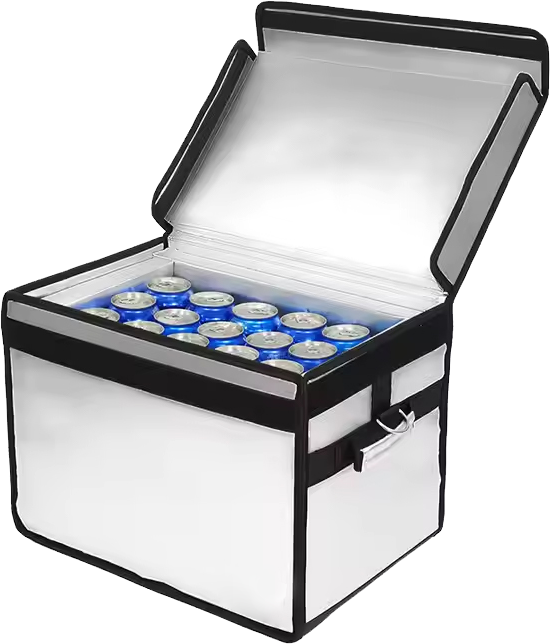
Why the Right Factory Choice Protects Your Bottom Line
Selecting a seafood insulated bag factory is an investment in your product’s integrity. High-quality insulated shipping containers reduce “product shrink”—the loss of inventory due to spoilage. While a cheaper bag might save you pennies upfront, a single failed shipment can cost you thousands of dollars in lost cargo and insurance claims.
By following these tips, you move away from being a “customer” and toward being a “partner” with a factory that understands the nuances of seafood logistics.
Frequently Asked Questions (FAQ)
1. What is the best material for a seafood insulated bag?
Most professional seafood insulated bag factory experts recommend a combination of heavy-duty Oxford cloth for the exterior, high-density EPE foam (at least 3mm-5mm) for the middle layer, and a leak-proof aluminum foil or PEVA liner for the interior. This provides the best balance of durability and thermal resistance.
2. Can a seafood insulated bag be 100% leak-proof?
Yes, but only if the inner liner is constructed using heat-sealing technology rather than traditional stitching. Stitching creates needle holes that allow melted ice to leak. Always ask your seafood insulated bag factory if they use high-frequency welding for the inner bladder.
3. How do I know if I’m dealing with a trading company or a factory?
Ask for a “walk-through” video of the production line or photos of their business license, which usually states their scope of activity (Manufacturing vs. Trading). You can also look for specialized machinery like industrial sewing machines and foam cutting tools.
4. Are these bags reusable or single-use?
It depends on your business model. A seafood insulated bag factory can produce lightweight, low-cost bags for single-trip home delivery, or heavy-duty, reinforced totes designed for hundreds of trips in a B2B “closed-loop” system.
5. What certifications should I ask for?
At a minimum, ask for FDA or LFGB food-grade certificates for the inner liner. For European markets, REACH and RoHS compliance for the fabrics are also highly recommended to ensure the materials are free from harmful chemicals.
6. Can I get a sample before placing a bulk order?
Yes, any reputable seafood insulated bag factory will provide a sample. Some may charge a small fee for custom prototypes, but this is usually credited back to you once you place a mass-production order.
Optimize Your Seafood Logistics Today
Don’t leave your temperature-sensitive cargo to chance. Choosing a specialized seafood insulated bag factory ensures that your brand remains synonymous with freshness and quality. Whether you need custom sizes, high-performance insulation, or reliable bulk supply, our team is ready to assist.
Contact weierken today to discuss your project requirements.


