


Shipping fresh tuna or frozen shrimp isn’t just about moving a box. It is about fighting biology and thermodynamics. If the cold chain breaks for even an hour, the product loses value. A professional seafood cooler bag factory plays a silent but critical role in this logistics chain.
At weierken, we have spent years refining the technical details that keep seafood at peak freshness. Whether you are a wholesale distributor or a brand looking for OEM solutions, understanding these six standards will help you choose a partner that protects your bottom line.

1. Insulation Performance and Refrigerant Compatibility
The first thing any buyer asks an insulated bag manufacturer is: “How long will it stay cold?” However, professional factories look beyond a simple hour count. We focus on the stability of the internal temperature climb curve, especially when external temperatures exceed 30°C.
A top-tier seafood cooler bag factory uses high-density insulation layers. While cheap bags use thin, low-grade foam, premium options utilize high-density EPE (Expanded Polyethylene) or PU (Polyurethane) foam. These materials offer lower thermal conductivity, meaning heat takes longer to penetrate the core.
Refrigerant compatibility is equally vital. Your bag must handle:
- Standard gel ice packs.
- Dry ice (which requires materials that don’t become brittle at -78.5°C).
- Phase Change Materials (PCM) for specific temperature ranges.
We test our bags to ensure the inner lining doesn’t crack when exposed to extreme cold. This ensures that the structural integrity remains intact throughout the delivery window.
2. Leak-proof Construction and Hydrostatic Pressure Standards
Seafood shipping involves melting ice. If that water leaks out, it creates a mess in delivery vehicles and ruins the customer experience. This is the biggest pain point in the industry. A reliable seafood cooler bag factory solves this through advanced bonding techniques.
There is a fundamental difference between a “sewn” bag and a “welded” bag. Sewing creates thousands of needle holes. Even with waterproof fabric, water will eventually find those holes. Professional leakproof bags utilize RF (Radio Frequency) welding or high-frequency heat sealing.
We measure success through “Hydrostatic Pressure Resistance” (measured in mmH2O). This quantifies how much water pressure the seams can take before failing. We use thick TPU or PVC mesh liners that are not only waterproof but also puncture-resistant. This prevents sharp fish fins or crab shells from piercing the liner and causing a leak.
3. Food Safety Grades and Heavy Metal Migration Testing
When fish or shrimp touch the interior of a bag, that bag becomes food-contact material. You cannot compromise here. A reputable seafood cooler bag factory must adhere to global safety standards such as FDA (USA), EU 10/2011 (Europe), or GB 4806.7 (China).
At weierken, we prioritize the chemistry of our materials. We ensure our liners are free from phthalate plasticizers, which can leach into fatty seafood. We also conduct rigorous heavy metal migration tests. These reports prove that the bag won’t transfer lead, cadmium, or mercury to the food.
Safety isn’t just about compliance; it’s about flavor. Low-quality plastics emit a “chemical smell.” This odor can be absorbed by the fish, ruining the delicate taste of premium seafood. Our materials are verified to be odorless, protecting the integrity of your product.
4. Structural Load-Bearing and Physical Fatigue Standards
Seafood is heavy. When you combine five kilograms of salmon with three kilograms of ice, you put immense stress on the handles. A common failure point for wholesale cooler bags is the handle-to-body connection.
A professional seafood cooler bag factory uses physics-based reinforcement. We employ “X-shaped cross-stitching” or, better yet, “integrated nylon webbing.” This is where the straps wrap entirely around the bottom of the bag, distributing the weight across the fabric rather than just the top seam.
Physical testing at our facility includes:
- Dynamic Load Testing: Dropping and lifting a weighted bag 1,000 times to simulate transport.
- Zipper Salt Spray Test: Since seafood environments are salty, zippers must be corrosion-resistant.
- Hardware Fatigue: Ensuring buckles don’t snap under tension.
By focusing on these metrics, we reduce the replacement costs for our B2B partners.
5. Airtightness and Closure Memory Standards
For high-end seafood delivery, such as sashimi-grade fish, thermal insulation isn’t enough. You need an airtight seal. Standard zippers allow “air exchange,” where cold air escapes and warm air enters.
high-quality seafood cooler bag factory offers airtight zippers. These use a complex interlocking mechanism that blocks airflow entirely. We also test the “memory” of our closures. Whether it is a flip-top lid or a heavy-duty Velcro strip, the seal must return to its original shape after thousands of openings.
Even in messy environments—where fish scales or ice shards might get stuck in the tracks—the closure must remain functional. We design our sealing mechanisms to be easy to clean while maintaining a tight grip on the internal climate.
6. Branding Customization and Durability Standards
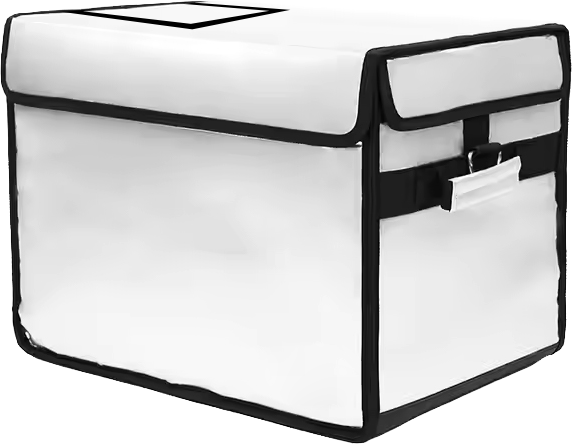
For B2B clients, a cooler bag is a moving billboard. If the logo peels off after two weeks in a damp cold room, the brand image suffers. A professional seafood cooler bag factory manages the surface treatment of the material to ensure long-term adhesion.
We compare different printing technologies for our clients:
- Silk Screen Printing: Cost-effective for simple logos.
- High-Frequency Embossing: Creates a 3D effect that never fades or peels.
- Heat Transfer: Best for complex, multi-colored designs.
We also strictly control Pantone color deviations. Your brand’s blue should look the same in a sunny parking lot as it does in a refrigerated warehouse. Our inks are tested for low-temperature resistance, ensuring the logo doesn’t crack when the bag is folded in a freezer.
At weierken, we treat branding as a technical specification, not an afterthought.
FAQ: Common Questions for a Seafood Cooler Bag Factory
Q1: What is the difference between EPE and PU foam in seafood bags?
EPE is lightweight and flexible, making it great for collapsible bags. PU foam is denser and offers superior insulation, often used in “hard-sided” soft coolers that need to keep items frozen for over 48 hours.
Q2: Can your factory produce bags that are safe for dry ice?
Yes. While standard PVC can crack at dry ice temperatures, we use specialized TPU or low-temperature resistant liners specifically designed for ultra-cold shipping environments.
Q3: How do you ensure the bags don’t smell like plastic?
We use virgin food-grade materials rather than recycled plastics. Every batch of material undergoes a VOC (Volatile Organic Compound) test to ensure no off-gassing occurs.
Q4: Do you offer OEM services for specific seafood dimensions?
As a dedicated seafood cooler bag factory, we provide full OEM support. We can customize the dimensions to fit specific shipping crates, oyster boxes, or whole salmon fillets.
Q5: What is the minimum order quantity (MOQ) for wholesale orders?
Our MOQs vary depending on the level of customization. For standard designs with custom logos, MOQs usually start at 500 units, while fully custom shapes may require higher volumes.
Q6: Are the materials used recyclable?
We offer various eco-friendly options, including R-PET (recycled polyester) fabrics and biodegradable TPU liners, helping your brand meet sustainability goals without sacrificing performance.
Secure Your Cold Chain with weierken
Selecting the right seafood cooler bag factory is an investment in your product’s quality and your brand’s reputation. At weierken, we don’t just make bags; we engineer thermal protection. From leakproof seals to food-grade certifications, we meet the highest industrial standards.
Don’t let a weak bag ruin a fresh catch.


