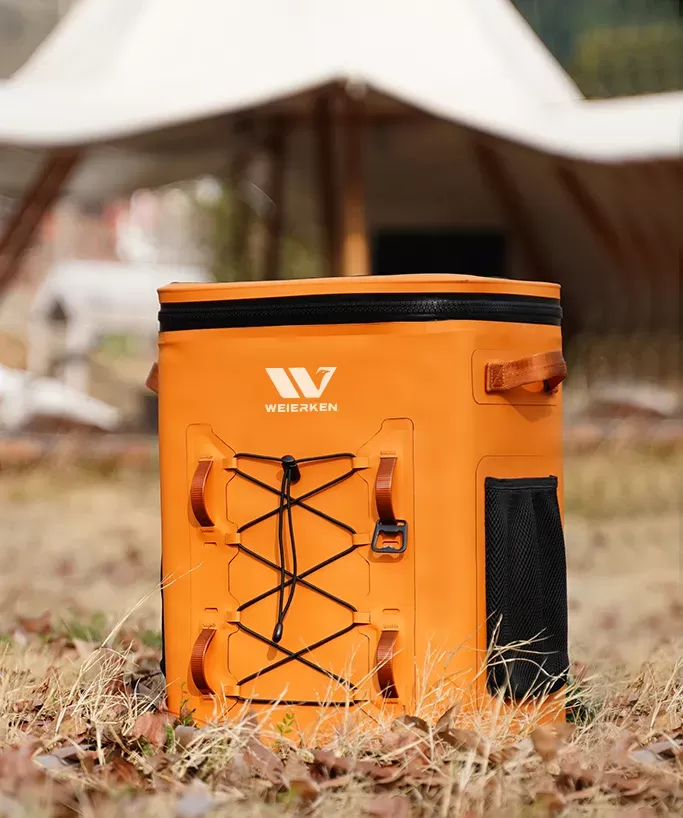

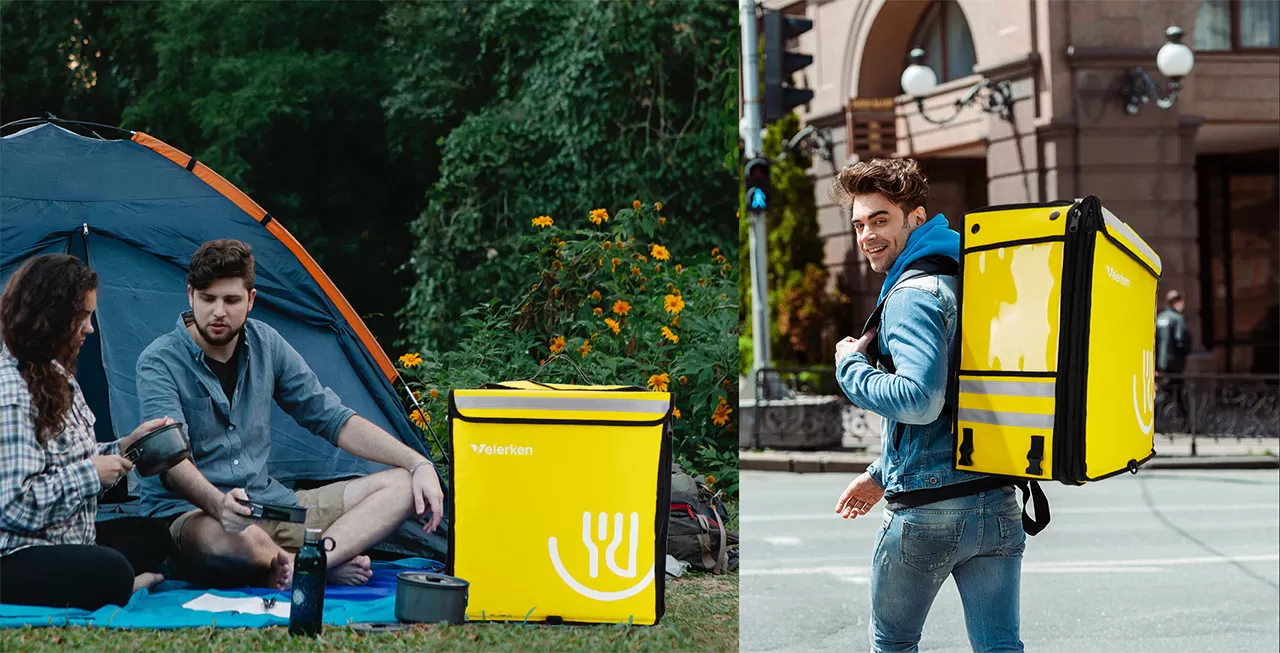
The global food delivery sector has changed rapidly over the past few years. Delivery platforms and restaurant chains now face intense pressure to deliver food hot, fresh, and in pristine condition. As a dedicated insulated delivery bag maker, weierken has observed a significant shift in what B2B buyers look for during procurement. Simple, generic thermal bags no longer meet the complex demands of modern logistics operations.
Procurement managers at regional delivery giants and operations directors at national restaurant chains face similar daily hurdles. They must combat rapid heat loss, prevent moisture buildup that makes fried food soggy, and address rider fatigue. Furthermore, high-frequency daily usage leads to rapid wear-and-tear, driving up replacement costs. This article explores six practical custom design trends that address these pain points directly.
1. Multi-Zone Temperature Control & Flexible Compartments
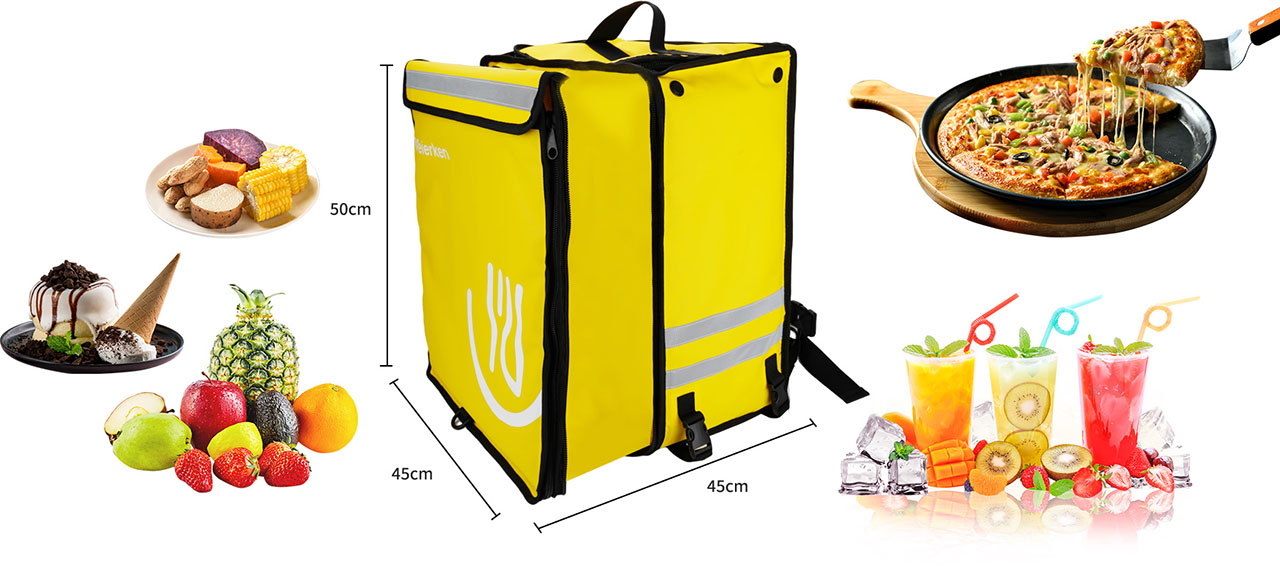
One of the oldest challenges in food logistics is the mixed order. Transporting a piping-hot pizza alongside an ice-cold beverage in the same compartment inevitably leads to ruined food. To resolve this issue, any forward-thinking food delivery bag manufacturer must focus on smart internal zoning.
Modern custom bags rely on flexible, adaptable interiors rather than fixed walls. These designs use several specialized features to maintain temperature integrity:
Adjustable Velcro Dividers: High-grip, insulated partition walls allow riders to resize compartments on the go based on the order size.
Dual Zipper Chambers: Separate physical compartments with individual openings prevent cold air from entering hot zones when a rider retrieves a specific item.
Phase Change Material (PCM) Pockets: Specialized interior mesh sleeves hold hot or cold gel packs, keeping specific zones at precise target temperatures for hours.
By implementing these physical dividers, logistics operators can maintain two distinct micro-climates inside a single bag. This simple adjustment reduces customer complaints about lukewarm meals and melted desserts.
2. Sustainable Materials and Eco-Friendly Design
Environmental, Social, and Governance (ESG) criteria now actively shape procurement decisions across Europe, North America, and beyond. Large-scale delivery platforms must align their supply chains with corporate sustainability goals. Consequently, the demand for an eco-friendly delivery bag design has transitioned from a niche preference to a core requirement.
To meet these green initiatives, modern manufacturers use innovative material alternatives that do not compromise on thermal performance:
Recycled PET (RPET) Fabrics: External shells woven from post-consumer plastic bottles offer excellent tear resistance and water-repellency.
PFC-Free Water Resistant Coatings: Replacing harmful fluorocarbon-based finishes with plant-based or silicon-based waterproofing agents.
Biodegradable and Recycled Thermal Fills: Using recycled cotton or structured bamboo fiber insulation layers instead of standard polyurethane foam.
Purchasing custom insulated delivery bags made from recycled materials helps brands demonstrate their environmental commitment. It also appeals directly to eco-conscious consumers who order food daily.
3. Smart Tech Integration and IoT-Ready Frameworks
Modern delivery management relies heavily on data. Fleet operators want to know where a package is and what state the food is in during transit. As a progressive insulated delivery bag maker, weierken now designs bags that accommodate smart tracking hardware seamlessly.
Instead of loose wires and bulky external power banks, modern tech-ready bags feature integrated compartments designed specifically for electronics:
Dedicated Sensor Pockets: Secure, transparent mesh pockets hold Bluetooth temperature sensors and GPS beacons without blocking signals.
USB-Heated Elements: Built-in carbon fiber heating pads connect to external power banks or a delivery motorcycle’s electrical system.
Integrated Wire Channels: Internal fabric sleeves route cables safely, protecting them from food spills, moisture, and physical damage.
These features turn a passive thermal container into an active, data-collecting asset. Fleet dispatchers can monitor thermal fluctuations in real-time, ensuring strict quality control across the entire delivery route.
4. Ergonomic Construction and Lightweight Materials
Rider retention and safety directly impact operational efficiency. Carrying heavy, poorly balanced bags for an eight-hour shift causes physical strain and slows down delivery times. Therefore, industrial designers prioritize rider comfort and load distribution.
Reducing the empty weight of wholesale thermal delivery bags is a primary goal. Manufacturers achieve this by updating structural components and harness designs:
Honeycomb Board Frames: Replacing heavy wooden or dense fiberboard supports with lightweight, rigid polypropylene (PP) honeycomb panels.
3D Mesh Back Panels: Thick, breathable honeycomb padding creates air channels against the rider's back, reducing sweat and heat buildup.
Load-Bearing Harnesses: Wide, padded shoulder straps combined with adjustable chest and waist buckles distribute weight evenly across the hips.
When riders use ergonomic gear, they experience less fatigue. This leads to safer riding habits, fewer damaged orders, and a more stable workforce for the delivery service provider.
5. High-Visibility Safety and Brand Aesthetic Integration
A delivery bag acts as a mobile billboard. It travels through busy city centers, exposing thousands of potential customers to a brand logo daily. However, safety must remain a top priority, particularly during night shifts or bad weather.
Experienced producers like weierken work directly with brand managers to merge corporate identity with safety standards. They avoid basic heat-transferred logos that peel off over time, opting for integrated, durable solutions instead:
Digital Sublimation Printing: High-precision printing processes ensure bright, accurate brand colors that resist fading from UV rays and rain.
Active Light-Emitting Panels: Integrating rechargeable LED light strips or photoluminescent materials directly into the bag’s outer seams.
Retroreflective Piping: Industrial-grade reflective materials that catch vehicle headlights from 360 degrees, protecting riders at dark intersections.
This design approach ensures that custom insulated delivery bags serve two purposes at once. They project a professional brand image while keeping delivery personnel highly visible on busy roads.
6. Sanitary, Easy-Clean, and Antibacterial Linings
Food hygiene is non-negotiable. Spills, condensation, and grease buildup inside a delivery bag create breeding grounds for bacteria and unpleasant odors. Traditional stitched seams often trap liquids, making deep cleaning incredibly difficult for riders.
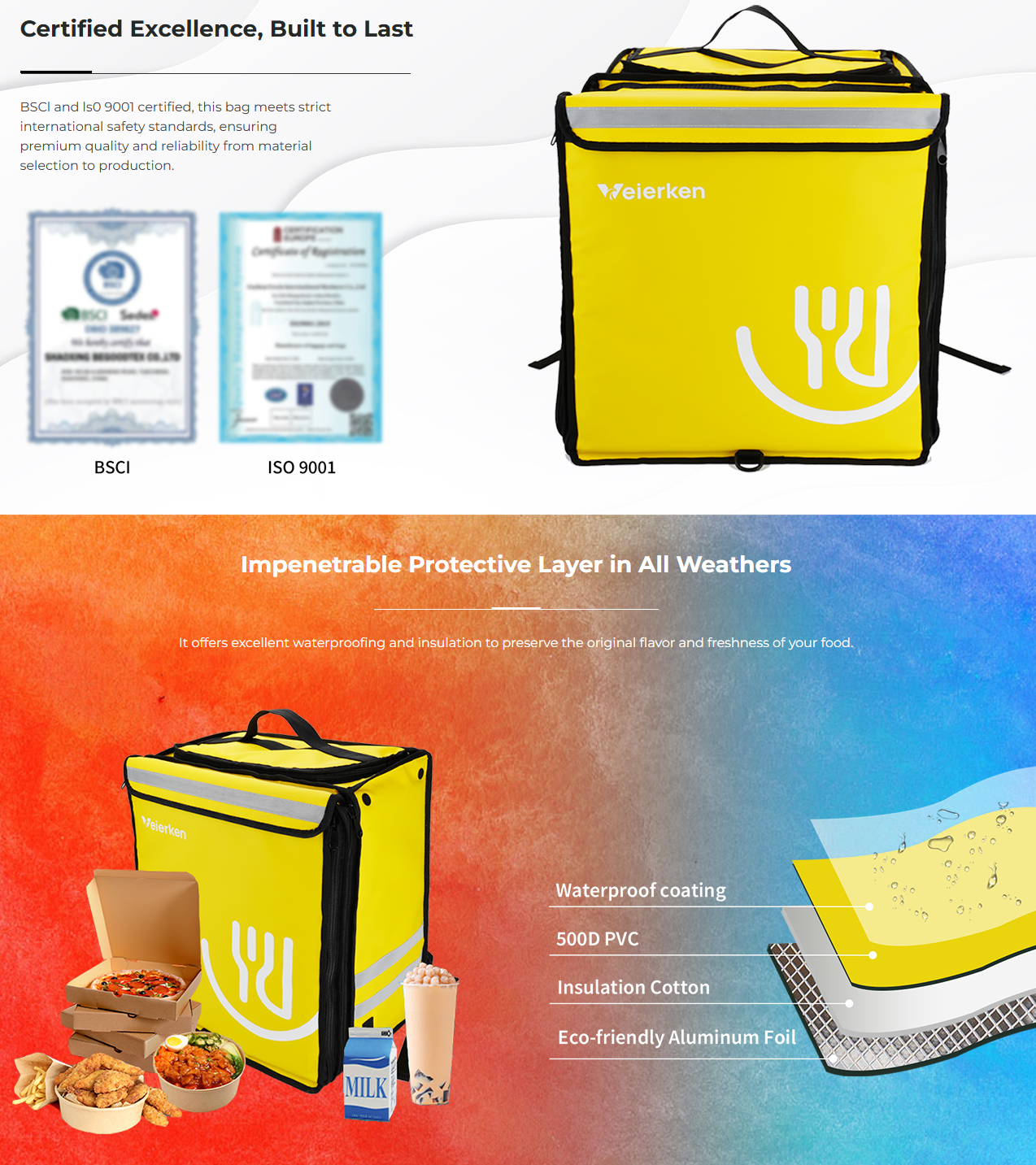
To address food safety regulations, modern manufacturing relies on seamless interior construction and advanced materials:
Heat-Welded Seams: High-frequency welding eliminates needle holes entirely, creating a 100% leakproof interior chamber.
TPU (Thermoplastic Polyurethane) Linings: Replacing cheap PVC with non-toxic, food-grade TPU that resists punctures and grease.
Antibacterial Additives: Treating aluminum foil and fabric linings with antimicrobial agents that actively suppress mold and bacterial growth.
These sanitary improvements allow riders to clean the entire interior with a single wipe at the end of a shift. This minimizes maintenance downtime and ensures compliance with municipal food safety audits.
Frequently Asked Questions
How do you choose a reliable insulated delivery bag maker for large volume orders?
Look for a manufacturer with verified experience in commercial B2B production. A reliable partner should offer customizable material options, clear quality control protocols, and physical samples before mass production begins. They should also possess a solid understanding of international food safety standards and logistics demands.
What materials offer the best thermal retention for long-distance deliveries?
High-density expanded polyethylene (EPE) foam, paired with a heat-reflecting aluminum foil or TPU lining, provides excellent thermal resistance. For long-distance deliveries, adding integrated heating elements or Phase Change Materials (PCM) helps maintain consistent temperatures for over 45 minutes.
Can custom insulated delivery bags be adapted for both bicycles and motorcycles?
Yes. Professional manufacturers design versatile mounting systems. These include adjustable bottom straps, heavy-duty buckle systems, and frame attachments that secure the bag to rear racks or allow riders to wear them comfortably as backpacks.
What is the typical minimum order quantity (MOQ) for custom designs?
Minimum order quantities generally vary depending on the complexity of the design and the custom materials requested. Most industrial manufacturers require an MOQ ranging from 100 to 500 units to keep production costs efficient for customized colors and shapes.
How does eco-friendly delivery bag design affect the unit price of wholesale thermal delivery bags?
Using recycled fabrics like RPET or biodegradable insulation can slightly increase the initial material cost. However, these durable materials often extend the lifespan of the bag, reducing replacement rates and helping companies meet mandatory environmental compliance goals.
How do heat-welded seams compare to traditional stitching?
Heat-welded seams melt the fabric layers together to create a single, continuous barrier. Unlike stitched seams, they contain no needle holes, making the bag completely leakproof and prevents moisture or spilled sauces from seeping into the insulation foam.
Partner with a Professional Manufacturer
Selecting the right equipment is a critical business decision that directly impacts food quality, rider safety, and brand reputation. Partnering with an experienced team like weierken allows you to customize every aspect of your fleet's gear, ensuring your delivery bags meet the daily challenges of the road.
Are you ready to optimize your delivery operations? Contact us today to request a material sample kit, discuss custom dimension options, or receive a preliminary design proposal for your fleet.