
Selecting a reliable B2B supplier involves more than comparing unit prices and lead times. In cold-chain logistics and food delivery, your choice of packaging directly affects food safety, product freshness, and brand trust. A weak seams or poor insulation layer can ruin a delivery route and damage your business reputation.
To secure a reliable product, procurement managers must use a rigorous vetting process. Industry specialists, including the technical team at weierken, recommend executing a systematic insulated bag factory audit before signing any supply contract. This guide provides an actionable checklist to verify that your chosen insulated bag maker can deliver consistent commercial-grade quality.
1. Material Compliance and Chemical Safety Standards
The materials used in your thermal bags must meet strict regional import and safety standards. Because these items transport food and pharmaceuticals, raw material compliance is the first step in any factory evaluation. You must ensure that your custom insulated bag manufacturer uses safe, certified materials.
Food-Grade Contact Safety
The inner lining of the bag makes direct or indirect contact with food containers. Your supplier must prove that these materials do not leach harmful chemicals under high heat or humidity:
FDA and EU Compliance: Verify that the interior linings, such as aluminum foil or PEVA, pass FDA food contact regulations or EU Directive 10/2011.
Certified Test Reports: Ask for independent test reports from accredited laboratories like SGS, TÜV, or Intertek instead of accepting internal self-declarations.
Environmental and Chemical Restrictions
Depending on your target market, materials must comply with environmental laws. These regulations prevent toxic components from entering the waste stream and protect consumers from hazardous substances:
REACH & RoHS: For European markets, the materials must comply with REACH SVHC standards, ensuring they are free from heavy metals and restricted plasticizers.
Phthalate-Free Linings: PVC and TPU coatings must not contain harmful phthalate plasticizers, which are heavily restricted in consumer products.
Outer Shell Durability
The exterior fabric must withstand harsh daily use, heavy weather, and rough handling by delivery couriers. Check the technical specifications for the following fabrics, such as Oxford polyester, non-woven polypropylene, or recycled PET (RPET):
Tensile Strength: The fabric must resist tearing under maximum cargo loads.
Abrasion Resistance Index: Ask for the Martindale abrasion test results to verify how the outer shell handles friction.
Waterproof Performance: Ensure the exterior has a durable water repellent (DWR) coating to keep rain from soaking the internal insulation foam.
2. Thermal Performance and Physical Testing Protocols
A capable insulated bag maker must have an in-house testing facility. You should not rely on visual inspections alone to judge thermal properties or physical strength. During your audit, check if the factory regularly performs the following quality control tests.
Thermal Decay Tracking
Ask the manufacturer to provide temperature decay curves for their bags. A reliable thermal bag supplier tests their products inside controlled temperature chambers:
Hot and Cold Simulation: The factory should test the bag in extreme ambient conditions, such as 25°C and 38°C, to measure temperature loss over a three-hour period.
Consistent Heat Barriers: The insulation foam, whether expanded polyethylene (EPE) or polyurethane, must maintain target temperatures within acceptable industry ranges.
Leakproof Testing and Seam Integrity
If your business uses loose ice or transports liquid-heavy meals, liquid containment is a major concern. Stitched seams inevitably leak when ice melts inside the compartment:
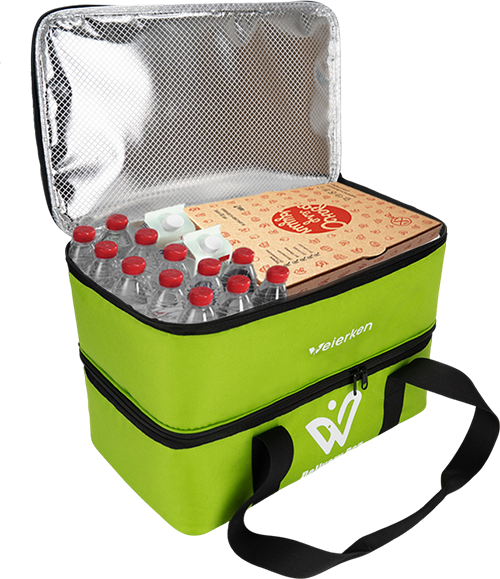
High-Frequency Welding: Verify if the factory uses heat-sealing or high-frequency welding machines for the inner linings. This process melts the materials together to form a leakproof barrier.
Static Water Testing: Ensure the factory fills random production samples with water for 24 hours to check for leaks or seepage through the base.
Hardware and Accessory Cycle Tests
A delivery bag is only as durable as its weakest zipper or buckle. Failures usually occur at these high-use points:
Zipper Cycle Testing: Zippers, whether YKK or custom waterproof designs, must undergo reciprocal tension tests. They should operate smoothly for at least 5,000 opening and closing cycles.
Buckle and Puller Stress Tests: The plastic buckles and metal pullers must resist cracking under freezing winter temperatures and high-tension pulls.
3. Workmanship and Structural Integrity
Even high-quality materials will fail if the assembly work is poor. When inspecting the factory's sewing lines, pay close attention to the structural details. This step helps prevent handle tearing or loose seams when the bags carry maximum loads.
During a factory tour, brands like weierken inspect several critical points on the sewing floor. Ensure your checklist includes these sewing standards:
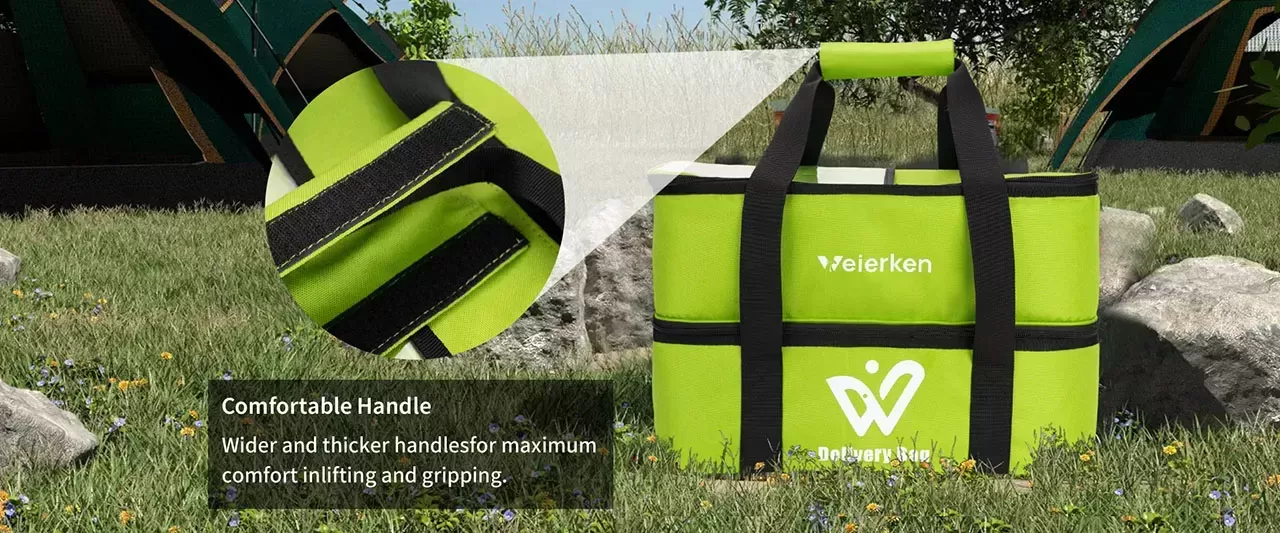
Reinforced Stitching: All load-bearing connections, including handle roots and shoulder straps, must feature "X-box" or triangular cross-stitching to distribute tension.
Stitch Density (SPI): The sewing machines must maintain a consistent stitch density. A standard of 6 to 8 stitches per inch (SPI) ensures high seam strength without puncturing the fabric excessively.
Even Insulation Distribution: The internal EPE foam or poly-fill must be secured to the outer panels. This prevents the insulation from shifting, which leaves thin spots that leak heat.
4. Factory Certifications, Capacity, and Traceability
The final part of your audit should focus on the factory's management and supply chain transparency. A professional insulated bag maker should have the certifications required to handle large international orders.
Quality Management Systems
Check if the factory holds an active ISO 9001 certification. This standard proves they follow a documented quality management system, keeping production quality consistent across different batches.
Social Responsibility Audits
Large retail buyers require ethical manufacturing practices throughout their supply chains. Confirm that the factory possesses a valid social compliance audit report, such as BSCI, Sedex (SMETA), or a custom retail audit from Walmart or Target.
R&D Capability and Prototyping Speed
Your business needs may require custom dimensions, specialized pockets, or unique vehicle mounting systems. Evaluate their research and development capabilities:
Design Translation: Can their engineering team work with 3D CAD models, tech packs, or physical samples?
Prototyping Lead Time: A competent R&D department should produce an accurate pre-production sample within 3 to 5 working days.
Capacity and Lead Time Management
Ensure the factory's production capacity can support your growth. Ask about their daily output limits, the number of active assembly lines, and their peak-season lead times. You should also confirm their minimum order quantity (MOQ) limits for custom colors and custom-molded parts.
Material Traceability
Your supplier must trace their raw materials back to their source. They should provide material certificate sheets for batch-specific foam, fabric, and foil. This level of tracking makes it easier to resolve quality issues if a defective batch of material enters production.
Audit Checklist Summary Table
| Audit Category | Target Requirement / Standard | Verification Method |
|---|---|---|
| Material Safety | FDA / EU Food Contact, REACH, RoHS, Phthalate-Free | Third-party lab reports (SGS/TÜV) |
| Thermal Performance | Consistent temperature maintenance (Hot/Cold) | Chamber test logs & temperature decay curves |
| Water Resistance | No leaking from melted ice packs | High-frequency welded seams, static water test |
| Sewing Quality | 6-8 Stitches Per Inch (SPI), Cross-stitched handles | Visual inspection, physical pull testing |
| Social Compliance | Ethical labor practices | BSCI, Sedex (SMETA) audit documents |
Frequently Asked Questions
What is the standard stitch density for commercial delivery bags?
A high-quality commercial bag should feature a stitch density of 6 to 8 stitches per inch (SPI). If the stitch density is lower, the seams can easily pull apart under heavy loads. If it is too high, the needle can weaken the base fabric, causing it to tear along the seam.
How can I verify if an insulated bag maker uses genuine food-safe materials?
You should request test certificates with matching batch numbers from accredited labs like SGS or Intertek. Make sure the document specifically references FDA 21 CFR or EU food contact test methodologies for materials like PEVA or aluminum foil.
Why is high-frequency welding better than standard sewing for wet items?
Sewing needles pierce the fabric, creating thousands of micro-holes that let water pass through. High-frequency welding uses heat and pressure to melt the edges of TPU or PVC fabrics together. This creates a solid, seamless joint that is completely waterproof.
Which factory certifications are necessary for importing thermal bags into the EU?
For European markets, importing companies should verify that their supplier complies with REACH chemical safety standards. A BSCI or Sedex (SMETA) social audit is also highly recommended, as many large European buyers require proof of ethical labor practices.
How long should it take for a custom insulated bag manufacturer to produce a sample?
A professional manufacturer with an active sample room should take about 3 to 5 working days to finish a custom prototype, provided they have the raw materials in stock. Complex designs requiring custom-molded plastic parts or custom-dyed fabrics may take longer.
Partner with a Certified Manufacturing Specialist
Conducting a factory audit requires time and attention to detail, but it protects your supply chain from costly failures and customer complaints. Choosing a supplier that meets these strict material, testing, and structural standards will help keep your deliveries fresh and your logistics running smoothly.
As a seasoned B2B partner, weierken welcomes comprehensive factory audits. We provide transparent test logs, material certificates, and verified social compliance reports to meet your sourcing guidelines. Contact our engineering team today to request a material swatch book, discuss your custom specs, or schedule a virtual audit of our production lines.