

Procuring a lunch delivery bag factory partner differs significantly from buying standard consumer thermal totes. In the professional food delivery sector, a bag faces high-frequency use, long exposure to outdoor elements, and the constant need for sanitization. A courier might open and close a bag fifty times a day, often in rain, snow, or intense heat. If the bag fails, your food quality drops and your brand reputation suffers.
Finding a factory that understands these operational stresses is the first step toward a successful delivery business. Manufacturers like weierken have focused on these specific pain points for years, moving beyond basic "insulation" to provide professional logistics tools. To ensure your investment holds up on the road, you must evaluate a lunch delivery bag factory based on more than just the lowest price.
This guide highlights six critical factors you should audit before signing a supply contract. We will look at technical specifications, durability standards, and the logistical flexibility required for modern food fleets.
1. Superior Thermal Retention for Extended Delivery Windows
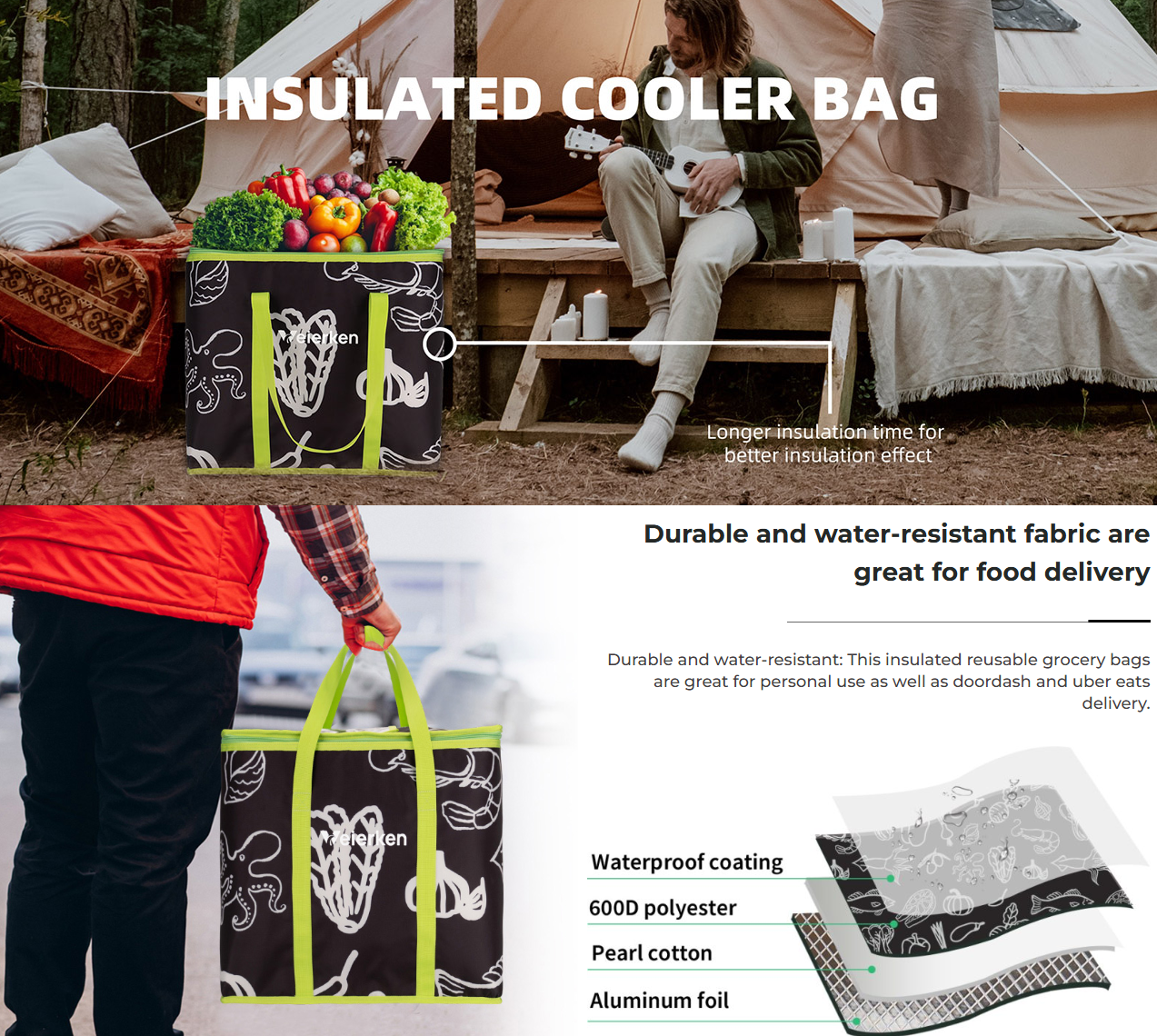
Professional delivery cycles often exceed sixty minutes. While a consumer might only need twenty minutes to get home from a grocery store, a courier often handles multiple drops across a city. You must ask your lunch delivery bag factory for real-world temperature data. A professional bag should maintain hot meals at 70°C, ensuring they stay above 40°C even after four hours. Similarly, cold meals at 0°C should not exceed 10°C in the same timeframe.
Do not settle for a factory that only provides an ISO certification without specific performance data. A reliable lunch delivery bag factory usually recommends high-density EPE (Expanded Polyethylene) foam combined with an aluminum foil composite layer. This combination acts as a powerful barrier against thermal radiation and conduction. Thickening the foam core to 8mm or 10mm can drastically improve retention times during extreme summer or winter peaks.
Thermal Testing: Request data curves showing internal temperature fluctuations over 4-6 hours.
Density Matters: High-density foam prevents the "collapsing" of air pockets, which is where the actual insulation happens.
Reflective Barriers: Ensure the internal foil is high-purity to maximize heat reflection back toward the food.
2. Structural Reinforcement: Zippers and Critical Stress Points
Data from fleet managers shows that zipper failure accounts for over 40% of delivery bag returns. In a high-speed delivery environment, couriers do not have time to be gentle. A reliable lunch delivery bag factory must use heavy-duty #8 or #10 zippers, preferably from reputable brands like YKK or equivalent-quality manufacturers. The zipper teeth must be large enough to resist snagging and durable enough to withstand thousands of cycles.
Stress points such as handle attachments and shoulder strap junctions are also common failure spots. At weierken, we emphasize the use of double-stitching and "bar-tack" reinforcement on every load-bearing seam. Ask your lunch delivery bag factory for a zipper cycle test report. A professional-grade bag should withstand at least 10,000 opening and closing actions without losing its teeth or breaking the slider. If the factory cannot provide this test data, the bags likely won't survive a month of heavy use.
3. Hygiene and Maintenance: Leak-proof Linings
Food delivery is inherently messy. Spilled soups, condensation, and greasy residues are daily occurrences. If a bag absorbs these liquids, it becomes a breeding ground for bacteria and foul odors. Therefore, a professional lunch delivery bag factory must offer a 100% waterproof and non-absorbent lining. Materials like PEVA (Polyethylene Vinyl Acetate) or 210D silver-coated nylon are the industry standard for easy maintenance.
Beyond the material, look at the seam construction. Traditional needle-stitched seams allow liquids to seep into the insulation core, which can never be fully cleaned. An expert lunch delivery bag factory utilizes heat-sealing technology or ultrasonic welding for the interior. This creates a "tub-like" structure that holds spills inside, allowing the courier to simply wipe the bag clean with a disinfectant cloth. You should perform a "water-fill test" on samples before placing a bulk order to verify these leak-proof claims.
4. Branding and Visual Identity for Fleet Operations
Your delivery bags are moving advertisements. However, the friction of a bag rubbing against a scooter box or a courier’s back can quickly erase a poorly printed logo. A high-quality lunch delivery bag factory should offer several durable branding processes. For polyester bags, heat transfer printing or sublimation provides vibrant, long-lasting colors. For PVC or heavier vinyl bags, silk-screen printing with specialized inks is often the better choice.
Ask the factory about logo placement. A professional lunch delivery bag factory should suggest positions on the front, sides, and top lid to ensure maximum visibility from all angles. Brands like weierken often recommend adding reflective strips alongside the branding. This not only improves courier safety during night shifts but also adds a high-tech, professional look to your fleet. The goal is a logo that remains crisp and clear after months of sun exposure and rain.
Abrasion Resistance: The print must withstand the constant rubbing against vehicle racks.
UV Protection: Ask if the inks used are UV-stable to prevent fading under direct sunlight.
Placement Strategy: Visibility is key when the courier is moving through traffic.
5. Logistics Optimization: Foldable and Stackable Construction
For a growing business, warehouse space is a major cost. If your bags are bulky and rigid, they will consume vast amounts of expensive square footage when not in use. A smart lunch delivery bag factory designs bags with logistics optimization in mind. Ideally, the bag should feature a foldable structure that reduces its height to 5cm or less when collapsed. This makes storage and recycling management much more efficient.
However, "foldable" must not mean "flimsy." The bag needs internal support, such as removable PP boards or reinforced EPE panels, to maintain its shape when loaded. A bag that sags or collapses while full will crush the food inside. When you audit a lunch delivery bag factory, ask to see their folding mechanism. It should be intuitive and durable enough for couriers to collapse the bag quickly between shifts without damaging the internal structural components.
6. Operational Agility: Tiered MOQ and Safety Stock Policies
Delivery demand is rarely static. Seasonal peaks, marketing campaigns, or sudden fleet expansions can leave you desperate for more gear. A reliable lunch delivery bag factory offers tiered MOQ (Minimum Order Quantity) options to support your growth. They might allow a small trial run of 500 bags for market testing before moving to a massive order of 10,000 units. Flexibility in the Bulk Order Process is a sign of a factory that wants to grow with you.
Furthermore, ask about their safety stock policy. A professional manufacturer often keeps a 10% to 15% reserve of raw materials (fabrics, zippers, and foam) specifically for their long-term partners. This allows for rapid replenishment, cutting lead times from thirty days down to fifteen days in emergency situations. In the fast-paced world of food delivery, this operational agility can be the difference between a successful holiday season and a logistical nightmare.
Partners like weierken pride themselves on this level of service. We understand that a lunch delivery bag factory is not just a vendor but an extension of your operations team. When you have a supplier who anticipates your needs, you can focus on expanding your kitchen and customer base.
Frequently Asked Questions (FAQ)
1. What is the most durable fabric for a lunch delivery bag?
Most professional lunch delivery bag factory partners recommend 600D to 1680D Oxford cloth with a PVC or PU coating. These fabrics offer the best balance of tear resistance, water repellency, and weight. For extreme durability, some fleets use heavy-duty vinyl (tarpaulin).
2. How often should a delivery bag be replaced?
With high-quality construction from a reputable lunch delivery bag factory, a bag should last 6 to 12 months under daily professional use. Bags that use inferior zippers or low-density foam often fail within 8 weeks, leading to much higher long-term costs.
3. Can the factory handle custom internal compartments?
Yes. A professional lunch delivery bag factory should offer OEM and ODM services. They can add cup holders, removable dividers for hot/cold separation, or even dedicated pockets for power banks and receipt printers.
4. How do I verify the insulation performance before buying?
Request a thermal test report from the factory. You can also conduct a simple "ice melt test" or a "hot water decay test" on samples. A reliable lunch delivery bag factory will encourage this testing because they are confident in their material specs.
5. What is the standard lead time for a bulk order?
Typical lead times for a lunch delivery bag factory range from 25 to 35 days. However, this can fluctuate based on the complexity of your customization requirements and the factory's current production queue. Always discuss "rush order" options beforehand.
6. Why are heat-sealed seams better than sewn seams?
Sewn seams involve needle holes that allow liquids and air to pass through. Heat-sealed seams use high-frequency welding to fuse the material, creating a 100% leak-proof and airtight barrier. This is essential for hygiene and thermal retention.
Take Your Delivery Fleet to the Next Level
Choosing the right lunch delivery bag factory is a strategic decision that affects your daily operations and your bottom line. By focusing on thermal retention, structural durability, and logistical flexibility, you ensure that your couriers are equipped for success. A cheap bag is a liability; a professional bag is an asset.
At weierken, we believe in building gear that survives the street. Our lunch delivery bag factory processes are designed to meet the rigorous demands of global food platforms and local boutique caterers alike. We combine high-tech materials with precision manufacturing to deliver bags that perform as hard as your riders do.
Ready to upgrade your delivery gear? Contact our team today to learn how we can support your fleet. Request a quote or a custom sample and see why we are the preferred partner for industry-leading brands.
Inquiry Now for Professional Delivery Solutions
Reliable lunch delivery bag factory services with weierken quality. Get started today.
SEND AN INQUIRY