

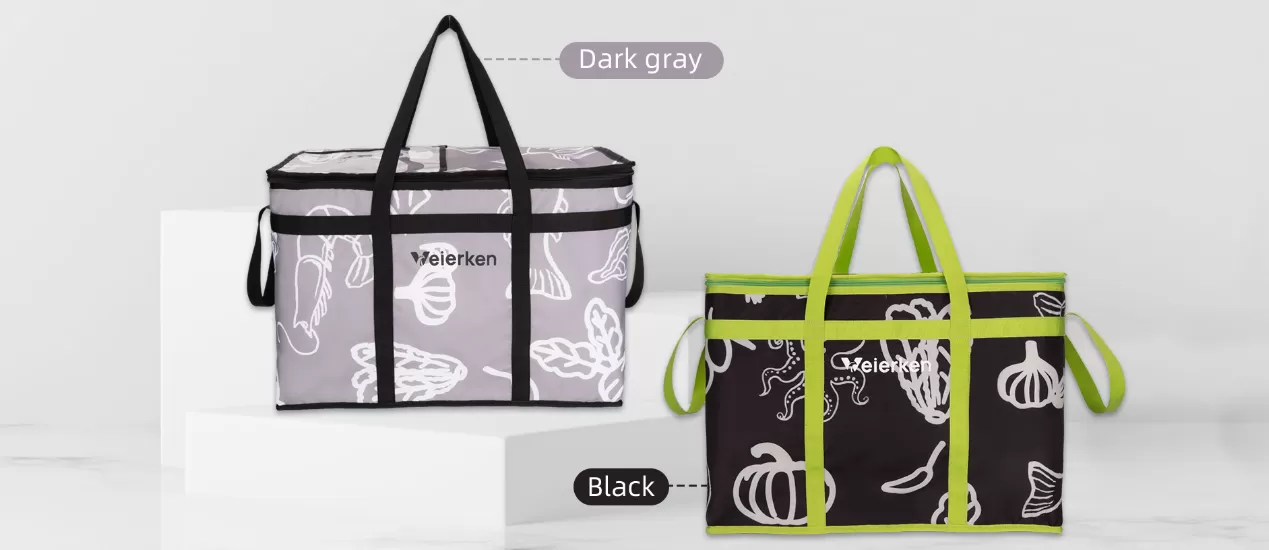
In the competitive world of retail and corporate gifting, your choice of a lunch insulated bag factory determines more than just your profit margins. It dictates your brand's reputation for quality. A lunch bag is a daily companion for millions of office workers and students. If it fails to keep food fresh or leaks after a week, your brand suffers the consequences. Professional manufacturers like weierken understand that success lies in the technical details of the OEM process.
A truly reliable factory does not just offer products; they offer solutions. They act as a technical partner, guiding you through material selection, compliance hurdles, and structural innovations. When you work with a top-tier lunch insulated tote factory, you gain access to a suite of services designed to move your product from a sketch to a retail-ready masterpiece. This guide explores the nine essential services you should expect from an expert Custom insulated lunch bag manufacturer.
1. Precision Sizing and Capacity Customization
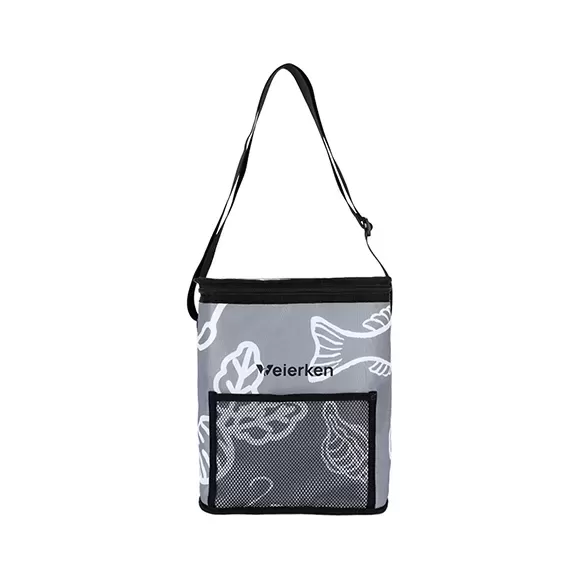
Every market has different standards for food containers. A bag designed for a 6-can soda pack won't work for a large bento box. A professional lunch insulated bag factory offers complete control over dimensions. They don't just ask for a size; they ask what goes inside. Do you need to fit a specific 12-can configuration or a tall thermos bottle?
The factory should provide 3D drawings or digital mockups before cutting any fabric. This step ensures the internal layout maximizes space without becoming bulky. Expert designers at weierken often suggest minor tweaks to the height or width to ensure the bag fits into standard backpacks or office lockers. This precision prevents the "sagging" look common in low-quality products.
Bento Box Optimization: Designing wide-base bags to keep meals horizontal.
Vertical Storage: Creating taller profiles for bottles and juice cartons.
Capacity Scaling: Offering 5L, 10L, and 15L versions within the same design language.
2. Advanced Fabric and Material Selection
The exterior of the bag is your first line of defense against the elements. A high-performing lunch insulated tote factory offers a library of materials beyond basic polyester. You can choose 600D or 900D Oxford for durability, or jute for a natural, eco-friendly aesthetic. For brands targeting sustainability, a Thermal bag wholesale supplier should offer rPET (recycled polyethylene terephthalate), which repurposes plastic bottles into high-strength fabric.
Waterproofing is another critical factor. Factories can apply TPU or PVC coatings to the outer shell, making the bag resistant to rain and accidental spills. They also offer Pantone color matching. This service ensures that the fabric color aligns perfectly with your brand's visual identity, maintaining consistency across your entire product line. Using the right fabric ensures your product survives the daily commute and looks good for years.
3. Professional Logo Printing and Brand Integration
Your logo is your signature. A Lunch cooler bag OEM specialist provides several ways to present your brand. Silk-screen printing is cost-effective for simple logos, while heat transfer is better for high-definition, multi-color graphics. If you want a more premium feel, you should consider embroidery or silicone patches.
Reliable factories like weierken advise you on which method works best for your chosen fabric. For example, a woven label might look better on a jute bag, whereas a 3D rubber logo adds a rugged, sporty feel to a nylon bag. They ensure that the branding is durable, meaning it won't peel or fade after repeated cleaning sessions. This service transforms a generic item into a valuable brand asset.
4. Specialized Insulation Material Upgrades
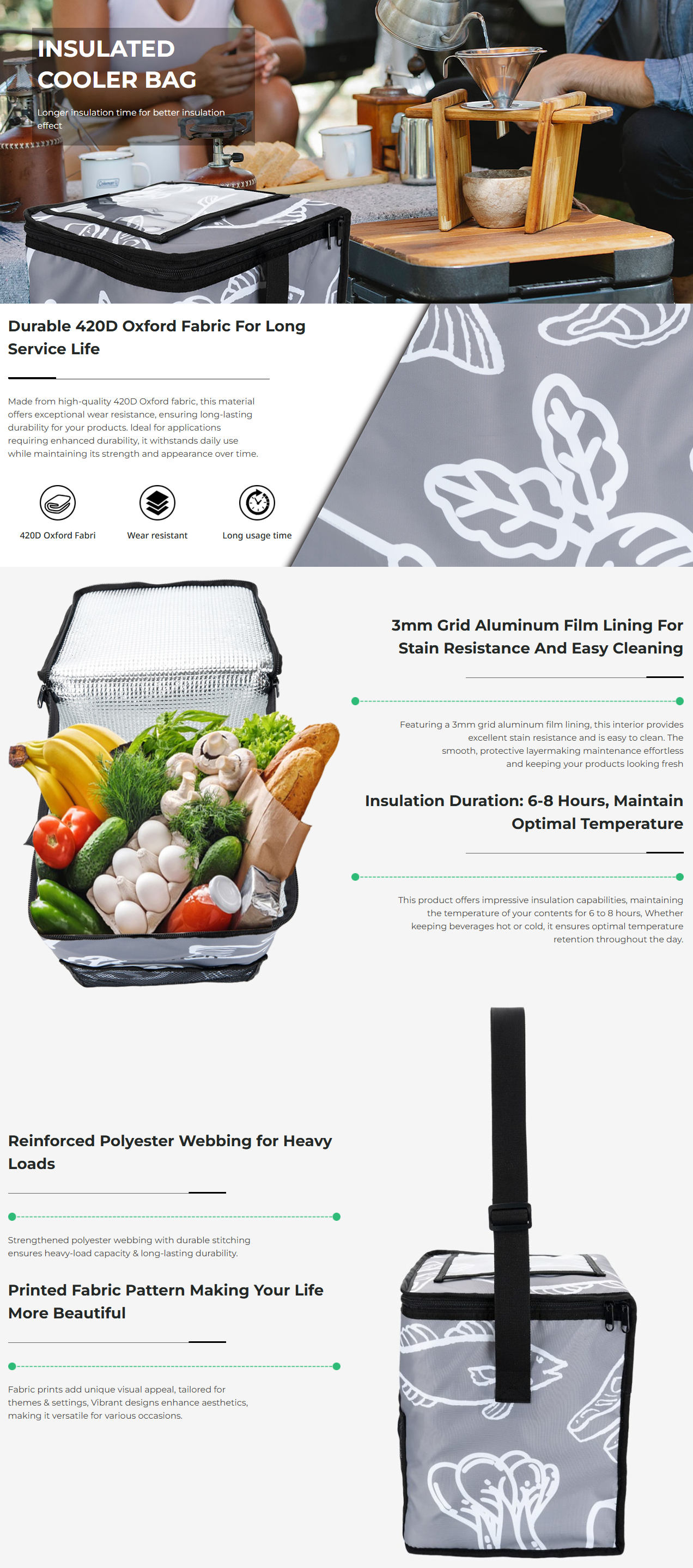
Insulation is the heart of the product. A standard lunch insulated bag factory might only use 3mm PE foam. While this works for short trips, it fails in summer heat. A professional Custom insulated lunch bag manufacturer offers upgrades to 5mm, 8mm, or even 10mm high-density EPE foam. The thicker the foam, the longer the temperature remains stable.
You can also choose between different lining materials. Standard silver foil is common, but PEVA (Polyethylene Vinyl Acetate) is the superior choice for modern brands. PEVA is non-toxic, BPA-free, and much easier to clean. For heavy-duty use, some factories offer EVA (Ethylene Vinyl Acetate), which provides even better thermal resistance. These upgrades allow you to market your product based on performance, such as "keeps food cold for 8+ hours."
5. Smart Interior Structural Design
User experience is defined by the small details inside the bag. A leading lunch insulated tote factory helps you design the "interior architecture." This includes adding mesh pockets for ice packs, elastic straps to secure water bottles, or even removable dividers. These features prevent food containers from flipping over and keep the contents organized.
Leak-proofing is the most requested feature in this category. Professional factories use heat-sealing technology rather than traditional sewing for the inner liner. This creates a seamless "tub" that prevents liquids from leaking into the insulation layer. When you work with weierken, we emphasize these leak-proof liners as a core selling point for our Lunch cooler bag OEM clients.
Dry/Wet Separation: Designing two compartments to keep dry snacks away from cold drinks.
Ice Pack Pockets: Integrated mesh slots to keep refrigerants in the optimal position.
Easy-Wipe Liners: Using materials that don't stain from sauce spills.
6. Custom Hardware and Accessory Integration
Hardware defines the "feel" of a bag. A Thermal bag wholesale supplier should offer more than just standard plastic zippers. You can request YKK or SBS zippers for smooth, snag-free operation. Custom zipper pullers made of metal or rubber can be engraved with your logo, adding an extra layer of brand sophistication.
Other hardware options include magnetic buckles, heavy-duty D-rings for shoulder straps, and metal "feet" on the bottom of the bag to prevent it from touching dirty surfaces. These small upgrades change the perceived value of the product. A bag with high-quality metal hardware feels like a premium investment, allowing you to command a higher retail price point.
7. Retail-Ready Packaging and Labeling
When the goods arrive, they should be ready for the shelf. A comprehensive lunch insulated bag factory handles all your packaging needs. This includes designing custom polybags, UPC barcode stickers, and branded hangtags. They can also provide retail display boxes or PDQ (Product Display Quantity) cartons for major supermarket chains.
Proper shipping marks and carton labeling are vital for smooth logistics. The factory ensures that every box is labeled with the correct weight, dimensions, and SKU information. This attention to detail prevents delays at customs and simplifies the process for your warehouse team. This "plug-and-play" service is a major advantage for e-commerce brands and traditional retailers alike.
8. Prototyping and Rapid Pattern Making
Speed to market is everything. You cannot wait months for a sample. A professional Custom insulated lunch bag manufacturer employs in-house pattern makers who can turn a drawing into a physical sample in 7 to 15 days. They should offer at least one or two rounds of free revisions based on your initial feedback.
This prototyping phase allows you to test the "tactile feel" of the materials and the strength of the seams. At weierken, we use this time to perfect the ergonomics of the handles and straps. Once you sign off on the pre-production sample, it serves as the golden standard for the entire mass-production run. This service minimizes the risk of expensive errors later in the Bulk Order Process.
9. Technical Testing and Compliance Support
International trade requires strict adherence to safety standards. A reliable lunch insulated bag factory provides testing support to ensure your product meets the regulations of your target market. This includes CPSIA (Consumer Product Safety Improvement Act) for children's products and REACH for the European market. They can also assist with California Proposition 65 compliance regarding lead and phthalates.
Internal performance tests are also part of the service. Factories perform drop tests to ensure the handles don't tear under load, and thermal retention tests to verify their insulation claims. Having these reports in hand gives your brand the foundation it needs to scale globally. It builds trust with both customs officials and the end consumer.
Load-Bearing Tests: Checking the tensile strength of shoulder strap attachments.
Zipper Fatigue Testing: Opening and closing the bag 5,000 times to ensure durability.
Food Contact Safety: Verifying that liners are FDA-approved and BPA-free.
Partner with an Expert Manufacturer for Long-Term Success
The OEM services offered by a professional lunch insulated bag factory are designed to take the stress out of manufacturing. By choosing a partner like weierken, you gain more than a supplier; you gain an engineering team. We prioritize structural integrity and thermal efficiency in every project, ensuring your lunch bags perform as well as they look.
From the first 3D drawing to the final shipping label, every step of the process is an opportunity to add value to your brand. Don't settle for a factory that just cuts and sews. Look for a partner that understands the science of the lunch insulated tote factory business. This expertise is what separates a one-time order from a multi-year partnership.
Are you ready to build a better lunch bag for your brand? Our team is standing by to help you with everything from material selection to global compliance. Contact weierken today to request a quote or start your first custom prototype.
Frequently Asked Questions (FAQ)
1. What is the typical MOQ for a custom lunch insulated bag?
Most lunch insulated bag factory partners set an MOQ between 500 and 1,000 pieces per color. This volume allows for the cost-effective sourcing of custom-colored fabrics and specialized hardware. However, for recurring clients, some Lunch cooler bag OEM providers offer more flexibility.
2. How long does the thermal insulation actually last?
A standard bag with 5mm EPE foam lasts 3 to 4 hours. If you upgrade to 8mm or 10mm high-density foam at a Custom insulated lunch bag manufacturer, you can extend this to 6 or 8 hours. Using high-quality ice packs is always recommended to maximize cold retention.
3. Is it possible to make the bag 100% leak-proof?
Yes. To achieve this, the lunch insulated tote factory must use heat-sealing or ultrasonic welding for the inner liner. This eliminates needle holes where liquids could escape. Always confirm that your manufacturer uses this technology rather than just sewing the liner.
4. What certifications should I ask for?
At a minimum, ask for BSCI or Sedex for ethical factory standards. For the product itself, request FDA, REACH, or LFGB certifications for food-contact safety. If you are selling to major US retailers, California Prop 65 compliance is essential.
5. Can I get a sample before placing a bulk order?
Absolutely. Any reliable Thermal bag wholesale supplier will insist on a pre-production sample. This usually takes about 10 days. Once you approve this sample, it becomes the quality benchmark for your entire mass-production order.
Start Your Custom Project with weierken
Expert lunch insulated bag factory solutions tailored for global brands. Request a quote today.
SEND AN INQUIRY