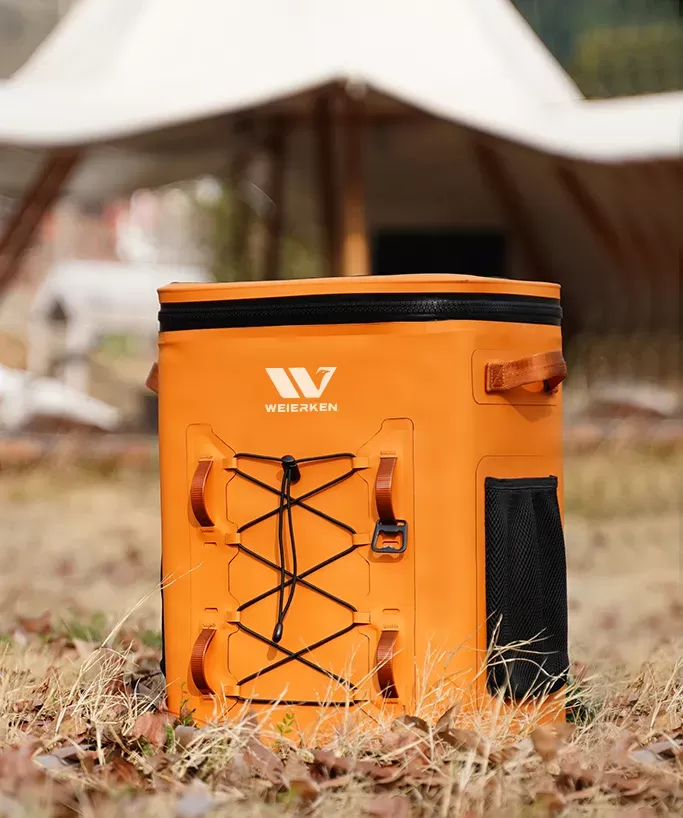

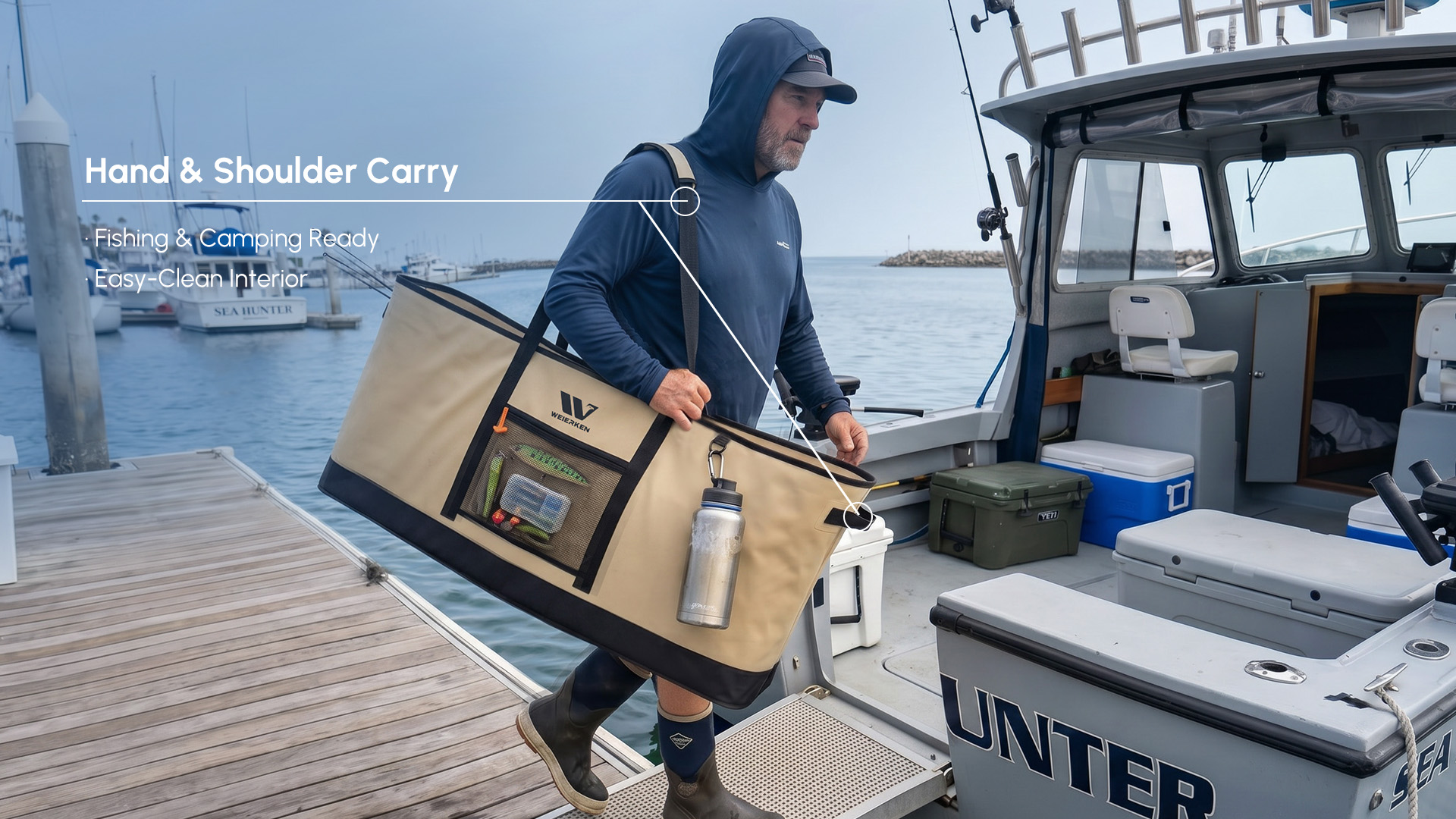
Fishing tackle backpacks operate in demanding outdoor environments. Unlike everyday commuter bags, a fishing backpack endures relentless saltwater spray, sharp hooks, heavy lead sinkers, baking sun, and sudden torrential downpours. When a bag fails on the water, the angler remembers the brand name printed on the front—not the factory that built it.
For fishing brands, e-commerce sellers, and tackle distributors, partnering with the wrong supplier creates massive hidden expenses. Leaking seams, seized zippers, ripped shoulder straps, and sagging bottoms lead to elevated return rates, warranty claims, and damaged brand equity.
A reliable OEM partner acts as your primary quality defense. At Weierken, our 20 years of technical bag manufacturing experience have shown that a qualified custom fishing backpack manufacturer must satisfy six fundamental engineering, structural, and operational benchmarks.
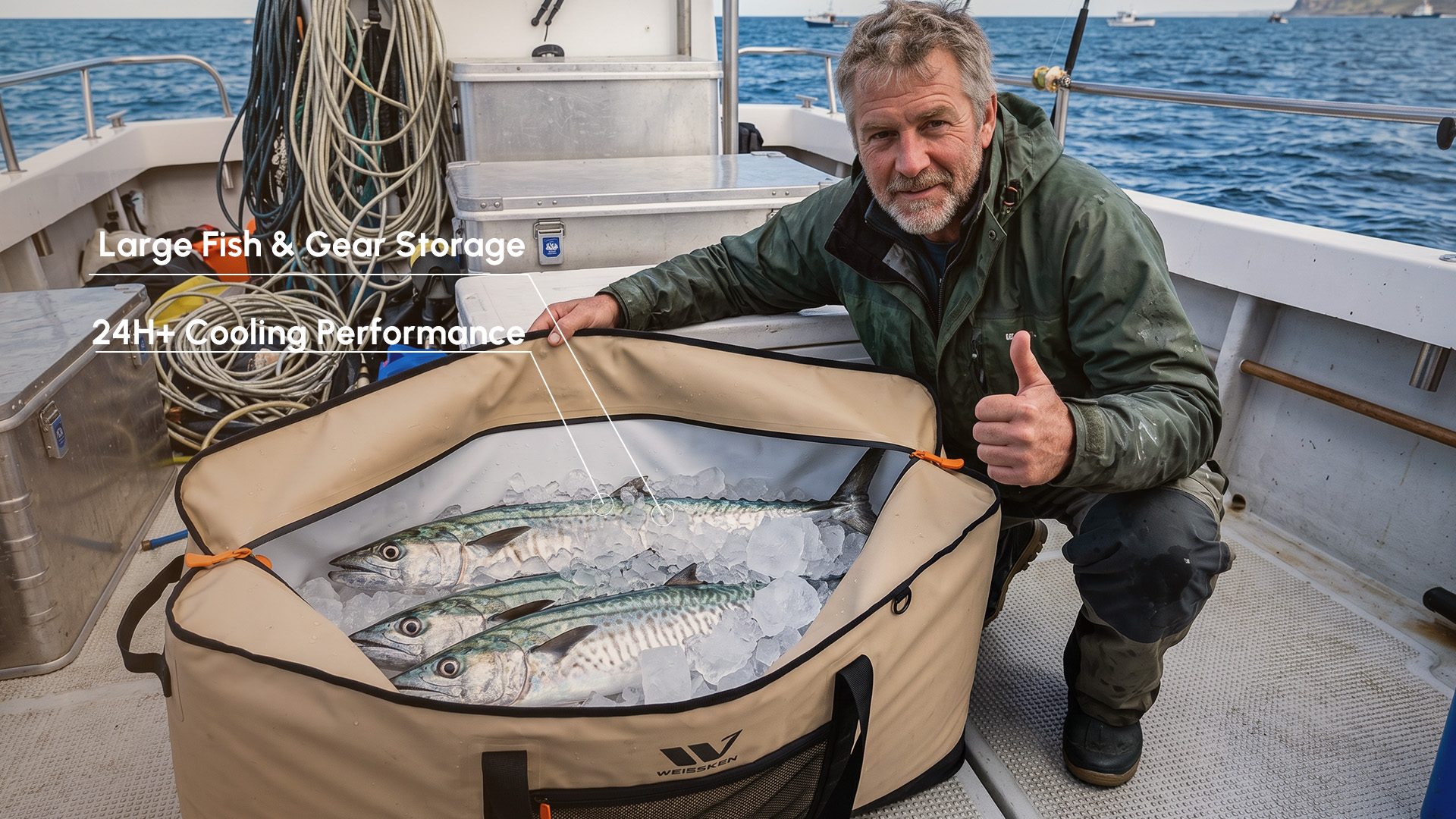
Standard 1: Structural Waterproofing Beyond Basic Water Resistance
Many general bag factories apply a basic Durable Water Repellent (DWR) surface spray and label the product "waterproof." In reality, DWR coatings quickly wear off under friction and fail completely when exposed to pooling water in boat hulls or driving rain.
A specialized fishing bag factory must differentiate between water-resistant construction and true structural submersion protection (IPX6 to IPX8 ratings).
High-Frequency (RF) Welded Seams: For true dry-pack fishing bags, the factory must use radio-frequency welding to fuse fabric layers at the molecular level, eliminating needle holes entirely.
Full Seam-Taping Technology: For cut-and-sewn performance packs, interior seams must feature heat-sealed polyurethane (PU) or TPU tape to block moisture penetration through stitch lines.
Heavy-Duty Technical Fabrics: The supplier should work fluently with 420D to 840D nylon TPU laminates or 500D heavy-duty PVC tarpaulin, balancing tear strength with total fluid containment.
Hydrostatic Testing Verification: The factory must own in-house hydrostatic head testing machinery to verify that fabrics and seam welds withstand a minimum of 10,000mm to 20,000mm of water pressure.
Standard 2: Saltwater, UV, and Hardware Corrosion Resistance
Salt crystals and marine environments destroy cheap metal zippers, sliders, and plastic clips within weeks. Coastal anglers require hardware that withstands continuous salt-crust buildup without binding or rusting.
Your manufacturing partner must source and test hardware engineered specifically for marine use:
Corrosion-Free Zippers: Standard coil zippers fail quickly around saltwater. Qualified suppliers use heavy-tooth POM resin zippers, water-repellent zippers, or fully airtight gas-tight zippers.
Marine-Grade Fasteners: All D-rings, carabiners, and strap tensioners must be 316-grade stainless steel, anodized marine aluminum, or high-impact polyoxymethylene (POM) plastic.
ASTM B117 Salt Spray Testing: Require your manufacturer to provide documented salt spray test results showing zero signs of surface pitting or oxidation after 48 to 96 hours of continuous exposure.
UV Anti-Aging Additives: Fabrics and webbing must contain UV inhibitors to prevent color fading, material embrittlement, and thread rot under direct sunlight.
Standard 3: Reinforced Load-Bearing and Bottom Abrasion Chassis
Anglers pack heavy. A fully loaded tackle pack containing four plastic utility trays, lead sinkers, pliers, spools of fluorocarbon, lunch, and a hydration bladder routinely weighs between 25 and 40 pounds. If the bottom blows out or a shoulder strap tears away from the main body, the bag becomes useless.
A reputable factory integrates deliberate load-dispersal reinforcements throughout the assembly:
Heavy-Duty Bar-Tack Stitching: All load-bearing zones—including shoulder strap attachment points, grab handles, and external tool loops—must feature dense, computerized box-X and bar-tack stitching using bonded nylon thread.
Compression-Molded EVA Hard Bottoms: A rigid, waterproof EVA or rubberized base keeps the backpack standing upright on wet boat decks, prevents hook punctures, and stops muddy water from soaking into the main compartment.
Ergonomic Molded Back Panels: High-density EVA foam back channels provide airflow to keep the wearer cool while distributing heavy tackle loads evenly across the hips and spine.
Dynamic Drop and Pull Testing: The factory should execute cyclical pull testing (up to 50–100 lbs of load) on top handles and straps to guarantee zero structural tear-out.
Standard 4: Precision Modular Organization for Standard Tackle Trays
A generic outdoor backpack cannot serve as an efficient fishing pack. The internal compartment dimensions must match industry-standard tackle utility boxes, such as the widely used Plano 3500, 3600, and 3700 sizing profiles.
Your supplier needs deep product design experience to balance internal storage with external tool accessibility:
Tight Dimensional Tolerances (±2mm): Tackle tray compartments must hold plastic utility boxes snugly so they do not shift during hiking, while still allowing smooth, one-handed removal.
Dedicated Quick-Draw Tool Sheaths: Exterior pockets must accommodate fishing pliers, braid cutters, lip grippers, and hook removers with hook-and-loop security tabs and drainage eyelets.
Integrated Rod Holder Sleeves: Side pockets and upper security straps must hold multipiece travel rods or net handles securely against the chassis without tipping the bag.
Internal Divider Flexibility: Padded internal dividers should use high-density hook-and-loop systems, allowing anglers to customize their storage layout for camera gear or oversized swimbaits.
Standard 5: Closed-Loop, Multi-Stage Quality Assurance Systems
Relying solely on a quick pre-shipment inspection is a risky strategy for complex tactical gear. A leading custom fishing backpack manufacturer runs strict quality control at every phase of production.
At Weierken, our manufacturing lines enforce four discrete inspection gates to ensure a 99.5% first-pass yield rate:
Incoming Quality Control (IQC): Raw fabric rolls, waterproof zippers, buckles, and webbing are checked for colorfastness, tensile strength, and coating uniformity before cutting.
In-Process Quality Control (IPQC): Technicians monitor stitching tension, welding temperature, and bar-tack positions on active assembly lines to catch deviations early.
Final Quality Control (FQC): 100% of finished backpacks undergo dimensional checks, aesthetic trimming, zipper smooth-run testing, and load-distribution checks.
Outbound Quality Control (OQC): Random batch inspections verify master carton drop resistance, barcode labeling, polybag ventilation, and retail hangtag accuracy.
Standard 6: Multi-Country Supply Chain Resilience and Global Compliance
Single-origin supply chains leave brands vulnerable to shifting tariff policies, regional trade disruptions, and port bottlenecks. Modern brands need manufacturing partners with diversified manufacturing bases and verified ethical compliance.
Dual-Base Production Strategy: Sourcing through a manufacturer with facilities in both China and Cambodia provides substantial advantages. Rapid prototyping and complex R&D run smoothly in China, while large-scale production runs take advantage of Cambodia's favorable tariff schedules for North American and European imports.
International Ethical Certifications: Your factory must maintain active BSCI, SEDEX, and ISO 9001 certifications to protect your brand reputation in mainstream retail channels.
Chemical Safety Compliance: All PVC, TPU, foams, and treatments must comply with REACH (EU) and California Proposition 65 (US) standards, ensuring they are free from harmful phthalates, lead, and toxic plasticizers.
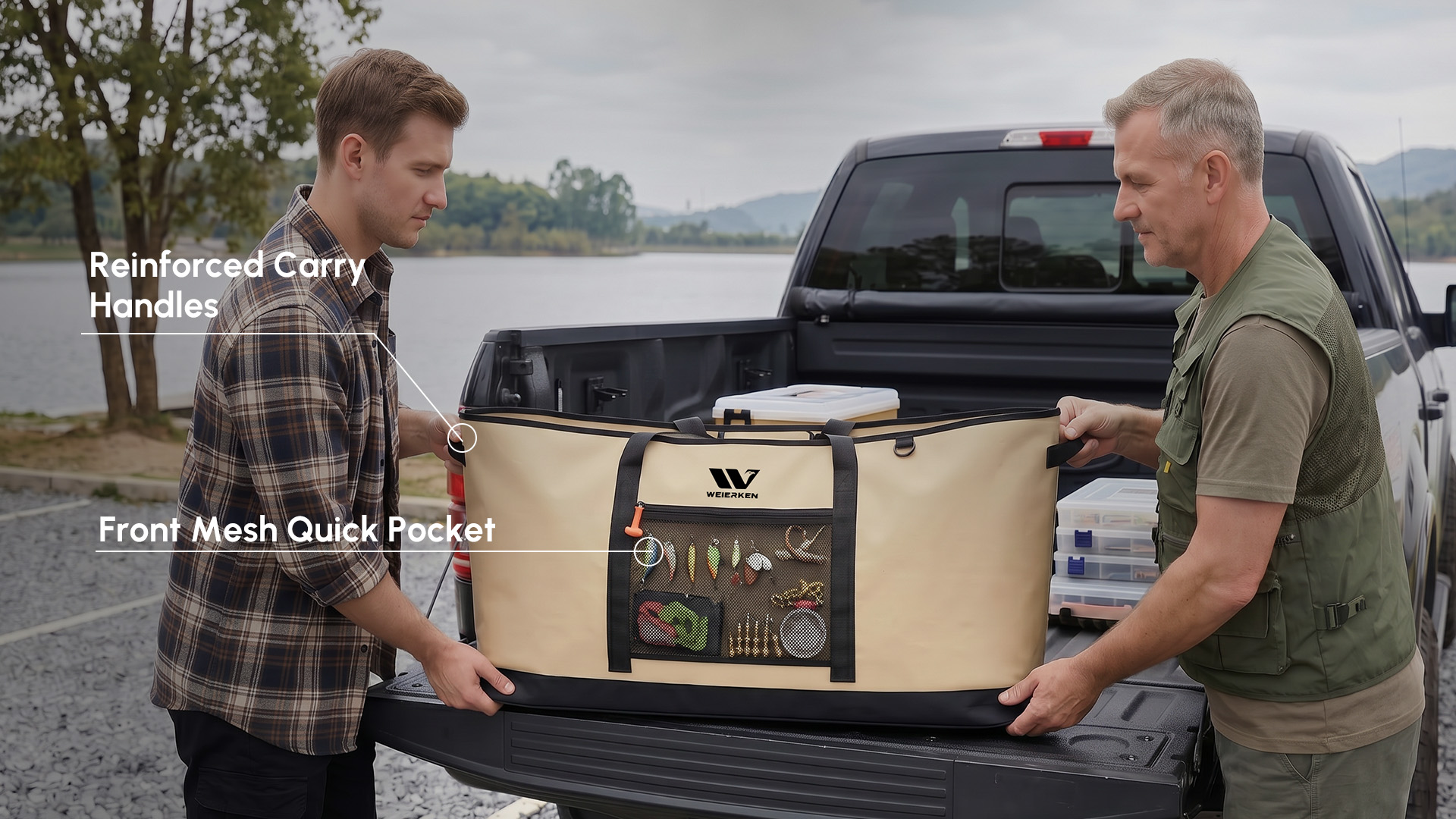
B2B Supplier Audit Checklist for Fishing Tackle Bags
Use the checklist below during your next factory audit or RFQ review to evaluate prospective manufacturing partners:
| Audit Category | Required Verification Item | Target Standard / Metric |
|---|---|---|
| Waterproof Capability | In-house Hydrostatic Head / Immersion Test | IPX6 rating or 10,000mm+ water column |
| Hardware Durability | ASTM B117 Salt Fog Chamber Testing | 48–96 hours without corrosion |
| Structural Integrity | Dynamic Drop & Handle Tensile Pull Test | 40+ lbs load dropped 1.5m without seam failure |
| Tackle Box Fitment | Engineering Drawing & Compartment Tolerances | Precision fit for standard 3600 / 3700 trays |
| Quality Control | Documented Multi-Stage QC Workflow | IQC, IPQC, FQC, OQC with 99.5% First-Pass Yield |
| Factory Compliance | Third-Party Ethical & Quality Audits | BSCI, ISO 9001, GRS, REACH, Prop 65 |
Frequently Asked Questions (FAQ)
Q1: What is the typical sampling and production lead time with a
custom fishing backpack manufacturer?
A1: Functional sample
development typically takes between 12 and 30 days depending on whether custom
EVA molds, tooling, or custom-extruded zippers are required. Mass production
runs usually require 45 to 60 days following sample approval and deposit
confirmation.
Q2: How does manufacturing fishing backpacks in Cambodia lower our
import costs?
A2: Cambodia benefits from preferential trade
agreements and lower customs duty brackets in major markets like the United
States and the European Union. By routing volume manufacturing through our
Cambodia facility, brands can reduce overall landed duty costs compared to
direct China exports.
Q3: Can we add an insulated cooler compartment into our tackle
backpack design?
A3: Yes. We frequently build hybrid tackle packs
featuring an insulated lower or upper compartment. We use high-density
closed-cell PE foam and leakproof heat-welded PEVA or TPU liners to hold ice,
drinks, or fresh bait without leaking into dry tackle sections.
Q4: What is the standard Minimum Order Quantity (MOQ) for custom
fishing backpacks?
A4: Our standard OEM MOQ starts at 500 to 1,000
units per design or colorway. This volume allows us to secure custom-dyed
fabrics, produce custom molded hardware, and optimize line efficiency for the
lowest unit cost.
Q5: Can you manufacture fishing bags with recycled and sustainable
materials?
A5: Yes. We offer GRS-certified (Global Recycled
Standard) recycled polyester and nylon fabrics (rPET) paired with non-toxic,
solvent-free TPU coatings. These materials offer the same tear resistance and
waterproof performance as virgin textiles while meeting consumer demand for
sustainable gear.
Partner with Weierken for Your Fishing Pack Line
High-end fishing bags require experienced engineering, robust materials, and rigorous production control. As an established custom fishing backpack manufacturer, Weierken supplies global tackle brands, charter outfitters, and outdoor retailers with dependable, tournament-grade gear.
Our dual China and Cambodia factory footprint, full-process quality assurance, and end-to-end DDP shipping simplify your manufacturing workflow. Contact our engineering team today to review your technical tech pack, request material swatches, and begin your sample build.