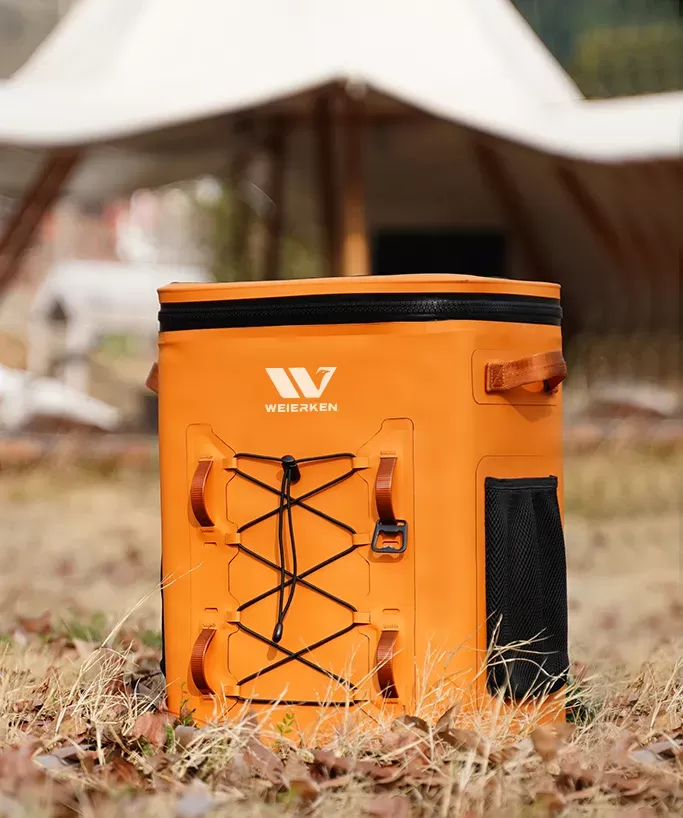

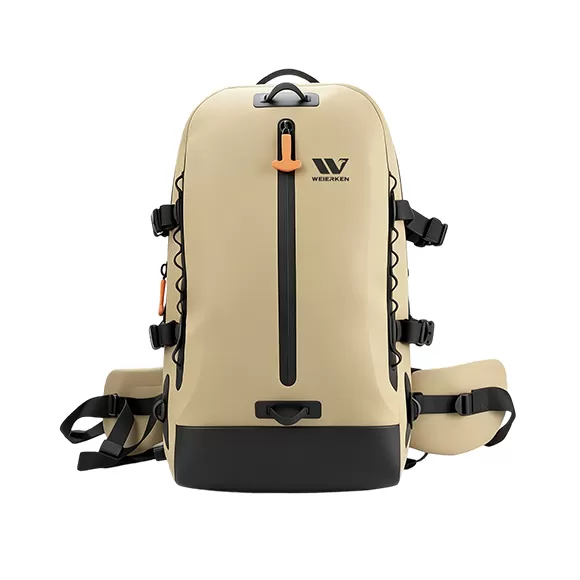
Sourcing technical outdoor equipment presents unique engineering challenges. When brands source fishing packs, they often encounter suppliers who claim their bags are completely waterproof. In reality, many factories only apply a basic Durable Water Repellent (DWR) coating over standard stitched fabric. While this repels light spray, it fails completely during heavy downpours, river wading, or saltwater kayak fishing.
A truly waterproof fishing pack requires specialized manufacturing. It needs Radio Frequency (RF) welding, airtight zipper installations, molded EVA base integration, and saltwater-resistant hardware. A generic audit checklist will not catch a factory that lacks these technical capabilities. Established manufacturers like Weierken emphasize technical validation before signing supply agreements.
This guide breaks down five essential auditing steps to evaluate a custom welded tackle backpack supplier. These steps help your sourcing team verify true manufacturing competence, production capacity, and trade compliance.
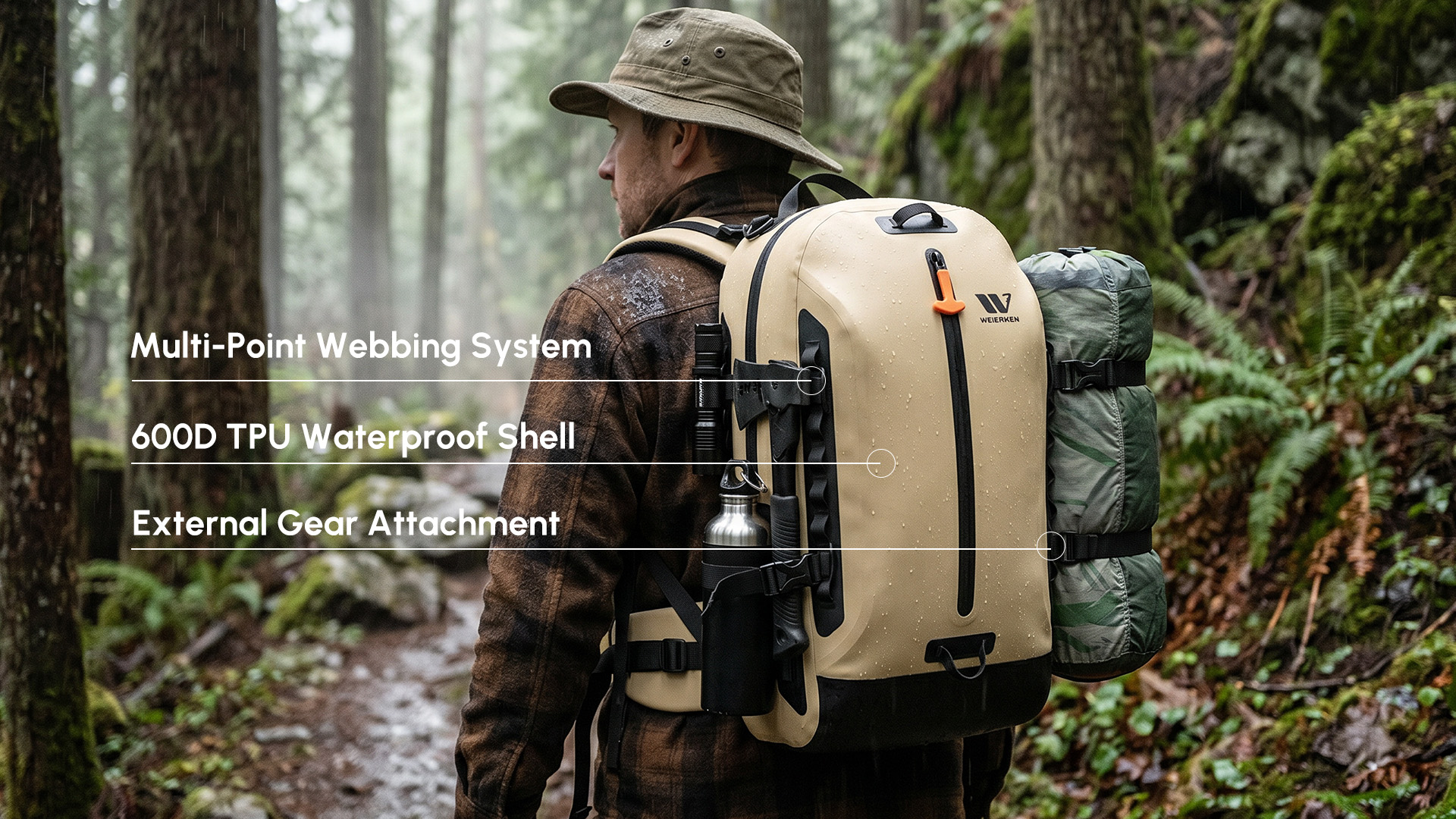
Step 1: Inspect High-Frequency Welding and Precision Cutting Machinery
True waterproofing depends on seamless molecular bonding. Traditional sewing machines punch thousands of needle holes into fabric. Even with taped seams, stitching under heavy loads creates leak points over time. Your on-site audit must start on the main workshop floor by examining the machinery.
A capable waterproof tackle backpack OEM relies on dedicated high-frequency (RF) and hot-air welding equipment rather than conventional sewing lines.
High-Frequency / RF Welding Machines: Check the machine count, tonnage, and tooling variety. High-frequency welding fuses TPU or heavy-duty PVC composite layers at the molecular level, creating a hermetic seal impervious to submersion.
Automated Laser Cutting Tables: Manual fabric shears or standard die-cutters leave rough edges on coated textiles. Inspect whether the factory uses CNC laser cutters to guarantee crisp, clean edges, which are critical for airtight seam alignment.
Hot-Air Seam Taping Stations: For hybrid bags that combine stitched reinforcement with waterproof compartments, inspect the temperature-controlled hot-air taping equipment.
Auditor Verification Question: "Can your engineering team demonstrate how you weld complex 3D corners and multi-layer webbing junctions without creating pinhole leaks or material thinning?"
Step 2: Audit In-House Testing Labs and Marine-Grade Quality Controls
A supplier's claims mean nothing without empirical data. A premier marine-grade tackle backpack factory audit requires inspecting the internal quality control laboratory. Marine fishing gear faces corrosive salt spray, UV degradation, and abrasive tackle trays.
Verify that the factory owns, operates, and calibrates the following diagnostic equipment:
Hydrostatic Head Pressure Tester: This instrument measures the water column resistance of fabrics and welded seams. For true submersible performance (IPX7 or IPX8), the welded seams must withstand 10,000mm to 20,000mm+ of hydrostatic pressure without weeping.
ASTM B117 Salt Fog Corrosion Chamber: Saltwater quickly ruins low-grade zippers and steel pullers. The lab should run continuous 48-hour to 96-hour salt spray tests on zippers, D-rings, and carabiners to verify corrosion resistance.
Dynamic Drop and Load Stress Testers: Tackle backpacks carry heavy lead sinkers, utility boxes, and hydration bladders. Ensure the factory tests handle pull-strength and shoulder-strap anchor points under dynamic drops exceeding 30 to 40 lbs.
Review the factory's quality logbooks. Top-tier operations maintain strict Incoming Quality Control (IQC), In-Process Quality Control (IPQC), and Final Quality Control (FQC), achieving a stable 99.5% First-Pass Yield (FPY).
Step 3: Assess Tooling, Molded EVA Bottom, and Prototyping Capabilities
Fishing tackle bags require rigid structural support. An angler places their pack on wet rocks, muddy banks, and boat decks. A reliable supplier must be able to design and build compression-molded EVA bases that integrate seamlessly with the welded upper body.
During the factory walkthrough, evaluate their structural engineering and R&D departments:
Plano & Flambeau Box Sizing Precision: The main compartment must fit standard utility tackle trays (such as Plano 3600 or 3700 series) with precise internal tolerances (within ±2mm). Ask to see their internal dimension matrices.
Molded Base Tooling Workshop: Check whether the factory molds EVA hard-bottoms in-house or works with dedicated tooling partners to produce non-slip, waterproof tub bases.
Dedicated Rapid Prototyping Sample Room: A specialized sample department should turn complex technical drawings into functional prototypes within 12 to 30 days.
A competent OEM will have in-house pattern makers who understand the stretch, thermal shrinkage, and welding parameters of heavy-gauge TPU-laminated nylon.
Step 4: Evaluate Dual-Country Manufacturing and Tariff Mitigation Strategies
Trade policies, fluctuating shipping rates, and tariffs make single-region sourcing risky. Sourcing managers now prioritize supply chain resilience by partnering with a waterproof bag manufacturer with China and Cambodia footprints.
A dual-facility model gives your brand clear commercial advantages:
Tariff Optimization: Sourcing through Cambodia allows North American and European buyers to leverage favorable trade classifications, legally avoiding steep Section 301 tariffs on Chinese luggage goods.
Supply Chain Redundancy: Advanced product engineering and rapid prototyping can take place at the central hub in China, while high-volume bulk production runs efficiently in Cambodia.
Scale and Capacity Buffer: Ensure the manufacturer operates substantial production space (such as 80,000+ square meters across facilities) and employs over 3,000 skilled workers. This prevents bottleneck delays during peak pre-season production.
End-to-End Shipping Support: Confirm whether the supplier provides complete Delivered Duty Paid (DDP) door-to-door logistics support.
Step 5: Verify International Compliance, ESG, and Material Certifications
Major retail buyers, big-box outdoor chains, and leading DTC platforms require strict social compliance and environmental safety. A factory lacking verified third-party audit reports exposes your brand to supply disruptions and reputational risk.
Demand current, unexpired documentation for the following credentials:
Quality Management Systems: Valid ISO 9001:2015 certification confirming documented standard operating procedures (SOPs) across all lines.
Social and Ethical Compliance: Clear, passing audit reports from BSCI (Business Social Compliance Initiative) or SEDEX (SMETA), verifying ethical labor practices, safe working environments, and fair compensation.
Chemical Safety Standards: Verified test reports showing raw materials comply with REACH (EU non-toxic chemical directives) and RoHS regulations, ensuring zero harmful plasticizers or lead.
Sustainability Certifications: GRS (Global Recycled Standard) verification if your product line incorporates post-consumer recycled rPET or eco-friendly TPU coatings.
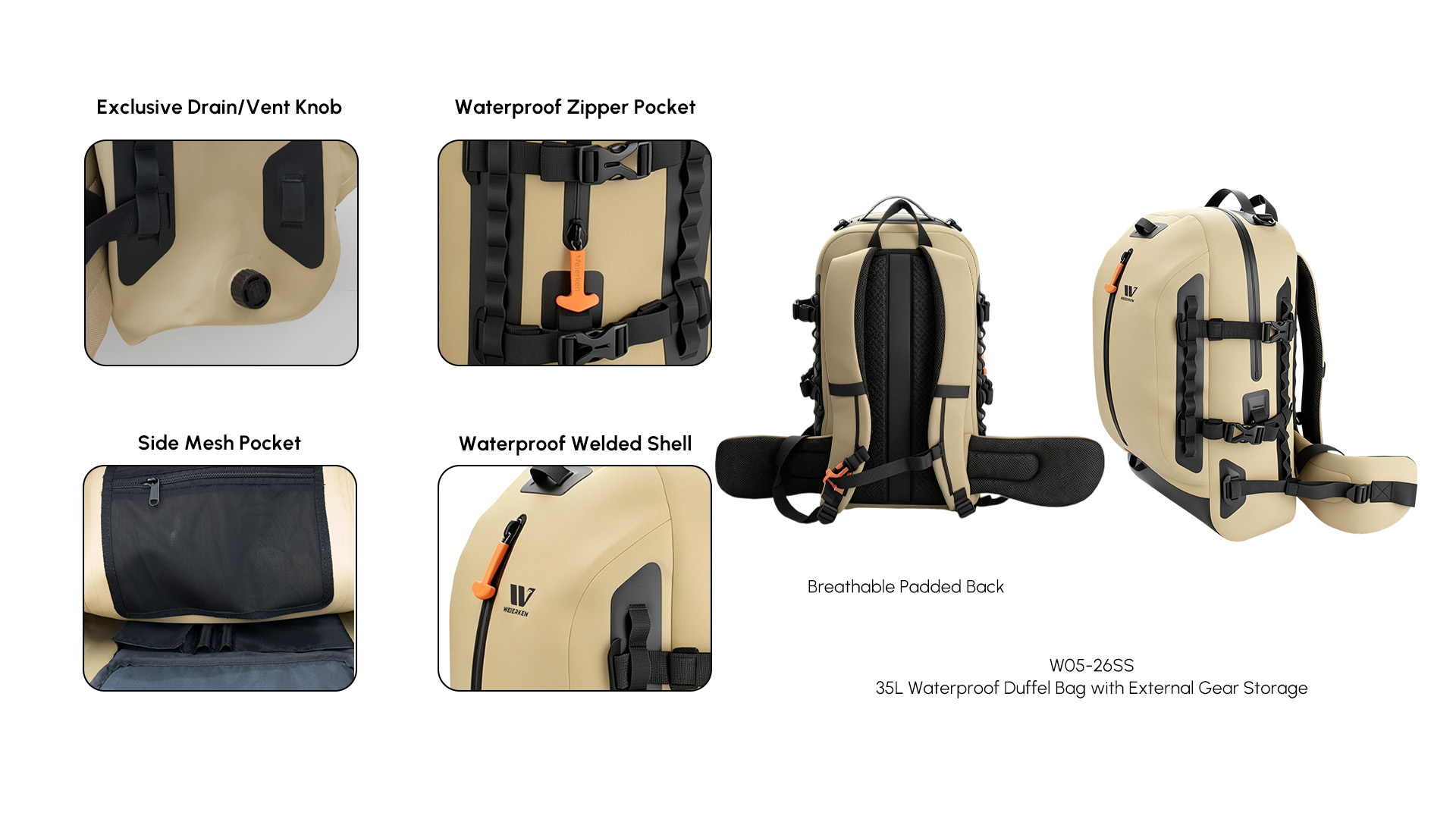
B2B Audit Tool: Waterproof Tackle Backpack OEM Scorecard
Use this evaluation matrix to grade prospective factories during your on-site or digital supplier review:
| Audit Category | Specific Verification Focus | Target Weight |
|---|---|---|
| 1. Machinery & Welding | High-frequency RF capacity, laser cutting tables, corner seam tools | 25% |
| 2. Lab & Quality Control | Hydrostatic head tester (IPX6-8), salt fog chamber, drop test, FPY > 99% | 20% |
| 3. R&D & Prototyping | Molded EVA tooling, Plano 3600/3700 fit, 12-30 day sample turnaround | 20% |
| 4. Capacity & Tariffs | China + Cambodia dual footprint, origin documentation, >80,000 sqm space | 20% |
| 5. Compliance & ESG | ISO 9001, BSCI / SEDEX green rating, REACH, RoHS, GRS certified | 15% |
Why Partner with Weierken for Waterproof Tackle Backpack Manufacturing
Since 2006, Weierken has engineered waterproof bags, insulated soft coolers, and technical marine packs for more than 2,000 global brands. We combine deep material science expertise with world-class production infrastructure.
Expansive Dual-Base Capacity: Over 80,000 square meters of modern workshop space across 3 company-owned manufacturing bases in China and Cambodia, powered by 3,000+ skilled workers.
Engineering-Driven Quality: Advanced high-frequency welding machines, CNC laser fabric cutters, and an in-house testing lab that maintain a 99.5% first-pass production yield.
Agile Product Development: Dedicated sample rooms capable of delivering custom technical samples within 12 to 30 days.
Tariff Savings: Full legal Form A / Certificate of Origin export documentation from Cambodia to help reduce import duties for US and European buyers.
Frequently Asked Questions (FAQ)
Q1: How do you verify true airtight and waterproof performance during mass production?
A1: Reputable OEMs use a multi-stage testing process. Each production batch undergoes positive pressure inflation tests, where seams are submerged in water tanks to check for air bubbles. Additionally, sample units undergo hydrostatic head tests to ensure seams consistently meet IPX7 or IPX8 standards under load.
Q2: Can we conduct a virtual video factory audit if our QA team cannot travel overseas?
A2: Yes. Weierken provides live virtual audits led by bilingual technical project managers. Our team walks your auditors through our raw material storage, CNC cutting bays, high-frequency welding lines, internal testing laboratories, and finished packing lines in real time.
Q3: Does the Cambodia factory maintain the same quality standards as the China facility?
A3: Yes. All facilities share identical ISO 9001 quality management frameworks, machinery models, and RF welding parameters. Senior production supervisors and QA directors oversee Cambodian operations to ensure quality remains completely consistent across both locations.
Q4: What is the typical Minimum Order Quantity (MOQ) and lead time for custom tackle packs?
A4: MOQs generally start between 500 and 1,000 units per colorway, depending on material customizations and custom molded tooling requirements. Sampling takes 12 to 30 business days, while initial mass production typically ships within 45 to 60 days after sample approval.
Q5: How do you protect our brand's proprietary designs and custom tooling?
A5: Professional OEMs protect your intellectual property through formal Non-Disclosure Agreements (NDAs). Custom tooling for EVA bottoms, branded zipper pulls, and patented ergonomic harness components remain your brand's exclusive property and are never shared or repurposed.
Upgrade Your Fishing Tackle Supply Chain Today
Do not let leaky seams, high tariffs, or unexpected factory delays hold your brand back. Partner with a proven manufacturing specialist that understands high-performance marine engineering.