

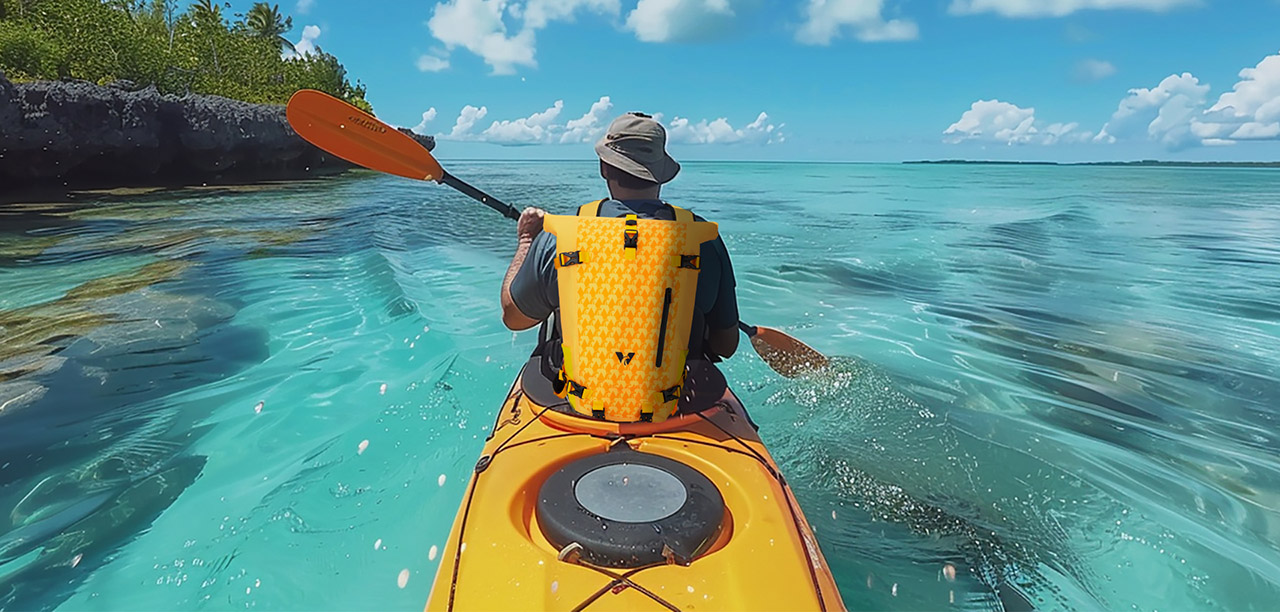
Paddlers push their equipment to the absolute limit. Saltwater, baking sun, sharp gravel, and deep submersion test every weld on a kayak bag. When a dry bag leaks, gear gets ruined, and brand reputation drops instantly.
Sourcing bulk dry bags for kayak brands requires more than comparing unit costs on a spreadsheet. You need a manufacturing partner capable of delivering repeatable waterproof integrity across thousands of units. Industry leaders like Weierken prove that systematic factory audits keep defects out of your warehouse and keep your customers dry.
Here are seven practical auditing tips to evaluate dry bag factories before placing your next high-volume order.
1. Audit Manufacturing Craftsmanship and Seam-Sealing Tech
Waterproof dry bags rely heavily on advanced thermal bonding, not traditional stitching. During your factory visit, check the machinery used to join fabric panels.
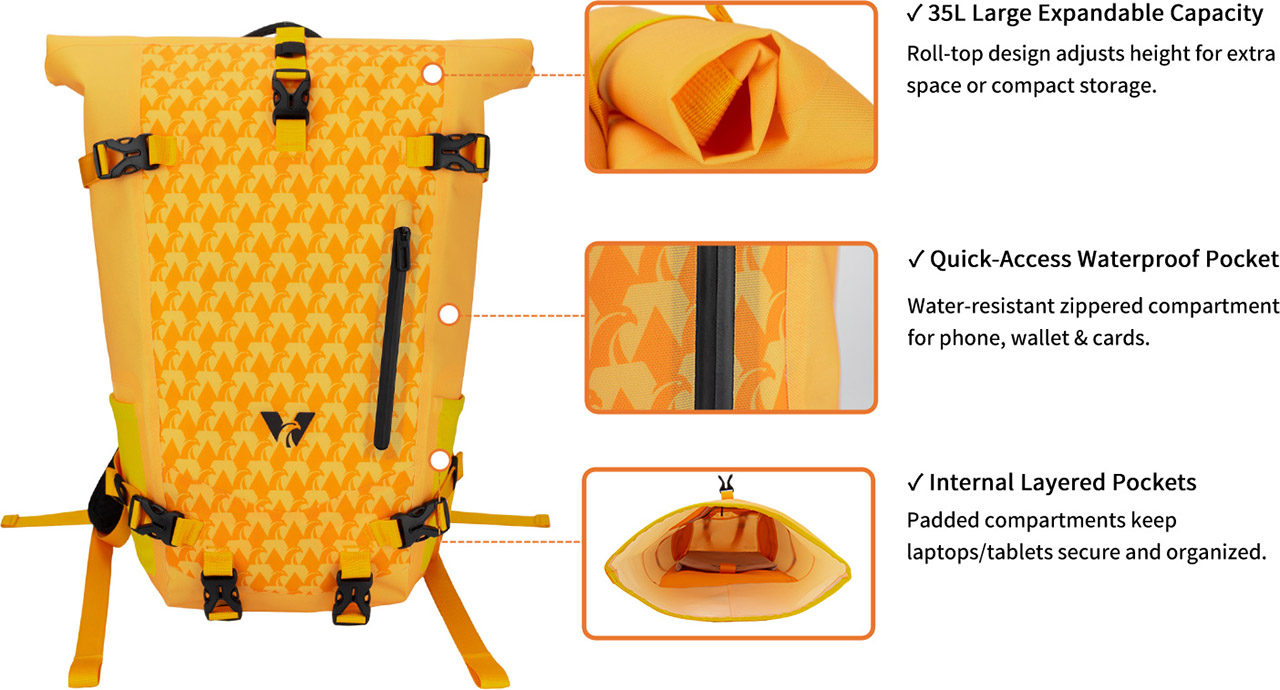
High-frequency (HF) welding and hot-air seam taping are essential for heavy-duty 500D PVC or TPU materials. Ask the factory how they handle complex geometric transitions, such as roll-top closures and reinforced haul handles. Poor temperature control during welding creates micro-gaps that leak under hydrostatic pressure.
Check machinery maintenance logs: Ensure HF welding dies receive regular calibration.
Inspect material thickness consistency: Verify that TPU/PVC coatings remain uniform across raw fabric bolts.
Evaluate complex sampling capabilities: Top-tier manufacturers like Weierken utilize dedicated technical sampling rooms to resolve structural flaws before mass production begins.
2. Inspect Quality Control Standards and First-Pass Yield
High defect rates destroy profit margins through return processing and warranty claims. You must inspect a factory's actual quality control process on the floor, not just read their written manual.
Look for continuous quality checkpoints. Factories should test raw materials upon arrival, conduct in-line checks during welding, and perform full inflation or submersion testing on finished bags. A reliable supplier measures success through First-Pass Yield (FPY).
For instance, Weierken maintains a First-Pass Yield above 99.5% across its production lines. They achieve this by running strict air-retention inflation tests on finished dry bags before packing. This rigorous routine ensures that defective seals never leave the factory floor.
3. Verify Compliance and ESG Certifications
North American and European outdoor markets enforce strict safety, environmental, and labor rules. Importing non-compliant waterproof bags creates massive legal and financial liabilities for your brand.
Request original audit reports for environmental and social compliance during your inspection. Ensure the factory updates these certificates annually through accredited third-party auditors.
Environmental & Chemical Safety: Look for REACH and GRS (Global Recycled Standard) compliance, especially if you market eco-friendly rPET dry bags.
Social Responsibility: Ensure current BSCI or SEDEX audit reports to prove fair labor standards.
Quality Management: Confirm ISO 9001 certification to guarantee standardized operational workflows.
4. Evaluate Tariff Mitigation and Dual-Base Strategy
Global trade tariffs and regional shipping bottlenecks impact landed costs significantly. Relying on a single manufacturing origin exposes your brand to sudden price hikes and supply disruptions.
Forward-thinking brands prefer suppliers with multi-country manufacturing footprints. A dual-factory model allows you to pivot orders based on tariff updates and labor availability.
To help clients lower import duties, Weierken operates dual production bases in China and Cambodia. The China facility excels at rapid prototyping, technical R&D, and complex material sourcing. Meanwhile, the Cambodia factory offers competitive tariff rates and stable long-term capacity for large volume runs bound for North America and Europe.
5. Examine Cross-Border Logistics and DDP Capabilities
A factory's responsibility should not stop at the loading dock. Managing ocean freight, customs clearance, duty payments, and inland trucking takes focus away from your marketing and product development.
When auditing a supplier, evaluate their cross-border shipping capabilities. Do they force you to handle complex FOB hurdles, or can they manage end-to-end delivery?
Partnering with a factory that offers DDP (Delivered Duty Paid) simplifies procurement entirely. Under DDP terms, the manufacturer takes full responsibility for shipping, customs clearance, and local transport. You receive your shipment at your warehouse as easily as buying from a local distributor.
6. Test R&D Speed and Prototyping Capabilities
Paddlers demand modern features like ergonomic shoulder harnesses, splash-proof external zip pockets, and laser-cut lash points. Sourcing bulk dry bags for kayak brands requires a factory that responds fast to design updates.
Delayed sample revisions can cause you to miss the peak spring kayaking sales window. Test your prospective factory's R&D speed during the quoting stage.
Evaluate design capability: Can their engineering team translate your tech pack into workable weld patterns?
Track turn-around times: Standard sample turnarounds should take between 12 to 30 days for technical outdoor gear.
Review market alignment: Work with manufacturers like Weierken whose dedicated R&D teams actively follow water sports trends to suggest practical hardware upgrades.
7. Measure Project Management and Communication Skills
Miscommunication leads to wrong color shades, incorrect logo placements, and delayed shipments. Your factory audit must assess how well their account team communicates in everyday project work.
Check if the manufacturer assigns dedicated project managers to your account. Do they send clear engineering drawings for approval? Do they maintain clear milestone tracking sheets?
With 20 years of experience serving global outdoor accounts, Weierken operates as a direct extension of your internal team. Their fluent, English-speaking project management staff eliminates language barriers, provides weekly production updates, and addresses technical issues immediately.
Key Metrics Comparison for Factory Audits
Use this reference table during your factory visits to benchmark prospective dry bag vendors against top industry metrics:
| Audit Criteria | Standard Factory Baseline | Top-Tier Benchmark (e.g., Weierken) |
|---|---|---|
| First-Pass Quality Yield | 92.0% - 95.0% | 99.5%+ |
| Sample Lead Time | 30 - 45 Days | 12 - 30 Days |
| Manufacturing Footprint | Single Factory (Local) | Dual Bases (China + Cambodia) |
| Compliance Certifications | Basic Local License | BSCI, GRS, REACH, SEDEX, ISO9001 |
| Logistics Options | FOB / EXW Only | Full DDP Door-to-Door Service |
Frequently Asked Questions (FAQ)
1. Why is high-frequency welding critical for kayak dry bags?
High-frequency (HF) welding uses electromagnetic energy to fuse fabric coatings together at the molecular level. Unlike sewing, which creates thousands of needle punctures, HF welding forms seamless, continuous bonds that prevent water from penetrating under pressure.
2. How does a dual-factory system in China and Cambodia benefit kayak brands?
A dual-factory strategy provides tariff relief and supply security. China offers quick component sourcing and technical prototyping, while Cambodia offers duty savings for bulk shipments imported into North America and Europe.
3. What certifications should I look for when sourcing bulk dry bags for kayak brands?
Look for ISO 9001 for quality control systems, BSCI or SEDEX for social labor compliance, and REACH or GRS for eco-friendly chemical and material standards.
4. What is DDP shipping, and why should outdoor brands use it?
Delivered Duty Paid (DDP) means the seller manages freight, clearance, and tariffs until the goods reach your final destination. It eliminates hidden import fees and simplifies supply chain management for brand owners.
5. How long does it take to sample custom technical dry bags?
While standard bag factories often take over 30 days, experienced technical manufacturers like Weierken can complete complex outdoor dry bag prototypes in 12 to 30 days.
Partner with a Proven Kayak Dry Bag Manufacturer
Finding a dependable factory for bulk dry bags for kayak brands doesn't have to be a risk. Work with a manufacturing team that brings technical skill, strict quality controls, and international compliance to every project.
Weierken brings 20 years of outdoor bag manufacturing experience to your brand:
Dual Production Bases: China + Cambodia facilities for tariff optimization and flexible scheduling.
Unmatched Quality: Proven 99.5% First-Pass Quality Yield with thorough inflation testing.
Complete Certifications: Fully audited under ISO 9001, BSCI, GRS, REACH, and SEDEX standards.
Hassle-Free Logistics: Full DDP door-to-door delivery straight to your warehouse.
Ready to upgrade your product line and secure reliable lead times for the upcoming season?
Request a 12-Day Prototype & Factory Audit Checklist Today