


Choosing a reliable partner for your custom bags involves more than just picking a color. When you work with a professional reusable insulated bag factory, you gain access to a suite of technical configurations. These options allow you to balance thermal performance, durability, and brand identity perfectly.
At Weierken, we understand that a food delivery courier has very different needs than a pharmaceutical logistics manager. Every detail counts toward the final user experience and your bottom line. By selecting the right OEM options, you can reduce waste and ensure your goods arrive in peak condition.
1. Custom Dimensions and Volume Capacity
Size is the most fundamental choice in any manufacturing project. A reusable insulated bag factory shouldn’t just offer “small, medium, and large.” Instead, we tailor the length, width, and height to match your specific cargo.
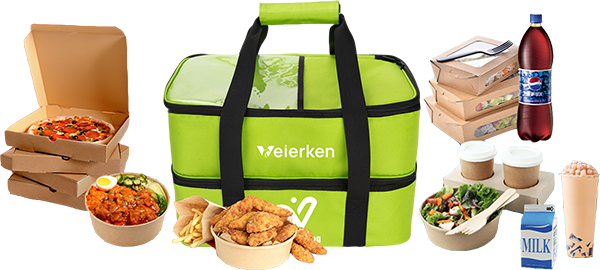
- Small Single-Meal Bags: Typically around 25x20x15cm, these are perfect for solo office workers or short-range app-based food deliveries.
- Large-Scale Delivery Boxes: For catering or grocery logistics, dimensions can reach 60x50x40cm. These often require internal rigid frames to maintain shape.
- Medical and Vaccine Carriers: These require precise interior measurements to fit standardized vaccine trays or ice packs without excess air gaps.
Customizing your dimensions ensures you aren’t paying to transport empty space. This optimization improves your shipping efficiency and lowers the per-unit transport cost. Weierken works with you to calculate the ideal interior volume based on your standard containers.
2. Insulation Material and Thickness Combinations
The heart of an insulated bag is the thermal barrier. Not all insulation is created equal. Depending on your target cold retention time, a reusable insulated bag factory offers several tiers of protection:
- EPP Molded Foam: This is a high-strength, lightweight, and washable material. It is ideal for professional food delivery where the bag might be dropped or bumped frequently.
- Multi-layer Aluminum Foil + Pearl Cotton (EPE): This is the go-to economic choice. It provides solid performance for short-range deliveries of up to 12 hours.
- PU Foam + Reflective Layers: This balanced option works well for 24-hour cold chain needs, offering better structural integrity than pearl cotton.
- VIP (Vacuum Insulation Panels): These are ultra-thin but offer maximum thermal resistance. They are typically reserved for long-distance pharmaceutical transport.
You can even request hybrid designs, such as thicker 30mm insulation for the base and thinner 5mm material for the top. This precision matching helps you avoid over-engineering the product, keeping your bulk wholesale costs competitive.
3. Exterior Fabrics and Color Customization
The exterior of your bag is its first line of defense and its primary branding tool. A professional reusable insulated bag factory provides a wide range of materials to suit different environments.
- Polyester Oxford (300D, 600D, 840D): The industry standard for durability. Higher “D” counts indicate a thicker, more abrasion-resistant weave.
- Nylon and Ripstop: Lightweight and exceptionally strong, preferred for high-end outdoor gear.
- Non-woven and Canvas: Excellent for eco-friendly promotional bags or retail shopping.
- PU Coated and Leather: Used for premium gift bags or industrial bags that need to be wiped clean easily.
Colors can be matched exactly to your Brand’s Pantone (PMS) numbers. We can also handle two-tone designs or contrast stitching. If your bags will be used in harsh conditions, we can apply UV-resistant or fire-retardant treatments to the fabric.
4. Branding and Printing Methods
Your bag is a moving billboard. A reusable insulated bag factory offers various ways to display your logo, each with its own aesthetic and cost benefit.
- Silk-screen Printing: Best for simple, solid-color logos. It is cost-effective and highly durable against wear and tear.
- Heat Transfer Printing: If your brand uses complex gradients or full-color photography, this is the best choice.
- Embroidery: This adds a premium, tactile feel. It is often used for high-end corporate gifts or professional technician bags.
- Woven and Rubber Labels: These are sewn into the seam or onto the face of the bag. They provide a subtle, professional look.
- Full-Surface Sublimation: You can cover the entire bag with a custom pattern. This is perfect for high-impact marketing campaigns.
At Weierken, we help you choose the method that ensures your brand stays visible throughout the bag’s long lifecycle.
5. Structural and Functional Components
How a user interacts with the bag determines its success. Customizing the hardware and layout can significantly improve efficiency. Consider these functional additions:
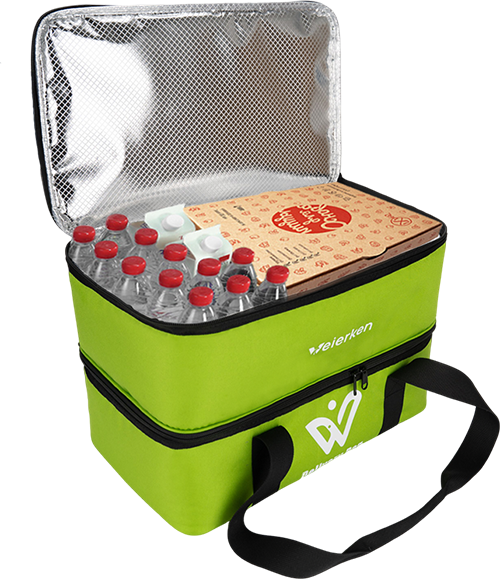
- Internal Layouts: Moveable dividers, elastic straps to hold bottles, and mesh pockets for ice packs help organize the interior.
- External Features: Front pockets for receipts, side pockets for water bottles, and transparent windows for ID cards or delivery notes.
- Closure Systems: Standard zippers, waterproof zippers, heavy-duty Velcro, or magnetic buckles. For food delivery, dual-pull zippers are often preferred for speed.
- Carrying Options: Single handles, adjustable padded shoulder straps, or even backpack-style straps with chest buckles.
Heavy-duty stitching at stress points is vital if your bags will carry heavy liquids or groceries. By tailoring these features, you cater to the specific needs of your end-user, whether they are a driver needing a shoulder strap or a chef needing a one-handed carry.
6. Lining and Food Safety Compliance
The interior lining is where the product meets the food or medicine. Safety and hygiene are non-negotiable. A reputable reusable insulated bag factory will offer several lining options:
- Food-grade PEVA: This material is eco-friendly, odorless, and safe for direct food contact. It is the gold standard for lunch bags and grocery carriers.
- Aluminum Film: Easy to wipe clean and highly reflective, which helps maintain temperature.
- Antibacterial Coatings: These help prevent the growth of mold and odors in damp environments.
- Leak-proof lining: Using high-frequency welding or heat-sealing instead of traditional sewing ensures that liquids stay inside the bag.
For many markets, meeting FDA or LFGB requirements is essential. Weierken ensures that all interior materials are tested for compliance, giving you peace of mind during the import process.
7. Packaging and Delivery Solutions
OEM service extends beyond the physical bag to how it arrives at your warehouse. A comprehensive reusable insulated bag factory helps you manage the final presentation and logistics.
- Individual Packaging: You can choose from simple OPP bags, eco-friendly non-woven sleeves, or even custom-printed color boxes for retail shelves.
- Added Accessories: We can include desiccants, instruction manuals, warranty cards, or even spare ice packs inside each bag.
- Logistics Management: We offer various shipping terms including FOB, EXW, and CIF. We can also design the master cartons to optimize container space, further reducing your landed cost.
This level of customization simplifies your secondary packaging process and reduces your domestic warehousing labor. Whether you are ordering a few thousand units or a massive bulk wholesale shipment, we ensure the delivery matches your operational workflow.
The Weierken Advantage
In the competitive world of logistics and retail, your equipment should be an asset, not a liability. Weierken has spent years perfecting the art of bag manufacturing. We don’t just take orders; we provide technical consultation to ensure your OEM project succeeds.
By choosing the right materials, such as Food-grade PEVA and heavy-duty stitching, you ensure that your investment lasts for years. Our team is ready to help you navigate these seven options to create a product that truly represents your brand’s quality.
Frequently Asked Questions
Q1: What is the typical MOQ for a custom order from a reusable insulated bag factory?
The Minimum Order Quantity (MOQ) usually starts at 500 to 1,000 pieces for custom sizes and colors. However, this can vary based on the complexity of the materials and the printing requirements.
Q2: How do you ensure the bags are truly leak-proof?
To achieve a leak-proof lining, we use heat-pressing or high-frequency welding technology rather than stitching for the interior seams. This creates a solid barrier that prevents liquids from seeping through.
Q3: Can I request a sample before committing to a bulk wholesale order?
Yes, most factories provide pre-production samples. This allows you to test the cold retention time and the durability of the materials in real-world conditions before full-scale manufacturing begins.
Q4: How long does the production process take?
Standard production usually takes 25 to 35 days after sample approval. This timeframe can fluctuate depending on the season and the availability of specific custom fabrics or hardware.
Q5: Are the materials used in Weierken bags eco-friendly?
We offer various sustainable options, including RPET (recycled polyester) fabrics and Food-grade PEVA linings. These materials help reduce environmental impact while maintaining high performance.
Q6: Can the factory help with the design if I only have a rough idea?
Yes, professional factories like Weierken have in-house design teams. We can create technical drawings and 3D mockups based on your requirements for size, function, and branding.
Ready to Start Your Project?
If you are looking for a reliable reusable insulated bag factory to handle your next OEM project, look no further. Weierken provides the expertise and manufacturing power to bring your vision to life.


