
Stand-up paddleboarding (SUP) continues to dominate water sports across the globe. As paddlers venture further onto open waters, the demand for durable, leak-proof bags has surged. However, building a successful water sports brand requires more than just a great product idea.
Finding a reliable custom SUP dry bag manufacturer determines whether your inventory arrives on time and performs under real-world conditions. A single bad seam can ruin gear, destroy your brand reputation, and trigger costly customer returns.
Industry veterans like Weierken have shaped outdoor gear manufacturing for over 20 years. By leveraging dual production hubs in China and Cambodia, Weierken helps global B2B brands balance high precision, fair costs, and risk-free delivery. Here are seven essential tips to guide your sourcing strategy when picking a manufacturing partner.
1. Inspect RF Welding Technology and Quality Pass Rates
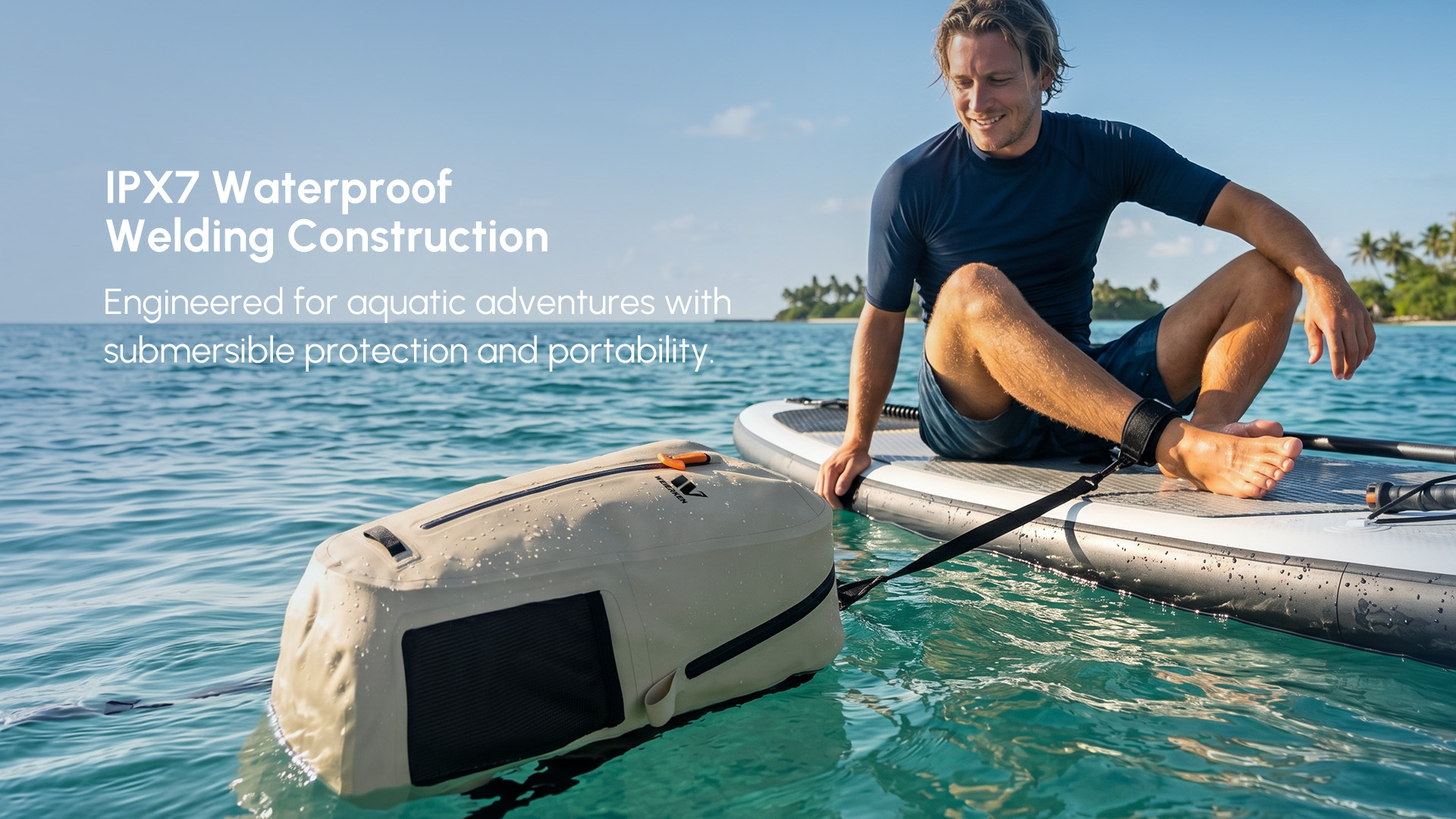
Standard sewing machines punch thousands of tiny holes into fabric. That technique works fine for city backpacks, but it invites failure on a paddleboard. True waterproof gear demands seamless thermal joining techniques.
When reviewing potential factories, focus heavily on their thermal bonding capabilities. Radio Frequency (RF) welding and High-Frequency (HF) welding fuse synthetic fabrics together at the molecular level. This creates a bond stronger than the surrounding fabric itself.
Key Quality Benchmarks to Demand
First-Pass Yield Rate: Choose a plant maintaining at least a 99.5% First-Pass Yield. High yield rates show that operators master temperature control, pressure settings, and dwell times.
Corner Leak Defenses: Bag corners endure heavy stress during roll-top sealing. Experienced manufacturers engineer structural reinforcements directly into these high-stress zones.
Submersion Testing: Ask if every batch undergoes pressurized air leak tests or total submersion checks before final packing.
Engineers at Weierken resolve corner leakage issues by analyzing fabric behavior under intense thermal compression. This technical diligence protects your brand from structural failures in rough waters.
2. Verify Eco-Friendly Materials and International Compliance
Modern consumers expect sustainable production practices. Outdoor brands must balance raw material durability with strict environmental regulations in North America and Europe.
Thermoplastic Polyurethane (TPU) has largely replaced traditional Polyvinyl Chloride (PVC) for premium SUP gear. TPU remains flexible in cold weather, resists abrasions, and lacks toxic plasticizers. However, material selection is only half the battle; official certifications prove compliance.
Essential Certifications for Global Import
Never take a supplier's word on fabric safety. Ensure your chosen factory holds verified documentation for your destination markets:
REACH & RoHS: Ensures raw materials remain free from dangerous heavy metals and chemical compounds.
GRS (Global Recycled Standard) & rPET: Validates recycled fabric content for eco-conscious product lines.
BSCI & SEDEX: Confirms ethical labor practices, safe working environments, and fair compensation.
ISO 9001: Guarantees standardized quality control processes across every production line.
Partnering with a fully certified original equipment manufacturer (OEM) like Weierken eliminates legal headaches at customs and gives your marketing team genuine sustainability credentials.
3. Evaluate Custom R&D Capabilities and Market Insights
A basic dry sack will not satisfy serious paddlers. SUP users need deck-specific features designed for marine environments. A capable factory offers active design solutions rather than simple drawing copy-pasting.
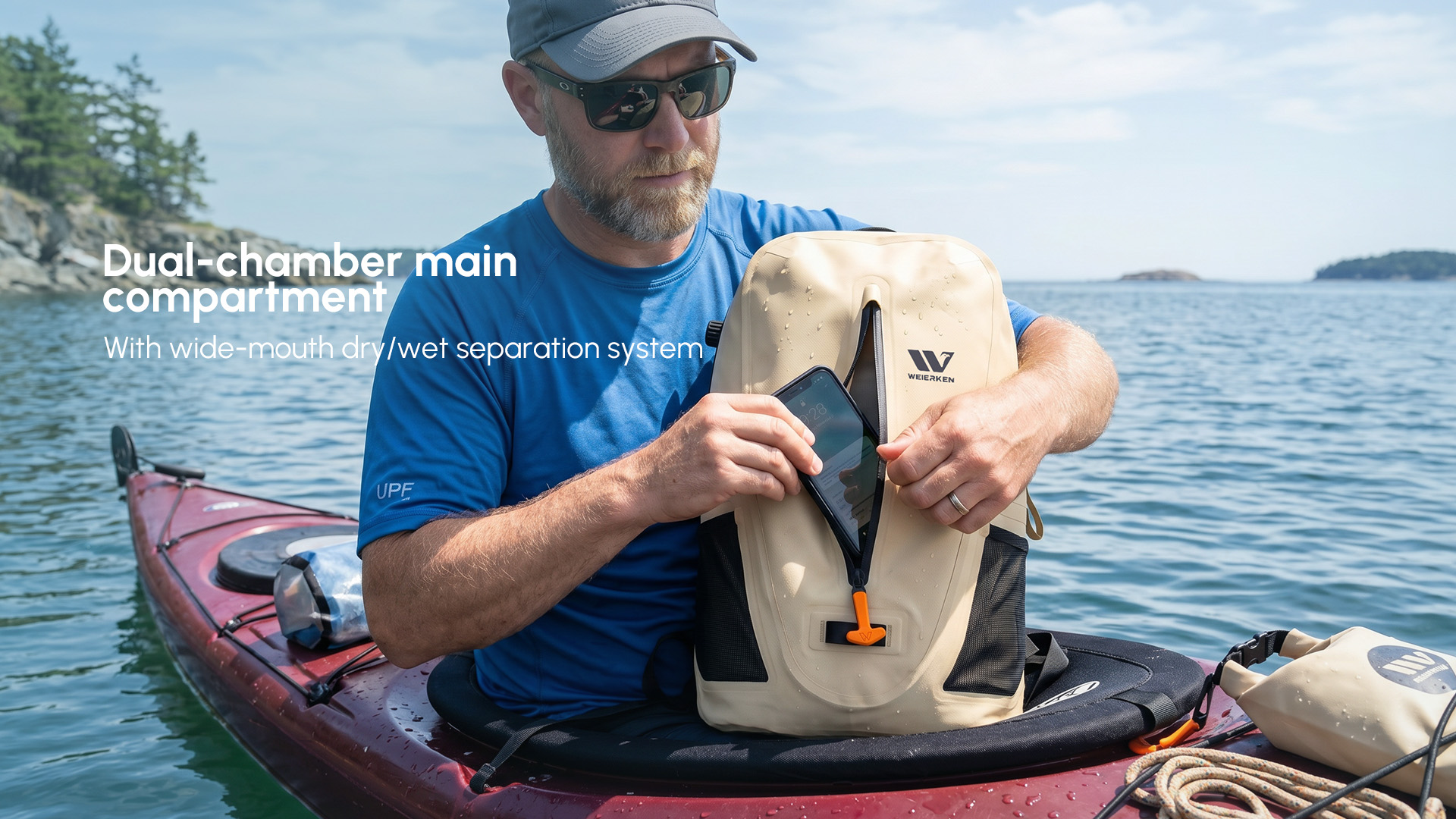
Your manufacturing partner should understand how bags attach to board rigging systems, how air valve systems release excess volume, and where splash-proof pockets belong for quick access.
SUP-Specific Functional Features to Consider
Deck Attachment Systems: Heavy-duty D-rings, carabiner clips, and custom tension straps that hold firm against ocean waves.
Air Purge Valves: Solves the problem of bulky trapped air, allowing users to squeeze bags down tight on the deck.
Transparent TPU Windows: Lets paddlers find snacks, phones, or keys without unrolling the main top seal.
Ergonomic Carry Straps: Quick-drying mesh shoulder straps that drain water fast while carrying heavy loads across sandy beaches.
Drawing on two decades of outdoor bag development, the internal R&D team at Weierken tracks changing water sports trends. They advise clients on smart material pairings and functional structural upgrades before tooling starts.
4. Demand Fast, High-Precision Prototyping
Speed to market can make or break your seasonal sales. If a factory takes three months just to deliver an initial sample, you will miss your spring product launch window.
Rapid prototyping reveals how well a manufacturer translates tech packs into actual physical products. A dedicated sampling room equipped with specialized cutting machines and custom welding dies separates tier-one suppliers from average cut-and-sew shops.
Look for a partner capable of shipping refined, functional prototypes in 12 to 30 days. Fast sample turnarounds allow your team to run real-world water testing, gather user feedback, and lock down final specifications quickly.
High-precision sample rooms also help identify design flaws early. Correcting a pattern error during prototyping costs a fraction of fixing a failed production run later.
5. Mitigate Tariff Risks with Dual-Sourcing Networks
Global trade policies change rapidly. Import tariffs, regional disruptions, and shipping line delays put massive pressure on profit margins for outdoor brands.
Relying on a single manufacturing origin exposes your supply chain to sudden cost spikes. Smart procurement managers now seek a flexible custom SUP dry bag manufacturer operating dual production bases.
The Strategy Behind Dual Manufacturing Operations
A dual-factory framework combining facilities in China and Southeast Asia offers powerful operational security:
China Production Hub: Ideal for complex R&D projects, rapid prototyping, sourcing technical trims, and quick-turn production runs.
Cambodia Production Base: Perfect for high-volume orders seeking reduced tariff rates and duty exemptions in competitive Western markets.
Weierken manages fully integrated operations in both China and Cambodia. This setup allows brand managers to shift order allocation seamlessly, protect profit margins, and keep delivery dates stable regardless of political shifts.
6. Ensure Complete DDP Cross-Border Logistics Support
Manufacturing a premium deck bag means little if freight stays stuck in port customs. For many brand owners, managing sea freight, booking containers, and handling import duties distracts from core sales and marketing efforts.
Look for suppliers offering complete Delivered Duty Paid (DDP) shipping solutions. DDP service turns complex international freight into a simple domestic delivery experience.
Benefits of Factory-Managed DDP Delivery
Zero Customs Hassles: The factory handles export customs, ocean bills of lading, and import clearances.
Predictable Landing Costs: All taxes, tariffs, and port handling fees are calculated upfront, preventing surprise invoice charges.
Direct Warehouse Delivery: Your shipments move straight from the factory floor to your fulfillment center door.
By streamlining cross-border logistics, Weierken lets outdoor brands focus on growing retail partnerships while experienced logistics teams clear the shipping hurdles.
7. Prioritize Transparent Communication and Team Extension
Communication gaps cause more production delays than machine breakdowns. Misinterpreting fabric specs, color matching, or logo placement wastes weeks of valuable lead time.
Work with manufacturing teams that act as an organic extension of your own company. Your vendor contact should understand technical terminology, speak fluent English, and run structured project milestone tracking.
A reliable supplier provides clear updates throughout every phase of the build cycle:
Material Sourcing Updates: Confirming lab-dip color matches and raw TPU batch inspections.
Mid-Production Visuals: Sharing clear photos and videos of high-frequency welding lines in action.
Pre-Shipment Reports: Providing final dimension checks, weight metrics, and packaging tallies before container loading.
Weierken assigns dedicated project managers with decades of overseas trade experience to every account. This proactive approach catches minor design errors before they turn into major manufacturing delays.
Partner with Weierken: Your Trusted Custom SUP Dry Bag Manufacturer
Scaling a successful water sports line requires a manufacturing partner who values precision, compliance, and supply chain security just as much as you do.
Dual-Factory Advantage: China + Cambodia facilities for tariff optimization and guaranteed lead times.
20+ Years Expertise: 99.5% quality pass rate backed by full ISO9001, BSCI, GRS, and REACH compliance.
Fast Turnaround: High-precision samples ready in 12 to 30 days with hassle-free DDP direct shipping.
Frequently Asked Questions
What materials are best for custom SUP dry bags?
TPU (Thermoplastic Polyurethane) is the top choice for high-end SUP dry bags. It remains flexible, highly abrasion-resistant, and eco-friendly. PVC offers a budget-friendly alternative for entry-level products, while rPET options cater to eco-conscious brands looking for recycled fabric choices.
How does high-frequency welding stop water leaks?
High-frequency (RF) welding applies electromagnetic energy and mechanical pressure to fuse synthetic fabrics together at the molecular level. Unlike standard stitching, RF welding creates a continuous, seam-free bond that prevents water from seeping through high-stress points.
Why should I choose a manufacturer with a Cambodia facility?
Production facilities in Cambodia offer significant tariff reductions for shipments entering North American and European markets. A dual-factory operator like Weierken allows you to shift volume orders to Cambodia, safeguarding your margins against shifting trade tariffs.
What is the typical sampling lead time for a custom SUP dry bag?
Standard prototyping takes between 12 and 30 days, depending on bag complexity and custom die requirements. Facilities with dedicated sample rooms deliver faster iterations and higher pattern precision.
Can Weierken assist with custom technical drawings and structural design?
Yes. The in-house R&D team at Weierken collaborates with brands to refine tech packs, select functional accessories, choose waterproof zipper configurations, and optimize bag geometry for paddleboard decks.
What is DDP delivery, and how does it help my business?
DDP (Delivered Duty Paid) means the manufacturer manages the entire shipping process—including freight booking, export/import customs, duty payments, and final door-to-door transportation. You receive finished products direct to your warehouse without dealing with port clearance complexities.
Build Your Next Best-Selling SUP Bag with Weierken
Don't let production flaws or shipping delays stall your brand growth. Connect with our engineering and project management team today to review your designs, request technical samples, or secure custom production quotes.
Ready to elevate your outdoor line? Contact Weierken now to request a free technical consultation and factory quote for your custom SUP dry bag project!