
The success of a pizza delivery business depends on one thing: the temperature of the crust when the customer opens the box. If the cheese is cold or the base is soggy, the brand suffers. For many procurement managers, finding a standard supplier is easy, but finding a strategic partner is difficult.
A professional pizza insulated tote factory must go beyond simple stitching. It needs to offer integrated solutions that address logistics, branding, and thermal physics. At weierken, we focus on engineering these solutions into every product. We believe that an OEM partner should solve problems before they reach the rider’s bike.
Here are nine specific OEM services that distinguish a high-tier factory from a basic workshop.
1. Visual Branding and Structural Design Synergy
Most factories simply print a logo on a pre-existing bag. This often leads to awkward placements where seams cut through the brand name. A top-tier pizza insulated tote factory offers a collaborative design process.
Our team at weierken works with your brand guidelines from day one. We align the bag’s structural lines with your visual identity. This means optimizing pocket placements and seam locations so they don't distort your logo or typography.
Ensures printing patterns do not cross structural seams.
Maintains proper brand proportions on curved surfaces.
Optimizes functional pocket locations for rider convenience.
We ensure that the custom delivery bag maintains its shape even when empty. A sagging bag looks unprofessional and damages brand perception. By integrating structural reinforcements with your color palette, the bag becomes a moving billboard for your business.
2. Modular Sizing Systems for Diverse Inventories
Managing inventory for different pizza sizes is a logistical headache. A smart factory provides a modular sizing system. Instead of unique components for every bag, we use standardized modules across different sizes.
For example, a 9-inch, 12-inch, and 18-inch bag can share the same handle width and strap reinforcement. This allows you to share spare parts across your entire fleet. It simplifies the manufacturing process and significantly lowers your SKU management costs.
When a pizza insulated tote factory uses modular templates, the lead times for new sizes drop significantly. You can react to market trends faster. If your brand introduces a new "Mega-Size" pizza, we can adapt existing modules to fit the new dimensions without starting the design from scratch.
3. Traceable Insulation Material Grades
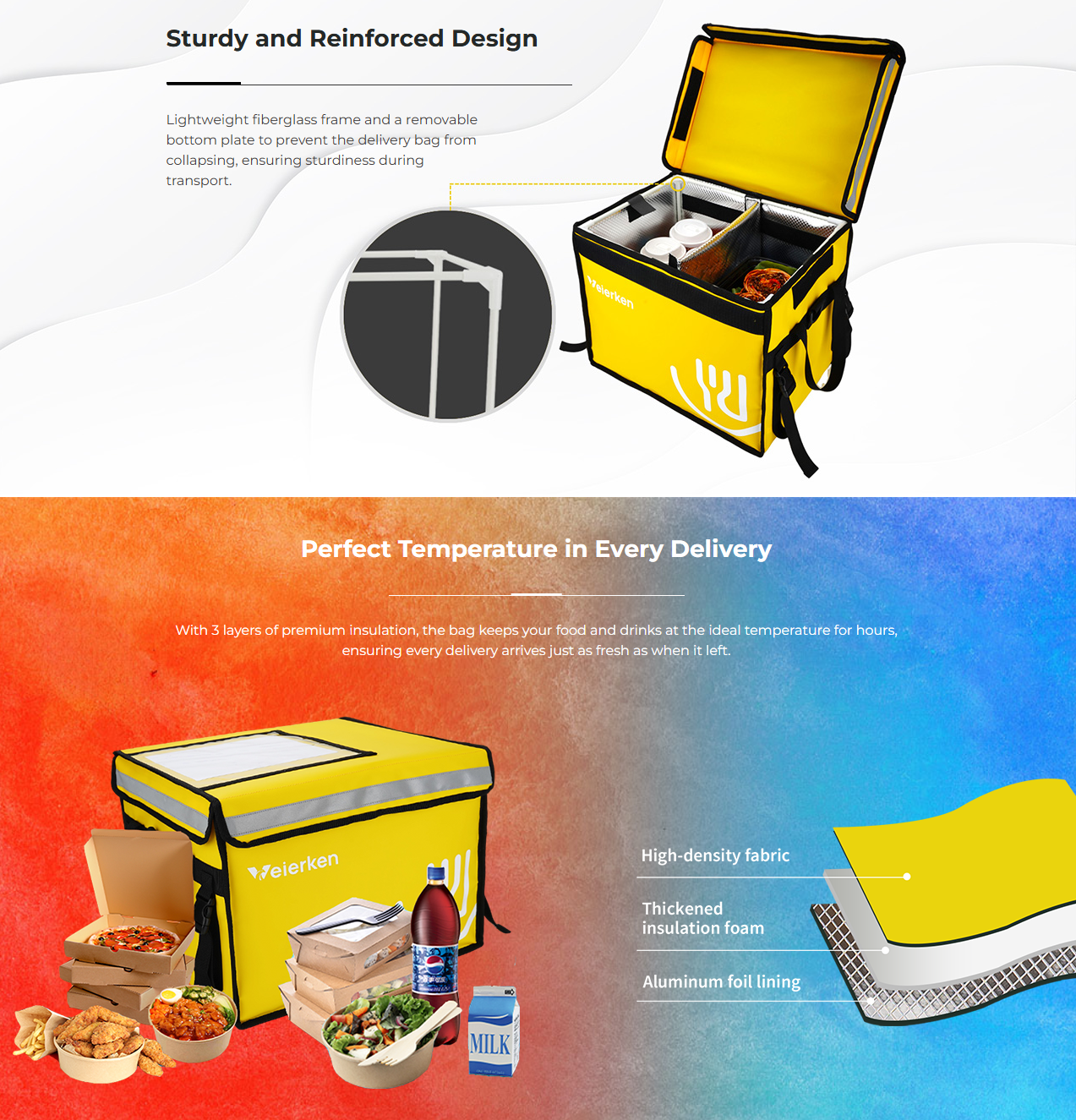
Don't settle for vague promises of "keeping food hot." A professional partner offers a clear menu of thermal insulation materials. We categorize our materials based on actual performance and scientific data.
Grade A: 30-minute retention using single-layer pearl cotton.
Grade B: 60-minute retention using aluminum foil combined with EPE foam.
Grade C: 120-minute+ retention featuring high-density EPE and heat-reflective layers.
We provide third-party thermal conductivity reports for each grade. This transparency allows you to choose materials based on your average delivery radius. If your riders never travel more than 15 minutes, Grade A might be the most cost-effective choice. If you operate in suburban areas, Grade C is a necessity.
4. Rapid Prototyping and Real-World Simulation
Time is money in the food industry. We offer a 3-to-5-day turnaround for structural or printed samples. But we don’t stop at just making a sample. Our pizza insulated tote factory simulates the actual delivery environment.
We conduct "stress tests" that mimic the vibrations of an electric scooter and the impact of climbing stairs. We want to know if the pizza warming bag maintains its balance when the rider is in a hurry or cornering sharply.
After the tests, we provide a "Delivery Environment Adaptability Report." This document details how the bag handles moisture buildup and physical wear. At weierken, we believe that a prototype should be proven in the field, not just shown in a clean showroom.
5. Dual Temperature Zone Compartmentalization
Modern delivery orders are rarely just pizza. Customers want cold sodas or fresh salads alongside their hot pies. Delivering these together in a single-compartment bag is a recipe for customer complaints.
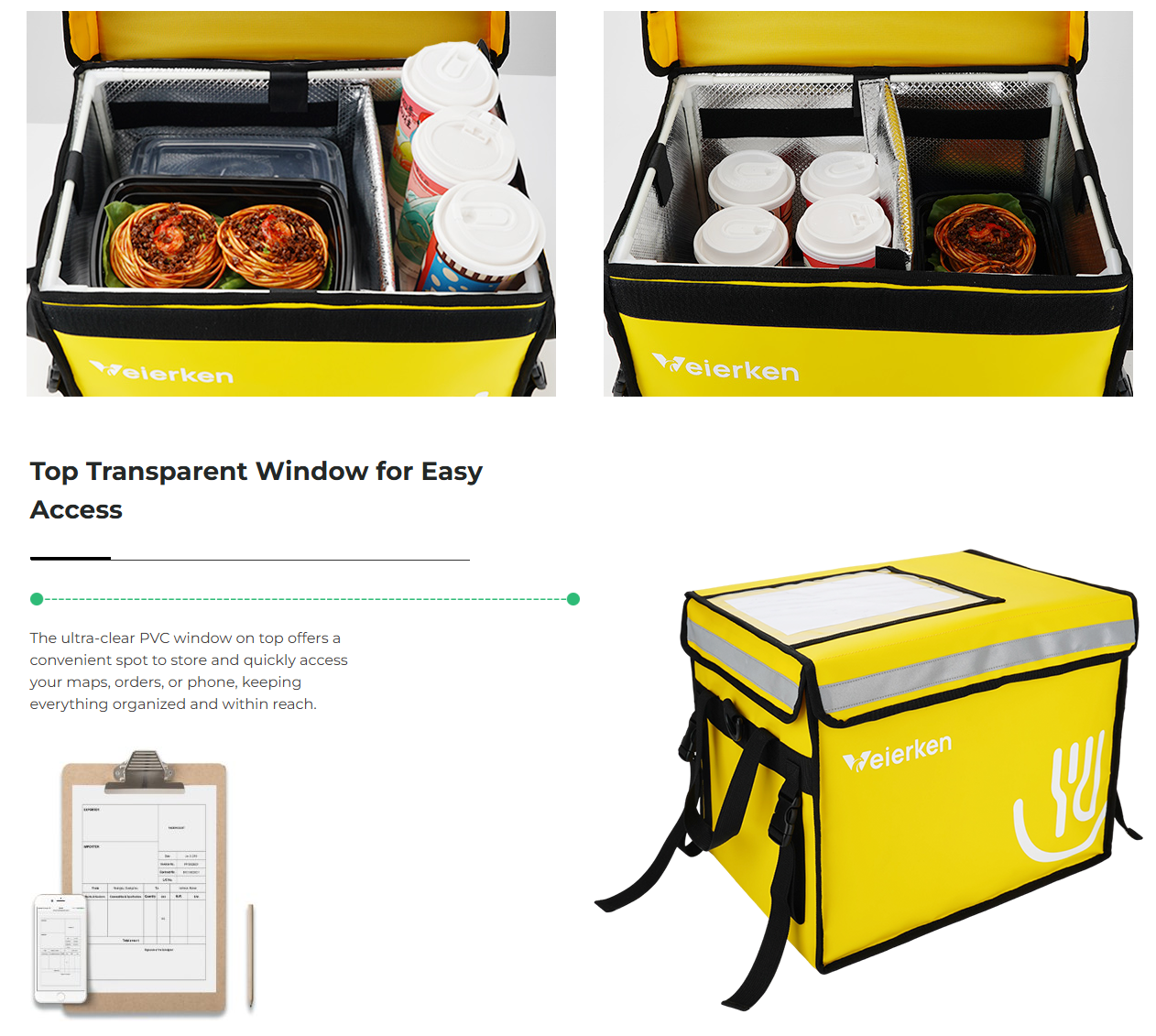
We design dual-zone insulated bags that separate hot and cold items effectively. We use removable, insulated dividers to create internal barriers. External cold-storage side pockets can also be added for drinks or desserts.
This design reduces the physical burden on the rider. They only carry one bag instead of two separate carriers. By preventing heat transfer between the hot pizza and the cold beverage, you ensure both items arrive in perfect condition. This is a critical service for any commercial food delivery bag factory.
6. Modular Design for High-Wear Components
Zippers, handles, and base corners are the first parts to fail on a delivery bag. Usually, when a zipper breaks, the whole bag is discarded. This is wasteful and increases your annual procurement budget unnecessarily.
A forward-thinking pizza insulated tote factory designs these parts to be replaceable. We use heavy-duty, detachable zipper tracks and modular buckles. If a strap breaks or a zipper jams, you can simply swap it out for a new one in the field.
In our OEM agreements, we commit to supplying these high-wear spare parts long-term. This extends the lifespan of your fleet by 12 to 18 months. It reduces your total cost of ownership and shows a commitment to sustainable business practices.
7. Transparent Production Dashboards and Remote Inspection
Trust is built through transparency. We provide our clients with access to a production management system. You can see exactly where your order stands in the manufacturing pipeline at any given time.
Whether it is the fabric cutting phase, the sewing and assembly stage, or final heat-pressing, the data is available. We also offer live photo or video updates for key production milestones to ensure the quality meets your expectations.
If you require a third-party inspection, we facilitate the process completely. We can even host a "virtual inspection" via a live stream. This level of openness is what sets a premium pizza insulated tote factory like weierken apart from the competition.
8. Low MOQ and Grouped Production Support
Entering a new market shouldn't require an order of 10,000 units. We support emerging brands by offering a low Minimum Order Quantity (MOQ) of under 500 pieces for specific custom designs.
To keep costs low, we use "grouped production." We align your order with other projects that use similar fabrics or hardware. This allows us to share material bulk-buying discounts with you, even if your order is small.
Even with grouped production, your brand elements remain unique. You get the benefit of wholesale pricing without the burden of excessive inventory. This flexibility is essential for startups and seasonal pilot programs.
9. Full Lifecycle Data Packages
Our service doesn't end when the truck leaves our warehouse. We provide a "Quality Data Package" for every shipment. This file contains the batch numbers of the raw materials used in your specific thermal food carriers.
It includes QC inspection pass rates, actual thermal test results, and storage recommendations. This data helps you track the performance of different batches over time. It provides a scientific basis for your logistics planning.
If a problem occurs in the field, we can trace it back to the specific material batch or production line. This scientific approach to insulated bag manufacturing helps you optimize your delivery flow and provides data-backed evidence for your next procurement cycle. weierken uses this feedback to refine our future production runs.
Frequently Asked Questions (FAQ)
1. What is the standard lead time for a custom pizza bag order?
For a standard OEM order, our lead time is typically 20 to 30 days. This includes material sourcing, printing, and quality control. However, our rapid prototyping service can deliver a physical sample in just 3-5 days to speed up your internal approval process.
2. Can you manufacture bags for extra-large 18-inch or 20-inch pizzas?
Yes. Our pizza insulated tote factory specializes in custom dimensions. We use high-strength internal frames and reinforced base plates to ensure that larger bags do not sag or lose their thermal efficiency under the weight of multiple heavy boxes.
3. How do you ensure the bags don't get "sweaty" inside?
Moisture buildup is a common issue that makes crusts soggy. We offer breathable lining options and specialized ventilation grommets. These features allow steam to escape without compromising the internal temperature, keeping the pizza crust crispy during transit.
4. Are the materials used in your factory food-safe and non-toxic?
Absolutely. All our food delivery bag materials comply with international safety standards. We use BPA-free liners and lead-free fabrics. We can provide SGS or Intertek certifications upon request to ensure your brand meets local health and safety regulations.
5. Do you offer different colors or just standard black and red?
We offer a wide range of custom fabric colors. We can match your specific brand colors using Pantone references. Whether you need high-visibility neon for night riders or a sophisticated matte finish for premium deliveries, we have the material options in stock.
6. What kind of zippers do you use for high-frequency use?
We primarily use heavy-duty industrial zippers tested for over 10,000 open-close cycles. We also offer waterproof zipper tape for regions with heavy rainfall to ensure the internal contents remain dry regardless of the weather conditions.
Contact Us
Ready to upgrade your delivery fleet with a partner who understands the science of heat? Whether you need a high-volume run or a specialized custom design, our team at weierken is ready to help you grow.
Email: service@weierkenbag.com
Phone: +1 (929) 944-7393
Address: SCHUYLER DR, JERICHO, NY 11753
Learn how our custom solutions can lower your costs. Request a quote today and let us show you why we are the preferred pizza insulated tote factory for global food brands.