

Choosing the right pizza insulated bag factory determines whether your customers receive a piping-hot meal or a lukewarm disappointment. Many buyers focus solely on the unit price during procurement. However, hidden costs usually arise later from poor durability, failing zippers, or inadequate heat retention. A cheap bag that fails after two weeks is more expensive than a premium one that lasts a year.
A factory visit is the most effective way to separate professional manufacturers from simple assembly workshops. At weierken, we have refined our manufacturing processes to exceed international standards. We understand that a delivery bag is a critical extension of your kitchen’s quality. If you want to protect your brand, you must audit your supplier with a technical eye.
If you are planning a factory audit, use these six critical rules to evaluate your potential partner. These steps ensure that the factory can handle high-volume production without sacrificing the thermal performance your business relies on.
Rule 1: Audit Warehouse Storage Conditions for Insulation Materials
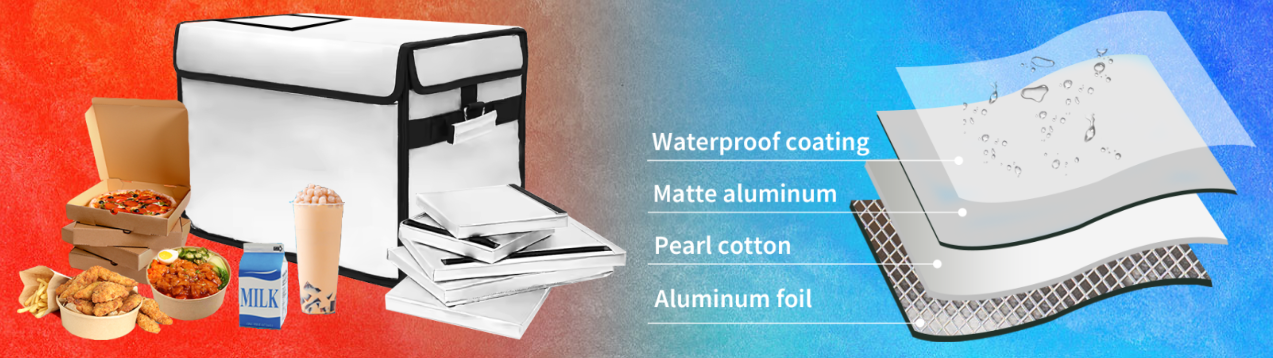
The performance of a thermal food carrier depends entirely on the integrity of its internal layers. Professional thermal insulation materials such as EPE foam (Expandable Polyethylene), aluminum foil composites, and PEVA liners are sensitive to their environment. They are not indestructible while in their raw state.
If a pizza insulated bag factory stores these raw materials in high-heat, humid, or direct sunlight areas, the materials begin to degrade. EPE foam can lose its "loft" and become brittle. Aluminum foil layers may delaminate from their fabric backing due to moisture. This leads to a significant loss in heat-trapping capabilities before the bag is even stitched together.
What to check during the audit:
Temperature and Humidity Logs: Ask for the warehouse records. The temperature should ideally remain below 30°C and humidity under 60%. High humidity is the enemy of foil-based insulation.
Stacking Methods: Ensure materials are stored on pallets, away from damp floors and walls. They should remain in protective moisture-proof packaging until they move to the cutting table.
Physical Spot Check: Randomly select a roll of pearl cotton or foil. Rub the surface or fold it sharply. It should not powder, crack, or separate. If it feels stiff or "crunchy," the material has already started to age.
Rule 2: Verify Traceability for Food-Contact Grade Liners
Since the internal liner of the bag sits in a high-heat, high-moisture environment with food boxes, it must be chemically safe. A professional pizza insulated bag factory must prove that its liners meet FDA compliance or LFGB standards. Some factories cut corners by using industrial-grade plastics that emit toxic odors or VOCs when heated.
At weierken, we prioritize consumer safety above all else. We maintain a strict paper trail for every square meter of fabric that enters our facility. We ensure that our heat-resistant liners do not migrate chemicals into the steam that surrounds the pizza box. This prevents "off-flavors" from affecting the food.
What to check during the audit:
Document Alignment: Request three documents for the same batch: the purchase invoice, the supplier’s factory test report, and a recent third-party food contact safety report. All dates and batch numbers must match perfectly.
On-Site Sampling: Take a small piece of the liner from the production line. Seal it in a bag and inform the factory you will send it for a total migration test. A reliable factory will welcome this level of transparency.
Odor Test: Open a finished bag that has been sitting closed in the warehouse. There should be no strong chemical smell. A "plastic" odor usually indicates low-grade recycled materials or non-food-grade additives.
Rule 3: Test Sewing Strength and Heat-Pressing Stability
Structural failure is the leading cause of "dead" inventory in delivery fleets. Broken handles and split seams are common in cheap bags. A high-quality pizza insulated bag factory uses specific industrial sewing techniques to handle the weight of multiple heavy pizza boxes. A full 18-inch pizza bag can weigh over 10kg; the stitching must reflect that load.
The stability of the heat-sealed seams is equally important. In many modern designs, the insulation layer is bonded to the inner liner to prevent slipping. If this bonding is weak, the insulation will sag inside the fabric, creating "cold spots" where heat escapes rapidly.
What to check during the audit:
Tensile Strength Testing: Randomly pick 3-5 finished bags. Use a digital tension meter to pull the handles. A professional bag should withstand at least 50kg of force without the stitching popping or the fabric tearing.
Stitching Pitch: Measure the sewing density. You should see 8 to 10 stitches per inch. Anything less indicates a factory trying to save thread and speed up production at the expense of durability.
Heat-Press Inspection: Check where the insulation meets the liner. Use a thin blade or your fingernail to try and peel the edge. If it bubbles or peels easily, the temperature or pressure settings on their machines are inconsistent.
Rule 4: Simulate Real-World Delivery Scenarios for Thermal Testing
Many factories provide a "thermal report" based on a bag sitting in a static, climate-controlled room. This is not how food delivery works in the real world. A rider faces wind, vibrations, and frequent bag openings. A reliable pizza insulated bag factory must prove performance under stress, not just in a lab.
We believe in "Active Testing." This means simulating the movements of a delivery person. We want to see how the moisture-wicking vents perform when the bag is being moved and how the thermal barrier holds up when the lid is opened and closed repeatedly.
What to check during the audit:
The 60-Minute Stress Test: Place a 65°C pizza box inside the bag.
Simulated Openings: Open the lid every 15 minutes for 30 seconds. This simulates a rider picking up or dropping off multiple orders in one route.
Data Comparison: Use an infrared thermometer to track the temperature drop rate.
Verification: Compare these real-time results against the factory’s marketing brochures. If the real-world temperature drops 15% faster than their "official" curve, the factory is likely inflating its performance data.
Rule 5: Review Defective Product Management and Repair Logs
No mass production quality system is perfect. Every factory will have some defects during a large run. The difference between a professional pizza insulated bag factory and a risky one is how they handle mistakes. You need to see a systematic Corrective Action Report (CAR) process in place.
If a factory claims they have zero defects, they are lying. It is much safer to work with a partner who identifies their 1% error rate and fixes it before the goods reach the shipping container. At weierken, we track every defect to the specific workstation to prevent the same mistake from happening twice.
What to check during the audit:
Defect Logs: Review the records for the last three months. Look for the "Defect Rate." A healthy factory usually maintains a rate under 2% for industrial textiles.
Isolation Zones: Check the "Red Tag" area. Defective items must be physically separated from the good stock with clear signage to prevent accidental shipping.
Repair Traceability: If a bag is repaired, is it re-inspected? Can the factory trace the repair back to a specific worker? This accountability prevents recurring errors in the sewing and assembly stage.
Rule 6: Evaluate Full OEM/ODM Service Capabilities
Many suppliers claim to be a "full-service pizza insulated bag factory," but they only offer basic "cut and sew" services. If you want a custom feature—like a built-in heating element or a specific modular pocket system—you need engineering support, not just a tailor. True OEM/ODM capability requires a dedicated R&D department.
I. Independent Engineering and Prototyping
Visit the sample room. It should have its own dedicated cutting tables, specialized sewing machines, and heat presses. Ask about the engineers' experience. You want to see at least two structural engineers with three or more years of experience in technical textile design. They should understand how different fabrics react to thermal expansion.
II. Historical Project Traceability
Ask to see the project files for three past custom delivery bag orders. A professional file includes the initial customer brief, the Bill of Materials (BOM), sample revision photos, and final QC standards. This proves they can manage a complex project from concept to delivery without losing information.
III. Proactive Technical Advice
Give the factory a hypothetical problem. For example: "I want to add a cup holder to the side without losing heat in the main compartment." A weak factory will just say "Yes, we can do it." A strong factory will suggest using reflective thermal barriers or specific insulation dividers and discuss how it impacts the weight and final unit cost.
IV. Tooling and Specialized Equipment
Check if they own their own molds for hard-bottom bases or specialized plastic components. Factories that rely entirely on external vendors for molds often have longer sample lead times and higher costs. Ask if they offer "mold-fee sharing" for long-term partnerships, which can lower your initial investment.
V. Intellectual Property and Design Protection
A trustworthy pizza insulated bag factory takes design confidentiality seriously. They should have a standard Non-Disclosure Agreement (NDA) ready for you to sign. Look at their sample room; is it locked? Are visitors allowed to photograph other customers' designs? Protecting your unique features is vital for your market advantage.
Frequently Asked Questions (FAQ)
1. Why is the warehouse environment so important for a pizza bag factory?
Insulation materials like EPE foam are chemical products. Excessive heat causes them to "off-gas" or lose their structural bounce. If the raw material is damaged by humidity or UV light before production, the finished bag will never meet its thermal targets, no matter how good the stitching is.
2. What is the difference between FDA and LFGB standards for liners?
FDA is the American standard, while LFGB is the European standard. Both ensure that the PEVA or aluminum liner does not transfer harmful substances to the food. A reliable pizza insulated bag factory should be able to provide testing reports for both depending on your target market.
3. How many stitches per inch should a high-quality pizza bag have?
You should look for a stitching pitch of 8-10 stitches per inch (SPI). If the SPI is too low, the seams will pull apart under the weight of heavy pizza boxes. If it is too high, the needle punctures may weaken the fabric, causing it to tear easily along the seam line.
4. Can a factory help me design a bag from scratch?
Yes, a professional pizza insulated bag factory with ODM capabilities will have structural engineers. They can take your rough sketches and create a 3D CAD design, select the appropriate denier fabric, and suggest the best insulation thickness for your specific delivery times.
5. What is a reasonable defect rate for mass-produced delivery bags?
In the industrial textile industry, a defect rate (AQL 2.5/4.0) usually results in a 1.5% to 2% actual defect rate. If a factory claims a 0% defect rate, they are likely not being honest. It is better to see a factory that identifies and fixes its 2% than one that hides it from the client.
6. How long does the prototyping process usually take?
For a standard pizza insulated bag factory, the first sample usually takes 7-10 days. If there are custom molds or specialized fabric dyes involved, it can take 15-25 days. Factories like weierken often offer a "fast-track" for existing templates to get samples out in under a week.
Contact Us
Are you looking for a pizza insulated bag factory that prioritizes engineering, transparency, and thermal performance? Our team at weierken is ready to provide the technical support and high-capacity production your brand requires. We don't just make bags; we build thermal solutions that grow your business.
Email: service@weierkenbag.com
WhatsApp/Phone: +1 (929) 944-7393
Factory Address:SCHUYLER DR, JERICHO, NY 11753
Learn how our custom solutions can protect your food quality. Request a quote for your custom project today. Let’s ensure your customers never have to eat cold pizza again.