


Rowing gear faces a unique set of challenges compared to standard gym equipment. Whether you are a brand owner looking to launch a new product line or a coach sourcing gear for a university team, the quality of your bags directly impacts your reputation. A bag that fails during a morning session on the river isn’t just a nuisance; it puts electronics and dry clothes at risk.
When you start looking for a professional rowing bag factory, you will find many suppliers claiming to offer “waterproof” solutions. However, the reality of the marine environment is unforgiving. You need a partner that understands the difference between a light rain shower and sitting in a puddle at the bottom of a rowing shell.
At weierken, we have spent years refining our manufacturing processes to meet these exact needs. We believe that transparency in the supply chain is the only way to build lasting gear. Before you sign a contract or send a deposit, you must vet your manufacturer with these five critical questions.
1. What is the actual waterproof rating, and do you have the test data?
This is the most common point of failure. Many factories use “water-resistant” fabric but finish the bag with standard stitching and cheap zippers. In the rowing world, “water-resistant” is simply not enough. You need to know if the factory can produce a true dry bag manufacturer grade product.
Ask about IP Ratings
A reputable rowing bag factory should be able to define the waterproof level of their products using the International Protection (IP) scale. For rowing, you should look for at least IPX6. This rating means the bag can resist high-pressure water streams from any angle. If the bag might end up submerged, ask for IPX7.
Verify the Construction Method
Stitched seams are essentially thousands of tiny holes. A professional welded seams bag factory will use high-frequency (RF) welding or heat welding to fuse the material panels together. This creates a permanent, airtight bond that prevents water from seeping through the joints.
- Does the factory use RF welding for the main body?
- Are the zippers splash-proof or truly airtight?
- Do they use roll-top closures, which are often more reliable than zippers in wet environments?
Request Proof
Don’t take their word for it. Ask for video evidence of an immersion test or a third-party lab report. At weierken, we often encourage our clients to perform their own “bucket test” on samples to see how our seals hold up under pressure.
2. Can the materials withstand long-term UV and salt exposure?
Rowing is an outdoor sport. Bags spend hours on docks, in boat trailers, and inside damp boathouses. Over time, sunlight and salt act as a slow poison to low-quality plastics and fabrics. A standard bag might look great in the showroom but become brittle and discolored after three months of use.
Fabric Composition Matters
Ask the rowing bag factory about the specific composition of their materials. We recommend using UV-treated PVC tarpaulin or TPU-coated nylon. These materials are engineered to resist the “hardening” effect caused by sun exposure. Another high-end option is Hypalon, which offers extreme resistance to chemicals and environmental degradation.
Beyond the Main Fabric
The fabric isn’t the only thing that fails. You must ask if the hardware—zippers, buckles, and D-rings—is salt-spray resistant.
- Zippers: Look for plastic resin sliders that won’t corrode.
- Webbing: High-density nylon webbing should be used to prevent fraying.
- Stitching: Any structural stitching that isn’t welded should use anti-UV bonded nylon thread.
Ask your crew team gear supplier if they have conducted QUV aging tests (simulating hundreds of hours of sunlight) or salt spray chamber tests. This data ensures the bag won’t fall apart mid-season.
3. How does the attachment system work with rowing shells?
A rowing bag that slides around the cockpit is a safety hazard. It can get caught under the slide or interfere with the foot stretcher. A factory that doesn’t understand the layout of a single scull or an eight-man boat will likely design a bag that is cumbersome to use.
Stability and Security
A specialized rowing bag factory should offer solutions for securing the bag to the boat. Ask if they can integrate:
- Multiple D-ring points: For bungee cord attachment to the deck.
- Non-slip bottom panels: Using silicone grips or textured PVC to prevent sliding on smooth carbon fiber surfaces.
- MOLLE webbing: Allowing rowers to customize where they clip their water bottles or small tools.
Boat-Specific Customization
Every boat is different. Weierken provides customization options that allow you to move the attachment points based on whether the bag is designed for a single, double, or coxed boat. A bag that stays put during a hard power-ten piece is a sign of a well-engineered product.
4. What are your MOQ, sampling, and re-order policies?
From a business perspective, the technical specs mean nothing if the logistics don’t align with your budget. Many factories have rigid policies that make it difficult for small brands or local clubs to get started. You need to find a rowing bag factory that supports growth.
Minimum Order Quantities (MOQ)
Standard MOQs in the industry are usually around 300 to 500 pieces. However, a flexible partner might offer a trial run.
- Initial Trial: Ask if they support a 100-piece trial order for your first design.
- Stock Styles: If you choose a standard template, the MOQ might be even lower.
Sampling Lead Times
You shouldn’t have to wait months just to see a prototype. A professional rowing bag factory should ship a sample based on existing patterns within 3 to 5 days. For a completely custom design requiring new molds, 15 to 20 days is a standard window.
Re-Ordering and Archiving
Ask how long they keep your patterns on file. At weierken, we archive digital patterns and material specs for at least two years. This ensures that when you need a “top-up” order of 50 bags for a new varsity intake, the colors and dimensions will perfectly match your previous batch.
5. Can you provide functional partitions like a waterproof wet/dry compartment?
Rowing involves a lot of wet gear. After a workout, rowers have damp uni-suits, sweaty socks, and possibly a dry change of clothes. A giant open sack is inefficient. You need to know if the factory can handle complex internal structures.
Specialized Internal Design
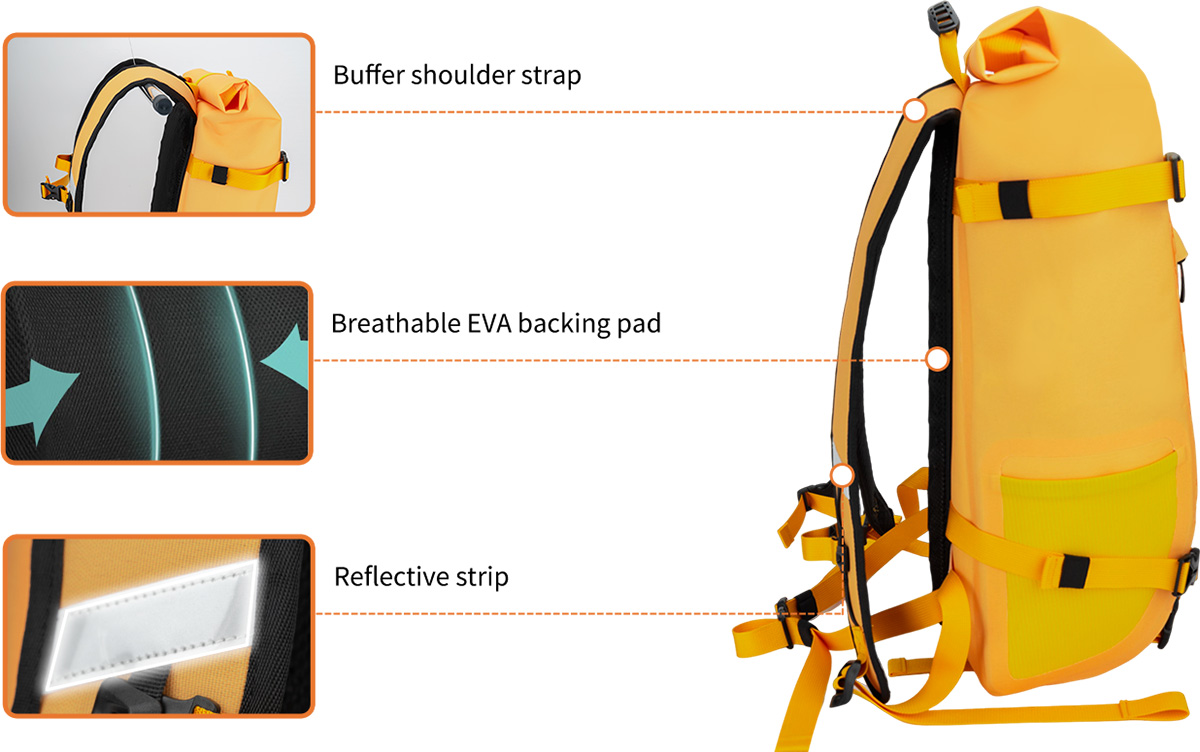
Ask if the factory can integrate a waterproof wet/dry compartment. This allows the user to isolate wet gear from clean clothes or electronics.
- Internal Dividers: Mesh pockets for heart rate monitors or wrenches.
- External Pockets: Quick-access spots for water bottles or sunglasses.
- Tool Pockets: Specific slots for 10mm/13mm spanners used for rigging.
Branding and Visuals
Finally, ask about their branding capabilities. Can they do high-visibility reflective strips for safety during early morning or evening rows? What about heat-transfer logos that won’t peel off when wet? A high-quality rowing bag factory offers multiple ways to showcase your brand identity without compromising the bag’s integrity.
Frequently Asked Questions
Q1: Why is RF welding better than traditional sewing for rowing bags?
Traditional sewing creates holes in the fabric. Even if you “tape” the seams, the tape can peel off over time. RF welding uses high-frequency energy to melt the layers of fabric together, creating a single piece of material that is 100% waterproof. As a welded seams bag factory, we prioritize this method for all marine-grade gear.
Q2: Can I get a sample before committing to a large order?
Yes. Any reliable rowing bag factory should provide samples. We typically charge a sample fee to cover the labor and material costs, but this fee is fully credited back to you once you place a bulk order.
Q3: What size bag is best for a typical rower?
For daily training, a 20L to 30L bag is standard. It fits a change of clothes, a water bottle, and small tools. For travel and regattas, a 60L bag is preferred to hold a foam roller, extra kits, and cold-weather gear.
Q4: How do you handle logo printing on waterproof materials?
We primarily use silk-screen printing or heat-transfer techniques with specialized inks that bond to PVC and TPU. These prints are tested to ensure they don’t crack or fade when exposed to salt water and heavy UV rays.
Q5: Do you offer any warranties on your products?
We provide a 1-year warranty on structural components like seams, zippers, and handles under normal use. If there is a manufacturing defect, we provide a replacement or a credit within 48 hours of your report.
Q6: Can the bags be used for other water sports like kayaking or SUP?
Absolutely. While we design these specifically with rowing shells in mind, the waterproof technology and UV resistance make them perfect for any paddle sport. We often act as a general dry bag manufacturer for various outdoor brands.
Finding the right rowing bag factory is the difference between a product that sells once and a product that builds a brand. You need a partner that understands the athlete’s struggle and the harsh reality of the water. Weierken is committed to delivering gear that survives the elements and supports your business goals.
We combine technical precision with flexible business terms to ensure you get the best possible return on your investment. From initial sketches to final delivery, we are with you every step of the way.
Take the next step in your production journey.
Don’t leave your gear to chance. Contact our team at weierken today to discuss your technical requirements and get a professional assessment of your design.


