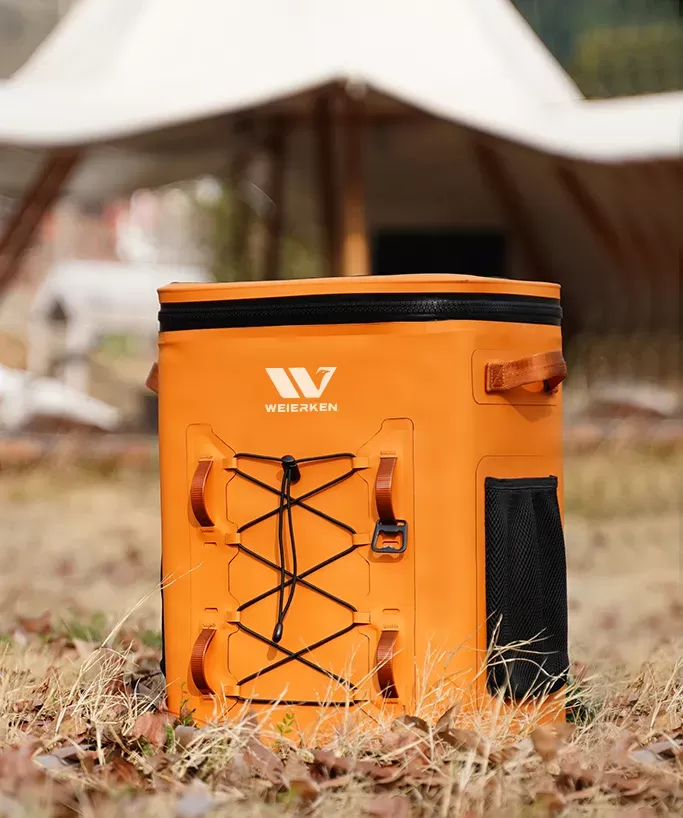


An outdoor sketching bag is not a standard backpack. It is a specialized piece of equipment designed to protect delicate art supplies while providing comfort during long hikes. For art supply retailers, painting kit brands, and educational institutions, selecting a competent outdoor sketching bag factory is a high-stakes decision. Your choice directly impacts your brand’s reputation for professionalism and quality. At weierken, we know that artists require precision and reliability from their gear.
When you source from an outdoor sketching bag factory, you aren't just buying fabric and zippers. You are investing in a technical art carrier that must house drawing boards, palettes, pencils, and folding stools. Many general bag manufacturers lack the specialized knowledge required to build internal structures that prevent art supplies from crushing each other. This guide provides six critical audit points to help you identify a superior manufacturing partner.
1. Verify Structural Compartmentalization and Board Compatibility
The primary job of an art supply backpack is to transport drawing boards safely. These boards come in various sizes, such as 8K, 4K, or even full-sheet dimensions. A professional outdoor sketching bag factory must offer design solutions that cater to these specific sizes. Look for factories that understand the need for independent drawing board compartments or adjustable internal straps.
During your factory visit, simulate real-world usage. Load the bag with a heavy wooden board, a large watercolor palette, a water bottle, and a folding stool. Check if the internal space remains organized or if the items press against each other. A well-designed artist field bag should maintain its shape even when fully loaded. Look for the following features:
Internal fixing straps: These prevent the board from shifting and impacting the artist's back.
Large-angle openings: Artists need to access tools quickly. The bag should open wide enough to see everything at a glance.
Dedicated brush slots: These should be protected by a flap to prevent damage to expensive bristles.
Ask the outdoor sketching bag factory if they can modify the compartment layout for your specific market needs. A factory that offers modular internal dividers demonstrates a deep understanding of the artist's workflow.
2. Inspect Fabric Durability and Protective Performance
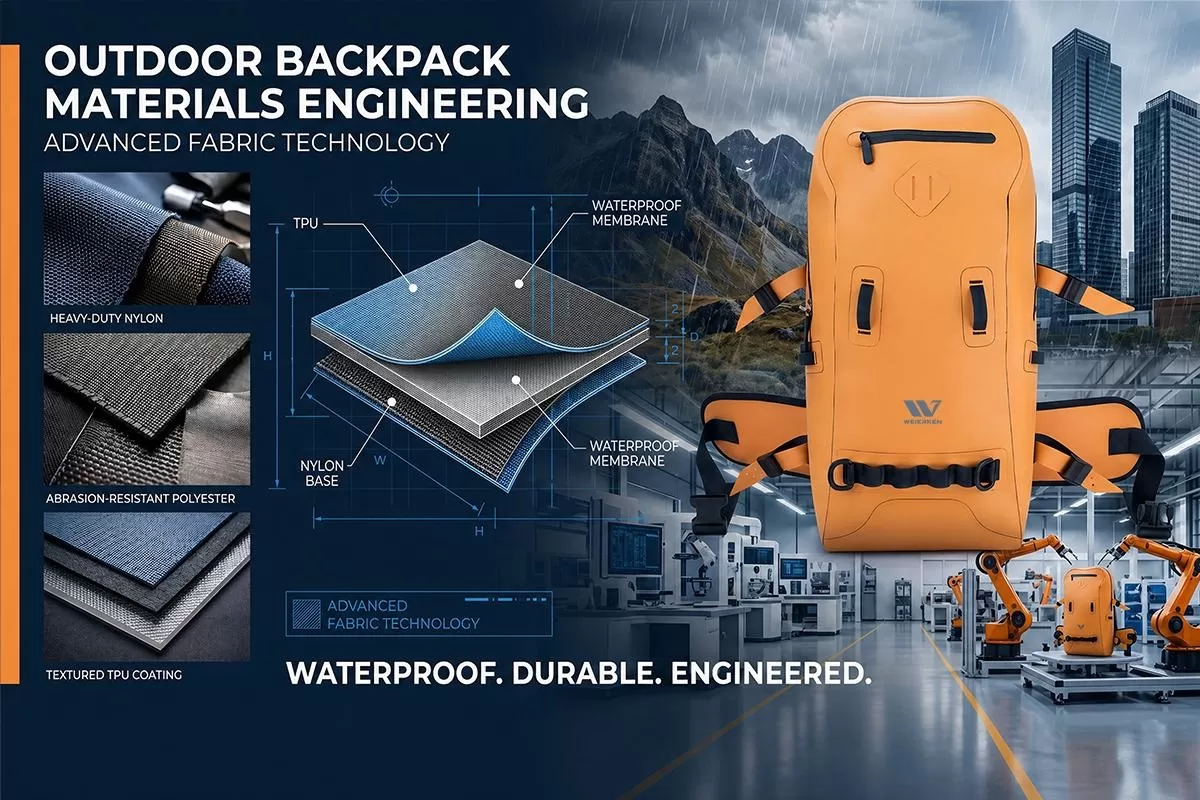
Sketching often takes place in rugged environments like riverbanks, grassy fields, or rocky hillsides. The materials used by an outdoor sketching bag factory must reflect these conditions. We recommend using 600D Polyester Oxford cloth or higher density fabrics. These materials provide the necessary tensile strength and abrasion resistance for heavy outdoor use.
Ask for the technical specifications of the fabric. It should feature a PU water-repellent coating to protect expensive paper and sketches from sudden rain or morning dew. Beyond the main fabric, inspect the bottom of the bag. A high-quality plein air backpack often uses a reinforced rubber base or a double-layered anti-wear fabric. This prevents the bag from wearing out when placed on rough, abrasive surfaces.
Request the following data from the outdoor sketching bag factory:
Martindale abrasion test reports: Ideally exceeding 15,000 to 20,000 cycles.
Water-resistance demonstration: Watch them perform a spray test on the finished fabric.
Built-in rain covers: Ask if they can integrate a detachable waterproof cover for extreme weather protection.
Reliability starts with the raw material. At weierken, we ensure that every fabric batch meets strict tear-resistance standards before it hits the sewing line.
3. Evaluate the Carrying System and Ergonomics
A full set of art supplies can be surprisingly heavy. When you factor in a liter of water and a metal folding stool, the weight can exceed 8kg. A poor outdoor sketching bag factory might use thin, unpadded straps that dig into the shoulders. A professional factory will prioritize ergonomic load distribution.
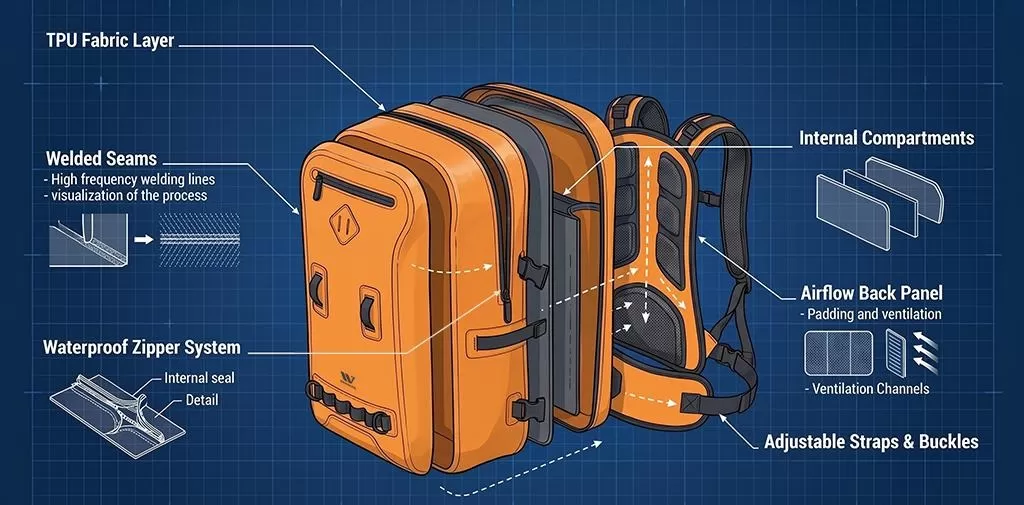
Check the width and thickness of the shoulder straps. They should be at least 5cm wide with high-density sponge padding of at least 1cm. Test the back panel breathability. A good technical art bag uses 3D breathable mesh and air-flow channels to prevent sweat buildup during long walks. These details are what separate a professional artist's tool from a cheap school bag.
Look for these ergonomic components:
S-shaped shoulder straps: These follow the natural contour of the body better than straight straps.
Adjustable chest buckles: These help stabilize the load and prevent the straps from slipping.
Waist support belts: For larger 4K board bags, a waist belt is essential for shifting weight to the hips.
If the outdoor sketching bag factory ignores ergonomic design, the end-user will suffer. High comfort levels lead to better reviews and repeat business for your brand.
4. Assess OEM Customization Depth and Prototyping Speed
In the competitive art supply market, unique design language is vital. You might want a hidden pocket for a smartphone, a specific color palette, or a custom CMYK printed logo. An outdoor sketching bag factory must have the internal resources to handle these OEM customization requests effectively.
Ask about their R&D team. Do they have dedicated bag pattern makers and structural engineers? A top-tier factory should be able to produce a functional prototype sample within 5 to 7 days. During the audit, ask to see their previous OEM project cases. Focus on complex designs like integrated tripod holders or specialized wet-paint carriers.
Verify their printing capabilities as well. Art brands often require high-fidelity heat transfer printing or durable silk-screen logos. Ensure the factory can guarantee color fastness to light and rubbing. If the logo fades after a week in the sun, it reflects poorly on your brand. A reliable outdoor sketching bag factory will provide material swatches for your approval before starting mass production.
5. Inspect Quality Control and Sewing Precision
The durability of an artist's rucksack depends on the quality of the stitching and the hardware. During your tour of the outdoor sketching bag factory, spend time in the sewing workshop. Observe the stitching pitch; for outdoor gear, we recommend 8 to 10 stitches per inch. Uniform stitching prevents seams from bursting under the pressure of a heavy drawing board.
Hardware is another area where many factories cut corners. Test all zippers and buckles. Zippers should move smoothly without catching on the fabric. Ask if they use auto-lock zippers, which prevent the bag from accidentally sliding open while the artist is walking. Check if the plastic buckles are made from high-impact POM material and ask for impact resistance test reports.
A rigorous quality control process should include:
Load-shaking tests: Filling a sample bag with 8kg and shaking it 50 times to check seam integrity.
Broken needle management: A strict policy to ensure no needle fragments remain inside the bag.
100% thread trimming: Ensuring the final product looks clean and professional.
At weierken, we maintain a zero-tolerance policy for structural defects. Every outdoor sketching bag undergoes a final inspection before packaging to ensure it meets our high standards.
6. Understand MOQ and Cost Transparency
For a B2B buyer, the financial structure of the partnership is just as important as the product. Discuss the Minimum Order Quantity (MOQ) early in the conversation. While the industry standard for an outdoor sketching bag factory is often 500 to 1,000 units, some flexible partners may support a 300-unit trial order for new designs.
Request a detailed Bill of Materials (BOM). This cost breakdown should show the price of the fabric, zippers, buckles, and labor separately. Cost transparency prevents hidden fees from appearing later in the production cycle. It also helps you understand where your money is going. For example, if you want to lower the price, you can see if switching a buckle brand or a fabric grade makes sense.
Clarify the tooling and molding fees. If your design requires a custom-shaped plastic part or a specific die-cut mold, find out who covers the initial cost. Many factories will offer a tooling fee refund once your total order volume reaches a certain milestone. Understanding these commercial terms ensures a smooth long-term relationship with your outdoor sketching bag factory.
Finding the right outdoor sketching bag factory requires a balance of technical auditing and commercial negotiation. By focusing on structural integrity, ergonomic comfort, and rigorous quality control, you can ensure your art supply brand delivers a product that artists truly value. A dedicated partner like weierken provides the expertise and manufacturing stability needed to succeed in the outdoor art market. Choose a factory that treats your design with the same respect an artist treats their canvas.
Frequently Asked Questions
What is the most durable fabric for an outdoor sketching bag?
Most professional outdoor sketching bag factories recommend 600D or 900D Polyester with a PU or PVC coating. These fabrics provide excellent tear strength and are easy to clean after a day in the field.
Can the factory customize the bag for different drawing board sizes?
Yes, a specialized outdoor sketching bag factory can adjust the dimensions of the main compartment to fit 8K, 4K, or even A2 boards. They can also add expandable zippers to accommodate different board thicknesses.
What is the typical sample lead time for an OEM sketching bag?
For a standard design with minor modifications, the sample lead time is usually 5 to 7 days. For completely new structures requiring custom molds, it may take 10 to 14 days to provide a finished prototype.
How does the factory ensure the bag is waterproof?
The outdoor sketching bag factory uses fabrics with a water-repellent coating (DWR). For 100% protection, they can add waterproof zippers or provide a taped-seam rain cover that fits over the entire backpack.
What is the standard MOQ for custom artist backpacks?
The minimum order quantity usually starts at 500 pieces per color. However, many factories are willing to support smaller trial orders of 300 pieces if you use standard fabric colors already in stock.
Contact Us
Are you ready to develop a high-quality product with an experienced outdoor sketching bag factory? At weierken, we specialize in custom art supply bags and technical outdoor gear. Our team offers end-to-end OEM and ODM services to help your brand stand out.
Email: service@weierken.com
Website: www.weierken.com
Contact us today to request a quote or schedule a virtual factory tour. Let's build the perfect gear for your artist community!