
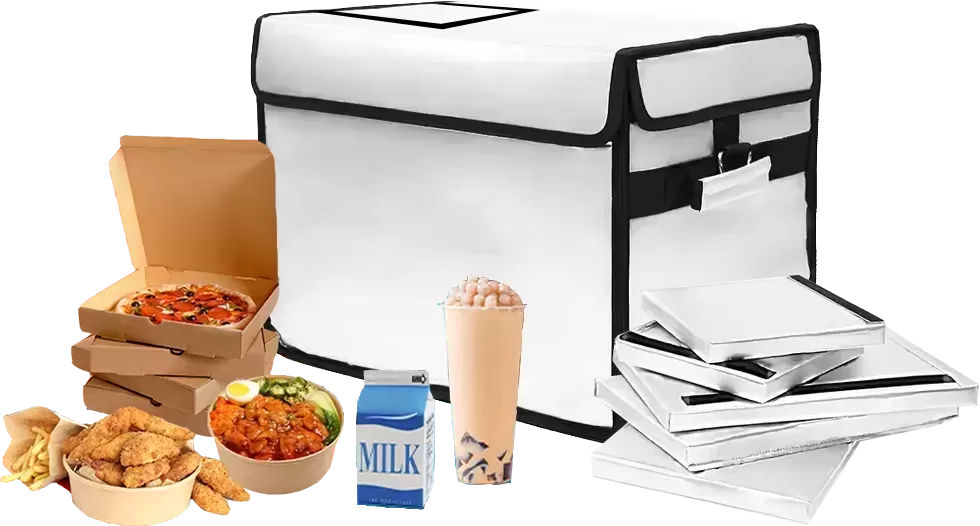
In the food delivery sector, the quality of a delivered pizza directly impacts customer satisfaction. Consumers expect their pizza to arrive hot with a crispy crust. Unfortunately, cold cheese and soggy cardboard boxes are common delivery complaints that ruin the dining experience. For restaurant chains and delivery equipment buyers, choosing a reliable pizza thermal tote maker is a critical operational decision.
Sourcing these items in bulk requires looking beyond simple aesthetic designs. Your choice of manufacturer affects your delivery range, customer retention, and brand image. At Weierken, we focus on engineering thermal transport solutions that protect your food quality during transit. Here is a practical guide on how to evaluate suppliers for your bulk commercial needs.
1. Balancing Heat Retention with Moisture Release
The main challenge of transporting hot pizza is balancing insulation with humidity control. When a hot pizza sits in a sealed box, it releases steam. If your delivery bag is completely airtight, this moisture condenses on the cold inner walls, dripping back onto the cardboard. This turns a crispy crust into a soggy, unappealing meal.
Effective Thermal Engineering Solutions
A professional pizza thermal tote maker resolves this issue through smart material selection and physical design. The bag needs to maintain a high internal temperature while allowing excess moisture to escape.
High-Density Insulation: Look for bags utilizing Expanded Polyethylene (EPE) foam or Polyurethane (PU) foam layers paired with a reflective foil lining. This combination reflects heat inward.
Integrated Steam Vents: Well-placed grommets or mesh panels let steam exit the bag without letting cold air flow inside.
Rigid Dividers: Internal shelves or dividers help air circulate around each box, preventing heat and moisture from getting trapped between stacked pizzas.
B2B Procurement Considerations
When you evaluate a pizza thermal tote maker for large orders, ask for their temperature decay test sheets. A high-quality bag should keep internal food temperatures above 60°C (140°F) for at least 45 minutes in typical outdoor environments.
2. Commercial-Grade Durability for Continuous Daily Use
Commercial food delivery is demanding. Drivers open and close bags hundreds of times a week, throw them into vehicles, and set them down on rough pavements. Retail-grade bags designed for picnics will quickly wear out and fail within weeks under these conditions.
What Makes a Bag Commercial-Grade?
For any experienced pizza thermal tote maker, structural durability is a key design priority. The bag must withstand abrasion, heavy loads, and constant cleaning without tearing or losing its shape.
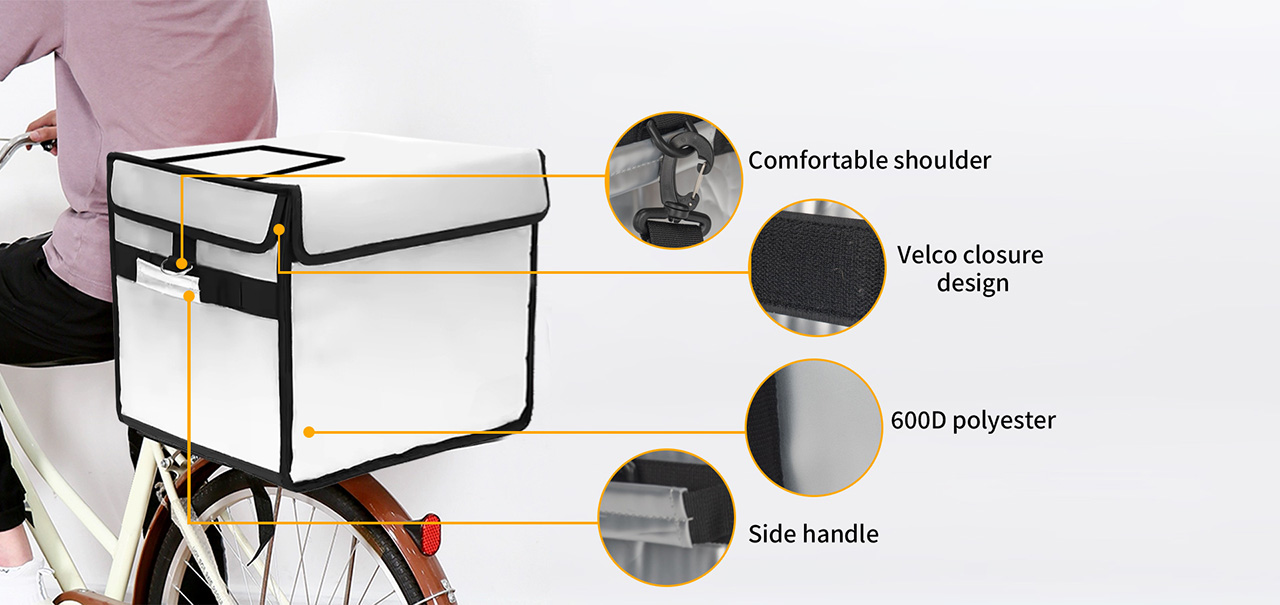
Rugged Shell Fabrics: Look for thick, tear-resistant outer fabrics like 600D polyester, 1000D nylon, or heavy-duty tarpaulin with water-resistant coatings.
Reinforced Stitching: Handles and shoulder straps must feature cross-stitching (X-box patterns) and wrap under the bottom of the bag to distribute heavy loads.
Industrial Fasteners: Commercial hook-and-loop closures or heavy-duty #10 dual-slider zippers are necessary to prevent closure failures.
B2B Procurement Considerations
During the sample evaluation stage, test the zippers and handles under maximum load conditions. Inspect the thread quality and seam construction to ensure they do not pull apart when the bag is packed with multiple heavy pizza boxes.
3. Easy Cleaning and Food-Grade Hygiene Standards
Delivery bags frequently contact grease, spilled marinara sauce, and melted cheese. If the inner liner is difficult to clean, it will quickly harbor bacteria, develop mold, and create unpleasant odors. This poses a hygiene risk and hurts your brand image.
Hygiene and Maintenance Standards
This is where Weierken stands out as a reliable pizza thermal tote maker. We focus on choosing inner linings that are both safe for food contact and easy for delivery staff to sanitize quickly between trips.
Wipe-Clean Liners: Seamless, heat-sealed aluminum foil or food-grade PVC liners prevent grease and liquid from soaking into the insulation foam.
Antimicrobial Materials: Chemical-resistant materials allow staff to use sanitizing sprays without degrading the liner over time.
BPA-Free Materials: All materials that contact the food boxes should be non-toxic and free from harmful chemicals.
B2B Procurement Considerations
A reputable pizza thermal tote maker uses food-grade liners that comply with local regulatory standards. Always ask for documentation showing compliance with FDA, LFGB, or REACH standards to ensure your deliveries meet safety guidelines.
4. Production Capacity and Customization Options
Chain restaurants and third-party delivery services have unique requirements. Standard stock bags rarely fit every box size or match a brand's exact visual style. Your manufacturing partner must be able to scale production while offering customization options.
Customization Options to Look For
A capable pizza thermal tote maker can modify several aspects of their designs to meet your specific operational needs.
Custom Dimensions: Bags should be sized to fit standard pizza boxes (such as 12-inch, 16-inch, or 18-inch boxes) without leaving excess empty space that wastes heat.
Electrical Heating Integration: For long-distance delivery, the factory should be able to integrate 12V vehicle-powered heating elements or pre-heating thermal pads.
Brand Printing: High-visibility reflective strips and durable silkscreen printing help keep your drivers safe and promote your brand on the street.
B2B Procurement Considerations
Confirm the manufacturer's monthly production capacity and their minimum order quantities (MOQ). A stable supplier should have clear processes in place to handle raw material shortages and seasonal shipping surges without delaying your orders.
Sourcing Your Delivery Bags Wisely
Choosing a low-priced delivery bag often leads to higher long-term costs due to frequent replacements and negative customer reviews. Selecting a high-quality pizza thermal tote maker is a long-term investment in your food quality and brand reputation.
Before placing a large bulk order, we recommend requesting sample bags to test on your actual delivery routes. This hands-on testing lets you verify how well the bags maintain heat and hold up to daily wear.
If you want to work with a experienced pizza thermal tote maker that prioritizes quality and practical design, contact Weierken today. Let us help you find the right configuration for your business. Send us an inquiry to discuss your custom project.
Frequently Asked Questions
1. What materials does a pizza thermal tote maker use for insulation?
Most manufacturers use Expanded Polyethylene (EPE) foam, which ranges from 5mm to 15mm in thickness. This foam is light, flexible, and has good thermal properties. It is typically paired with a reflective inner aluminum foil liner to bounce heat back toward the pizza boxes.
2. How do steam vents work without losing too much heat?
Steam vents are small, baffled metal eyelets or breathable mesh strips located near the top of the bag. Because steam rises, it naturally escapes through these vents. The openings are small enough to let moisture out without allowing significant drafts of cold air to enter the main compartment.
3. Are heated pizza delivery bags worth the extra cost?
Yes, especially if your average delivery time exceeds 20 to 30 minutes, or if you operate in cold winter climates. Heated bags use low-voltage heating elements that plug into car chargers or portable batteries. This active heating keeps pizzas hot and dry for hours.
4. What certifications should a high-quality pizza bag have?
Since these bags transport food, their interior liners must be non-toxic and safe. Look for manufacturers whose materials are certified under food contact regulations like FDA (US), LFGB (Europe), or REACH. This ensures the plastics do not release harmful chemicals when heated.
5. How do you clean and sanitize commercial pizza bags?
Most commercial bags feature waterproof, non-porous interior liners. Delivery staff can wipe down these liners with warm water, mild dish soap, or commercial sanitizing sprays. Avoid machine washing or submerging the bags in water, as this can damage the internal foam insulation.
6. How do I check the manufacturing capacity of a pizza thermal tote maker?
You can check their capacity by requesting factory audit reports (such as BSCI or ISO 9001 certifications), asking about their monthly output figures, and checking if they have dedicated production lines for thermal goods. Reliable suppliers will gladly share this information with prospective buyers.