

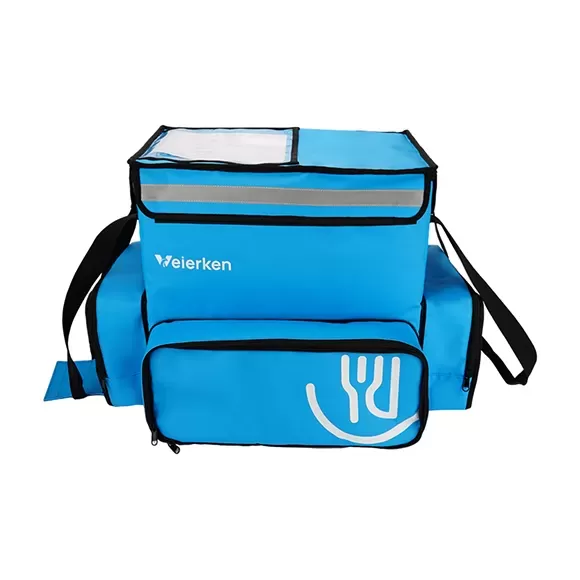
Direct-to-consumer (D2C) pet wellness brands face tough logistics challenges. Shipping biological raw frozen food (BARF) and gently cooked diets requires steady temperature control. If ambient heat creeps into the package, the food spoils, fats turn rancid, and customers leave. Off-the-shelf packaging rarely solves these issues. At Weierken, we engineer industrial-grade delivery packaging that bridges the gap between bulky EPS foam boxes and cheap grocery bags. Sourcing bulk insulated bags for pet food delivery requires a clear understanding of polymer engineering, seam welding, and thermal physics. This guide breaks down the technical specifications logistics managers must evaluate before commissioning large production runs.
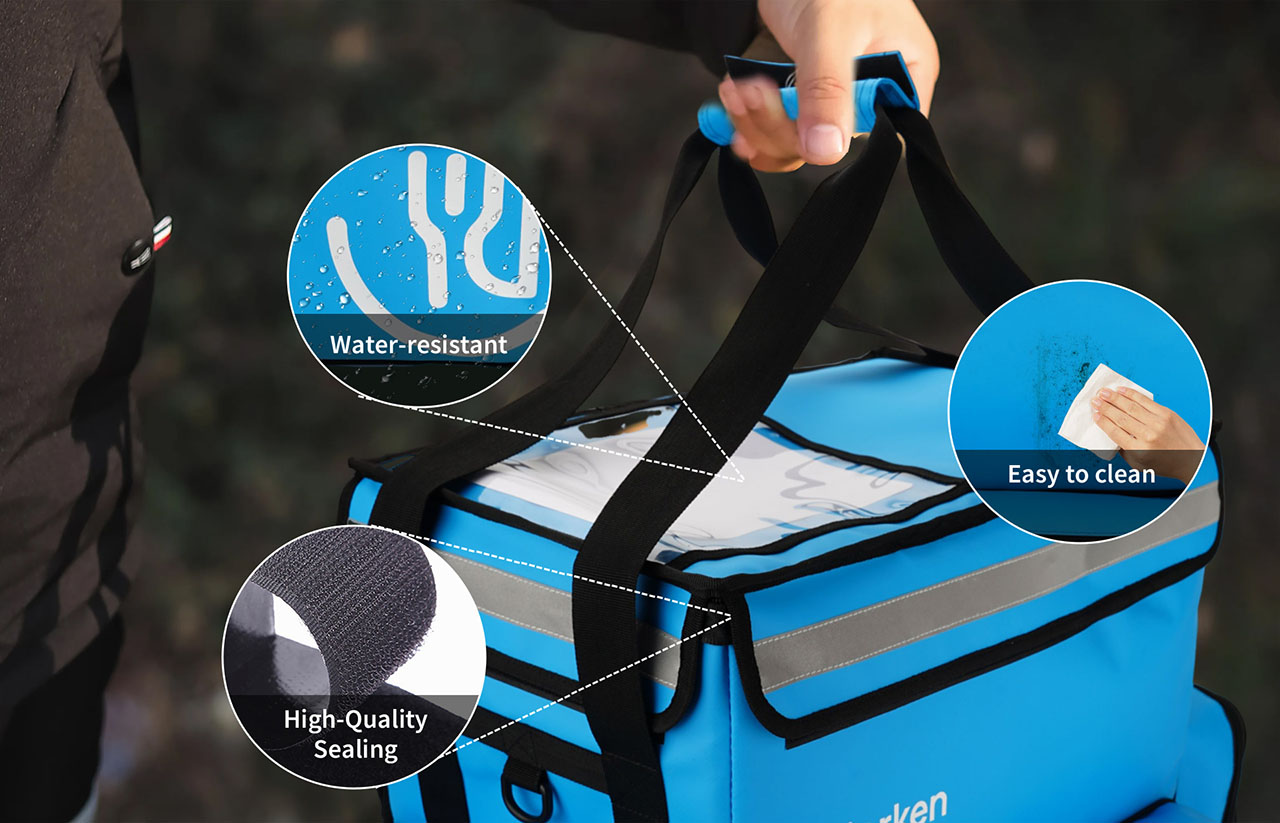
Why Choose Bulk Insulated Bags for Pet Food Delivery?
Pet nutrition is undergoing a major shift. Pet parents treat dogs and cats like family members, fueling double-digit growth in premium fresh, cooked, and raw diets. However, handling frozen perishable freight creates real operational friction.
Solving the Cold Chain Crisis: Raw (BARF) & Fresh Frozen Pet Food Logistics
Unlike human ready-to-eat meals, raw pet diets contain zero preservatives. They rely entirely on sub-zero temperatures to stop bacterial growth like Salmonella and Listeria.
Standard delivery networks introduce constant risks:
Couriers leave parcels on hot porches in direct sunlight for hours.
Transit delays stretch initial 24-hour delivery windows into 48 hours.
Condensation and blood weep from defrosting meat, soaking through typical packaging.
A specialized pet food cold chain delivery bags manufacturer designs products to neutralize these specific failure points. The goal is simple: maintain core temperatures below -18°C (0°F) for frozen items, or between 0°C and 4°C (32°F to 40°F) for fresh meals, from the fulfillment hub to the customer's bowl.
Bulk Sourcing vs. Off-The-Shelf: How Bulk Insulated Pet Food Delivery Bags Lower Unit Shipping Costs
Buying stock bags from distributors hurts your profit margins. Off-the-shelf bags force you to ship empty dead space, which burns through expensive refrigerants like dry ice and gel packs.
Working directly with a manufacturing partner delivers distinct financial benefits:
Dimensional Precision: Bags are built to fit your portion tubs or meat chubs without wasting interior space.
Volume Tier Savings: Procuring wholesale raw pet food packaging bags in container volumes cuts unit costs significantly compared to catalog pricing.
Optimized Shipping Weight: Precision sizing means you pack only the refrigerant you actually need, trimming billable dimensional weight on every package.
Advanced Materials for Custom Bulk Insulated Pet Food Bags
A reliable thermal container relies on layered materials working together. Each layer tackles a different mechanical or thermal challenge.
Exterior Shell Fabrics: Balancing Durability & Water Resistance (Oxford 600D vs. Non-woven)
The exterior shell absorbs conveyor friction, weather, and rough parcel handling. Your distribution model dictates your fabric choice:
600D to 900D Oxford Polyester: Backed with a polyurethane (PU) or polyvinyl chloride (PVC) coating, this woven fabric resists tears, scuffs, and water penetration. It serves as the industry standard for reusable, closed-loop local deliveries.
Laminated Non-Woven Polypropylene (NWPP): A cost-effective, lightweight choice for one-way D2C subscription boxes. When bonded to a metalized film, it resists surface moisture and holds crisp, full-color exterior branding.
Reinforced Kraft Paper Laminates: An emerging alternative that offers structural stiffness and an organic look for brands focused on curbside recycling.
Core Insulation Materials: Selecting the Right Foam (EPE, XPE, PU) for Cold Retention
The core material governs the thermal resistance (R-value) of the packaging. The foam cell structure determines how quickly heat moves through the walls:
Expanded Polyethylene (EPE Foam): Standard low-density foam ranging from 3mm to 10mm. It provides decent cushioning and reliable thermal resistance for 12 to 24-hour delivery routes.
Cross-Linked Polyethylene (XPE Foam): Features a microcellular, closed-cell structure. It does not crush under heavy meat portions, retaining its thermal performance better than standard EPE over longer trips.
Polyurethane (PU) Foam Panels: High-density, semi-rigid insulation used when deliveries must survive 48 to 72 hours. PU provides high thermal resistance without requiring thick, bulky packaging walls.
Leak-Proof Linings for Raw Pet Food: Food-Grade Foil vs. Seamless Heat-Sealed PEVA
The interior lining must keep fluids inside while reflecting radiant heat. Traditional stitched seams fail here because sewing needles create thousands of tiny exit holes for liquids.
Food-Grade Aluminum Foil: Reflects up to 97% of radiant heat. However, it can tear easily if exposed directly to sharp frozen bone edges unless bonded to a protective plastic film.
Seamless Heat-Sealed PEVA (Polyethylene Vinyl Acetate): The premier choice for raw meat. High-frequency ultrasonic welding fuses the corners together without stitches. This creates a completely waterproof basin that stops blood, grease, and moisture from reaching the insulation layer.
Thermoplastic Polyurethane (TPU): A heavy-duty lining material that stays flexible below freezing. It resists cuts and tears better than PVC or PEVA, making it ideal for rugged, reusable subscription bags.
Thermal Performance Standards for Bulk Pet Food Delivery Bags
A bag's real value shows in its thermal validation curves under field conditions. A bag that works well in a cold warehouse can quickly fail inside a warm delivery van.
Validating Cold Retention: Maintaining Sub-Zero Temperatures for 24 to 48 Hours
Thermal stability requires balancing heat gain against the cooling capacity of your refrigerants. The thermal performance of pet food delivery bags is verified using temperature chambers running summer profiles up to 40°C (104°F).
Factory-grade validation tracks three critical stages:
Latent Heat Phase: The phase-change material absorbs ambient heat while staying at a stable temperature (e.g., dry ice at -78.5°C or ice gel at 0°C).
Sensible Heat Phase: Once the refrigerant melts or sublimates entirely, internal temperatures begin to rise.
Critical Threshold: The exact minute internal temperatures climb past the -18°C or 4°C safety lines. High-grade bags delay this threshold for at least 36 to 48 hours.
The Role of Airtight Closures in Thermal Pet Food Bags (Zipper vs. Velcro Leakage Analysis)
Heat enters through closures much faster than through insulated walls. Choosing the right closure system prevents thermal leaks:
| Closure Mechanism | Air Leakage Rate | Thermal Impact | Best Use Case |
|---|---|---|---|
| Standard Coil Zipper | High (Air moves between teeth) | Loses 3-5 hours of cold life | Same-day urban courier delivery |
| Fold-Over Lip + 50mm Hook-and-Loop | Low to Moderate | Forms a tight physical barrier | One-way carton liners & mailers |
| Airtight TPU Coated Zipper | Near Zero (Hermetic seal) | Maximizes cold retention | Reusable commercial delivery totes |
Sizing with Coolants: Calculating Bag Volume vs. Gel Ice Packs / Dry Ice
Avoid guessing coolant volumes. Packaging engineers size containers using thermal load math:
Heat Gain (BTU/hr) = (Surface Area / R-Value) × (Exterior Temp - Target
Interior Temp)
For standard 24-hour frozen pet meat transit, aim for a 1:2.5 or 1:3 ratio of refrigerant weight to product payload. For 48-hour transit, target a 1:1.5 ratio. Premium insulation foams with higher R-values reduce the amount of coolant needed, saving on cargo weight.
Custom OEM/ODM Capabilities for Pet Food Delivery Insulated Bags
Every D2C pet food brand uses different packaging formats, from flat vacuum-sealed chubs to round tubs. Working with an OEM like Weierken lets you tailor the bag directly to your fulfillment needs.
Custom Sizing: Integrating Insulated Bags into Corrugated Shipping Boxes
Many brands pack an insulated thermal liner directly inside a standard corrugated cardboard box. We engineer these liners to sit flush against the box interior:
Gusseted bottom patterns open into neat cubes, eliminating dead space.
Scored fold lines let fulfillment workers pop the liners open in seconds, speeding up packing lines.
Peel-and-seal adhesive release liners provide quick, tamper-evident closures without requiring extra packing tape.
Heavy-Payload Reinforcement: Custom Handles Built for Wet & Frozen Pet Food Weight
Pet food is dense and heavy. A two-week subscription box can easily weigh 10 to 20 kilograms (22 to 44 lbs). Standard sewn top handles will pull away and rip through lightweight fabrics under that kind of load.
To prevent structural failure, we build in several key reinforcements:
Cross-box ("Box-X") stitching on all webbing attachment points.
Continuous webbing straps that wrap completely under the bottom of the bag to support heavy weights from below.
Padded neoprene or durable EVA handle wraps to prevent courier hand strain during heavy carries.
Eco-Friendly Customization: Sustainable rPET Materials for Green Pet Brands
Pet owners care deeply about sustainability. Many avoid brands that use single-use expanded polystyrene (EPS) foam coolers. We help brands switch to sustainable materials by sourcing certified rPET (Recycled Polyethylene Terephthalate) fabrics made from recycled water bottles. Combining an rPET woven shell with a recycled cotton or bonded cellulose fiber insulation pad gives your brand a clean, fully recyclable shipping solution.
Sourcing Bulk Insulated Bags for Pet Food Delivery: Pricing, MOQs & Logistics
Moving from prototypes to full factory production requires careful budget planning and supply chain management.
How Order Volumes (MOQ) Impact Unit Costs in Bulk Insulated Bag Manufacturing
Industrial bag manufacturing involves setup steps like fabric dyeing, cylinder engraving, and tooling dies. Because of these fixed costs, order volumes heavily dictate your final price per unit.
Sample Runs (10 to 50 units): Built via CNC sample cutting tables. Useful for thermal chamber validation, but carries a high unit cost.
Entry Production (500 to 1,000 units): Uses standard yardage colors with silk-screened logos. Good for regional product launches.
Full Container Loads (5,000 to 20,000+ units): Unlocks custom fabric dyes, rotogravure full-bleed exterior printing, customized zipper pulls, and the lowest possible unit cost.
Flat-Packed Logistics: Maximizing Container Load to Lower Sea Freight Overhead
Shipping pre-assembled rigid coolers across the ocean means paying to ship empty air. We design all our custom insulated pet food delivery bags to fold flat for transit. Our production lines use hydraulic vacuum-compression presses to condense finished bags into dense master cartons. This flat-pack approach triples the unit count per pallet, cutting ocean freight costs per unit down to pennies.
FAQ: Sourcing Bulk Insulated Bags for Pet Food Delivery Directly from the Manufacturer
Q1: What is the ideal insulation thickness for 48-hour frozen pet
food delivery?
A1: For a 48-hour transit window in summer weather,
we recommend an 8mm to 10mm high-density cross-linked polyethylene (XPE) foam
core, or a vacuum-sealed fiber insulation pad. Pair this insulation with a
reflective metalized inner barrier and airtight closures to prevent ambient heat
transfer.
Q2: Are custom bulk insulated pet food bags FDA/REACH certified for
food contact?
A2: Yes. Quality manufacturers use inner linings like
virgin PEVA, TPU, and aluminum foils that pass FDA 21 CFR 177 standards for food
contact, alongside European REACH Annex XVII regulations. These materials remain
non-toxic, odorless, and free of heavy metals or plasticizers that could
contaminate pet food packages.
Q3: What is the typical lead time for custom printed pet food thermal
bags?
A3: Physical prototyping and engineering samples usually take
7 to 10 working days. Once samples are approved and deposit terms are met, mass
production typically runs 25 to 35 days, depending on order size and custom
fabric requirements.
Q4: Can these thermal bags be washed and reused in a closed-loop
subscription network?
A4: Yes. For closed-loop models, we build bags
using heavy-duty 900D Oxford shells paired with thick, puncture-resistant TPU
inner linings. Couriers can wipe down or spray sanitize these bags with
commercial disinfectants between runs without wearing down the materials.
Q5: What closure holds cold air in better: industrial hook-and-loop
or zippers?
A5: Waterproof TPU-coated zippers create a true hermetic
seal, providing the best defense against warm air infiltration. A wide 50mm
fold-over hook-and-loop flap serves as an economical second choice for one-way
mailers, easily outperforming standard loose coil zippers.
Secure Your Cold Chain with Weierken
Protecting raw and fresh pet food during transit requires durable barrier fabrics, reliable leak-proof seams, and proven thermal performance. Using poorly engineered packaging risks spoiled food, ruined shipments, and lost customers.
Weierken manufactures high-performance insulated cold-chain bags designed specifically for direct-to-consumer pet food brands. Whether you need high-volume one-way shipping liners or rugged, reusable subscription delivery totes, our engineering team builds solutions that protect your products and your margins.
Need to upgrade your cold chain packaging? Contact our engineering team today to review your temperature requirements, request physical material swatches, and receive a competitive factory-direct quote.