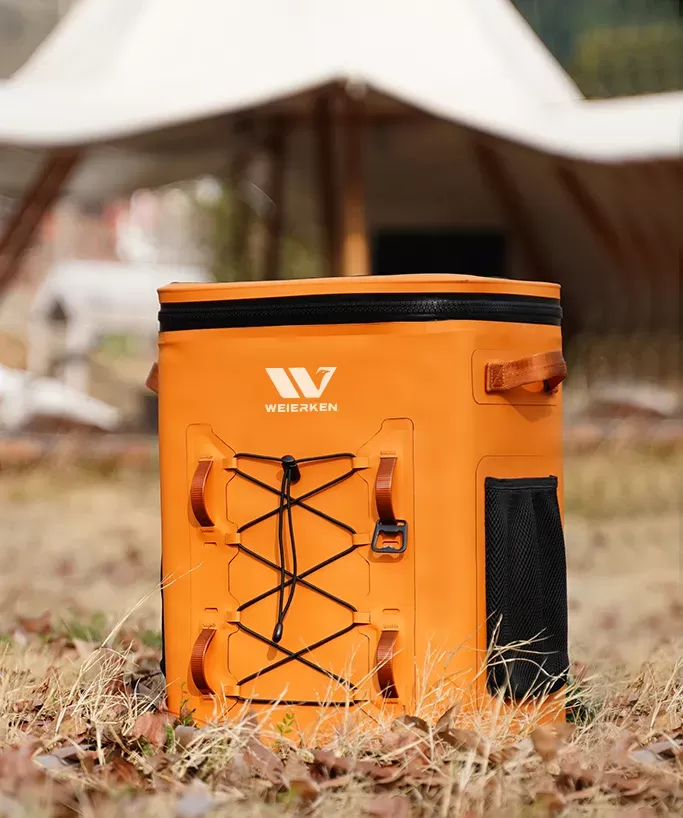

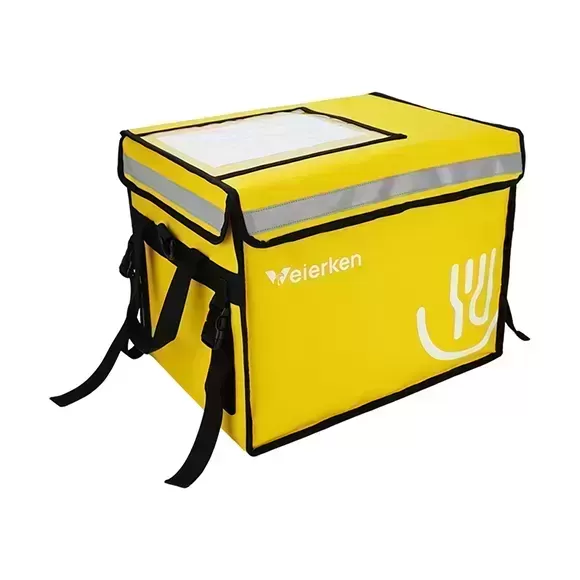
A lukewarm pizza or melted gelato creates an immediate churn risk for local food delivery platforms. Most fleet managers focus on dispatch algorithms and driver routing. Yet, the physical container carrying the meal often determines whether a customer orders again.
Cheap, off-the-shelf delivery bags degrade fast. Zippers snag, handles tear under load, and thin insulation fails during multi-drop routes. These failures inflate customer compensation costs and force frequent equipment replacements.
Investing in custom reusable insulated bags for local food delivery turns packaging from a recurring operational expense into a durable fleet asset. Specialized manufacturers like Weierken help enterprise delivery operations engineer solutions built specifically for harsh, high-frequency transit cycles.
Finding the right OEM factory requires looking past generic product catalogs. You need a production partner that understands thermal dynamics, material fatigue, and food hygiene standards.

1. Thermal Engineering and Material Architecture
Thermal retention is not just about thick padding. It requires a balanced combination of an impermeable outer shell, an efficient radiant barrier, and a closed-cell insulating core. When sourcing custom thermal delivery bags bulk, review the factory's material specifications down to the millimeter.
Interior Linings: Food Contact and Thermal Reflection
The interior lining directly handles food spills, steam condensation, and rough container edges. A competent OEM insulated food delivery bag manufacturer should offer several industrial lining options:
Food-Grade Aluminum Foil: Highly reflective to radiant heat. Ideal for hot food deliveries, though thinner variants can tear if rigid plastic containers scrape them repeatedly.
Seamless Heat-Sealed PEVA: Welded with high-frequency voltage machines rather than stitched. It prevents liquid leaks into the insulation foam, resists odor absorption, and wipes down easily between shifts.
TPU (Thermoplastic Polyurethane) Laminates: Premium option offering extreme puncture resistance, flexible cold-crack performance, and exceptional grease resistance.
Insulation Core: Density Over Bulk
A bulky bag is not necessarily an efficient bag. Standard single-use bags rely on low-density open-cell foam that compresses flat under minor weight, ruining its thermal insulation value.
For demanding courier operations, insist on high-density Expanded Polyethylene (EPE) pearl cotton or Ethylene-Vinyl Acetate (EVA) foam ranging from 8mm to 15mm in thickness. These closed-cell materials retain their structural shape under load and hold food temperatures above 60°C (140°F) or below 4°C (40°F) for over two hours.
Outer Shell Durability: Surviving Weather and Friction
Motorcycle pegs, metal cargo racks, and pavement contact will destroy lightweight polyester in weeks. Look for factories working with heavy-duty commercial textiles:
600D to 1680D Polyester/Oxford: Treated with durable water repellent (DWR) and backed by PVC or PU coatings to block heavy rain.
500D-900D Tarpaulin (PVC-Coated Mesh): The industry standard for extreme durability. It is 100% waterproof, scrub-resistant, and withstands constant friction against scooter cargo frames.
2. Delivery-Specific Structural Engineering
Local food fulfillment involves unpredictable obstacles. Couriers sprint up concrete stairs, navigate downpours, and mount bags to motorbikes. Generic consumer coolers fail in this environment.
Your OEM partner must possess the engineering skill to translate operational hurdles into reinforced structural designs.
Vehicle Integration and Weight Distribution
Heavy orders cause driver fatigue and risk road accidents. For heavy-duty commercial delivery backpacks, verify that the factory builds ergonomic back panels with thick mesh ventilation and wide, padded waist straps that shift weight away from the shoulders.
If your fleet relies on mopeds or electric bicycles, the factory should integrate industrial-grade tie-down loops, reinforced D-rings, and heavy-duty bottom anchor straps. Baseboards must use rigid, lightweight corrugated plastic (PP sheet) rather than fiberboard, which warps permanently when wet.
Modular Interior Organization
Modern delivery platforms handle multi-basket orders combining hot entrees and cold beverages. A flexible internal compartment structure prevents food degradation:
Removable Insulated Dividers: Heavy-duty hook-and-loop partitions let couriers isolate hot meals from chilled items inside a single bag.
Anti-Spill Cup Holder Systems: Removable, high-density foam inserts or collapsible fabric trays that secure various cup sizes and prevent expensive beverage disasters.
Expandable Compartments: Accordion-style zip-out sections that accommodate large pizza boxes without forcing drivers to tilt the main container.
Safety and Field Visibility
Courier safety is a fundamental operational responsibility. Look for factories experienced in integrating wide 3M retroreflective bands across the front, sides, and shoulder straps. High-visibility piping helps protect your workforce during night deliveries and poor weather conditions.
3. Food Safety, Hygiene, and Compliance Certifications
Transporting food exposes your business to strict local health regulations. Using untested consumer-grade bags across a commercial fleet invites regulatory scrutiny and customer health hazards.
Leading supply chain teams audit factory compliance well before requesting design proofs. Verified production facilities, including Weierken, maintain active compliance certifications to support international enterprise buyers.
Mandatory Material Certifications
Every internal material that sits near unsealed food containers must comply with chemical safety baselines:
FDA Food Contact Compliance: Assures that liners emit no hazardous chemicals or toxic residues under sustained high temperatures.
EU REACH & RoHS: Restricts dangerous heavy metals, toxic phthalates, and plasticizers frequently found in cut-rate plastics and synthetic rubbers.
Antimicrobial Surface Treatments: Advanced factories can apply silver-ion or zinc-based coatings to interior liners, preventing bacterial colonies from breeding in warm, humid interior pockets.
Ethical Manufacturing Audits
Large regional hospitality brands cannot risk association with illicit labor practices. Confirm that your prospective supplier holds valid social compliance audits, such as BSCI (Business Social Compliance Initiative) or Sedex (SMETA). These audits verify safe working conditions, fair pay, and environmental responsibility across production lines.
4. Evaluating Manufacturing Muscle and Testing Rigor
A sleek sales sample does not guarantee consistent bulk production runs. Commercial procurement teams need an OEM partner capable of scaling smoothly from prototyping to monthly tens of thousands of units.
Rapid Prototyping and Pattern Engineering
Can the factory interpret 2D tech packs and return functional 3D samples within 7 to 10 days? Skilled manufacturers employ in-house sample rooms staffed by dedicated pattern makers. They quickly catch design flaws—like weak seam placements or unsealed leak points—before tooling begins.
Stress Testing and Quality Control (QC)
Inquire specifically about their internal quality lab. Wholesale reusable food transport bags endure thousands of hard impacts during their service life. A reliable OEM conducts rigorous stress tests before shipment:
Drop Tests: Loading a finished delivery pack with 20kg to 25kg of weighted mass and dropping it repeatedly from a height of one meter onto concrete to test handle and seam integrity.
Zipper Cycle Testing: Validating that heavy-duty resin or waterproof zippers (such as genuine YKK or verified factory-custom tracks) endure at least 5,000 to 10,000 pull cycles without tooth separation.
Seam Shear Strength: Tensile testing machines must verify that load-bearing points, box-X stitches, and strap anchors hold fast under industrial pull forces.

5. Brand Customization and Total Cost of Ownership (TCO)
Your delivery fleet represents your brand's most visible public touchpoint. Every courier moving through a city center acts as a mobile billboard. Customization should never stop at a cheap, single-color silk-screen logo that flakes off after two rainy shifts.
Evaluate the factory’s printing capabilities. Look for precision Pantone color matching across different fabric textures, fade-resistant UV pigment inks, dye-sublimation for complex graphics, and molded rubber or reflective badges that keep your logo looking clean after months of hard road use.
The Real Economics: Disposables vs. Heavy-Duty Reusables
Procurement teams sometimes push back against the higher upfront cost of custom food-grade insulated delivery bags. A look at the Total Cost of Ownership (TCO) shows why this logic is flawed.
A flimsy delivery bag costs around $10 to $15 but often breaks down within 30 to 45 days of intense multi-drop use. Over a year, a single full-time rider burns through six to eight cheap bags, wasting upwards of $100 while dealing with sticky zippers and lukewarm food.
Conversely, a well-engineered custom insulated bag manufactured by an experienced OEM costs more initially but lasts over 1,000 duty cycles. Factoring in reduced food spill claims, fewer temperature complaints, and consistent brand presentation, your true cost per delivery drops by over 80% across the equipment's lifespan.
Frequently Asked Questions
Q1: What is the typical Minimum Order Quantity (MOQ) for custom insulated delivery bags?
A1: For standard custom configurations using existing factory fabrics and hardware, MOQs generally start around 500 units per style. Full custom fabric dyeing, specialized pantone matches, or proprietary molded parts typically require an MOQ of 1,000 to 2,000 units to offset setup costs.
Q2: Can an OEM factory guarantee zero interior leaks from food spills?
A2: Yes, provided you specify high-frequency heat-sealed (welded) interior liners using PEVA or TPU instead of traditional needle-stitched seams. Needle punctures allow spilled broths or melting ice to seep into the internal foam padding, generating mold and foul odors.
Q3: How long will an industrial delivery bag hold hot food above safe serving temperatures?
A3: Bags built with 10mm to 12mm high-density EPE foam and heat-reflective inner linings typically keep food above 60°C (140°F) for 90 to 150 minutes, assuming the bag remains fully zipped between drops. Adding internal thermal baffles or active heating elements extends this window.
Q4: What material is best for high-frequency motorbike and scooter delivery?
A4: PVC-coated tarpaulin is the best outer material for two-wheel fleets. It resists abrasions, shrugs off road grit, blocks torrential rain, and couriers can wipe it clean in seconds at the end of their shifts.
Q5: How can our fleet ensure custom delivery backpacks comply with rider safety laws?
A5: Work with your OEM factory to place certified retroreflective materials (such as genuine 3M Scotchlite) along all exposed outward faces. Ensure shoulder systems distribute weight effectively across the torso, and confirm that the bag does not sit too high, allowing riders unobstructed peripheral vision while wearing motorcycle helmets.
Building a Stronger Last-Mile Operation
Reliable last-mile food logistics depends on the durability of your gear. Sourcing reusable insulated bags for local food delivery from a basic trading company or generic supplier risks operational hiccups, customer complaints, and short equipment lifespans.
Focus your vendor selection on core production realities: thermal insulation engineering, food contact safety compliance, ergonomic design, and verified drop testing. A true OEM manufacturing partner provides the engineering resources and production scale your fleet needs to protect food quality on every run.
Is your delivery fleet struggling with damaged gear, leaking bags, or temperature complaints? Contact the production specialists at Weierken today to discuss your fleet requirements, review technical fabric swatches, and request a quote on custom thermal solutions.