

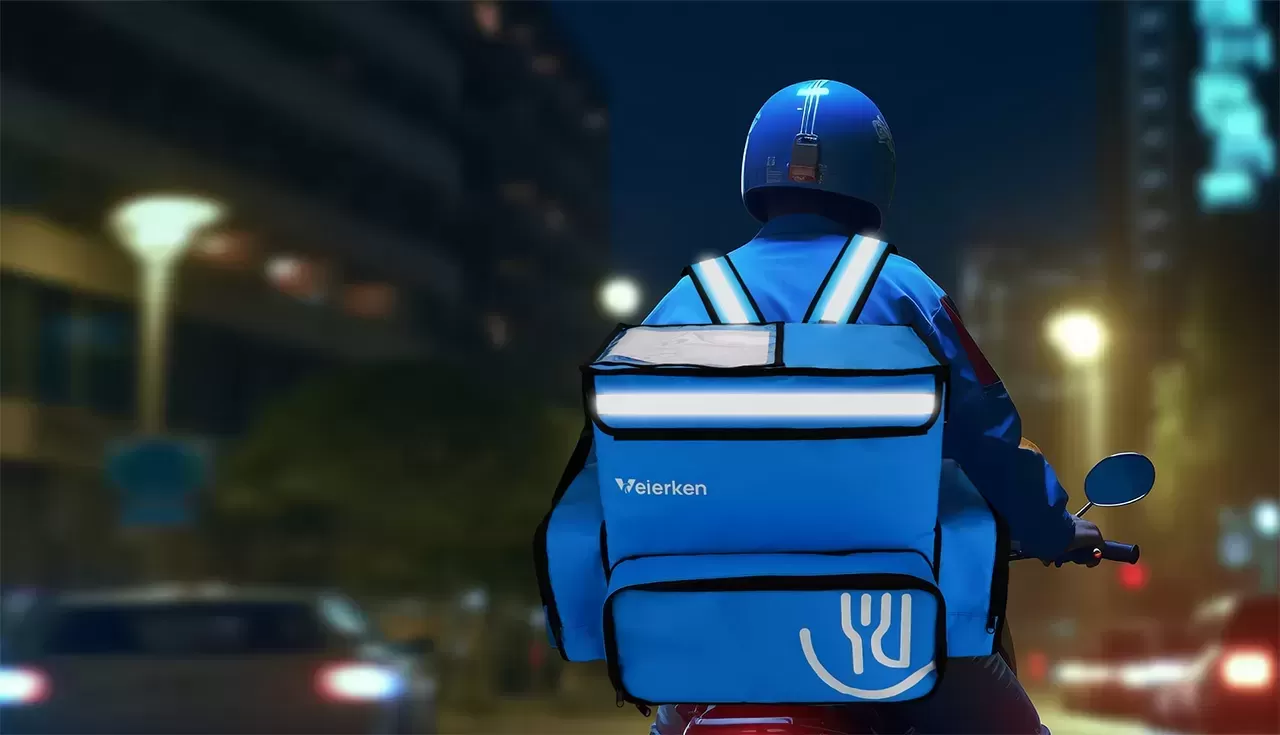
Transporting fresh meat, poultry, and seafood requires strict attention to temperature control and hygiene. Unlike standard fast-food deliveries, raw meat products are heavy, highly perishable, and prone to liquid leakage. If your business manages a cold chain delivery network, selecting the wrong bag materials can lead to spoiled products, health violations, and damaged brand reputation.
Working directly with an experienced meat delivery bag maker like weierken allows distributors and cold chain brands to customize carrier solutions from the raw material level. Understanding the technical specifications of outer fabrics, insulation layers, and inner linings is essential to making an informed procurement decision. This guide outlines the industrial material standards required for professional-grade meat delivery bag manufacturing.
1. Outer Shell Materials: Durability and Weather Protection
The exterior of a commercial meat delivery bag must withstand rough daily handling, heavy payloads, and diverse weather conditions. Because bone-in meats can be heavy and sharp, the outer fabric requires high tensile strength and puncture resistance.
Heavy-Duty Oxford Fabrics (600D and 1680D)
Oxford polyester is the industry standard for commercial delivery bags. The "D" stands for Denier, which measures the linear mass density of the fiber. A higher denier indicates a thicker, more durable thread.
600D Oxford Fabric: This material offers a balance between structural durability and lightweight handling. It is suitable for medium-sized bags or short-distance deliveries.
1680D Oxford Fabric: This double-strand weave is exceptionally robust. It offers high resistance to abrasions, punctures, and tearing, making it suitable for large-capacity, heavy-duty thermal bag OEM projects.
PVC Tarpaulin (Mesh-Reinforced PVC)
For operations requiring maximum durability and ease of cleaning, PVC Tarpaulin is a reliable choice. This material features a polyester mesh core sandwiched between PVC layers. It is completely waterproof, highly resistant to tearing, and can be wiped clean in seconds, making it a favorite for high-volume cold chain meat packaging fleets.
Protective Surface Coatings
To shield the bag from rain, snow, and dirt, raw fabrics are coated with protective polymers. Polyurethane (PU) or Thermoplastic Polyurethane (TPU) backings are applied to the inside of the outer fabric. These coatings prevent external moisture from penetrating the insulation core, preserving the bag's thermal performance.
2. The Thermal Insulation Core: Preventing Temperature Fluctuations
The core layer of the delivery bag determines how long meat products can remain within safe temperature zones. A professional thermal meat delivery bag OEM must match the insulation thickness to the target delivery window.
Expanded Polyethylene (EPE) Foam
EPE foam, commonly known as pearl cotton, is the most widely used insulation material in delivery bag manufacturing. It consists of closed-cell structures containing tiny air pockets, which slow down heat transfer.
5mm EPE Foam: Suitable for quick, local deliveries (usually under 1 hour) where transit times are minimal.
8mm to 10mm EPE Foam: The standard thickness for professional cold chain logistics, maintaining stable internal temperatures for 2 to 4 hours when used with gel ice packs.
Ethylene-Vinyl Acetate (EVA) Foam
In high-end applications, manufacturers may combine or replace EPE with EVA foam. EVA is denser and firmer than EPE. It provides superior structural support, ensuring the delivery bag maintains its shape even when loaded with heavy meat trays. This prevents the bag from collapsing and crushing the contents inside.
Balancing Insulation Performance and Portability
While thicker insulation improves thermal performance, it also increases the overall weight and bulk of the bag. An experienced insulated bag manufacturer helps clients find the middle ground. They select foam densities that provide the required thermal resistance without making the bag too heavy for couriers to carry comfortably.
3. Inner Lining Materials: Food Safety and Leak Prevention
The interior lining is the most critical component of a meat delivery bag. It comes into direct contact with food packaging and must handle condensation, ice pack runoff, and occasional meat juices without absorbing liquids or odors.
As a specialized manufacturing partner, weierken focuses heavily on lining safety. We ensure that our interior materials meet the necessary food safety requirements for transport packaging.
Food-Grade Material Standards
Linings must be non-toxic, odorless, and easy to sanitize. Common materials used by a professional leakproof delivery bag factory include:
PEVA (Polyethylene Vinyl Acetate): A chlorine-free, eco-friendly plastic. It is highly flexible, easy to clean, and serves as an excellent FDA-approved delivery bag lining material.
Aluminum Foil with Polymer Backing: Reflects radiant heat back inside the bag to maintain cold temperatures. However, it must be laminated with a protective film to prevent tearing from sharp corners.
TPU (Thermoplastic Polyurethane): Offers excellent resistance to oils, greases, and low temperatures. It remains flexible in freezing conditions, making it suitable for frozen meat transport.
Seamless Leakproof Technology
Traditional sewing methods use needles that puncture the fabric, leaving thousands of tiny holes. Over time, meat juices and condensation seep into these stitch holes, creating breeding grounds for bacteria and mold that are almost impossible to clean.
To prevent this, manufacturers utilize High-Frequency Welding (also known as radio-frequency or hot-press welding). This process uses electromagnetic energy to fuse the lining seams together without needles or thread. The result is a completely seamless, 100% waterproof interior tub that keeps liquids contained and can be sprayed down and disinfected easily.
4. Industrial Accessories: Securing the Closure and Load
A delivery bag is only as strong as its weakest component. Even with the best fabrics and insulation, cheap zippers or weak handles will cause the bag to fail prematurely in the field.
Water-Resistant and Airtight Zippers
Standard zippers allow cold air to escape and warm ambient air to enter the bag. For meat delivery, we recommend heavy-duty, resin-coated water-resistant zippers. These zippers feature a rubberized track that seals the opening when closed, reducing thermal loss and preventing external water from dripping inside.
Reinforced Load-Bearing Straps
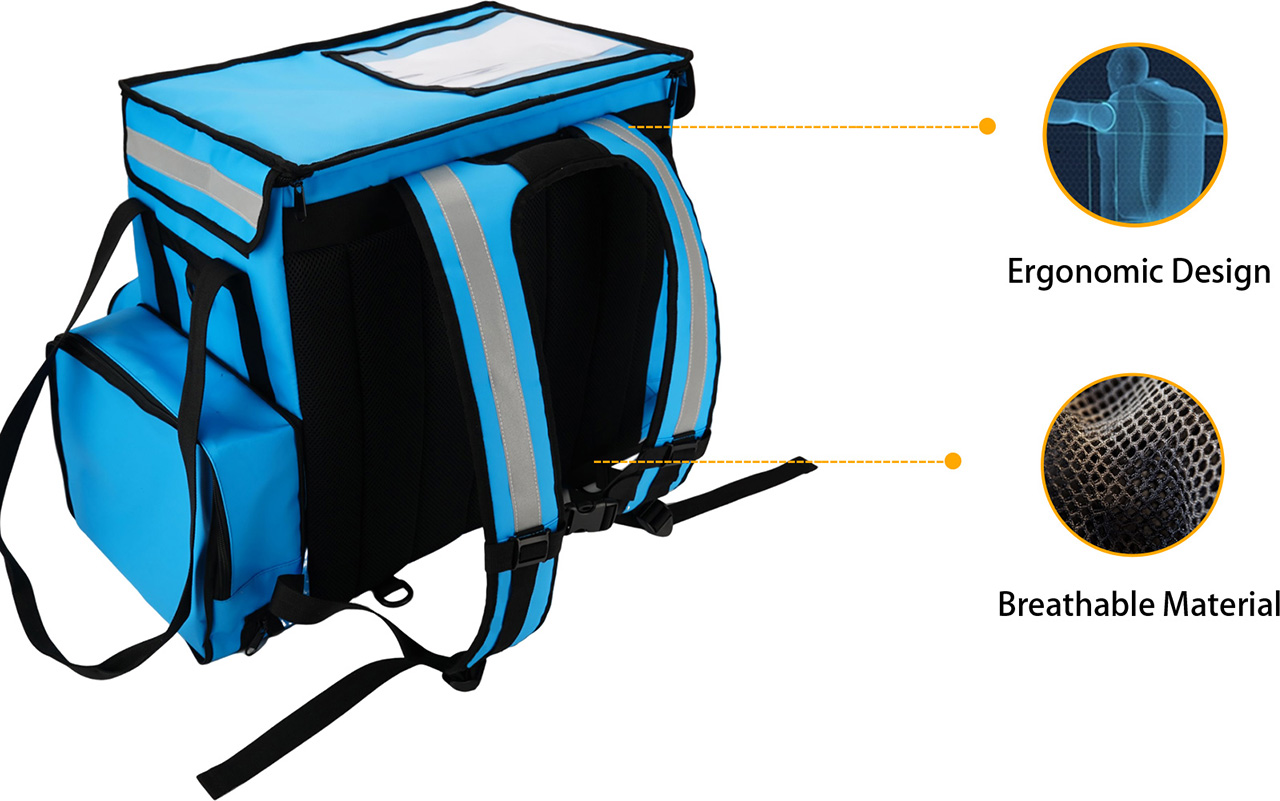
Because meat orders can easily weigh 10 to 20 kilograms, the shoulder straps and carry handles require industrial reinforcement. Manufacturers use high-tensile nylon or polyester webbing. These straps are secured to the body of the bag using box-stitch or cross-stitch patterns, distributing the load across a larger surface area to prevent tearing.
5. Custom OEM Capabilities: Designing for Your Logistics Network
Every cold chain delivery operation has unique requirements. A reliable B2B partner will work closely with your logistics team to customize key specifications:
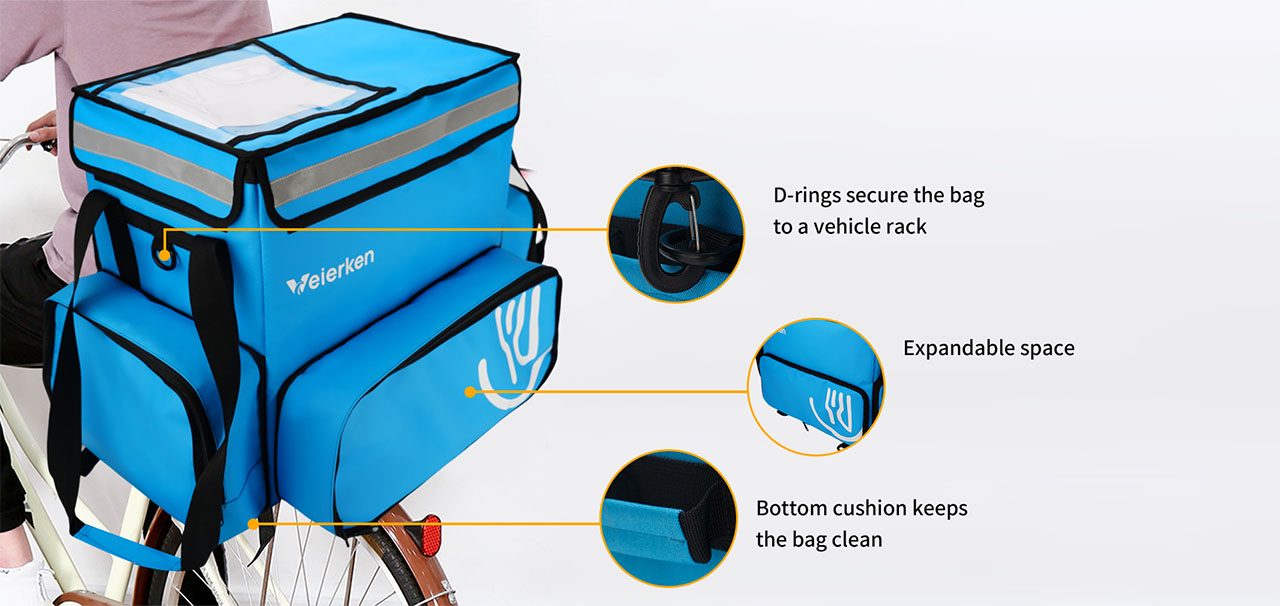
Custom Dimensions: Tailored to fit your standard plastic crates, cardboard boxes, or vacuum-sealed meat trays perfectly.
Internal Dividers: Movable Velcro or thermal panels that allow you to separate frozen items from chilled meats inside the same bag.
Branding Integration: Silk-screen printing, rubber patches, or reflective logos to ensure your delivery fleet represents your brand professionally on the road.
Frequently Asked Questions
What is the typical MOQ for custom meat delivery bags?
Minimum order quantities (MOQ) generally range from 500 to 1,000 pieces per design, depending on the material customization, color choices, and custom sizing requirements. Standard colors or existing patterns may allow for lower MOQs.
How does a leakproof delivery bag factory ensure no liquids escape?
We achieve this by using High-Frequency Welding technology on the inner linings (such as PEVA or TPU). This process melts the edges of the sheets together under pressure, forming a solid, seamless barrier that contains liquids and prevents them from reaching the insulation foam.
Can these bags maintain safe raw meat temperatures for over 4 hours?
Yes. By combining thick 10mm EPE or EVA foam insulation with high-quality gel ice packs, the internal temperature can remain within the recommended safe cold-chain range (under 4°C / 40°F) for 4 hours or more, depending on external weather conditions.
What is the difference between PEVA and PVC for the inner lining?
PEVA is a non-chlorinated vinyl material that is widely accepted as safe for food contact applications. It remains flexible in cold weather and is odorless. PVC often contains phthalates and plasticizers, which can emit chemical odors and are generally avoided for direct food contact linings.
How do weierken bags handle heavy, bone-in meat products without puncturing?
We use double-layered protective designs. The exterior consists of puncture-resistant 1680D Oxford fabric or heavy PVC Tarpaulin. Internally, we can incorporate thick plastic protective panels (PE boards) or heavy-duty TPU linings that resist damage from bone ends and sharp tray corners.
Work with a Partner Committed to Quality
Sourcing your delivery equipment from an experienced manufacturer ensures your cold chain logistics remain unbroken. From choosing the correct denier of fabric to implementing seamless hot-press welding, every material choice impacts your operational efficiency and food safety compliance.
At weierken, we manufacture dependable, commercial-grade thermal packaging tailored to your exact brand specifications. Our team is ready to assist you with material selection, sampling, and high-volume production. Contact our team today to request a quote and discuss your custom OEM requirements.