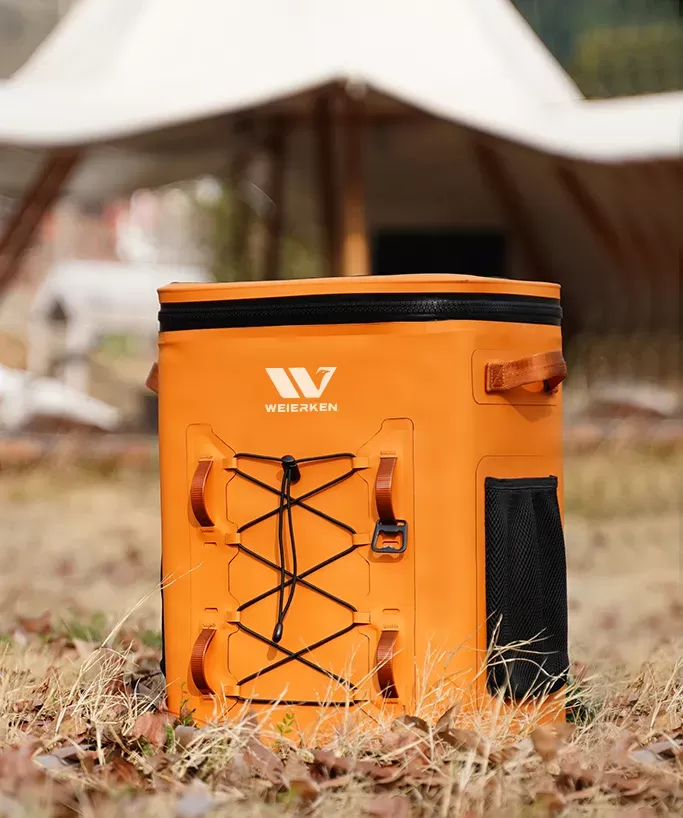

Every commercial seafood distributor knows that cold chain logistics leaves zero room for error. Yet many procurement teams still make the mistake of buying ordinary thermal bags to save pennies on unit prices.
A few weeks into shipping, the problems start. Melted ice and blood leak through stitched seams, soaking master cartons and ruining entire delivery routes. The true cost of cheap packaging quickly shows up as customer refunds, spoiled inventory, and damaged brand trust.
True cost reduction never comes from buying the cheapest item on the market. Real savings come from eliminating middleman markups, leveraging favorable trade tariffs, and choosing bags that never leak or puncture during transit.
Working directly with an established leakproof fish delivery bag supplier like Weierken bridges the gap between rugged cold-chain engineering and lean procurement costs.
The Hidden Costs of Cheap Fish Delivery Bags
When live catch or fresh fillets leave your processing facility, the clock starts ticking. Relying on sub-par packaging to protect perishable stock creates a continuous financial drain on your operation.
1. Ice Slurry Leaks and Damaged Shipments
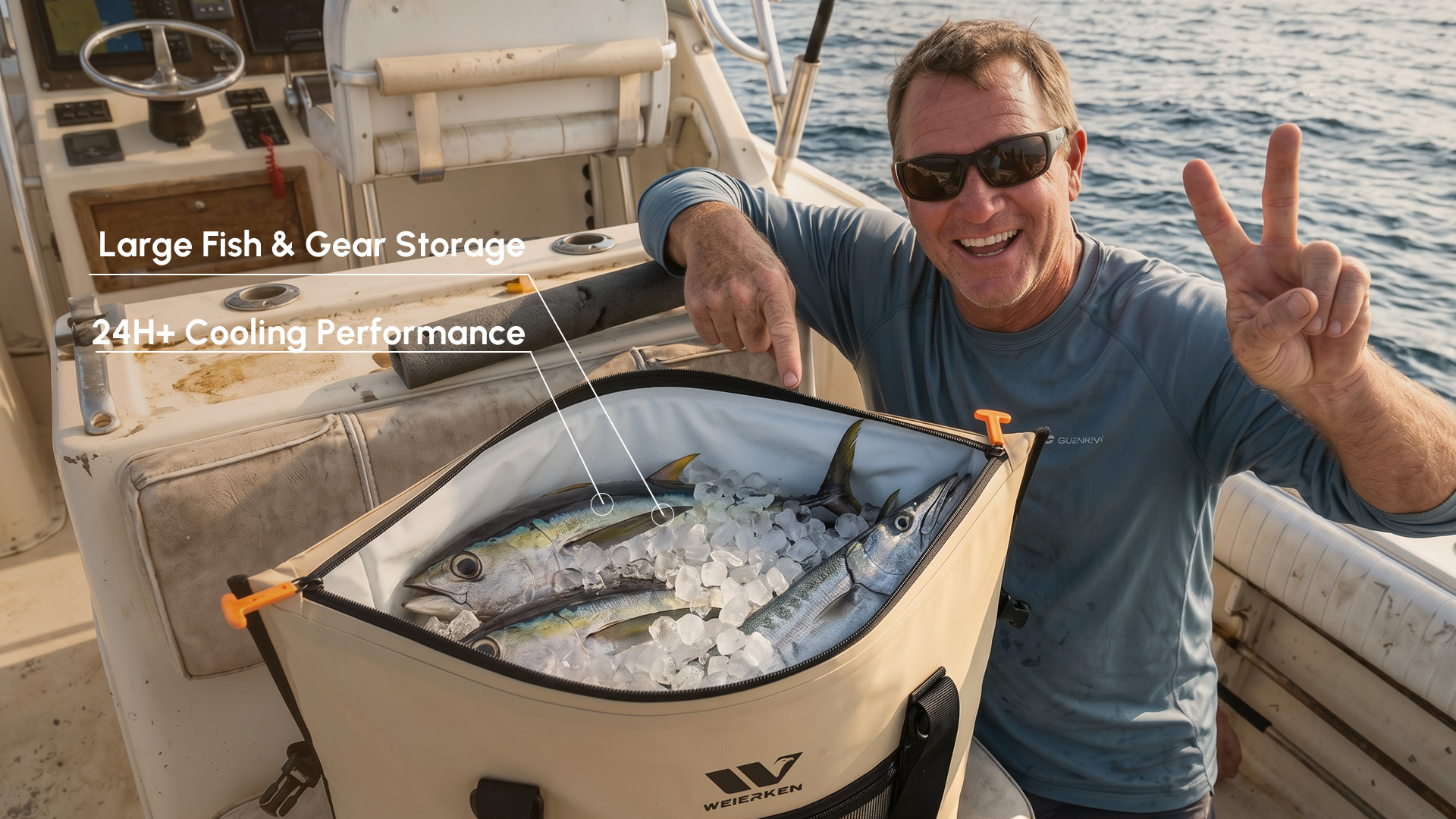
Fresh fish requires heavy wet ice or slurry to maintain temperature between 0°C and 2°C. Standard stitched cooler bags cannot hold melted water under pressure.
As the ice melts, liquid seeps through sewing needle perforations. The resulting brine soaks into the corrugated delivery boxes, causing cartons to collapse inside trucks. Delivery drivers face rejected drops, and your company pays for full product write-offs.
2. Punctures from Hard Dorsal Fins
Species like sea bass, tilapia, snapper, and rockfish feature rigid, needle-sharp dorsal fins. Standard PVC and cheap foil linings tear the moment a fish shifts during transport.
Once the lining punctures, water enters the internal foam insulation. The wet foam loses its thermal resistance, breeds bacterial odors, and turns a reusable bag into immediate landfill waste.
3. Trading Company Markups
Many overseas buyers purchase their delivery gear through trading agents rather than an actual factory. These intermediaries tack on margins of 20% to 35% while adding little value to product quality.
When quality defects occur, trading companies create communication delays. Working with a direct thermal cooler bag manufacturer removes these markups and puts you in direct contact with the engineers building your bags.
Engineering Standards: What Makes a Bag Truly 100% Leakproof?
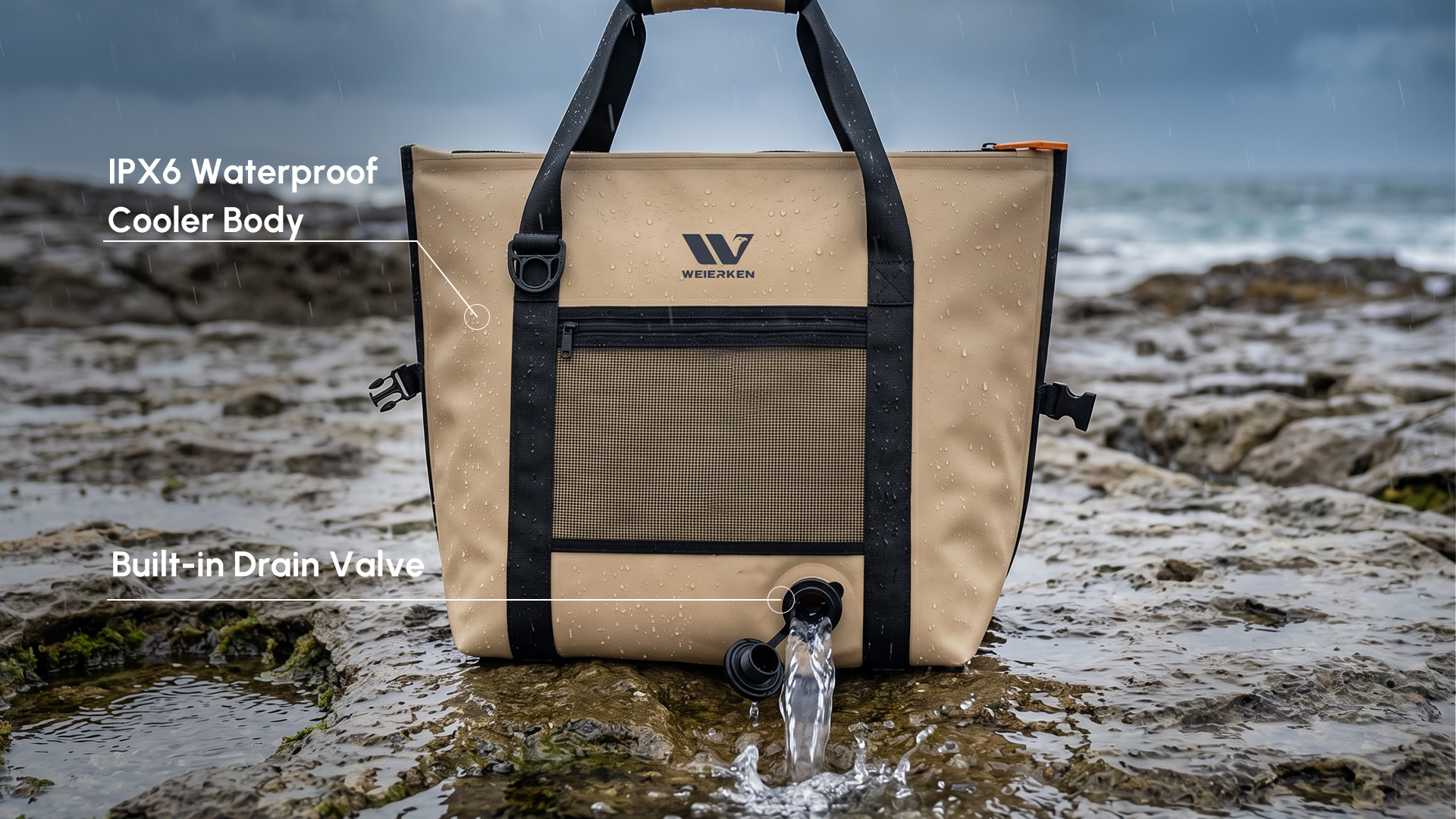
True leak-proofing requires specialized machinery and material science. You cannot achieve a watertight seal with a sewing machine and seam tape.
High-Frequency (HF) Seamless Welding vs. Stitching
Traditional manufacturing punches needle holes through fabric. Even if a factory glues or tapes these seams, thermal contraction and constant moisture break the glue down over time.
An experienced leakproof fish delivery bag supplier relies on high-frequency voltage welding. This process applies radio-frequency energy to melt thermoplastic polyurethane (TPU) or heavy-duty PEVA layers together at a molecular level.
The resulting weld is completely seamless and stronger than the surrounding base material. At Weierken, our welded inner liners undergo 48-hour inverted water tests to ensure zero drops escape under static pressure.
Puncture-Resistant Liner Materials
Standard retail cooler liners use 0.08mm to 0.12mm PVC film that tears easily. Commercial seafood logistics demands industrial-grade polymers.
Reinforced TPU Composite: Offers exceptional tensile strength, flex-crack resistance in freezing temperatures, and strong puncture resistance against sharp bones and spines.
Heavy-Gauge Food-Grade PEVA: Delivers non-toxic, odorless, and crack-resistant performance while meeting stringent FDA and EU food-contact standards.
Woven Ripstop Reinforcement: Cross-hatched structural grids that stop micro-tears from expanding across the liner.
Airtight and Waterproof Zipper Systems
The top opening is the most common failure point when bags shift or tip inside moving vehicles. Standard tooth zippers let water and odor spill out into cargo holds.
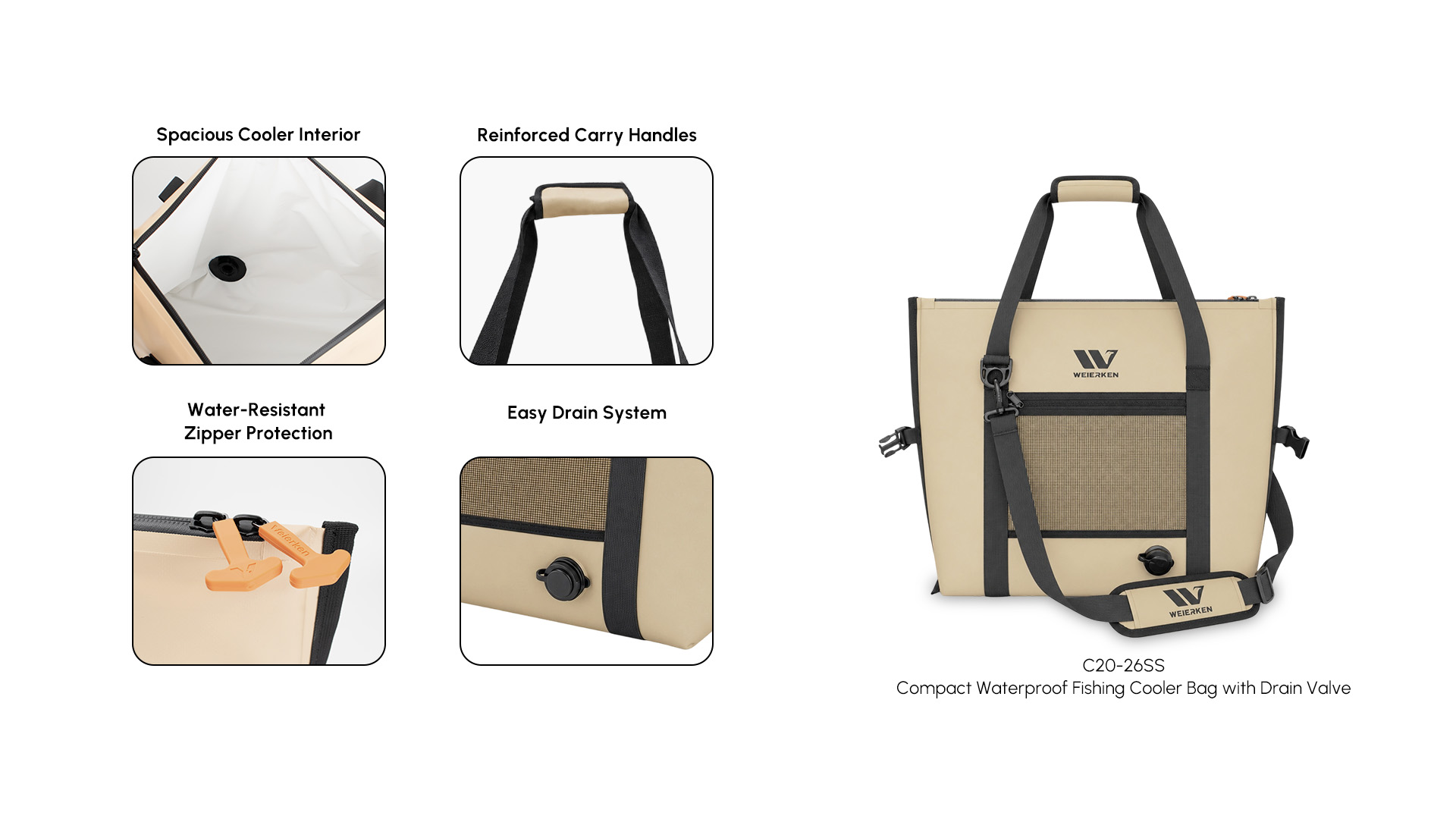
Industrial seafood totes feature airtight, pressure-resistant zippers with rubberized vulcanized tape. These closures lock inside liquid and block fishy smells from escaping into mixed courier loads.
Four Direct-Sourcing Levers to Cut Cold Chain Packaging Costs
Lowering your landed cost requires structural changes in how you source. B2B buyers can lower their procurement expenditure by pulling four specific supply chain levers.
1. Factory-Direct Pricing Without Intermediaries
Bypassing trading companies immediately lowers your unit acquisition cost. Direct access to our engineering floor also speeds up your design iterations.
Weierken operates an independent rapid-sampling workshop. We turn digital design files into physical, functional sample bags in 3 to 7 business days. This rapid turnaround helps you test your cold chain setup without months of delays.
2. The Cambodia Tariff Advantage
Import duties can quickly erode profit margins for North American and European seafood distributors sourcing from Asia. Standard customs duties on imported textile goods often range from 10% to over 25%.
Weierken operates a dual-hub production system across China and Cambodia. Our Cambodia fish cooler bag factory gives buyers access to preferential tariff programs, including GSP and specific bilateral trade treaties.
This manufacturing strategy allows you to slash your landed duty fees legally, delivering direct margin expansion straight to your balance sheet.
3. A 99.5% Quality Pass Rate Eliminates Waste
A low unit price means nothing if 5% of your bags arrive with defective zippers or weak welds. Discarding damaged bags on arrival drives up your true cost per usable unit.
Weierken applies strict quality assurance protocols at every production stage:
Hydrostatic testing on all welded raw liners before final exterior assembly.
Dynamic load-drop tests to verify handle webbing, anchor stitching, and load distribution.
Continuous zipper cycle testing under high-tension loads.
This process controls our bulk production pass rate at 99.5%, preventing batch rejections and costly operational downtime.
4. Turnkey DDP Logistics Management
Coordinating maritime shipping, customs clearances, harbor fees, and inland drayage requires staff time and incurs unexpected port storage fees.
As a full-service DDP commercial cooler bag supplier, Weierken manages the entire transport process. We book containers, handle export paperwork, clear destination customs, prepay local duties, and truck the goods straight to your warehouse doors.
Spatial Engineering: Hidden Savings in Bag Architecture
Freight and storage costs represent a major portion of your packaging budget. Bulky rigid plastic coolers take up valuable space on trucks, ships, and warehouse pallet racks.
Collapsible, Flat-Pack Architecture
Rigid coolers force you to pay to transport empty air. By contrast, collapsible, factory-direct insulated fish bags fold down to a fraction of their working size.
Smart creasing and flexible, closed-cell foam cores allow our large commercial bags to compress flat by up to 70% during storage and transit. This space saving allows you to double the number of units packed per ocean container, cutting your inbound freight cost per bag in half.
Modular, Detachable Liners
In standard cooler bags, a single interior puncture forces you to scrap the entire bag, including the expensive outer shell and carry straps.
Weierken offers a modular design featuring detachable, heat-welded inner liners secured with heavy-duty hook-and-loop tracks. If a puncture occurs, your team can remove and replace the damaged bladder in seconds.
You preserve the durable outer shell, lowering long-term packaging replacement costs across your delivery network.
Compliance Standards and Procurement Verification
When buying waterproof seafood delivery bag wholesale products, compliance paperwork protects your business from customs confiscations and regulatory penalties.
Never place bulk orders with a factory that cannot verify its testing and labor practices. Your supplier should maintain up-to-date documentation for:
Material Safety: REACH, RoHS, and FDA compliance reports proving inner liners are free of BPA, heavy metals, and toxic plasticizers.
Social Accountability: BSCI and SEDEX audit reports confirming fair wages, safe workplaces, and lawful operations.
Recycled Materials: Global Recycled Standard (GRS) certification for brands using post-consumer rPET fabrics to achieve sustainability goals.
Quality Systems: ISO 9001 certified manufacturing facilities ensuring consistent, repeatable output across high-volume production runs.
Frequently Asked Questions (FAQ)
Q1: Why are high-frequency welded bags superior to stitched bags for fresh fish logistics?
A1: Sewing creates thousands of needle punctures that leak water when ice melts inside the bag. High-frequency welding uses electromagnetic energy to fuse polymer surfaces together without holes. This process creates a continuous, molecular-level barrier that guarantees leakproof containment under heavy ice and water loads.
Q2: How does sourcing from your Cambodia factory lower our total procurement cost?
A2: The Cambodia fish cooler bag factory allows international buyers to utilize preferential trade programs, including GSP and duty-free import status in various Western markets. Depending on your destination country, shifting production from regions with heavy punitive duties to Cambodia can reduce import tariffs by 10% to 25%.
Q3: What methods protect your delivery bags from sharp fish fins and spines?
A3: We reinforce our inner liners with high-density, food-contact TPU and heavy-gauge PEVA composites that provide far higher puncture resistance than standard PVC films. For handling aggressive species like snapper or rockfish, we can also add tear-resistant ripstop interliners and protective bottom wear-plates.
Q4: What is the typical turnaround time for custom bag prototypes?
A4: For custom fish delivery bags, our dedicated sampling team builds working, pressurized prototypes within 3 to 7 business days. Complex patterns involving custom hardware or specialized external carry-frames typically take 10 to 14 days.
Q5: Can your factory manufacture delivery bags that fold flat for empty backhaul runs?
A5: Yes. We routinely engineer commercial bags with integrated fold-lines and compression straps. These designs compress down to 30% of their operational volume when empty, cutting down freight costs during transport and saving valuable floor space in delivery vehicles.
Stop Losing Profits to Cold Chain Leaks
Damaged boxes, spoiled fish, and customs delays eat away at your cold-chain margins. Buying low-quality bags from trading companies only leads to higher operating costs down the line.
Cut your procurement expenses at the source. Partnering directly with an experienced leakproof fish delivery bag supplier gives you reliable weld strength, clear tariff advantages, and full DDP shipping convenience.
Whether you manage an urban seafood delivery fleet or distribute wholesale catches across international borders, Weierken delivers the engineering your business requires.
Ready to cut cold chain packaging cost and eliminate shipping leaks? Contact the Weierken engineering team today to request free material swatches, review hydrostatic pressure test data, and receive a competitive factory-direct quote.