

Cold chain logistics for fresh seafood has zero margin for error. A single failed seam or a ruptured liner can turn hundreds of pounds of live lobster, sashimi-grade tuna, or fresh oysters into costly waste.
When ice melts and brine leaks onto outer shipping boxes, cargo gets rejected. Worse, temperature spikes breed bacteria, generating customer claims that destroy commercial reputations. Sourcing the right packaging partner is not just about buying bags; it is about protecting your bottom line.
Finding a competent seafood transport bag OEM requires looking beyond unit pricing. B2B procurement managers must evaluate seam integrity, puncture resistance, international trade compliance, and landed delivery costs.
With over two decades of precision manufacturing in specialized thermal delivery gear, Weierken helps seafood distributors, cold chain logistics operators, and grocery e-commerce brands build dependable, leak-proof transport systems.
Critical Engineering Standards for Seafood Transport Bags
Standard retail cooler bags fail quickly under commercial seafood shipping conditions. Saltwater corrosion, heavy ice slurry, and sharp shell edges demand industrial engineering. A dependable OEM must excel across three distinct technical metrics.
1. 100% Leak-Proof and Odor-Containment Construction
Traditional sewn bags leak. Stitching needles punch thousands of micro-holes through the fabric and lining, allowing melted ice water to seep through under pressure. This liquid soaks corrugated master cartons, leading to pallet collapses during transit.
A qualified leak-proof fish delivery bag OEM solves this problem by eliminating needle holes in the liquid retention zone. Advanced fabrication relies on:
High-Frequency (HF) Welded Seams: Using radio frequency energy to melt and fuse thermoplastic polyurethane (TPU) or heavy-gauge PEVA layers into a single, seamless barrier.
Airtight, Water-Sealing Zippers: Pressure-resistant zipper tracks that prevent brine from spilling out even if the bag tips over inside a delivery van or airfreight container.
Hermetic Odor Trapping: Non-porous interior linings that prevent fish odors from escaping into mixed-cargo vehicles.
2. Multi-Layer Thermal Performance (24 to 72 Hours)
Perishable seafood demands constant temperatures between 0°C and 4°C (32°F to 39°F), while frozen catches require sub-zero stability. Standard foam wraps cannot maintain these tight thresholds over extended delivery routes.
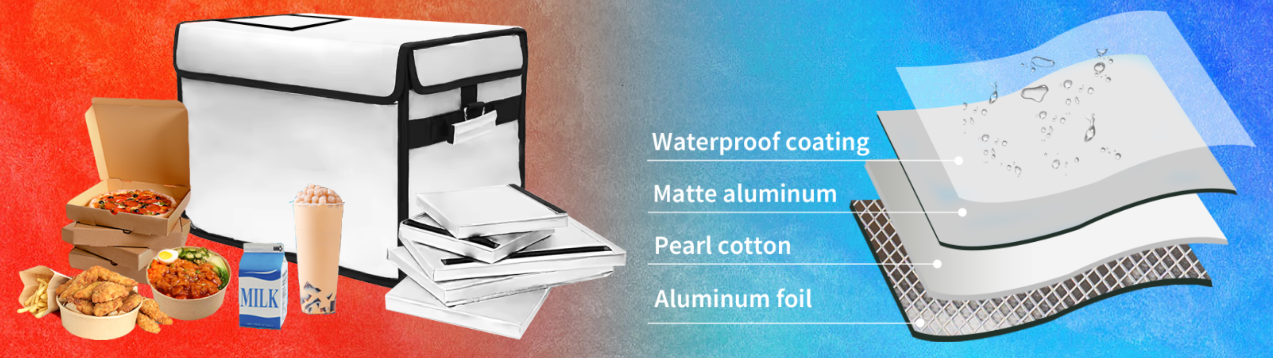
An experienced insulated seafood shipping bags manufacturer constructs composite walls that systematically block heat transfer:
Outer Shell: High-density 600D to 1680D Oxford polyester or heavy-gauge waterproof PVC tarpaulin that blocks wind, moisture, and radiant heat.
Insulation Core: High-density, closed-cell NBR or expanded polyethylene (EPE) foam ranging from 8mm to 20mm in thickness. Closed-cell foam resists moisture absorption, maintaining its R-value even in humid environments.
Reflective Radiant Barrier: Reinforced aluminum thermal film or food-grade silver PEVA that reflects radiant cold back into the storage compartment.
3. Puncture Resistance Against Crustaceans and Bones
Lobster claws, crab spines, and sharp fish fins easily puncture standard thin-film plastic liners. Once the inner skin tears, water enters the insulation core, breeding mold and destroying the bag's thermal capacity.
Your custom cold chain cooler bag for seafood must incorporate tear-resistant ripstop nylon, thick TPU laminates, or puncture-deflecting reinforced bottom trays. These rugged linings withstand direct scrapes from shells, ice scoops, and commercial handling.
Supply Chain Optimization and Tariff Mitigation
Engineering excellence means little if trade barriers, port bottlenecks, or tariff spikes erode your distribution margins. Savvy B2B buyers now structure their supplier selection around manufacturing flexibility and trade lane efficiency.
Dual-Base Manufacturing: China and Cambodia
Geopolitical tensions and unpredictable regional trade shifts make single-origin sourcing risky. A factory shutdown or localized freight surge can paralyze your distribution network right before peak seasonal seafood harvests.
Weierken addresses this challenge through a dual-hub production strategy:
China Facility: Focuses on rapid prototyping, raw material testing, complex custom engineering, and agile medium-run orders.
Cambodia Cooler Bag Factory: Built for high-volume mass production, offering massive throughput for international container-load orders.
This dual-facility system gives procurement heads the agility to shift order volumes based on capacity needs, material availability, and geopolitical developments.
Slashing Landed Costs with Preferential Tariffs
Import duties on sewn goods and polymer-coated bags can reach double digits in North American and European ports. Sourcing directly from an established Cambodia cooler bag factory allows buyers to leverage trade agreements like the Generalized System of Preferences (GSP).
By producing your transport bags in Cambodia, your company can legally lower or eliminate punitive tariffs. This duty relief drops your landed cost per unit, expanding profit margins without sacrificing technical specifications.
Rigid Quality Control: The 99.5% Pass Rate Standard
When you ship hundreds of thousands of dollars in fresh seafood weekly, inconsistent bag quality is unacceptable. A batch of defective seams can trigger mass cargo claims.
A premier seafood transport bag OEM implements multi-stage quality assurance protocols on the factory floor:
24-Hour Hydrostatic Seam Testing: Filling finished production samples with water and checking for moisture seepage or pressure drops over a full day.
Drop and Tensile Testing: Dropping loaded bags from transport heights to confirm that handles, straps, and bottom welds do not burst under shock impact.
Zipper Cycle Testing: Validating that waterproof zippers slide smoothly and seal completely through thousands of open-close cycles.
These strict checks maintain an exceptional 99.5% first-pass yield, preventing defective units from reaching your packing lines.
Stress-Free DDP Logistics Support
Managing freight forwarders, customs brokers, harbor maintenance fees, and import documentation drains company time. Working with a dependable DDP commercial cooler bag supplier eliminates logistical friction.
Under Delivered Duty Paid (DDP) terms, your manufacturing partner manages the entire export process: ocean booking, customs clearance, duty payment, and final delivery to your regional fulfillment warehouse. You receive goods at your domestic facility as easily as buying from a local vendor.
Global Compliance and Audited Operations
Corporate seafood enterprises and supermarket suppliers must meet rigorous environmental and social governance standards. Your contract manufacturing partner must provide clear third-party audit reports.
Ensure your chosen supplier holds current certifications, including:
Social Audits: BSCI and SEDEX compliance, ensuring fair wages, safe factory conditions, and zero child labor.
Material Safety: REACH and FDA-compliant food-contact material testing, confirming linings are non-toxic and free of dangerous plasticizers.
Sustainability: Global Recycled Standard (GRS) and rPET certifications for brands incorporating recycled ocean-bound plastics into their transport bags.
Quality Systems: ISO 9001 certification verifying repeatable, process-driven manufacturing controls.
R&D and Rapid Prototyping: Concept to Mass Production
Every commercial seafood operation maintains distinct shipping parameters. A residential oyster subscription box has different dimensional requirements than a commercial B2B tuna shipping tote. A cookie-cutter catalogue cannot solve custom logistical challenges.
In-House Product Development
A true OEM/ODM partner does not simply assemble provided materials. They maintain internal engineering teams that analyze your cold chain variables: duration of transit, refrigerant choice (wet ice, gel packs, or dry ice), outer shipping dimensions, and stacking configurations.
By understanding thermal decay rates and vehicle space optimization, the R&D team can recommend lighter, more compressible fabrics that lower shipping freight without compromising temperature stability.
Rapid Prototyping Capabilities
Fast market launches demand rapid sampling. Waiting weeks for an initial prototype delays distribution schedules and burns capital.
Advanced sample centers can translate client technical drawings or reference bags into working, leak-proof prototypes within 3 to 7 business days. This speed allows logistics engineers to conduct real-world cold retention stress tests, refine internal sizing, and finalize branding well before production runs start.
Building a Long-Term Strategic Manufacturing Partnership
Contract manufacturing works best when your supplier functions as an extension of your internal operational team. Cold chain logistics needs open communication, clear production milestones, and continuous technical improvement.
Weierken works directly with logistics directors and brand managers from early design reviews through bulk delivery. Clear English-language communication prevents misunderstandings regarding material gauges, printing tolerances, and sealing methods.
Transparent milestone reporting gives you visual updates across raw material procurement, high-frequency tooling setup, bulk production runs, and final container stuffing. You retain complete visibility over your supply line at every stage.
Frequently Asked Questions (FAQ)
Q1: What is the minimum order quantity (MOQ) for a custom seafood transport bag OEM project?
A1: Custom OEM projects typically require an MOQ of 500 to 1,000 units, depending on fabric specifications, customized colorways, and proprietary tooling requirements. For standardized base patterns with custom logo application, smaller trial batches can often be arranged to support cold chain transit validation.
Q2: Can your factory manufacture bags compatible with dry ice usage?
A2: Yes. Dry ice reaches temperatures of -78.5°C (-109.3°F), which makes ordinary PVC linings brittle and prone to cracking. We engineer dry ice-compatible bags using cold-crack-resistant TPU coatings, specialized venting valves to safely exhaust expanding carbon dioxide gas, and high-density cryogenic foam insulation.
Q3: How do you verify leak-proof performance before shipping an order?
A3: Every production batch undergoes strict hydrostatic testing. Quality inspectors fill random sample units with water and colored dye, placing them on clean paper test sheets for 24 hours under static load. Any seam seepage, moisture sweating, or zipper leakage results in immediate batch rejection and tool recalibration.
Q4: How does sourcing from your Cambodia factory benefit American and European buyers?
A4: Sourcing from Cambodia helps international buyers avoid high country-specific tariffs often levied on Chinese-manufactured sewn and heat-welded goods. Cambodia benefits from preferential trade access under programs like GSP, resulting in lower duty rates and significantly reduced overall landed costs.
Q5: What is the typical lead time from prototype approval to mass production delivery?
A5: Once a functional sample is approved, raw material preparation and bulk manufacturing typically take 30 to 45 days, depending on order volume. Shipping via ocean freight generally requires an additional 15 to 30 days depending on the final destination port.
Secure Your Cold Chain with Weierken
Selecting the right seafood transport bag OEM determines whether your valuable shipments arrive kitchen-ready or end up spoiled in a claims dispute. Cheap construction and weak seams quickly turn into expensive liabilities.
Protect your catch, defend your brand reputation, and trim tariff costs with production backed by twenty years of manufacturing mastery. Whether you require collapsible airfreight seafood totes, puncture-proof crustacean bags, or last-mile urban fish delivery backpacks, our engineering team is ready to assist.
Ready to strengthen your cold chain logistics? Contact the Weierken engineering team today to review your technical requirements, request a physical prototype, and receive a competitive dual-hub manufacturing quote.