


Outdoor enthusiasts demand gear that survives harsh weather and rugged terrain. Sourcing high-quality equipment requires partnering with a highly competent trekking bag factory. Buyers often make the mistake of focusing purely on aesthetics rather than the engineering behind the product. True quality relies entirely on durable materials and rigorous construction methods.
Over the years, the manufacturing experts at weierken have seen how poor material choices ruin otherwise excellent bag designs. A factory must understand how fabrics, hardware, and structural designs interact under extreme stress. Finding a reliable Hiking backpack manufacturer means looking closely at their material science and testing protocols. Here is a detailed breakdown of the technical elements you must verify when selecting your production partner.
1. The Ergonomic Suspension System: Making Heavy Loads Feel Light
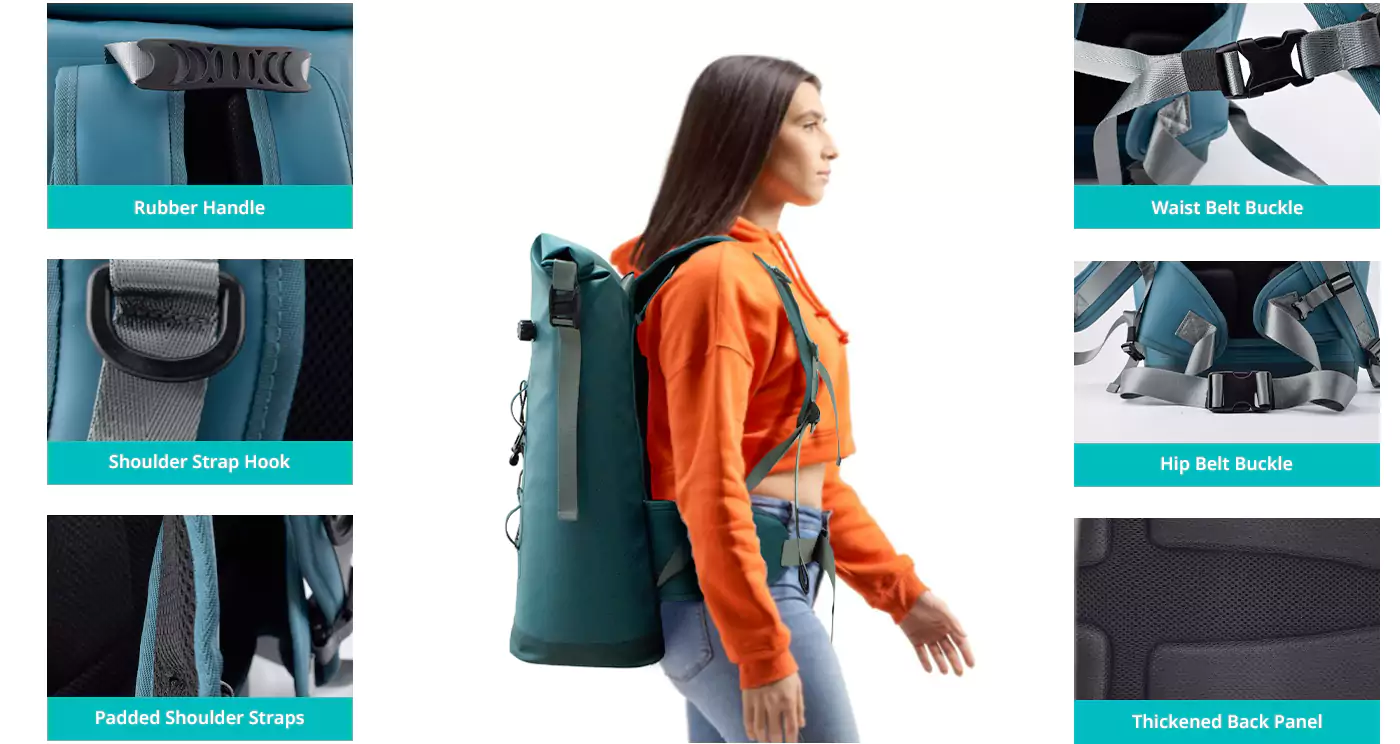
The comfort of a hiking bag depends entirely on how it transfers weight from the shoulders to the hips. A premium trekking bag factory invests heavily in ergonomic suspension design. This prevents user fatigue during long wilderness expeditions.
A proper Internal frame backpack utilizes pre-formed aluminum stays or advanced carbon fiber rods. These support frames mimic the natural curve of the human spine. High-end models feature removable and moldable stays that easily adapt to different torso lengths.
The back panel structure also plays a critical role in user comfort. Manufacturers use high-density EVA molded foam with deep ventilation channels. Heavy-duty bags often utilize a suspended mesh back panel supported by a spring steel frame. This design physically separates the bag from the user’s back, allowing maximum airflow.
Shoulder straps and hip belts handle the majority of the friction and weight. Consider these specific construction details:
- S-shaped shoulder straps lined with high-rebound sponge to reduce neck compression.
- Adjustable hip belt angles, typically ranging between 15 and 30 degrees.
- High-density foam padding in the hip belt to successfully transfer 80% of the load to the user’s hips.
Always ask your trekking bag factory to provide simulated load-bearing data. For example, a quality test should show less than a 5% shoulder strap deformation rate after carrying a 15kg load for 10 kilometers.
2. Fabric Tear Strength: Data is the Only Standard
A common misconception is that thicker backpack fabric automatically equals better durability. In reality, a top trekking bag factory places specific high-performance materials only in critical stress zones. This strategic placement maximizes durability while minimizing overall weight.
Different zones of the bag require different fabric properties. High-friction areas like the base need extreme abrasion resistance. Meanwhile, the upper body requires lightweight but tear-resistant materials. Here are the most common high-performance fabrics used by professionals:
- Cordura fabric (500D or 1000D Nylon 6.6): The absolute champion of abrasion resistance, used heavily on the bag’s bottom panel.
- Ripstop nylon: This fabric features a reinforced grid structure. If a puncture occurs, the grid prevents the tear from spreading further.
- Dyneema Composite Fabric: Made from ultra-high-molecular-weight polyethylene. It boasts a strength-to-weight ratio fifteen times greater than steel.
Do not just trust the name of the fabric on a spec sheet. Demand actual third-party physical performance reports from your trekking bag factory. The data serves as the only objective standard for quality.
Look for these specific ASTM testing benchmarks:
- Warp tear strength must exceed 35N, and weft tear strength must exceed 30N.
- Martindale abrasion resistance tests should pass 50,000 continuous cycles.
- Tensile strength at major webbing connection points must endure over 200kgf.
3. Load-Bearing Test Standards: Simulating Real-World Extremes
A qualified hiking backpack must survive a grueling series of dynamic and static physical tests. A professional trekking bag factory actively tries to destroy their prototypes to find structural weaknesses. This rigorous testing phase ensures the final product will not fail on a remote mountain trail.
Static load-bearing tests form the baseline of quality control. The factory fills the bag with sandbags equal to its rated capacity plus an additional 30%. They then hang the bag by its main straps for 24 uninterrupted hours. A passing grade means zero split seams, zero broken buckles, and absolutely no webbing slippage.
Dynamic load testing simulates the bouncing motion of a hiker walking over rough terrain. Engineers strap the fully loaded bag onto a mechanical vibration table. They run the machine at a frequency of 2 to 5Hz with a 30mm amplitude. The bag must endure 20,000 continuous cycles without any functional failure.
Factories also conduct localized tension tests on isolated attachment points. These points include:
- Top grab handles and external compression straps.
- Ice axe loops and trekking pole attachments.
- The factory applies a sudden 100kg pulling force to these points for 10 seconds.
Always ask your Hiking backpack manufacturer to provide video evidence of these tests. At weierken, we routinely supply our B2B clients with detailed batch inspection reports to guarantee complete production transparency.
4. Comprehensive Waterproofing: From Fabrics to Seams
Waterproofing an outdoor bag requires a complete systemic approach, not just a simple chemical spray. A capable trekking bag factory engineers waterproofing at both the material and structural levels. Heavy rain can quickly ruin expensive electronic gear and sleeping bags, so complete protection is non-negotiable.
Material-level waterproofing depends on the exact coating or lamination applied to the nylon base. Standard PU (Polyurethane) coatings usually offer a hydrostatic head rating of 1000 to 2000mm. This easily handles light showers and splashes. For heavy expeditions, factories use TPU films that withstand over 5000mm of water pressure.
Some advanced materials, like X-Pac and Dyneema Composite, are inherently waterproof. Water cannot physically pass through their laminated layers. However, water will always find its way through needle holes if the factory neglects structural waterproofing.
To combat seam leakage, a premium trekking bag factory applies precise structural defenses. They utilize:
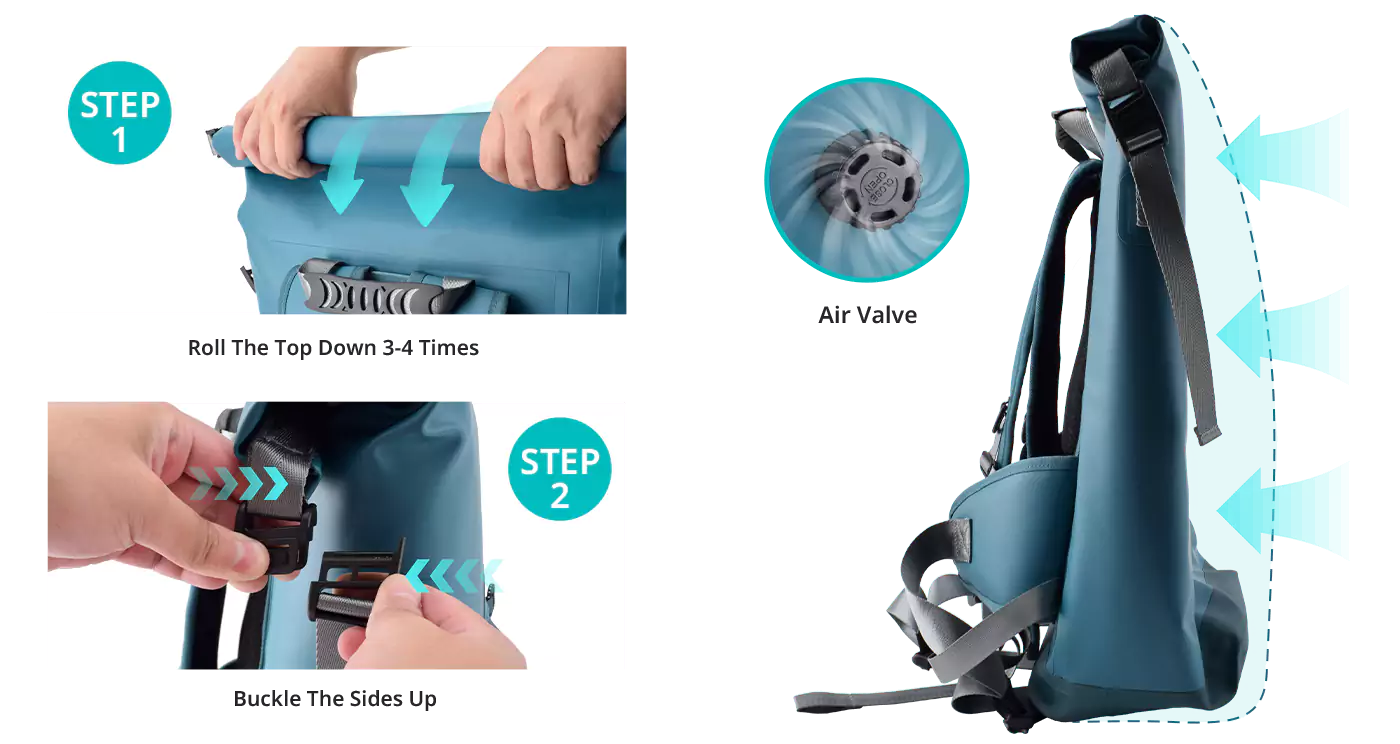
- Roll-top closures that block moisture effectively, similar to marine dry bags.
- YKK AquaGuard zippers featuring an exterior polyurethane film over the zipper teeth.
- Heat-sealed seam tape applied over every single interior stitch line to seal needle punctures.
Request formal shower tests from your supplier. The factory should simulate a heavy downpour for one straight hour. They place dry paper towels inside the bag during the test; the towels must remain perfectly dry.
5. Lightweight Engineering: Saving Grams Without Sacrificing Strength
Modern hikers obsess over base weight. They want the lightest gear possible. However, shaving weight through cheap shortcuts ruins the bag’s integrity. A dedicated trekking bag factory achieves lightweight designs through smart engineering and structural optimization.
Factories optimize fabric weight by utilizing high-tenacity yarns. For example, replacing standard 420D nylon with high-tenacity 210D Robic nylon reduces fabric weight by 20%. Amazingly, the tear strength remains nearly identical. This smart substitution significantly lowers the overall weight of a large Internal frame backpack.
Hardware optimization also cuts unnecessary weight. Top manufacturers select hollowed-out buckles and minimalist D-rings from premium brands like Woojin. They also use half-width webbing straps and laser-cut back panel mesh to eliminate excess plastic and fabric.
A sophisticated trekking bag factory also applies structural subtraction. This means removing non-essential dividers and using seamless welding technology to reduce bulky reinforcement patches.
Ask your manufacturing partner to provide a detailed Gram per Square Meter (GSM) analysis sheet. This document clearly identifies which sections act as heavy-duty abrasion zones and which sections serve as optimized weight-reduction zones.
Partner With an Expert Manufacturing Team
Building a world-class outdoor backpack requires a deep understanding of physics, material science, and modern production technology. Sourcing the right trekking bag factory allows you to deliver exceptional products that your customers will trust in the wild. Focus on suppliers who gladly share their testing data and manufacturing processes.
Brands like weierken understand that B2B relationships thrive on transparency and technical excellence. We help our clients navigate complex fabric choices, optimize their tech packs, and strictly control mass production quality. You do not have to compromise on durability to achieve your target margins.
Are you ready to develop a high-performance outdoor line? Our engineering team is ready to review your designs and provide actionable manufacturing feedback.
Send us an inquiry today to request a detailed quote, discuss custom materials, and start your prototyping phase.
Frequently Asked Questions (FAQ)
Q1: What is the main advantage of using an Internal frame backpack over a frameless design?
A: An Internal frame backpack uses aluminum or carbon fiber stays to transfer the load weight directly to the user’s hips. This greatly reduces shoulder fatigue and increases stability on uneven terrain. Frameless bags are much lighter but become very uncomfortable if you carry loads heavier than 10 to 12 kilograms.
Q2: Why do manufacturers use Cordura fabric specifically on the bottom of the bag?
A: Hikers frequently drop or drag their bags on sharp rocks, dirt, and abrasive concrete. Cordura fabric offers exceptional abrasion resistance compared to standard nylon. Placing this heavy-duty material exclusively on the bottom panel protects the bag’s highest wear point while keeping the upper sections lighter.
Q3: How does a trekking bag factory prevent water from leaking through the sewn seams?
A: Even if the fabric itself is waterproof, the sewing needles punch thousands of tiny holes into the material during assembly. A professional trekking bag factory runs heat-sealing machines over the interior seams. This process melts specialized waterproof tape over the stitches, creating a completely watertight barrier.
Q4: What does the term “Ripstop nylon” actually mean?
A: Ripstop nylon is a specially woven fabric that features a distinct grid pattern of thicker reinforcement threads. If a sharp branch punctures the fabric on a trail, the tear will stop as soon as it hits one of these thicker grid lines. This prevents small holes from destroying the entire panel.
Q5: Can I request a completely custom back panel mold for my brand’s backpacks?
A: Yes, a capable Hiking backpack manufacturer can design and press custom EVA foam back panels. You can specify the exact pattern of the ventilation channels and even press your brand’s logo directly into the foam. Keep in mind that custom molded panels usually require a specific mold fee and a higher Minimum Order Quantity (MOQ).


