The bakery and food delivery sectors are undergoing a quiet revolution. It is no longer enough to simply deliver a cake in one piece; the packaging itself must tell a story of responsibility. Businesses today face mounting pressure to reduce their environmental footprint, and this extends deeply into their supply chain.
Finding a cake thermal bag distributor who understands this shift is crucial. It is not just about buying a bag anymore. It is about finding a partner who can engineer a sustainable solution from the ground up.
Companies like weierken are leading this charge. They are moving beyond simple transaction models to offer deep value in R&D and green manufacturing. This article explores how modern distributors are transforming the landscape of insulated packaging through specific, actionable innovations.
I. ODM-Based Eco-Material Libraries and Joint Development
The traditional sourcing model often leaves buyers guessing about material properties. You might want something “green,” but defining what that means can be difficult. A capable cake thermal bag distributor now transforms their internal R&D capabilities into a service you can use directly.
Verified Eco-Material Solution Packages
Instead of vague promises, top-tier distributors provide access to a comprehensive, verified material library. This allows your design team to make informed decisions during the ODM (Original Design Manufacturer) phase.
- Bio-based Linings: Options derived from corn starch or PLA that replace traditional aluminum foil while maintaining thermal retention.
- Recycled Fabrics: Exterior materials made from rPET (recycled plastic bottles) with verified GRS (Global Recycled Standard) certification.
- Plant-Based Dyes: Coloring agents that reduce heavy metal pollution in water systems.
A professional cake thermal bag distributor will provide detailed comparison data. You will see side-by-side metrics regarding thermal performance, cost implications, and international certifications for each material combination.
Joint Testing and Verification
Adopting new materials carries risk. Will a compostable film hold up under the weight of a heavy wedding cake? Will it survive a humid delivery run?
Innovative distributors share this risk with you. Their ODM teams offer:
- Small-Batch Prototyping: Creating limited runs to test material durability in real-world scenarios before mass production.
- Compliance Testing: Handling third-party lab tests (like FDA or EU food safety standards) to ensure the new eco-materials are safe for food contact.
Exclusive Eco-Formula Development
One size rarely fits all in the premium bakery market. Your brand might need a specific texture or a distinct shade of green that standard swatches cannot match.
Development teams at companies like weierken can co-develop exclusive material formulas. This might involve adjusting the blend of recycled cotton and polyester to achieve a softer hand-feel or engineering a custom coating that improves water resistance without using harmful fluorocarbons. This balance of durability, safety, and ecology is the hallmark of a modern cake thermal bag distributor.
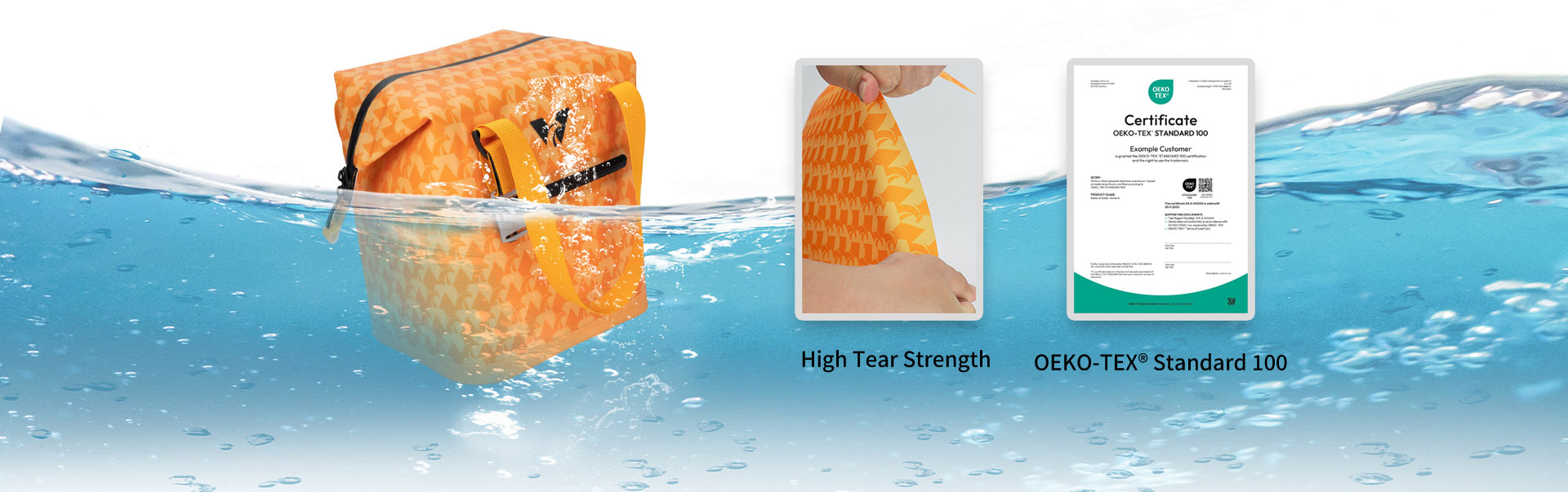
II. OEM Manufacturing Committed to Clean Production
When you choose an OEM (Original Equipment Manufacturer) partner, their factory becomes an extension of your brand. If their smokestacks are black, your “green” image is compromised.
A responsible cake thermal bag distributor ensures that the manufacturing process is as clean as the product itself.
Transparent Green Factory Audits
Trust requires transparency. Leading distributors now practice “open kitchen” policies regarding their production facilities.
- Certification Access: They openly display and allow audits for certifications like LEED (Leadership in Energy and Environmental Design) or ISO 14001.
- Resource Management: You can review data on how the factory manages water usage and how they filter waste discharge.
Low-Carbon Process Integration
Clean manufacturing should not be an expensive add-on. It should be the standard. When executing your OEM orders, a forward-thinking cake thermal bag distributor integrates low-carbon technologies into the workflow automatically.
- Waterless Printing: Utilizing digital or heat-transfer printing techniques that eliminate wastewater from the dyeing process.
- Renewable Energy: Running production lines partially or fully on solar or wind power generated on-site.
Eco-Friendly Packaging and Logistics
The sustainability chain often breaks at the very end—shipping. You might have a biodegradable bag wrapped in three layers of virgin plastic.
Your distributor should offer clear OEM options for the final stage:
- Plastic-Free Packing: Using paper bands or biodegradable polybags for individual units.
- optimized Stacking: Designing cartons to maximize container space, reducing the carbon footprint per unit during transport.
- Carbon-Neutral Logistics: Partnering with freight forwarders who offset emissions.
III. Full Lifecycle Carbon Data Services in ODM/OEM Models
Sustainability needs math, not just marketing. To make genuine claims in your Corporate Social Responsibility (CSR) reports, you need hard data. An advanced cake thermal bag distributor integrates data analytics into their customization services.
ODM Carbon Footprint Prediction
Decisions made during the design phase determine 80% of a product’s environmental impact.
During the ODM stage, your partner should provide a predictive model. If you switch from a nylon zipper to a recycled polyester zipper, how much CO2 is saved? If you reduce the insulation thickness by 1mm but use a higher density foam, does the carbon footprint drop?
This modeling helps you make design choices that align with your corporate emissions targets before a single bag is sewn.
Batch-Specific OEM Carbon Reports
Averages are not good enough for detailed ESG reporting. A top-tier cake thermal bag distributor can provide a carbon footprint report for every specific batch they manufacture for you.
- Real-Time Data: Calculations based on the actual electricity mix used during that production week.
- Material Tracing: specific emission data from the raw material suppliers used for that specific order.
Digital Traceability and the “Green ID”
Imagine a QR code sewn into your thermal bag. When scanned, it reveals the entire journey of that product.
Distributors like weierken are exploring digital linkage where ODM design data and OEM production data combine. This generates a unique “Green ID” for the product. Your customers can scan the bag to see:
- Where the materials came from.
- The renewable energy used to make it.
- Instructions on how to recycle it.

IV. Circular Economy-Oriented OEM/ODM Collaborative Design
The old model of “take-make-waste” is obsolete. The most sophisticated service a cake thermal bag distributor can offer is a strategy for the end of the product’s life.
Design for Recycling (DfR)
Recycling is often impossible because materials are glued together permanently. A circular-focused ODM approach prioritizes disassembly.
- Modular Design: Creating insulation layers that can be pulled out and recycled separately from the outer fabric.
- Material Identification: Clearly labeling every component (zippers, handles, linings) so recycling centers know exactly what they are handling.
- Mono-Material Construction: Designing the entire bag from a single polymer family (like 100% Polyester) so it does not need to be separated at all.
OEM Support for “Product as a Service”
Some innovative bakeries and logistics companies are moving to rental or subscription models for their thermal gear. They need bags that last longer and can be repaired.
Your cake thermal bag distributor can support this by:
- Durability Engineering: Manufacturing bags with reinforced stress points specifically for high-rotation use.
- Refurbishment Services: Providing backend support to repair torn handles or replace worn zippers, extending the asset’s life.
Closed-Loop Material Recovery
The ultimate goal is a closed loop. Leading distributors are beginning to establish retrieval systems. They can take back your retired thermal bags, process them at their facility, and turn them into raw materials.
This reclaimed material is then fed back into the ODM process to create your next generation of products. This creates a brand-exclusive material cycle, ensuring that your old bags become your new bags, minimizing waste entirely.
The role of a cake thermal bag distributor has evolved. It is no longer just about securing the lowest price for a bulk order. It is about engaging in a strategic partnership that enhances your brand’s sustainability credentials.
From providing verified libraries of eco-materials to offering granular carbon data and enabling circular economy designs, distributors like weierken are setting a new standard. They prove that industrial manufacturing can be both efficient and responsible.
As you look for your next supplier, ask them about their carbon data capabilities and their closed-loop strategies. The answers will tell you if they are ready to help you build a future-proof brand.
Frequently Asked Questions (FAQ)
1. How do I know if the “eco-friendly” materials provided by a cake thermal bag distributor are genuine?
A reputable cake thermal bag distributor will always provide certifications to back up their claims. Look for standards such as GRS (Global Recycled Standard) for recycled fabrics, or OK Compost/BPI certifications for biodegradable materials. Companies like weierken provide these documents alongside their material library for full transparency.
2. Does choosing eco-friendly materials for thermal bags significantly increase the cost?
While some advanced bio-materials can carry a premium, the gap is closing. Furthermore, a skilled cake thermal bag distributor can help you engineer the product to balance costs. For example, using a mono-material design can reduce assembly costs, offsetting the price of the raw material.
3. Can you customize the insulation performance in eco-friendly bags?
Yes. The “eco” label refers to the material source or disposal method, not a lack of performance. Through ODM services, a cake thermal bag distributor can adjust foam density and lining thickness to meet specific thermal retention times (e.g., keeping cakes cool for 4 hours) while still using sustainable materials.
4. What is the minimum order quantity (MOQ) for a custom eco-friendly design?
MOQs vary depending on the complexity of the materials. Standard recycled fabrics often have lower MOQs because the distributor stocks them. However, if you require a custom-developed bio-based formula, the cake thermal bag distributor may require a higher volume to justify the material production run. It is best to consult with the sales team for specifics.
5. How does the “Green ID” or digital traceability benefit my bakery business?
It serves as a powerful marketing tool. By allowing your customers to scan a QR code and see the carbon journey of the bag, you validate your brand’s commitment to the planet. It turns a simple cake thermal bag distributor purchase into a customer loyalty asset, proving you are not just “greenwashing.”
Ready to transform your packaging with sustainable innovation?
Do not let your supply chain lag behind. Contact us today to explore our eco-material libraries and discuss how we can engineer the perfect low-carbon thermal solution for your brand.
[Click here to send your inquiry to weierken]