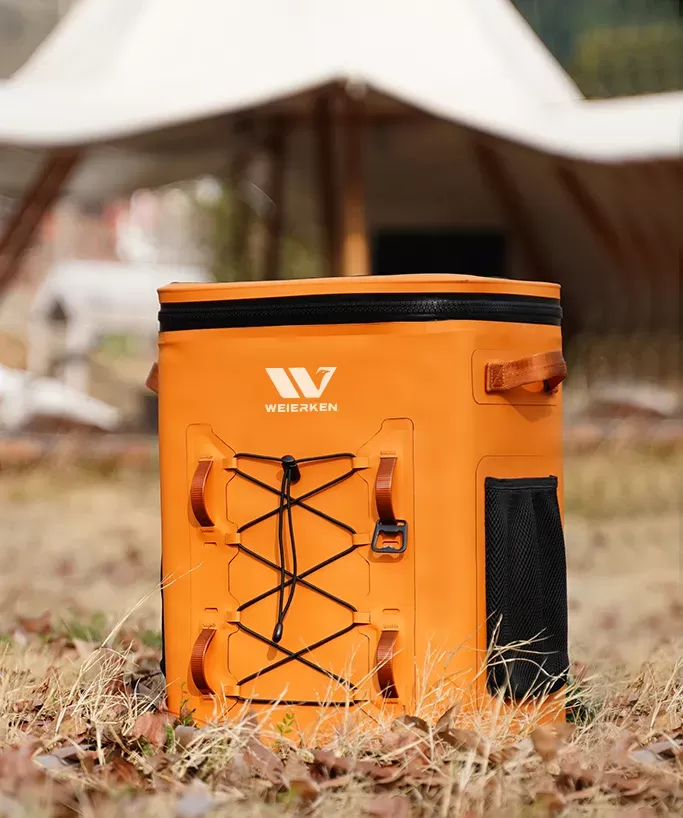

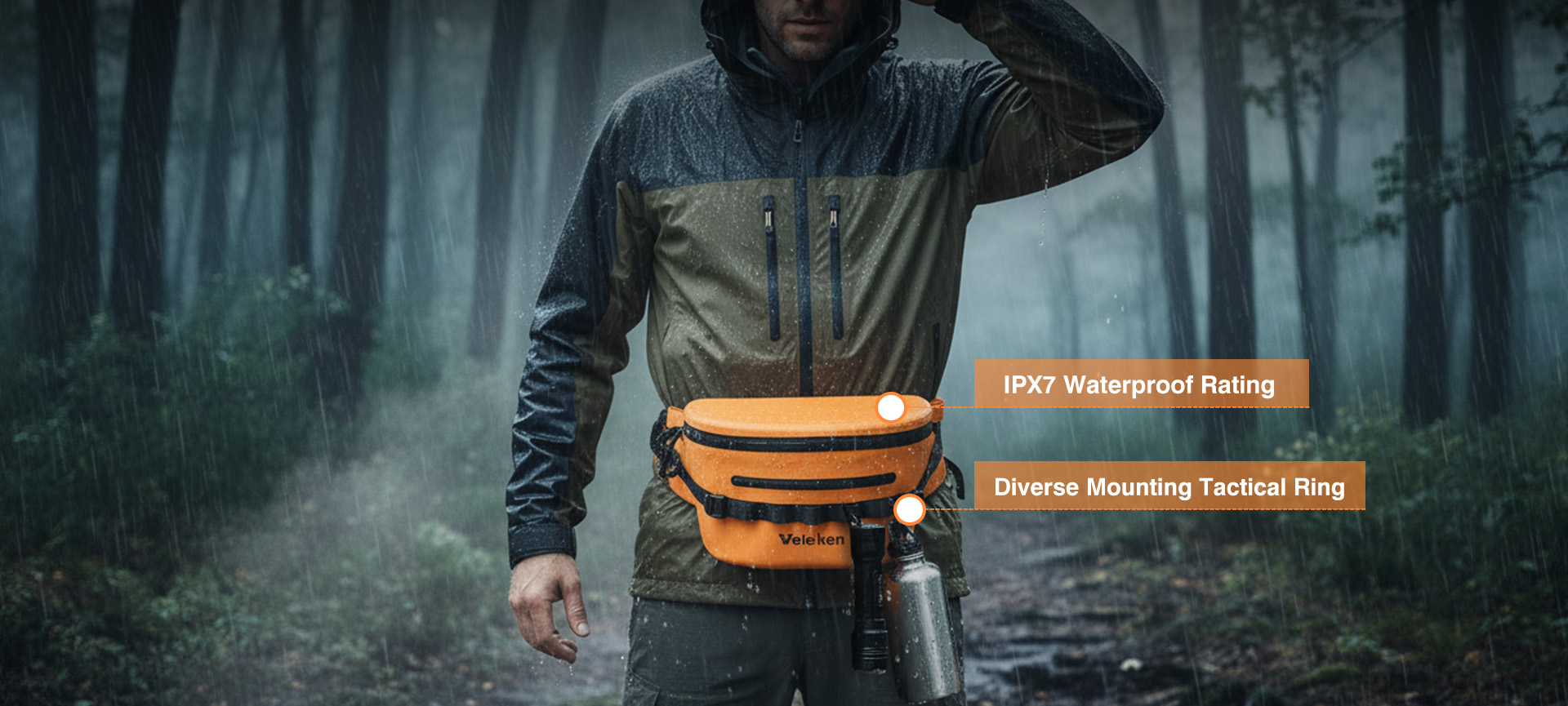
Fishing environments test gear to its absolute limits. Salt spray, scorching UV rays, sharp treble hooks, and abrasive rocks constantly wear down equipment. A fishing tool pouch or plier holster does far more than hold tools. It protects expensive split-ring pliers, braid cutters, and lip grippers from rust while keeping them within arm's reach during fast-action fishing.
For brand managers and outdoor gear procurement specialists, building a reliable product line requires strict material standards and precise manufacturing. Returning defective gear damages brand reputation and eats into profit margins. Partnering with the right manufacturer solves these problems before production even starts.
With over 20 years of technical bag manufacturing experience, Weierken created this engineering guide. Below, we break down fabric choices, corrosion-resistant hardware standards, and multi-country production strategies for your next fishing tool pouch OEM project.
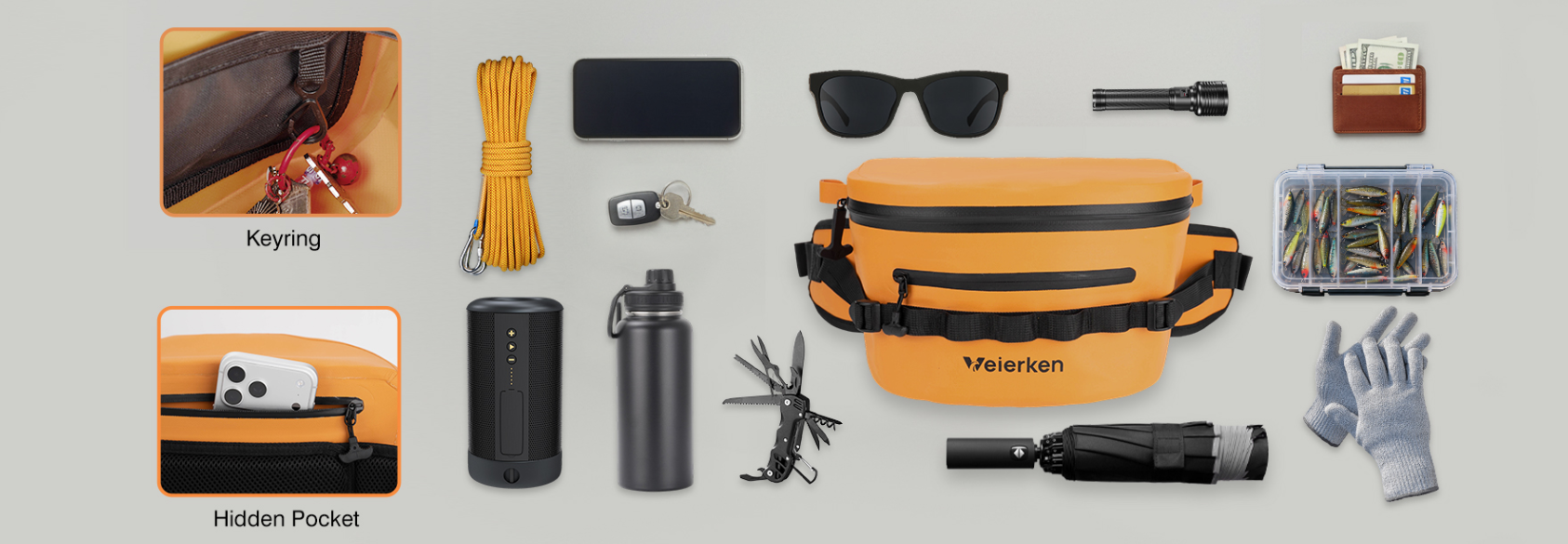
1. Core Material Selection for Custom Fishing Tool Pouches
Anglers demand gear that withstands puncture, abrasion, and continuous moisture without adding unnecessary bulk. Choosing the right base textile forms the foundation of product longevity. Here is how the most reliable outdoor textiles compare for tackle and tool storage.
| Fabric Type | Key Performance Strengths | Ideal Product Applications | Weierken Engineering Recommendation |
|---|---|---|---|
| 1000D / 500D Cordura / Nylon (PU Coated) | Superior tear resistance, extreme tensile strength, classic tactical finish. | Heavy-duty plier sheaths, wading belt pouches, technical lure bags. | Add reinforced bottom panels and high-density edge binding to stop fraying. |
| 840D / 420D TPU Laminated Tarpaulin | 100% waterproof barrier, mud-resistant, easy to wipe clean after saltwater use. | Submersible tool holders, kayak deck pouches, waterproof tackle organizers. | Assemble using seamless radio-frequency (RF) high-frequency welding. |
| Heavy-Duty Hypalon (CSPE) | Immunity to saltwater rot, extreme flex fatigue resistance, UV stable. | High-wear friction zones, plier jaw insert linings, MOLLE anchor points. | Use precision laser cutting and multi-layer reinforcement stitching. |
| Compression Molded EVA Shell | Semi-rigid impact protection, crush resistance, holds three-dimensional shapes. | Electronic fish-finder accessory cases, premium molded lure and plier holsters. | Laminate with waterproof ripstop nylon and deboss 3D custom brand logos. |
Cordura and Ballistic Nylon for Heavy Abrasion
High-denier nylon remains an industry standard for rugged fishing pouches. A 500D or 1000D nylon fabric treated with a polyurethane (PU) back-coating provides excellent structure while resisting scuffs against boat gunwales and rocks. For belt-mounted holsters that face constant tool insertion, heavy nylon prevents tools from poking through the side walls.
TPU Laminated Fabrics for Complete Water Protection
Thermoplastic polyurethane (TPU) coatings outperform traditional PVC in every marine test. TPU remains flexible in sub-freezing weather, resists degradation from fish oils, and emits fewer harmful chemicals. When bonded to 420D or 840D nylon, TPU allows for seamless welded seams that keep inner compartments dry even when submerged.
Hypalon Reinforcements for High-Stress Touchpoints
Synthetic rubber compounds like Hypalon provide unmatched grip and cut resistance. Placing Hypalon patches where sharp plier jaws rest stops steel edges from cutting standard fabrics. It also acts as a heavy-duty anchor for D-rings and external lanyard loops.
2. Hardware and Engineering Standards for Saltwater Resistance
Fabric represents only half of the durability equation. Hardware failures account for a major portion of warranty returns in the fishing tackle sector. A single rusted rivet or jammed zipper ruins an otherwise well-built product. An experienced fishing tool pouch OEM factory must enforce strict marine-grade hardware standards.
Marine-Grade Zippers and Fasteners
Salt crystals quickly destroy standard metal zipper sliders. Seawater causes galvanic corrosion, freezing metal teeth within weeks of use. To avoid this, technical fishing bags rely on specific zipper styles:
Water-Repellent Coil Zippers: YKK AquaGuard zippers feature a polyurethane laminate that repels ocean spray and rain.
Molded Plastic Teeth: Heavy-duty POM resin zippers cannot rust, making them ideal for exterior tackle compartments.
Anodized Aluminum and POM Hardware: Replace cheap alloy clips with high-tensile polyoxymethylene (POM) plastic or hard-anodized marine aluminum clips.
Salt-Spray Testing: All metal components must clear ASTM B117 salt-spray testing for a minimum of 72 to 96 hours without signs of oxidation.
Puncture Protection and Rapid Drainage
Trapped water accelerates tool corrosion. If an angler wades into the surf, their pouch inevitably fills with water. Quality custom manufacturing integrates smart drainage solutions:
Mesh and Grommet Drain Ports: Marine-grade brass or stainless steel drainage grommets at the base allow water to exit instantly.
Puncture-Proof Internal Liners: High-density polyethylene (HDPE) sheets or thick PVC backer boards sewn inside the pouch block hook points and sharp jaws from penetrating toward the user's body.
Quick-Drying Mesh Accents: Rubberized, non-absorbent mesh pockets store terminal tackle and leader spools without absorbing water or odors.
Structural Reinforcement and Stitching Integrity
Standard polyester sewing threads deteriorate under direct sunlight and marine moisture. We utilize bonded nylon threads with UV inhibitors to prevent thread rot. Factory sewing operators apply high-density bar-tack stitching across belt loops, D-ring tabs, and MOLLE webbing. Every primary load-bearing anchor point withstands pull tests exceeding 20 kilograms, preventing gear loss in the field.
3. Why Global Brands Partner with Weierken for Fishing Tool Pouch OEM
Scaling a functional fishing brand requires more than basic assembly lines. Brands need a manufacturing partner that combines technical sample making, raw material sourcing, and flexible international logistics. Weierken supports worldwide fishing brands with integrated design and manufacturing capabilities.
Dual-Base Manufacturing Network: China and Cambodia
Relying on a single manufacturing origin exposes brands to sudden supply disruptions and heavy tariff burdens. Weierken operates production facilities in both China and Cambodia, giving clients several operational advantages:
Tariff Optimization: Our Cambodia facility allows qualifying shipments to enter major Western markets under preferential duty programs, lowering overall landed costs.
Agile Prototyping in China: Our primary technical center in China handles rapid material sourcing, complex tooling development, and precision sampling.
Risk Mitigation: If regional production constraints arise, we seamlessly shift volume orders between facilities to preserve your delivery schedules.
Strict Quality Assurance and Factory Compliance
Product defects cost money and burn customer goodwill. Weierken enforces multi-stage quality control from raw material intake to final carton packaging. Our internal quality control teams conduct raw fabric tensile tests, colorfastness evaluations, seam pull tests, and visual checks on 100% of finished goods.
Our production facilities maintain full compliance with international ethical and technical standards, including ISO 9001, BSCI, SEDEX, and REACH. We also hold GRS (Global Recycled Standard) certification, allowing us to produce eco-friendly fishing bags made with certified rPET fabrics.
Rapid Sampling and Technical Problem-Solving
Turning a 2D sketch into a functional, market-ready sample requires deep structural expertise. Our dedicated prototype room delivers refined sample pouches within 12 to 30 days. Whether you need seamless RF welded seams, custom magnetic closures, or molded EVA tool holsters, our engineering team refines the design to streamline mass production and reduce scrap rates.
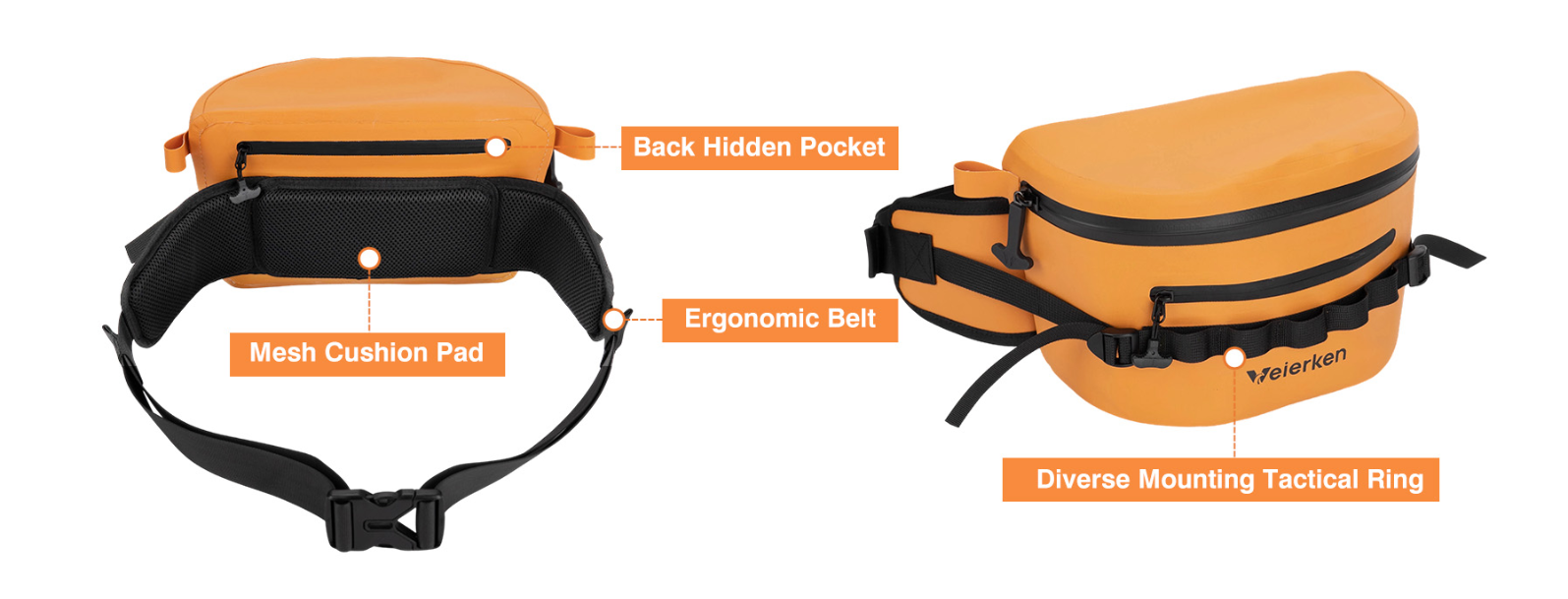
4. Step-by-Step OEM Development Workflow
We make custom outdoor gear manufacturing straightforward and transparent. Our proven development cycle keeps your project on schedule from concept to final delivery.
Step 1: Technical Requirement Alignment: You provide tech packs, design sketches, or reference samples. We discuss fabric specs, hardware finishes, drainage requirements, and target retail price points.
Step 2: Prototyping and Functional Testing (12–30 Days): Our sample room builds working prototypes. We run pull tests, verify plier fitment, check stitching tension, and ship samples directly to your design team for evaluation.
Step 3: Factory Allocation and Quotation: We establish a transparent pricing model and recommend either our China or Cambodia facility based on your order volume, tariff goals, and lead-time requirements.
Step 4: Mass Production and Multi-Stage QC: Production begins with strict inline inspections. We check raw fabric rolls, monitor stitching accuracy, inspect welded seams, and run final random inspections under AQL 2.5 standards.
Step 5: DDP Logistics and Door-to-Door Delivery: We handle export documentation, customs clearance, and ocean freight. We deliver finished goods straight to your domestic distribution center with complete DDP service.
5. Frequently Asked Questions (FAQ)
Q1: What is the typical MOQ for a custom fishing tool pouch OEM
project?
A1: Our standard minimum order quantity (MOQ) generally
ranges from 500 to 1,000 pieces per colorway, depending on material
customization. For custom-dyed fabrics or specialized EVA molds, MOQs may vary.
We also support lower trial quantities for established brands introducing new
product categories.
Q2: How do you verify the saltwater corrosion resistance of metal
hardware?
A2: We use specialized ASTM B117 salt-spray testing
chambers. We expose metal components, snaps, D-rings, and zipper sliders to a
continuous 5% salt fog environment for 72 to 96 hours. We only approve parts
that show zero surface pitting, peeling, or red rust formation.
Q3: Can your factory handle both stitched nylon and high-frequency
welded TPU construction?
A3: Yes. Weierken operates advanced
automated sewing workshops as well as dedicated radio-frequency (RF) and hot-air
welding lines. We can produce classic stitched tactical nylon pouches,
completely submersible welded TPU dry pouches, or hybrid designs that combine
both technologies.
Q4: How does your dual-facility setup in China and Cambodia save on
import costs?
A4: Producing goods in our Cambodia facility allows
importers in North America, Europe, and other regions to capitalize on favorable
tariff classifications and trade agreements. This reduces import duty rates
compared to standard shipments originating solely from China, directly improving
your gross profit margins.
Q5: Can you manufacture fishing gear bags using recycled or
sustainable fabrics?
A5: Yes. We are GRS (Global Recycled Standard)
certified. We regularly source certified rPET nylons, recycled polyester blends,
and non-toxic TPU membranes. We provide the necessary transaction certificates
(TC) so you can market verifiable sustainability claims to your retail
buyers.
Start Your Custom Fishing Tool Pouch Project Today
Upgrading your fishing accessory line requires dependable materials, proven water-resistant hardware, and an experienced manufacturing team. Whether you need a high-strength plier holster, a wading tackle pouch, or a fully waterproof lure bag, Weierken delivers consistent quality backed by two decades of manufacturing excellence.
Contact our technical engineering team today to review your designs, request material swatch cards, or receive a detailed manufacturing quotation for your next fishing tool pouch OEM project.
Get in Touch: Send your tech pack and project specifications directly to our project team at service@weierkenbag.com to get started.