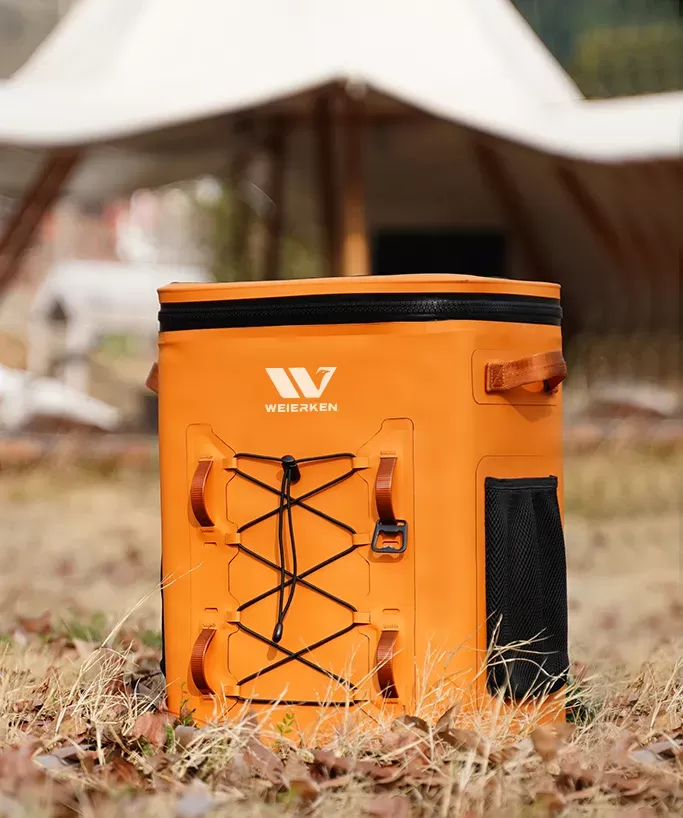

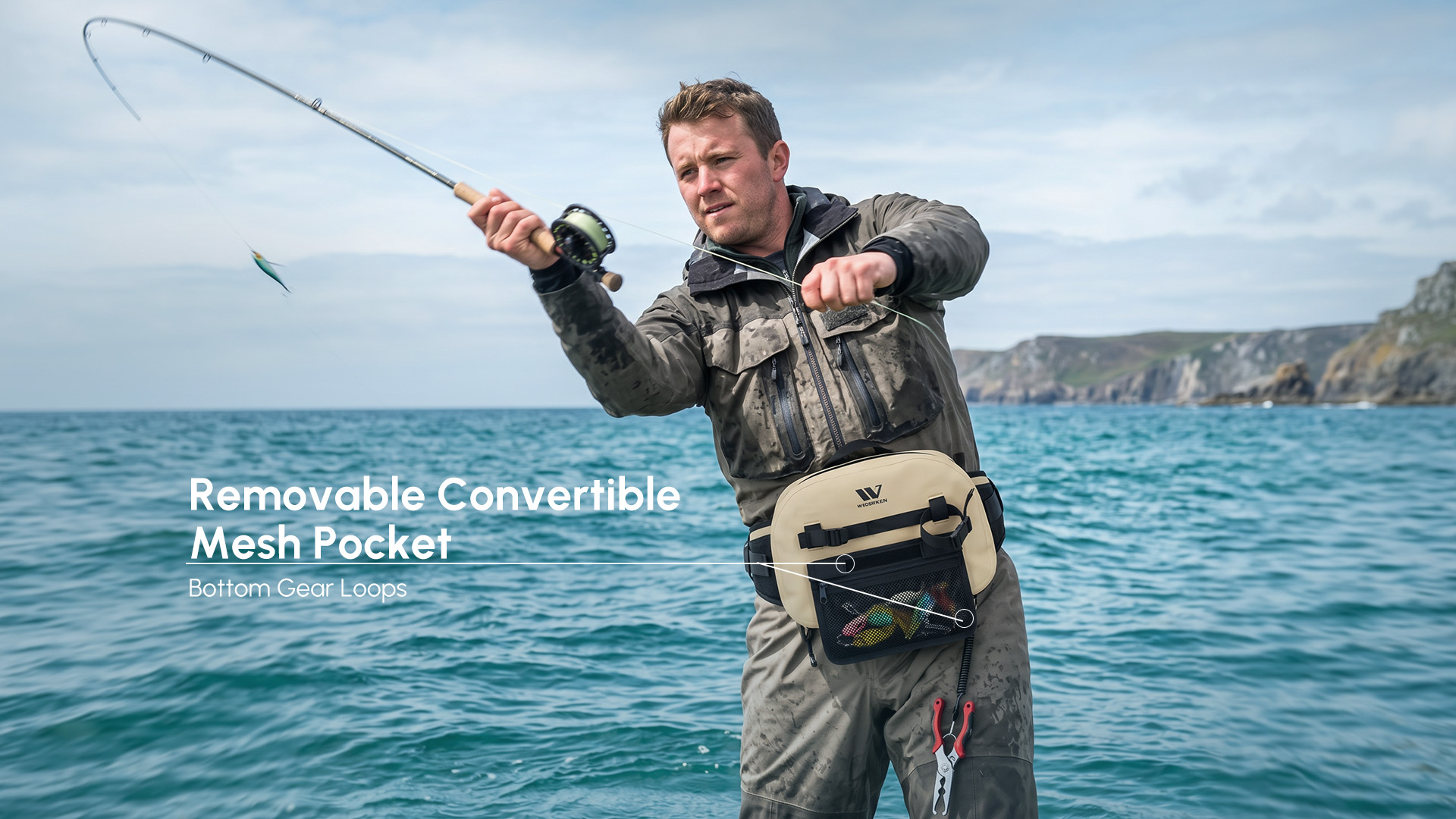
Fishing hardware like rods, blanks, and reels demands heavy upfront tooling and lengthy R&D timelines. In contrast, tackle soft goods deliver faster turnaround times, healthier profit margins, and repeat sales. For growing tackle brands and retail distributors, private-label gear bags provide an immediate way to build catalog value and boost average order volume (AOV).
Anglers demand specialized storage solutions for every technique. They want quick access to their terminal tackle, corrosion resistance in salt spray, and puncture resistance against sharp treble hooks. Partnering with an experienced contract manufacturer like Weierken enables fishing brands to turn technical sketches into market-ready soft goods that withstand brutal marine environments.
Whether you need compact lure wraps, modular leader line dispensers, or molded reel cases, sourcing custom fishing accessory bags requires a practical understanding of materials, hardware durability, and factory-level execution.
High-Demand Categories for Tackle Brand Catalogs
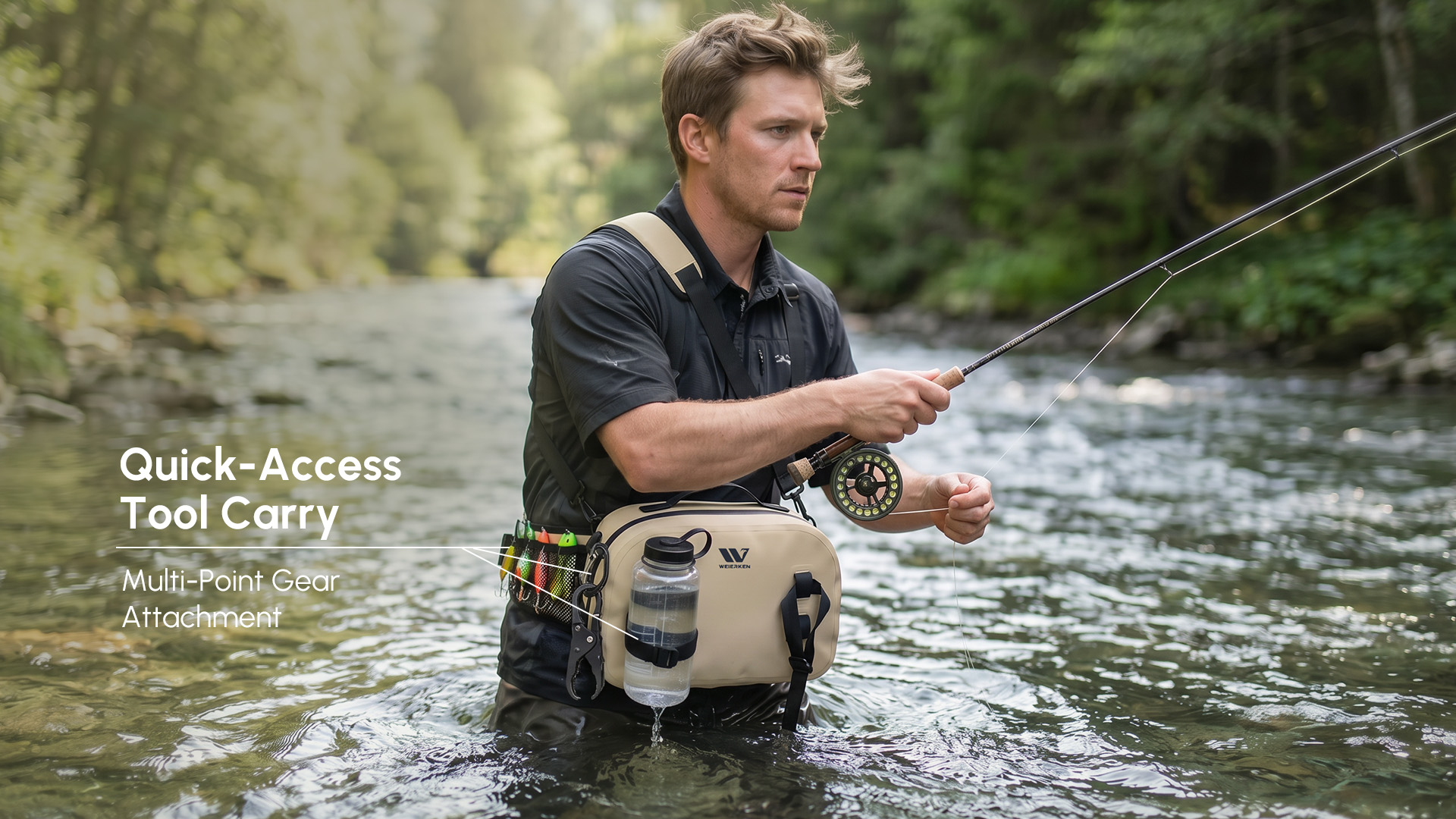
Modern anglers rarely carry one generic tackle box. Instead, they organize their rigs by target species and fishing technique. Adding targeted accessory bags helps tackle brands create complete ecosystems around their existing hardware.
1. Lure Wraps & Jig Storage Systems
Hard lures, slow-pitch jigs, and soft swimbaits require quick visual identification and robust hook protection.
Lure Wraps: Multi-pocket roll-up designs built with heavy-duty clear window films. They let anglers inspect hook points and body finishes without unrolling the entire bundle.
Jig Wallets: Reinforced vertical sleeves with breathable vinyl mesh bottoms that allow saltwater drainage and rapid air drying, preventing hook corrosion.
Puncture Protection: Puncture-proof TPU linings stop sharp 4X treble hooks and heavy assist cords from piercing outer shells.
2. Leader Line & Terminal Tackle Management
Fluorocarbon and monofilament spools turn into a bird's nest if left loose inside a boat locker. Modular management pouches solve this common frustration on the water.
Leader Spool Dispensers: Compact zippered pouches with integrated exterior rubber grommets. Anglers pull and cut leader material without opening the case.
Rig & Terminal Binders: Removable, heavy-gauge clear PE ziplock sleeves fitted inside zippered Cordura binders for pre-tied Sabiki rigs, drop-shot setups, and assist hooks.
Internal Elastic Retainers: Heavy-gauge elastic bands keep line spools organized by pound-test rating for rapid changes during tournament runs.
3. Molded Reel Covers & Tool Pouches
Protecting high-end baitcasting and spinning reels during transit protects customer investments and builds brand trust.
Thermoformed EVA Reel Cases: Semi-rigid outer shells lined with soft micro-fleece to absorb shocks, protect bail arms, and shield boat rash during rough boat rides.
Neoprene Reel Covers: Form-fitting 3mm to 5mm closed-cell neoprene sleeves engineered with hook-and-loop cutouts for rod-mounted storage.
Pliers & Boga Grip Sheaths: Heavy-duty molded holsters equipped with stainless steel D-rings, lanyard anchor points, and reinforced belt clips.
Material Engineering & Saltwater Durability Standards
Marine environments destroy cheap soft goods. Salt crystallization jams standard zippers, sunlight degrades lightweight polyester coatings, and sharp hooks slice thin PVC windows. Manufacturing reliable custom fishing accessory bags requires careful material selection tailored to freshwater or harsh saltwater use.
| Component | Standard Freshwater Spec | Pro Saltwater / Tournament Spec | Engineering Test Standard |
|---|---|---|---|
| Outer Fabric | 600D / 900D Polyester with PU coating | 500D / 1000D Nylon Cordura® or 840D TPU | ASTM D3884 (Martindale Abrasion 5,000+ cycles) |
| Clear Windows | 0.25mm Standard Clear PVC | 0.4mm–0.6mm UV-Stabilized, Non-Yellowing TPU | Cold-crack resistance down to -20°C |
| Zippers | Nylon coil reverse zipper + Zinc pullers | Molded Delrin / YKK AquaGuard® + Plastic sliders | ASTM B117 96-Hour Continuous Salt Spray Test |
| Seams & Joining | Double-needle stitching + Bartack reinforcement | Bonded Nylon V-69 thread + High-Frequency RF Welding | Tensile pull test exceeding 25 kg per seam |
For high-exposure marine lines, radio-frequency (RF) welding produces 100% airtight, waterproof seams without needle punctures. When combined with polyurethane-coated nylon, RF-welded accessory pouches keep terminal tackle completely dry even when submerged or washed down with a boat deck hose.
Customization Options to Build Brand Identity
Original equipment manufacturing (OEM) should reflect your distinct visual identity. As a specialized partner, Weierken supports end-to-end branding applications that hold up across seasons of sun and salt exposure.
Branding and Exterior Detailing
Molded Rubber & Silicone Patches: High-relief 3D sonic-welded logos resist fading, peeling, and saltwater degradation far better than direct screen printing.
Custom Molded Pull Tabs: Ergonomic TPR and zinc-alloy zipper pullers shaped with your brand's trademark geometry.
Reflective Accents: Retro-reflective trims and screen-printed logos ensure nighttime visibility for surfcasting and night boating safety.
Sublimated Camouflage Patterns: Custom digital camo, marine topographical maps, or hex patterns printed directly onto ripstop substrates.
Modular Hardware and Attachment Systems
Modern fishing bags rarely exist in isolation. Anglers prefer modular setups they can reconfigure depending on the day's target species.
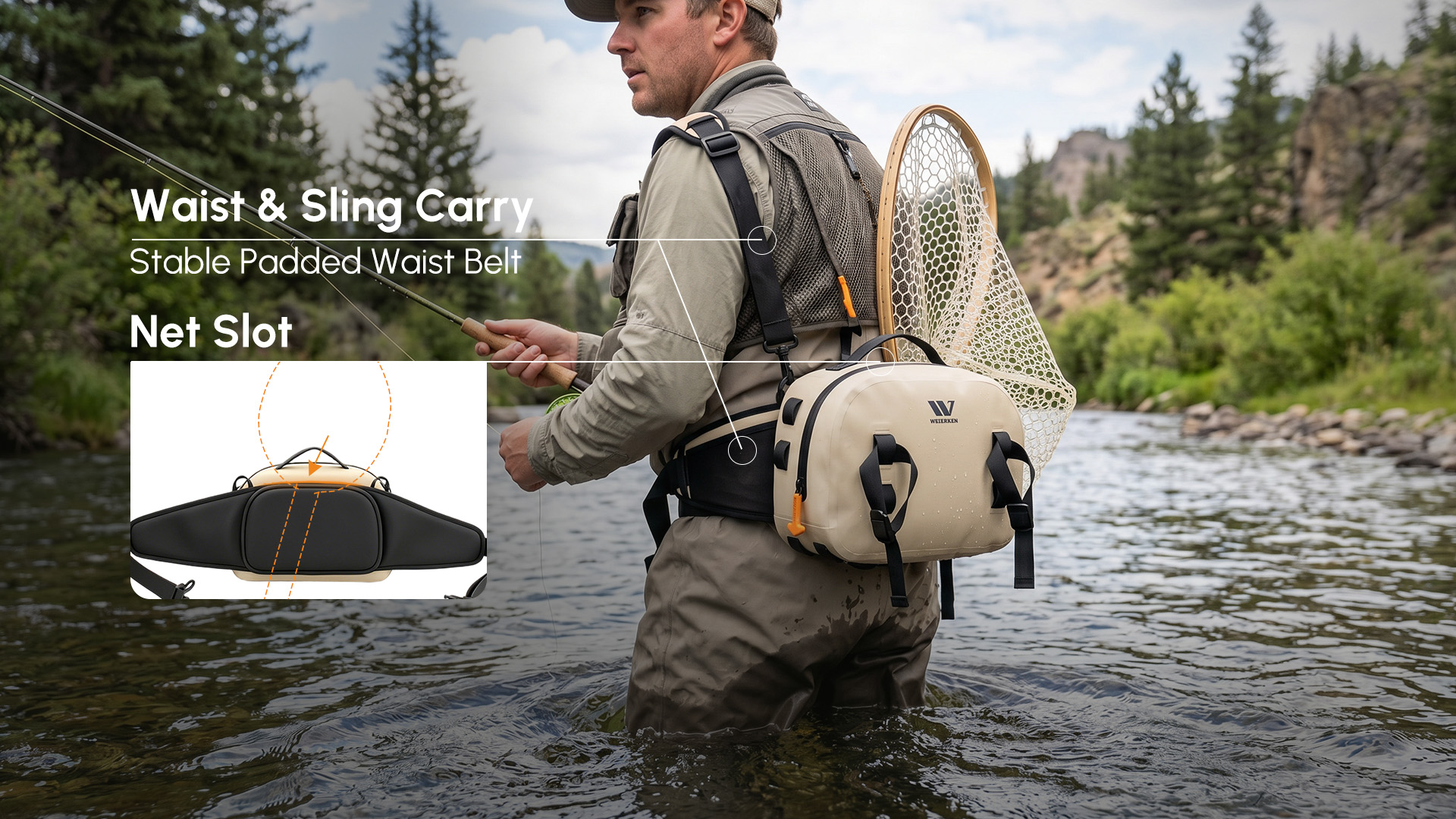
MOLLE / PALS Webbing: Standard 1-inch tactical nylon webbing ladders allow anglers to attach small terminal pouches directly to primary tackle backpacks.
Anodized Aluminum Carabiners: Marine-grade hardware that resists oxidation while providing secure tether points for drift boats and kayak tracks.
Drainage Grommets: Brass and POM drainage eyelets placed at pocket bases prevent water pooling after rainy days on the water.
Eco-Friendly Materials and Global Compliance
Modern consumers actively look for sustainable products. You can specify GRS-certified (Global Recycled Standard) rPET fabrics sourced from recycled ocean plastics. Furthermore, manufacturing processes should meet strict international compliance standards, including REACH, RoHS, and California Proposition 65 (phthalate-free and lead-free PVC/TPU coatings).
Step-by-Step OEM/ODM Manufacturing Workflow
Working with an offshore soft goods factory demands structured quality gates. A reliable production pipeline minimizes sample revisions, confirms technical specs early, and protects your production schedule.
Tech Pack & Specification Review: You provide CAD files, 2D sketches, reference samples, or functional requirements. The factory engineering team completes a Design for Manufacturability (DFM) review to identify cost savings and structural improvements.
Prototyping & Lab Testing (7–14 Days): The sample room builds physical prototypes using production-grade fabrics. The sample undergoes tensile seam checks, zipper cycle testing, and cold-crack analysis.
Sample Sign-Off & Pre-Production Tooling: Once you approve the physical sample, the factory prepares cutting dies, logo molds, and specialized sewing fixtures.
Mass Production & In-Line Quality Control: Production moves forward through standard quality checkpoints:
IQC (Incoming Quality Control): Inspecting incoming fabric rolls for hydrostatic head, colorfastness, and coating uniformity.
IPQC (In-Process Quality Control): Checking stitching tension, seam taping, and dimensional tolerance on the line.
FQC (Final Quality Control): 100% visual and functional inspection of completed bags before carton packing.
Packaging & Global Logistics: Custom retail packaging—including branded header cards, barcode hangtags, and polybags—is applied before palletization. Shipments leave via FOB, CIF, or DDP air/ocean freight straight to your distribution center.
Frequently Asked Questions (B2B FAQ)
Q1: What is the standard Minimum Order Quantity (MOQ) for custom fishing accessory bags?
A1: Standard MOQ for custom-dyed fabrics and custom-molded components typically starts at 500 to 1,000 units per style or colorway. However, if your design uses our in-stock, factory-standard fabrics (such as standard black 600D polyester or 500D PVC tarpaulin), we can accommodate trial runs starting at 300 units to support new product launches.
Q2: How do you prevent zipper binding and corrosion in saltwater environments?
A2: Metal coil zippers fail quickly in marine environments due to galvanic corrosion and salt encrustation. We use heavy-duty molded Delrin plastic teeth or authentic YKK AquaGuard® water-repellent zippers paired with corrosion-proof POM composite or electroplated marine-grade sliders. Every saltwater-rated hardware batch undergoes ASTM B117 salt spray testing.
Q3: Can your factory produce fully waterproof, submersible accessory bags?
A3: Yes. For complete IPX7 or IPX8 submersion protection, we use double-sided TPU-laminated fabrics or heavy-duty PVC tarpaulin joined by high-frequency (RF) welding. We combine these materials with airtight, pressure-tested waterproof zippers to guarantee that water will not enter the main compartment even when dropped overboard.
Q4: What technical files do we need to submit to get an accurate quote?
A4: A complete Tech Pack is ideal. This should include 2D/3D dimensional drawings, a Bill of Materials (BOM), fabric specifications, Pantone color codes, and vector artwork for your logos (.AI or .PDF). If you do not have a finished Tech Pack, our engineering team can reverse-engineer a specification sheet from a physical benchmark sample.
Q5: Do you offer white-label or ready-made designs for quick customization?
A5: Yes. In addition to full custom OEM manufacturing, we maintain an ODM library of proven fishing accessory bags, including lure wallets, leader dispensers, and reel pouches. You can select an existing factory pattern, choose your preferred colorways, and add your custom rubber logos or heat-transfer branding to hit the market in a fraction of the time.
Q6: What is the typical lead time from prototype approval to final shipment?
A6: Initial counter-sample prototyping takes roughly 7 to 12 business days. Following final sample approval and deposit confirmation, mass production lead times typically range from 35 to 45 days, depending on order volume and the complexity of your custom tooling.
Build Your Custom Tackle Soft Goods Line
Expanding your catalog with targeted soft goods gives your brand higher margins and reinforces your presence on every fishing trip. Working directly with Weierken gives your product development team access to proven marine-grade fabrics, clean seam engineering, and scalable production capacity.
Whether you want to refine an existing tackle pouch or build an entire line of waterproof lure storage systems from scratch, our technical team is ready to assist.
Contact Weierken Manufacturing Today:
Email: service@weierkenbag.com
Business Inquiries: OEM & ODM Private Label Development
Services: Free Material Swatch Books | DFM Engineering Analysis | Rapid Prototyping