


By Weierkenbag sourcing team
If you are searching for a food delivery bag plant, the real question is not just who can make a bag. It is who can produce the right structure, insulation, materials, and customization support for your market. This guide explains what buyers usually check before choosing a manufacturer and how to compare suppliers more confidently.
When buyers use the keyword food delivery bag plant, they are usually looking for more than a product page. They want to know whether a supplier can handle production, customization, quality control, and the kind of delivery bag structure required for real commercial use.
That includes questions like: Can the factory support private label orders? What insulation materials are available? Can the bag be adapted for pizza, meal delivery, groceries, or cold-chain transport? And can the supplier respond quickly when specifications need to change?
What Buyers Usually Mean by “Food Delivery Bag Plant”
In most sourcing situations, this keyword points to a factory-level search rather than a retail search. Buyers are often importers, wholesalers, brand owners, distributors, or delivery-service suppliers looking for a manufacturing partner instead of a single off-the-shelf bag.
That means the page should answer production-related questions, not just product questions. Buyers want to know whether the supplier can support custom sizing, branded logos, material upgrades, and the volume requirements of repeat commercial orders.
What to Check First
Whether the supplier focuses on delivery bags as a real production category, not just an occasional add-on product.
Whether the bag structure, insulation layers, and material options match your target use case.
Whether the factory can support logo customization, size adjustment, and packaging changes.
Whether the supplier can clearly explain MOQ, production lead time, and quality-control process.
What Makes a Good Food Delivery Bag Manufacturer?
A reliable manufacturer should be able to explain why one structure works better than another, not just show a list of models. For food delivery bags, the details that matter most usually include insulation performance, outer material strength, zipper or closure design, carrying comfort, and ease of cleaning.
On the Weierkenbag delivery bags category page, the company highlights waterproof and wear-resistant materials, customization support, and flexible production response. Those are exactly the kinds of points many buyers want to confirm early, especially for food delivery, meal transport, and temperature-sensitive products.
Key Areas Buyers Should Compare
| Area | Why It Matters | What to Ask |
|---|---|---|
| Insulation structure | Affects how well the bag supports hot or cold delivery. | What insulation layers are used, and what applications are they best suited for? |
| Outer material | Influences durability, water resistance, and daily wear performance. | Is the bag made from PVC, Oxford, TPU, RPET, or another material? |
| Customization | Important for private label, brand consistency, and market positioning. | Can the factory support logo printing, color changes, custom sizes, and packaging? |
| Production response | Useful when product updates or reorder timing matter. | How quickly can samples, revisions, and bulk orders be handled? |
| Factory standards | Helps buyers assess production consistency and supplier readiness. | What certifications, quality checks, and inspection processes are in place? |
What the Weierkenbag Delivery Range Shows
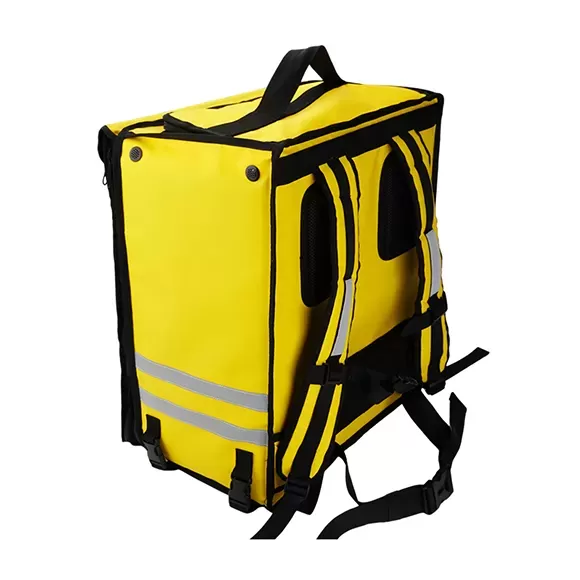
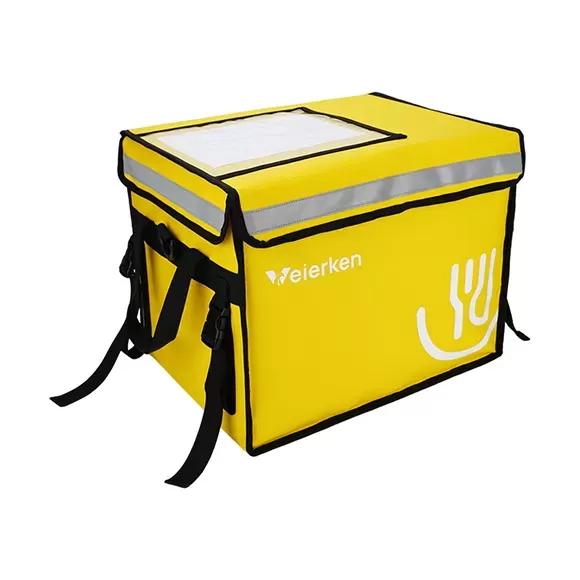
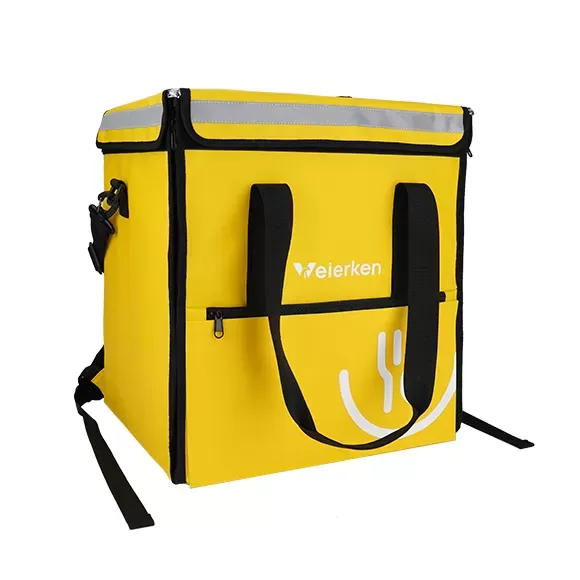
The current delivery bag category includes multiple formats, from compact insulated bags to large-capacity thermal delivery bags. That matters because buyers often need different bag sizes and carrying styles for different use cases, such as meal delivery, fresh food transport, pizza runs, or grocery delivery.
Some models on the page also emphasize expandable storage, adjustable dividers, detachable drink racks, padded carrying support, and non-woven or PVC-based structures. For a buyer, that is useful because it shows the supplier is working with more than one standard bag template.
Customization Matters More Than Many Buyers Expect
For many sourcing projects, the bag itself is only part of the order. The factory also needs to support brand presentation, functional details, and packaging requirements. On the Weierkenbag delivery page, the customization section mentions materials, logo options, zippers, accessories, and colors.
That is useful because it tells buyers the discussion can go beyond a standard SKU. If your project needs reflective branding, transparent windows, adjustable dividers, shoulder straps, or different closure styles, that should be part of the factory conversation early.
Questions Worth Asking Before You Send an RFQ
Which delivery bag structures are best for my use case: meal delivery, pizza, groceries, frozen food, or multi-purpose distribution?
What materials and insulation layers do you recommend for my temperature and handling requirements?
Can you support custom logo, custom size, custom color, or upgraded accessories?
What is the MOQ for standard products versus customized orders?
What certifications or factory standards can you share for production and quality control?
How long do sampling, production, and shipping usually take?
How to Tell if This Supplier Fits Your Project
No single factory is right for every order. The best fit depends on your category, order model, and target market. If you need a supplier that can support delivery bags as a real product line, offer customization, and show clear manufacturing capability, then a plant-oriented supplier page should make that visible.
Based on the current website content, Weierkenbag positions itself around custom production, factory certification, and category depth across cooler, delivery, waterproof, hiking, and other bag segments. For buyers looking at food delivery bags specifically, that can be a good starting point for deeper quotation and specification review.
Explore Related Options
View the full delivery bag range if food delivery is your main sourcing category.
Compare cooler bags if insulation performance and broader cold-use scenarios are also important.
Check waterproof bags if outdoor, marine, or weather-resistant use is part of your product line.
Review hiking bags if your project also covers outdoor carry products.
FAQ
What does “food delivery bag plant” usually mean in sourcing?
It usually means the buyer is looking for a factory or manufacturing supplier, not just a reseller. The focus is on production capability, customization, quality control, and order support.
What should I ask a food delivery bag manufacturer first?
Start with materials, insulation structure, customization options, MOQ, lead time, and factory standards. Those answers will tell you much more than a product gallery alone.
Can delivery bags be customized for different food categories?
Yes. Many manufacturers can adjust size, internal structure, logo treatment, colors, and accessory details to fit pizza, meal delivery, groceries, or cold-food transport.
Why does material choice matter so much?
Because the outer fabric, insulation layer, and closure design affect durability, cleanliness, thermal performance, and how well the bag handles daily delivery conditions.
Is it better to choose a factory with multiple bag categories?
Often, yes. A broader product range can be useful if you want to compare delivery bags with cooler bags, waterproof bags, or other related categories under one supplier relationship.