

Biopharmaceuticals, insulin, vaccines, and laboratory samples require precise temperature control during transit. Even brief exposure to extreme ambient heat can compromise active ingredients, leading to complete product spoilage. This vulnerability creates a critical challenge for pharmaceutical brands, clinics, and medical supply distributors.
Selecting a specialized manufacturing partner is the first step in protecting your biological goods during last-mile transit. Many standard insulation bags struggle when left in hot delivery vans or exposed to direct sunlight. A professional medical cooling bag maker like Weierken addresses these vulnerabilities through rigorous thermal engineering and robust material selection.
By understanding what makes a cooler durable and thermally efficient, procurement managers can reduce product losses. This guide outlines the key technical standards, material options, and quality compliance metrics required to select a manufacturing partner.
The High Cost of Medical Thermal Failure
Cold chain logistics failures result in billions of dollars of wasted pharmaceuticals annually. Unlike food and beverage transport, medical cargo has zero tolerance for temperature deviations. If a cold pack drops its thermal barrier for even an hour, the contents may become ineffective.
B2B buyers face major liabilities if their thermal transport packaging fails. These risks include:
High product return rates from clinics and pharmacies.
Loss of active ingredients in expensive, life-saving medications.
Regulatory non-compliance with health safety standards.
Damaged brand reputation among healthcare providers.
Working with an experienced heavy-duty cooler bag manufacturer mitigates these risks. These specialists design containers that withstand both mechanical wear and extreme ambient temperatures.
Technical Analysis: What Makes a Medical Bag Temperature-Stable?
To prevent medication spoilage, a cold storage bag must restrict heat transfer and maintain airtight sealing. Buyers must look past marketing terms to examine the engineering behind the bag construction.
Leakproof Welded Seam Technology
Traditional sewing methods use needles that puncture the outer fabric, creating thousands of microscopic holes. Over time, moisture from condensation and ice packs leaks through these holes. Warm air also seeps inside, rapidly melting the internal cold source.
A reliable melt proof cooler bag maker replaces traditional stitching with advanced high-frequency welding. This process offers clear structural benefits:
It uses electromagnetic energy to fuse material layers at the molecular level.
It creates continuous, seamless bonds that are entirely airtight and waterproof.
It prevents seam tearing and adhesive degradation under high temperatures.
Our leakproof welded seam technology keeps the interior dry and preserves the cold barrier.
TPU vs PVC Cooler Bags: Material Safety in Healthcare
Material safety is critical when dealing with medical supplies. Comparing TPU vs PVC cooler bags reveals major differences in chemical stability, durability, and heat resistance.
| Property | TPU (Thermoplastic Polyurethane) | Standard PVC (Polyvinyl Chloride) |
|---|---|---|
| Biocompatibility | Toxin-free, phthalate-free, and safe for medical contact. | May leach plasticizers and release chlorine over time. |
| Thermal Resistance | Maintains structural stability in cold and extreme heat. | Softens and becomes sticky when exposed to warm environments. |
| Durability | Highly resistant to punctures, oil, and abrasions. | Prone to cracking when folded repeatedly. |
For medical applications, TPU is the preferred material. It does not release gases or degrade inside hot shipping vehicles. This chemical stability makes it safe to use alongside sensitive diagnostic kits and medicines.
Multi-Layer Thermal Barriers
To keep biological products stable, a medical container must use a structured, multi-layer thermal design. Standard thermal bags often use thin, single-layer foam that fails quickly. Premium bags manufactured by Weierken utilize a more robust, three-layer architecture:
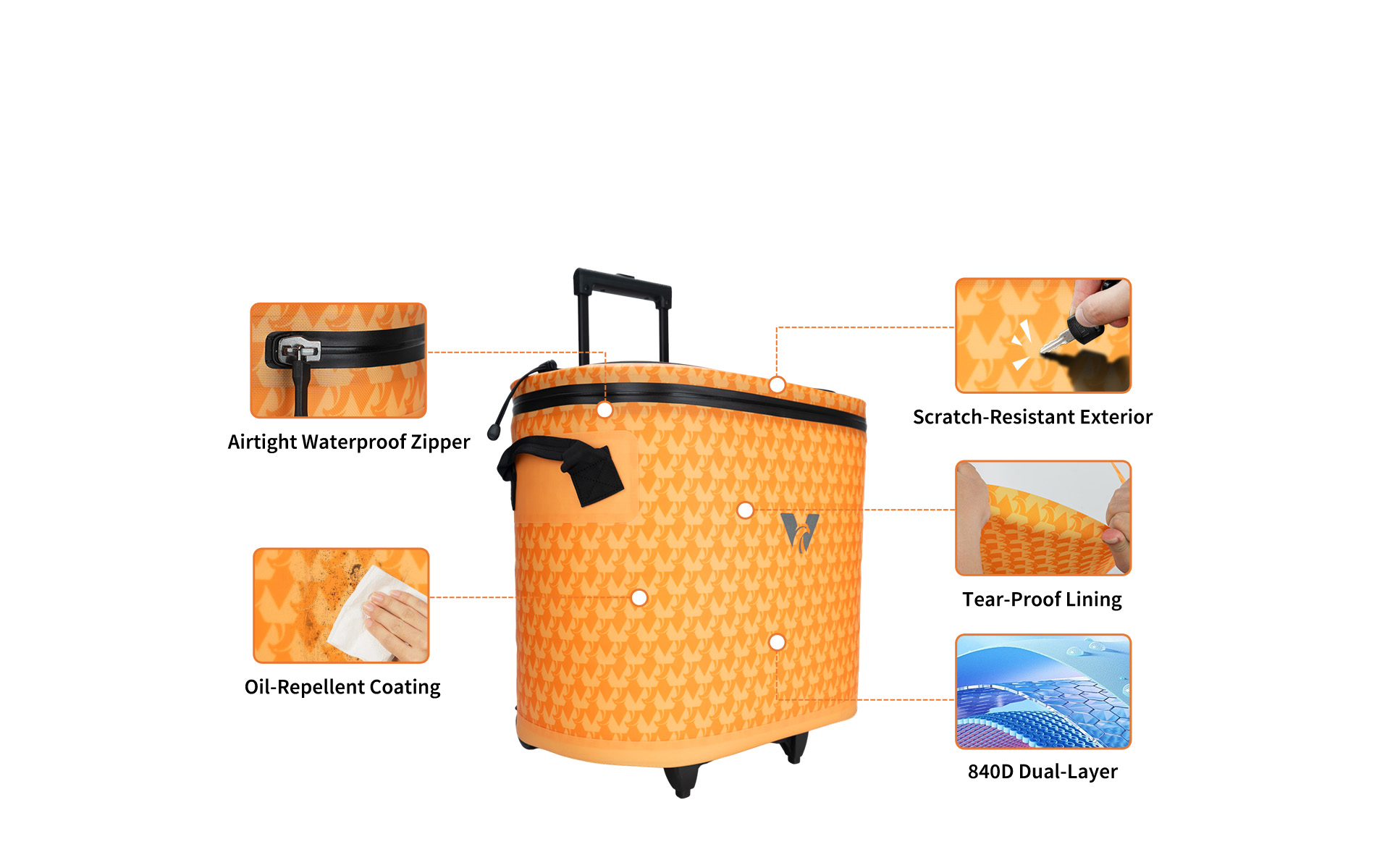
Outer Layer: A heavy-duty, TPU-coated fabric that resists tearing, moisture, and high external heat.
Insulation Core: High-density NBR (Nitrile Butadiene Rubber) closed-cell foam. This foam has low thermal conductivity and resists compression.
Inner Lining: Cleanable, food-grade, or medical-grade TPU. This lining prevents microbial growth and withstands frequent sterilization.
B2B Procurement and Customization Guide
Sourcing medical cold-chain equipment requires careful coordination with your factory. Buyers must verify the manufacturer's engineering capabilities and regulatory compliance before placing large-scale orders.
The OEM/ODM Customization Process
A professional OEM thermal bag factory should provide a structured product development cycle. This process typically includes:
3D Design & Blueprints: Design teams map out dimensions to fit specific vials, syringes, or temperature monitors.
Functional Prototyping: The factory builds physical samples within 7 to 10 days for laboratory evaluation.
Rigorous Testing: Prototypes undergo thermal chamber testing to verify how long they can maintain target temperatures.
These steps ensure that the finished product meets your specific temperature requirements before full-scale manufacturing begins.
Certifications and Regulatory Compliance
Medical-use transport bags must meet strict regulatory standards. When evaluating a potential supplier, request documentation for the following certifications:
FDA & LFGB Compliant Materials: Confirms that the food-grade insulation materials and plastics used in the liner are safe and non-toxic.
REACH & RoHS: Ensures the assembly materials are free from hazardous chemicals and heavy metals.
ISO 9001 & BSCI: Verifies that the factory operates under strict quality management and ethical manufacturing guidelines.
MOQs and Supply Chain Capacity
Purchasing managers must balance inventory levels with production efficiency. High-performance, welded thermal bags require custom tooling and machinery setup. Therefore, minimum order quantities (MOQs) typically start at 500 to 1,000 units per production run.
Ensure your chosen supplier has the capacity to scale production during periods of high demand. A reliable partner should offer transparent delivery schedules and maintain a stable raw material supply chain.
Key Application Scenarios for Medical Cooling Bags
High-quality medical coolers serve several critical functions across the healthcare and scientific sectors. Designing your product line around these use cases helps target specific buyer needs:
Insulin and Pen Needle Travel Cases: Compact, pocket-sized cases designed for diabetic patients who travel in hot climates.
Clinical Sample Transport: Secure bags used by laboratories to transport blood, tissue, and urine samples safely between clinics.
Last-Mile Vaccine Distribution: Medium-sized carriers that preserve temperature stability for field healthcare workers in remote areas.
Pharmacy Delivery Services: Heavy-duty bags used by couriers delivering temperature-sensitive prescriptions directly to patients' homes.
Many distributors also stock premium wholesale soft cooler bags to sell to regional clinics, veterinary hospitals, and research facilities.
Frequently Asked Questions
1. Why are sewn seams risky for medical cooling bags?
Sewn seams create thousands of needle punctures. These small holes allow melted ice water to leak out and warm ambient air to seep in, which can compromise sensitive medications inside the bag.
2. What is the difference between food-grade and medical-grade TPU?
Both materials are non-toxic and free from plasticizers. However, medical-grade TPU undergoes stricter purity testing. It is also more resistant to chemical sanitizers, making it easier to disinfect between uses.
3. How long can a medical cold bag maintain cold temperatures?
Thermal performance depends on the insulation thickness, ice pack configuration, and external heat. Most high-density closed-cell foam bags can maintain stable temperatures between 2°C and 8°C for 24 to 48 hours.
4. What is the average lead time for custom medical cooler bags?
The standard timeline includes 7 to 10 days for prototyping and testing. Once design approval is complete, mass production typically takes 35 to 45 days, depending on the order volume.
5. Can the interior of these bags be customized with organizers?
Yes. Custom options include mesh dividers, elastic loops for syringes, secure pockets for temperature monitors, and dedicated slots for gel packs. These organizers keep medical contents secure and organized during transport.
Partner with an Experienced Industry Manufacturer
Protecting delicate medical cargo from thermal degradation requires reliable, tested manufacturing standards. At Weierken, we focus on combining high-frequency welding with durable, non-toxic materials to deliver stable thermal transport solutions.
If you are looking for a reliable medical cooling bag maker to develop high-performance cold chain bags, our engineering team is here to help. Contact our office today to discuss your project specifications, request a functional sample, or receive a manufacturing estimate.