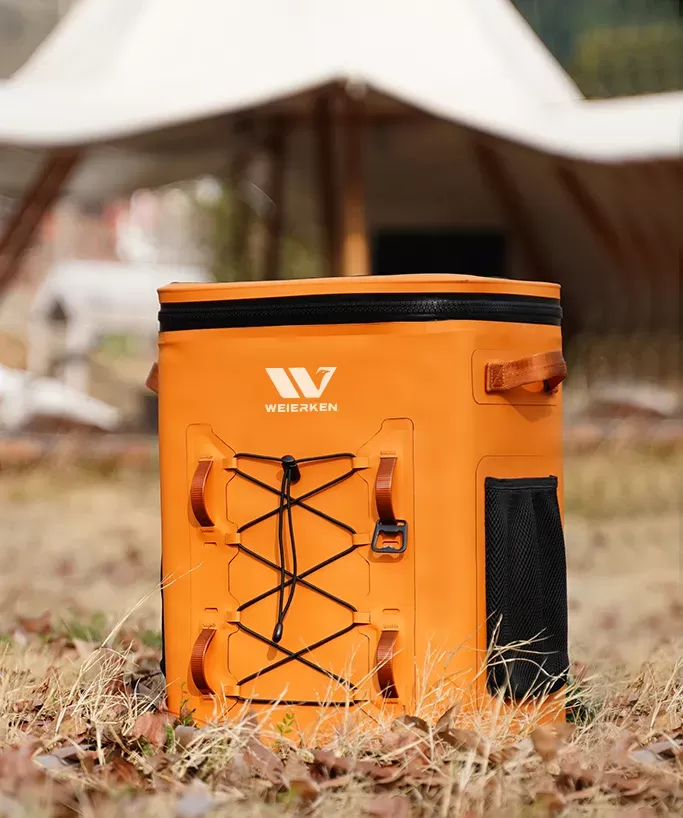

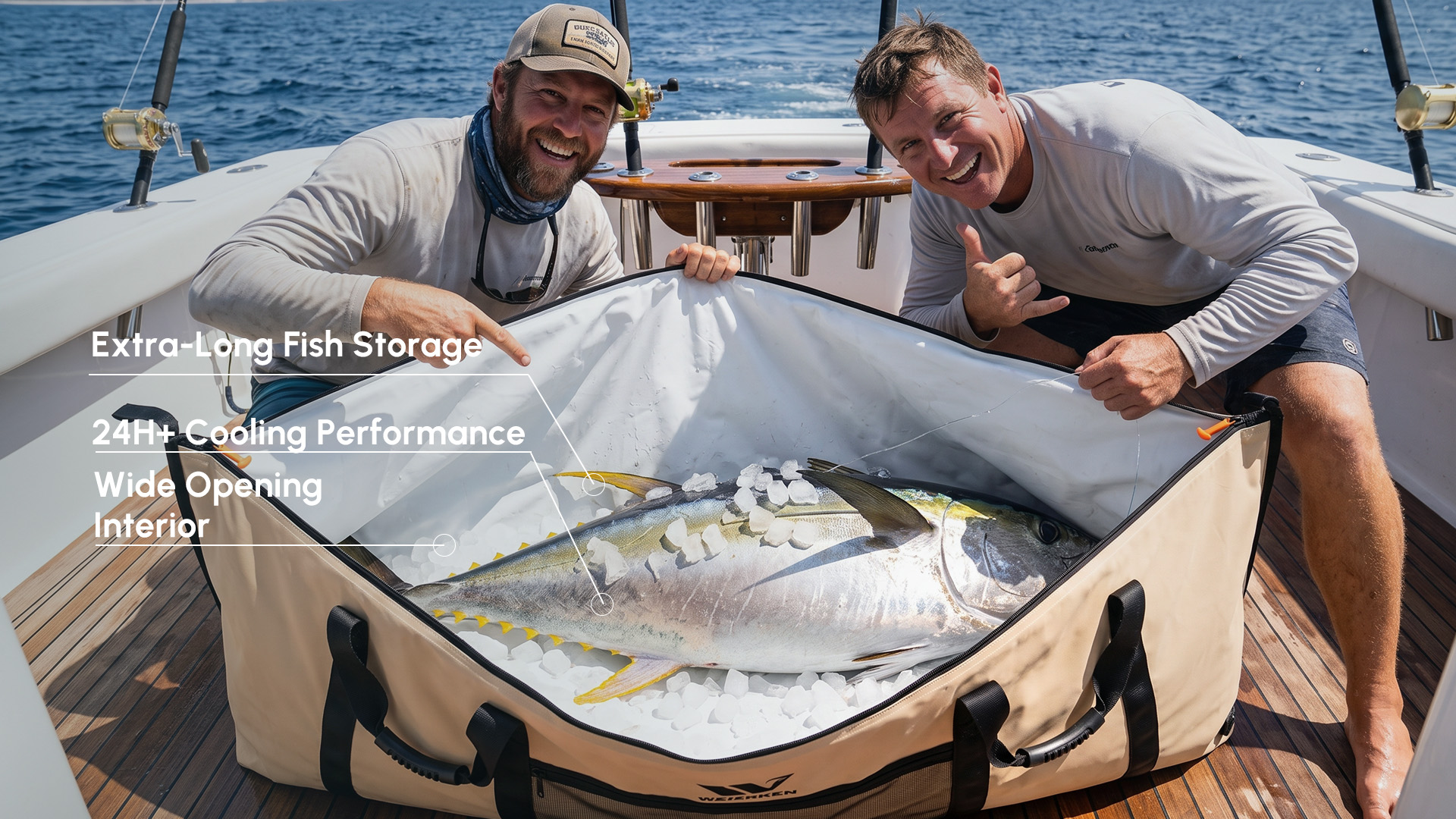
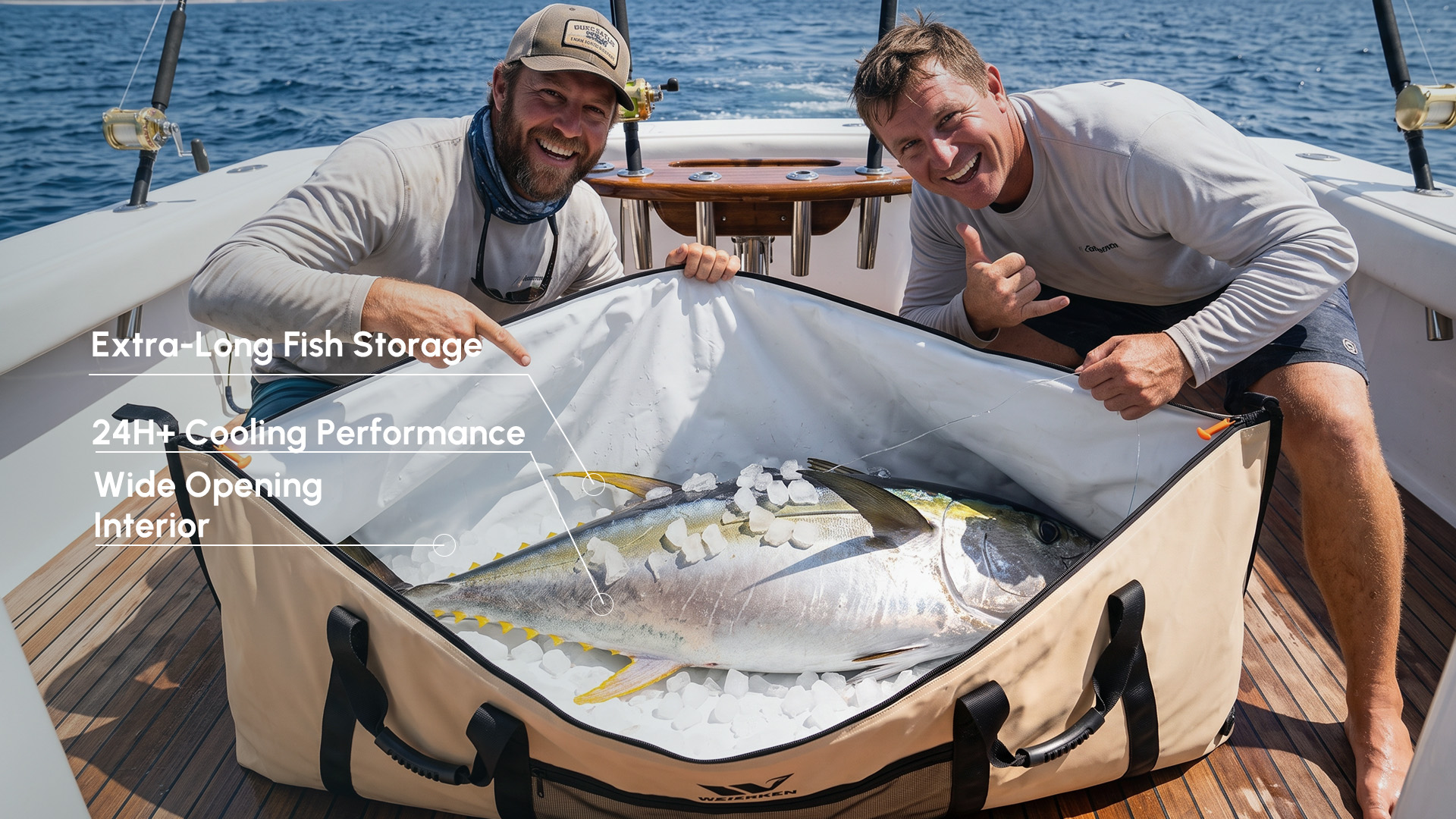
Les glacières traditionnelles à parois rigides occupent d'énormes quantités d'espace sur le pont des bateaux en mer et des kayaks. Elles ajoutent du poids mort, éraflent les gelcoats et font grimper les coûts de transport. En raison de ces défis, les marques maritimes, les organisateurs de tournois et les distributeurs de matériel de pêche se tournent vers des glacières portables et isolées.
Un sac à poissons pliable résout les contraintes de stockage tout en gardant les prises fraîches pendant des jours. Cependant, la construction d'un produit fiable nécessite des capacités de production spécialisées. S'approvisionner auprès d'un fournisseur de sacs génériques conduit souvent à des coutures éclatées, des fuites de sang de poisson, des fermetures éclair cassées et une fonte prématurée de la glace.
S'associer à un fabricant de sacs à poissons pliables dédié comme Weierken comble le fossé entre la production d'équipement de base et l'équipement marin de qualité tournoi. Voici les quatre services de OEM essentiels qu'un fabricant professionnel fournit pour aider les marques de plein air à dominer le marché des glacières marines.
1. Sélection de Matériaux Personnalisés et Ingénierie Thermique
Une glacière doit résister à des nageoires dorsales acérées, à des poissons pélagiques dentés, au soleil brûlant et à l'eau salée corrosive. Une usine de sacs à poissons isolés OEM expérimentée construit chaque couche pour gérer des environnements marins extrêmes sans échouer.
Revêtements Extérieurs et Intérieurs de Qualité Commerciale
Les tissus PVC standard se fissurent sous une exposition prolongée aux UV et se déchirent facilement lorsqu'ils sont perforés. Une usine de sacs à poissons de marque privée dédiée propose des options de matériaux de qualité industrielle :
Bâche PVC Résistante (500D à 1000D) : Hautement résistante aux perforations, imperméable et enduite pour résister à la boue marine et à l'absorption des odeurs.
Polyuréthane Thermoplastique Écologique (TPU) : Plus léger que le PVC, résistance exceptionnelle aux fissures par temps froid, sûr pour les aliments et exempt de plastifiants toxiques.
Ajouts UV et Antimicrobiens : Revêtements spécialisés qui empêchent la dégradation des matériaux sous un soleil constant et inhibent la croissance bactérienne provenant des fluides de poisson.
Isolation Thermique en Mousse à Cellules Fermées
La mousse à cellules ouvertes absorbe l'eau comme une éponge si une couture pince. Les fabricants professionnels utilisent exclusivement de la mousse d'isolation à cellules fermées dense, d'une épaisseur allant de 0,5 pouce (12 mm) à 1,0 pouce (25 mm).
Cette structure à cellules fermées bloque le transfert de chaleur et n'absorbe jamais l'humidité, garantissant que vos clients profitent de 24 à 48 heures de rétention de glace solide sur l'eau.
Soudure RF Haute Fréquence Sans Couture
Coudre à travers un sac de glacière crée des milliers de trous d'aiguille par lesquels l'eau et le sang peuvent s'infiltrer. Un fournisseur spécialisé de sacs à poissons robustes utilise la technologie de soudure par radiofréquence (RF) haute fréquence.
La soudure RF fusionne les matériaux intérieurs et extérieurs au niveau moléculaire. Cela crée une couture 100 % étanche qui résiste à la pression interne sans déchirure ni fuite de fluides à l'intérieur d'une cabine de bateau ou d'un lit de camion.
2. Quincaillerie Marine, Accessoires Fonctionnels et Développement de Taille
Les pêcheurs en mer exigent des caractéristiques fonctionnelles qui résistent à de lourdes charges. Un sac de glacière marine personnalisé nécessite des configurations de quincaillerie dédiées adaptées à des styles de pêche spécifiques.
Fermetures Éclair et Attaches Étanches
Les fermetures éclair représentent le point de défaillance le plus courant sur les sacs marins. Une usine OEM fournit des options de quincaillerie adaptées à votre gamme de prix et à vos critères de performance :
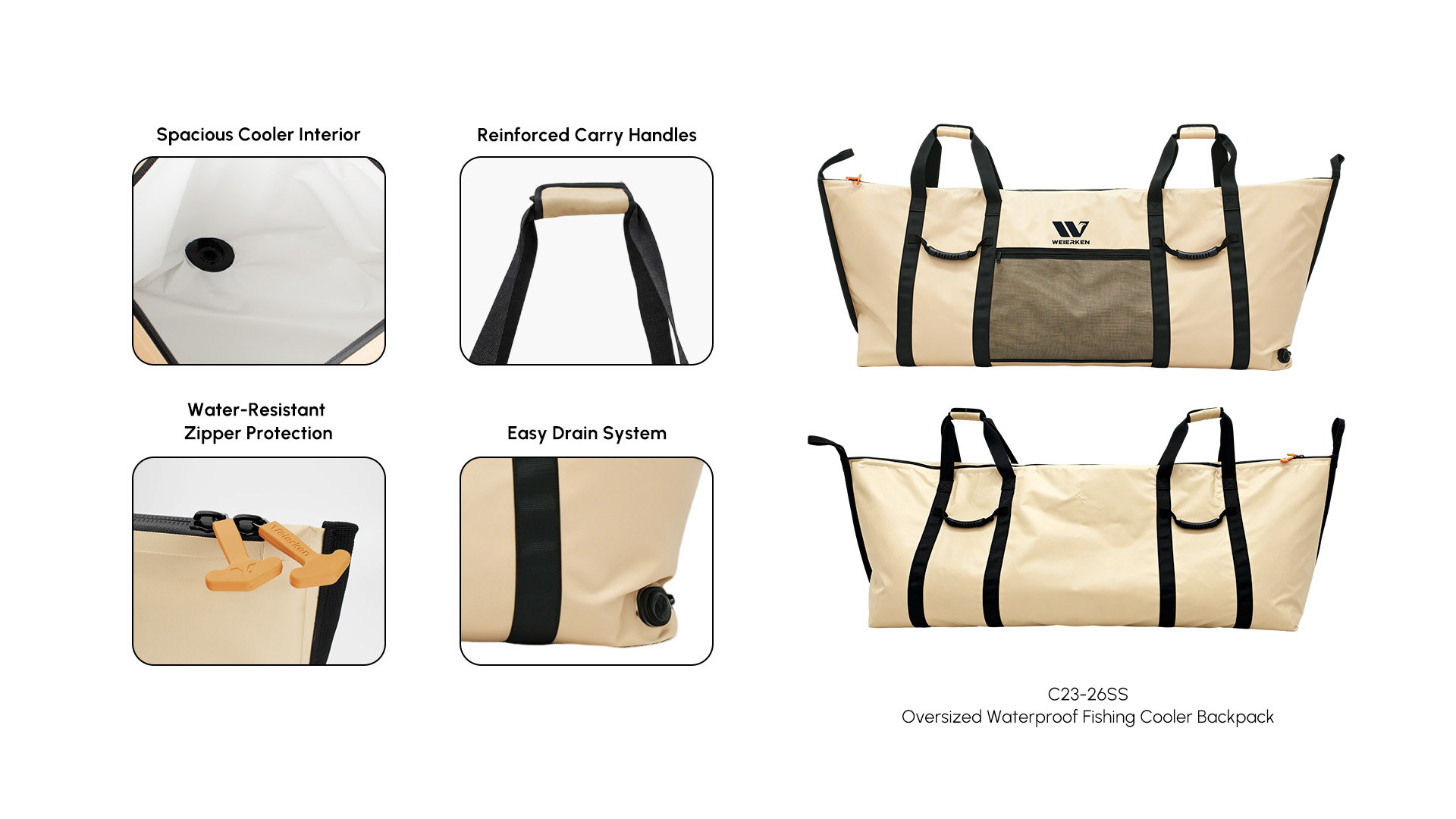
Fermetures éclair étanches / Fermetures éclair imperméables: Conceptions à dents ou à spirale testées sous pression (y compris les fermetures éclair étanches YKK authentiques ou personnalisées) qui retiennent l'air froid et empêchent les déversements de liquide même si le sac se renverse.
Fermetures éclair en nylon marin résistant à la corrosion: Fermetures éclair surdimensionnées #10 ou #12 résistantes au sel avec des tirettes robustes pour un accès rapide avec des mains mouillées.
Fermetures à enroulement à crochets et boucles: Rabats de tempête secondaires et fermetures velcro commerciales qui protègent la piste de la fermeture éclair de l'exposition directe au soleil et de la contrainte physique.
Systèmes de drainage et de gréement intégrés
Nettoyer les écailles de poisson, la boue et la slush sanglante ne devrait pas nécessiter de retourner le sac. Les fabricants OEM intègrent des accessoires de qualité marine directement dans le châssis soudé :
Bouchons de drainage à verrouillage par rotation: Vannes de drainage à vis à profil bas qui permettent un nettoyage et un drainage rapides sur le pont du bateau.
Poignées en sangle renforcées: Sangles en nylon cousues en boîte et soudées capables de supporter 100 à 200+ livres de poisson pour un transport à une ou deux personnes.
D-Rings d'ancrage de pont: D-Rings en acier inoxydable robuste ou en polymère résistant à la corrosion placés stratégiquement pour attacher le sac sur les ponts de kayak ou les transoms de bateau pendant les traversées en mer agitée.
Gamme complète d'outillage et de dimensions personnalisés
Différentes pêches nécessitent des facteurs de forme distincts. Un fabricant expérimenté construit des modèles personnalisés en fonction des espèces cibles :
Modèles de kayak et côtiers (36" à 40"): Conceptions à nez effilé qui s'adaptent au contour spécifique des proue de kayak tout en maintenant une faible résistance au vent.
Sacs offshore de taille moyenne (48" à 60"): Formats rectangulaires conçus pour le kingfish, le snapper, le grouper et le mahi-mahi.
Sacs de gros gibier et de thon (70" à 120"): Conceptions à fond plat avec soufflets et murs de séparation internes conçus pour contenir de géants thons rouges, wahoo et marlins.
3. Marque de distributeur privée, esthétique et emballage de détail
Se démarquer sur les étagères de détail et les marchés directs aux consommateurs nécessite une identité visuelle distincte. Les fabricants OEM comme Weierken fournissent des services de marque de distributeur privée de bout en bout qui s'alignent sur vos normes de marque.
Techniques d'application de logo personnalisées
En fonction de la surface du matériau et du positionnement de vente au détail cible, les fabricants proposent plusieurs méthodes de marquage :
Embossage haute fréquence: Logos en relief ou en creux moulés directement dans le tissu PVC/TPU pour un aspect propre et permanent qui ne s'écaille jamais.
Impression sérigraphique: Encres marines multicolores formulées pour résister à l'usure par rayures et à l'abrasion par eau salée.
Patches en caoutchouc moulé: Badges en PVC 3D soudés ou cousus sur les sangles de poignée et les panneaux avant pour une finition premium.
Impression numérique sur toute la surface: Motifs de camouflage, lignes topographiques ou œuvres d'art personnalisées sur la coque extérieure.
Tissus assortis à Pantone
Construire une ligne de produits reconnaissable nécessite des couleurs de marque cohérentes. Un fabricant de sacs de pêche pliables OEM assortit la palette d'entreprise de votre marque en utilisant des codes de couleur Pantone (PMS) exacts pour le corps principal, le piping de bord, les tirettes de fermeture éclair et les poignées en sangle.
Solutions d'emballage prêtes pour le détail complètes
Expédier des sacs en vrac en vrac dans des cartons en carton nuit à l'attrait de détail. Un package OEM complet comprend :
Boîtes maîtresses de détail personnalisées imprimées en couleur.
Étiquettes suspendues de marque avec codes-barres UPC et spécifications de performance thermique.
Sacs de rangement en maille respirante avec cordons de serrage pour un stockage compact hors saison après utilisation.
Emballage plié et strapé qui minimise le volume pour l'optimisation FBA d'Amazon et le fret maritime.
4. Prototypage Rapide, MOQ Faibles et Contrôle Qualité Strict
Amener un nouveau concept de glacière marine sur le marché nécessite une exécution rapide, un risque d'inventaire minimal et une vérification de qualité stricte avant le lancement commercial.
Retour d'Échantillons Rapide
Un partenaire OEM qualifié passe rapidement du croquis conceptuel au produit tangible. En utilisant des outils CAO et des tables de découpe informatisées, les fabricants produisent des prototypes entièrement fonctionnels en 3 à 7 jours ouvrables, permettant aux marques de tester immédiatement des unités d'échantillons sur l'eau.
Quantités Minimales de Commande (MOQ) Flexibles et Évolutives
Les nouvelles marques et les startups de matériel de pêche ont souvent du mal à répondre aux exigences de volume massif des usines. Les usines leaders proposent des programmes MOQ flexibles par paliers :
Essais de Lots : Faibles quantités de commande initiales (généralement 200–500 unités) pour tester de nouveaux marchés régionaux et valider la demande des consommateurs.
Évolutivité de la Production de Masse : Lignes de production dédiées à haute fréquence capables de fabriquer des dizaines de milliers d'unités par mois pour les saisons de pêche de pointe.
Assurance Qualité en Laboratoire et sur le Terrain
Chaque lot de sacs de capture doit survivre à des conditions réelles difficiles. Une usine fiable soumet les séries de production à des tests physiques approfondis :
Tests d'Étanchéité Hydrostatique : Remplissage des sacs finis avec de l'eau et suspension sous pression pour vérifier l'intégrité des coutures à 100 %.
Tests de Traction des Poignées : Application d'une contrainte de charge mécanique sur les poignées et les anneaux en D pour garantir zéro défaillance des joints sous des poids lourds.
Tests de Cycle de Fermeture Éclair : Cycle automatique d'ouverture et de fermeture dans des conditions de pulvérisation saline pour vérifier le bon fonctionnement du curseur.
Évaluation de la Fonte de Glace : Tests en chambre thermique contrôlée suivant les températures internes sur des intervalles de 24, 48 et 72 heures.
Conformité Internationale et Expédition Directe
Le commerce mondial exige le respect de normes strictes de sécurité chimique et environnementale. Les usines professionnelles fournissent des matériaux conformes aux réglementations REACH, RoHS, Prop 65 et sans BPA pour le contact alimentaire. De plus, elles gèrent la logistique de service complet, offrant une livraison FOB, CIF ou DDP directement à votre entrepôt ou centre de logistique tiers (3PL).
Questions Fréquemment Posées (FAQ)
Q1 : Pourquoi choisir un sac de capture de poisson soudé RF plutôt qu'un sac de glacière traditionnel cousu ?
Les sacs de glacière cousus utilisent des aiguilles qui percent le tissu imperméable, permettant à l'eau sanguinolente et à la glace fondue de s'écouler à travers les trous de couture au fil du temps. La soudure RF à haute fréquence fusionne les panneaux de tissu ensemble en utilisant de l'énergie électromagnétique. Cela crée une liaison moléculaire impénétrable qui garantit une doublure de glacière 100 % étanche et nettoyable.
Q2 : Combien de temps un sac de pêche isolé sur mesure peut-il conserver la glace ?
La rétention de glace dépend de l'épaisseur de l'isolation, du rapport glace-à-poisson et de la température ambiante. Les sacs fabriqués avec de la mousse à cellules fermées de 0,5 à 0,8 pouce et des matériaux PVC/TPU robustes conservent la glace pendant 24 à 48 heures dans des conditions estivales typiques. Les modèles haut de gamme avec des fermetures éclair hermétiques et des cœurs en mousse de 1 pouce peuvent conserver la glace jusqu'à 72 heures.
Q3 : Quel est le délai standard pour la création d'échantillons personnalisés et la production de masse ?
Le prototypage et l'échantillonnage personnalisé prennent généralement de 3 à 7 jours ouvrables une fois que les spécifications de conception 2D/3D sont finalisées. La production de masse nécessite généralement de 30 à 45 jours après l'approbation de l'échantillon et la confirmation du dépôt, en fonction de la quantité de commande et des exigences de personnalisation du matériel.
Q4 : Quelle est la quantité minimum de commande standard pour les sacs de pêche pliables en marque blanche ?
Les quantités minimales de commande standard varient généralement entre 300 et 500 unités pour les modèles entièrement personnalisés utilisant des couleurs de tissu en stock. Les tissus personnalisés assortis à Pantone ou les outillages matériels complexes peuvent nécessiter une MOQ de 500 à 1 000 unités en fonction des spécifications du fournisseur de matériaux.
Q5 : L'usine peut-elle produire des sacs de poisson en formes personnalisées pour les kayaks et les ponts de bateau ?
Oui. L'outillage personnalisé permet aux fabricants de produire des sacs coniques spécialement conçus pour les puits de proue de kayak, des sacs plats à fond large pour les transoms de bateau, ou des profils de torpille longs et étroits conçus pour transporter des espèces pélagiques comme le wahoo, le maquereau roi et le thon sans plier le poisson.
Se procurer vos glacières marines auprès du bon partenaire protège la réputation de votre marque et booste vos résultats. Un fabricant expérimenté de sacs de pêche pliables fait plus que couper et souder du tissu. Ils conçoivent des barrières thermiques durables, intègrent du matériel de qualité marine et livrent des produits prêts à la vente qui fonctionnent lorsqu'ils sont accrochés à des poissons trophées.
Que vous ayez besoin de sacs de pêche compacts pour kayak ou de sacs de thon de tournoi de 8 pieds, Weierken offre un soutien professionnel en fabrication OEM/ODM pour donner vie à votre vision.
Prêt à élargir votre gamme de produits de refroidissement marins ?
Contactez notre équipe d'ingénierie dès aujourd'hui pour demander un devis, discuter de vos exigences de conception ou commander un échantillon personnalisé.
Email : service@weierkenbag.com
Site web : weierkenbag.com