

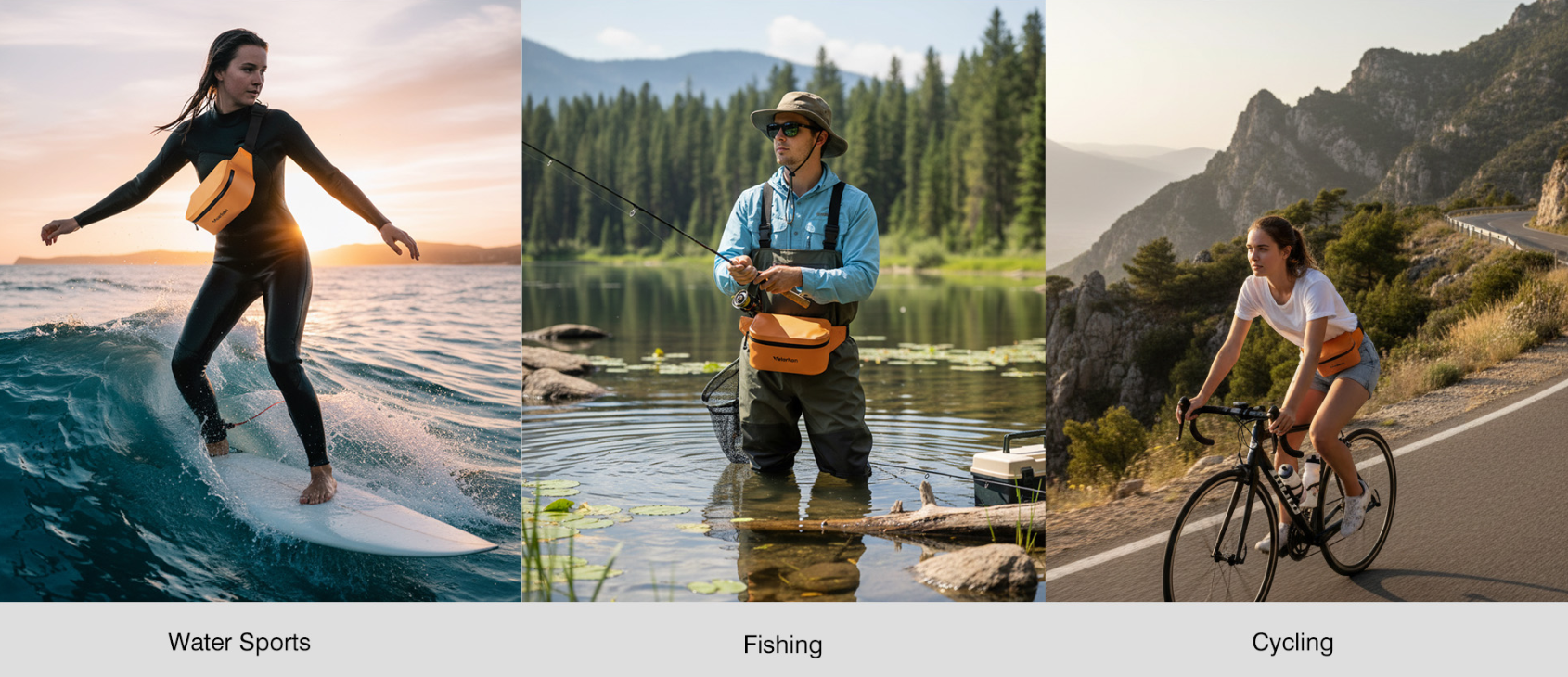
Le matériel de pêche subit des dommages sur l'eau. Les embruns salins rouillent les composants métalliques, les hameçons triples pointus percent les tissus fins, les pluies torrentielles imprègnent les électroniques sensibles, et les radiations UV constantes dégradent les plastiques standards. Lorsqu'un pêcheur sort une paire de pinces à anneaux fendus rouillées ou perd un multi-outil à travers un étui déchiré, il blâme la marque sur l'étiquette.
Pour les marques de matériel de plein air, les entreprises de matériel de pêche et les vendeurs eCommerce, les retours de produits et les avis négatifs remontent souvent à une seule cause : le partenariat avec une usine de découpe et de couture qui manque de connaissances techniques en ingénierie marine. Un fabricant de poche à outils de pêche OEM expérimenté ne se contente pas de coudre du tissu ensemble sur la base d'un croquis. Ils vous aident à spécifier les bons textiles techniques, à sélectionner du matériel résistant à la corrosion, et à exécuter le niveau exact d'étanchéité que votre marché exige.
Chez Weierken, nous travaillons directement avec les équipes de développement de produits pour transformer les défis techniques en matériel robuste, prêt pour le marché. Ce guide complet décrit les options de matériaux, les normes de construction étanches, et les spécifications de matériel de qualité marine que vous devez considérer lors de l'approvisionnement de votre prochaine production.
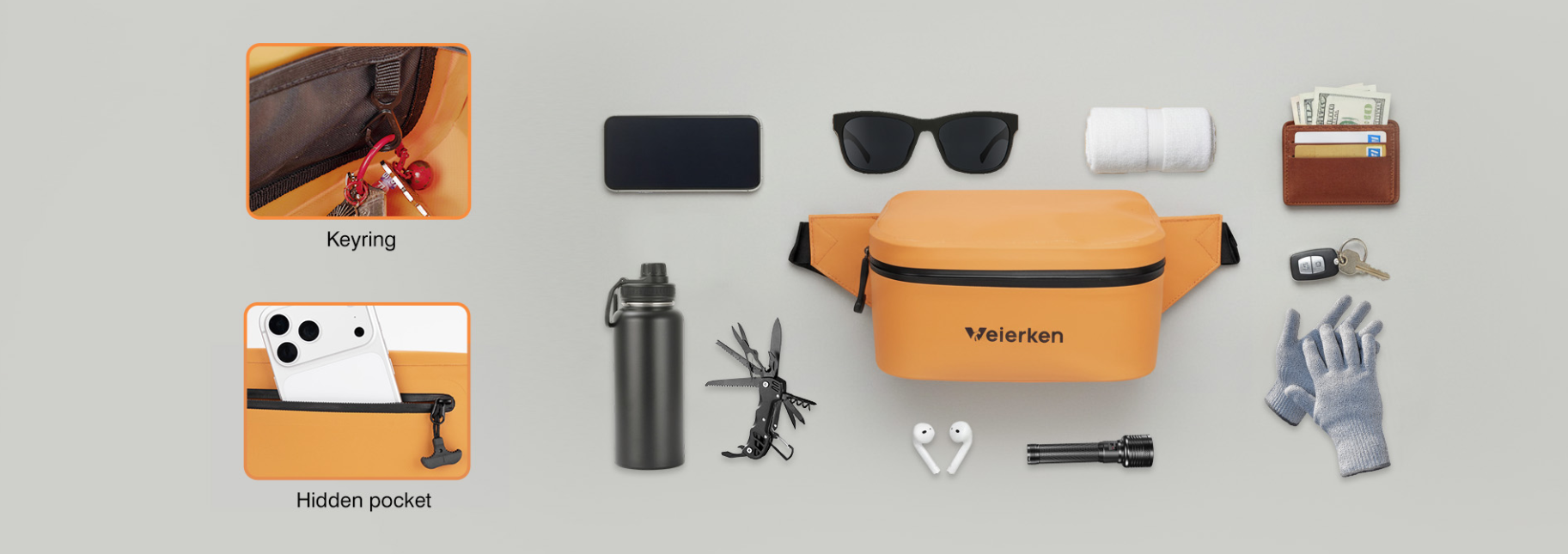
1. Matrice d'Ingénierie des Matériaux : Équilibrer l'Abrasion, le Poids et le Coût
Le choix du bon tissu de base détermine la résistance de votre poche à outils de pêche à l'abrasion des bords de bateau, à la perforation par des couteaux dentés, et à l'exposition prolongée au soleil. Un fournisseur professionnel de poches de pêche en Cordura et un OEM partenaire travaillent généralement dans quatre catégories de matériaux principales.
Nylon et Cordura 500D / 1000D Résistants
Les tissus Cordura et en nylon haute ténacité établissent la norme pour des applications à forte usure comme les étuis à pinces en eau salée et les poches utilitaires pour ceintures de wading.
Résistance à la Perforation et à l'Abrasion : Le tissage dense et texturé résiste à l'effilochage lorsqu'il est frotté contre des rochers tranchants, des lits d'huîtres et des boîtes à pêche en métal.
Traitement DWR : Les revêtements de Durable Water Repellent (DWR) appliqués en usine font en sorte que l'eau perle et roule sur la surface plutôt que de s'imprégner dans les fibres.
Application : Idéal pour les holsters à pinces d'utilisation quotidienne, les ceintures à outils de wading, et les poches de matériel modulaires où la respirabilité et la robustesse structurelle extrême sont les plus importantes.
Tissus Laminés en TPU (Polyuréthane Thermoplastique)
Pour un matériel étanche de première qualité, les laminés en TPU surpassent de loin les revêtements traditionnels. Le TPU peut être laminé sur des substrats en nylon ou en polyester dans des configurations unilatérales ou bilatérales.
Compatibilité de Soudage : Le TPU fond de manière cohérente sous des ondes radio à haute fréquence, permettant des joints complètement sans couture et étanches à l'air.
Résilience Environnementale : Il maintient sa flexibilité dans des conditions de gel, résiste à la dégradation chimique due aux huiles de poisson et aux écrans solaires, et ne contient pas de plastifiants toxiques.
Application : Le choix numéro un pour les sacs à outils entièrement submersibles, les étuis de téléphone étanches, et les poches d'accessoires électroniques flottables.
Coques en Mousse EVA Moulée
Lorsque des objets délicats comme des compteurs de ligne, des sondeurs de poissons ou des pinces en titane haut de gamme ont besoin d'une protection contre les écrasements, la mousse EVA (Éthylène-Vinyle Acétate) moulée par compression offre une défense structurée.
Absorption d'impact : La coque semi-rigide absorbe les impacts lourds des équipements tombés ou du chargement de bateau en mouvement.
Options de laminage : L'EVA peut être thermoformée et doublée de cuir PU, de nylon Oxford ou de tissu jersey résistant à l'eau pour une finition cosmétique élégante.
Application : Étuis à outils moulés, boîtes à mouches à coque dure et pochettes optiques de protection.
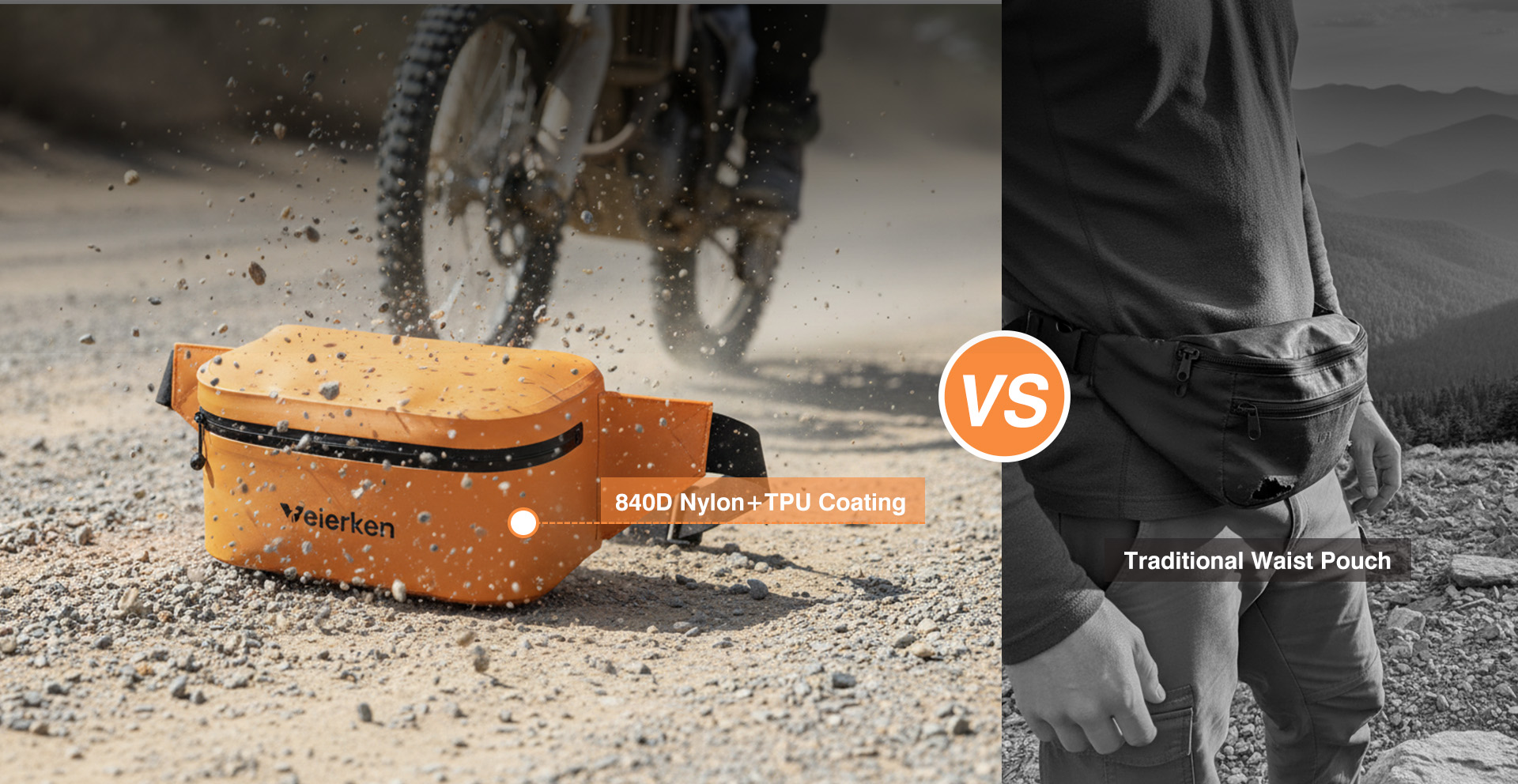
Tarpaulin en PVC de qualité commerciale (500D–840D)
Le tarpaulin en PVC offre une alternative économique et robuste pour les marchés de la pêche commerciale et des charters.
Entretien facile : L'extérieur lisse et non poreux permet aux pêcheurs de laver le sang de poisson, la croûte de sel et les résidus d'appâts en quelques secondes.
Barrière étanche : Inherently 100% étanche et hautement compatible avec les machines de soudage RF.
Application : Rouleaux à outils marins robustes, pochettes de rangement montées sur le pont et sacs de matériel de pêche en eau salée à prix abordable.
2. Le cadre d'ingénierie étanche à 3 niveaux
Tous les pochettes de pêche n'ont pas besoin de survivre à une plongée de 10 pieds. Une sur-ingénierie d'un simple support à outils augmente les coûts de production, tandis qu'une sous-ingénierie d'une pochette offshore entraîne des équipements ruinés. Un fabricant qualifié de gaines pour pinces de pêche conçoit des produits selon trois classifications étanches claires.
Niveau 1 : Résistant à l'eau et étanche aux éclaboussures
Conçu pour le lancer depuis la rive, la pêche au bar et les conditions de pluie légère où les outils ne font face qu'à des éclaboussures de surface occasionnelles.
Processus de fabrication : Construction traditionnelle à point verrouillé industriel.
Améliorations déperlant : Tissus de face traités DWR associés à des fermetures éclair en nylon à bobine inversée déperlant.
Concentration sur le design : Conçu pour un déploiement rapide des outils, une respirabilité maximale et un séchage rapide plutôt qu'un total étanchéité.
Niveau 2 : Résistant aux intempéries et protection contre les fortes pluies
Conçu pour des sorties en bateau toute la journée, le lancer en surf et l'exposition à de fortes tempêtes où l'eau ne peut pas être autorisée à s'accumuler à l'intérieur de la pochette.
Processus de fabrication : Couture de précision renforcée avec du ruban adhésif à joint thermique PU haute température sur tous les trous d'aiguille internes.
Fermetures éclair : Fermetures éclair en polyuréthane laminé résistantes à l'eau avec des garages à fermeture éclair en caoutchouc moulé pour fermer l'écart supérieur vulnérable.
Performance : Résiste à la pluie continue et aux éclaboussures provoquées par le vent sans laisser l'humidité pénétrer les coutures.
Niveau 3 : Submersible et hermétique (Normes IPX6 à IPX8)
Requis pour les pêcheurs en kayak, les pêcheurs à gué et les équipages en mer dont les équipements risquent d'être complètement submergés dans des vagues déferlantes ou en eau profonde.
Processus de fabrication : Soudage haute fréquence (RF) sans couture à 100 % ou fusion à air chaud, liant des panneaux TPU ou PVC en une structure solide et monobloc.
Mécanismes de scellement : Fermetures éclair industrielles hermétiques/étanches ou fermetures à rabat multi-pli sécurisées par des boucles robustes.
Évaluation IPX : Capable de passer le test IPX7 (immersion dans 1 mètre d'eau pendant 30 minutes) ou le test de submersion continue IPX8.
3. Matériel de qualité marine, charge utile et design ergonomique
Une pochette à outils n'est aussi forte que son système d'attache. Même le tissu Cordura le plus résistant échoue si le clip de ceinture se casse sous le poids de coupeurs de tresses lourds. Une usine de sacs de qualité marine intègre des composants spécialisés conçus spécifiquement pour les environnements humides.
Quincaillerie Résistante à la Corrosion
Les vis en acier standard, les rivets en nickel et les boutons en zinc bon marché se corrodent en quelques semaines d'exposition à l'eau salée. Un OEM fiable de poche à outils de pêche spécifie des alternatives résistantes à la corrosion :
Acier Inoxydable Marin de Qualité 316 : Pour les anneaux en D, les anneaux fendus et les œillets de cordon, l'acier inoxydable 316 offre une résistance supérieure à la corrosion par piqûre par rapport à l'acier standard 304.
Fixations en Laiton Massif : Boutons en laiton massif recouverts de noir ou plaqués nickel qui ne se bloqueront pas à cause des cristaux de sel séchés.
Boucles en POM (Polyacétal) Vierges : Quincaillerie en plastique robuste de marques reconnues (comme Duraflex ou UTX) qui résiste à la dégradation UV et ne se fissurera pas à des températures de congélation.
Systèmes de Montage et d'Attache Polyvalents
Les pêcheurs modernes transportent leur équipement sur des sacs à dos, des ceintures de wading, des rails de bateau et des rails de kayak. Les poches à outils polyvalentes présentent des options d'attache modulaires :
MOLLE Renforcé Découpé au Laser : Panneaux de sangle en hypalon scellés à chaud ou renforcés qui s'intègrent parfaitement dans des gilets de pêche tactiques et des sacs de matériel.
Clips de Ceinture Pivotants à 360 Degrés : Clips composites à haute résistance qui pivotent en douceur, maintenant les pinces en position verticale que le pêcheur soit assis dans un siège de kayak ou escalade des rochers au bord de l'eau.
Bandes Auto-Agrippantes Antidérapantes : Fermetures auto-agrippantes avec support en caoutchouc qui se verrouillent solidement autour des ceintures de wader sans glisser pendant le mouvement.
Drainage et Renforcement Structurel
Pour les poches non submersibles, la gestion de l'eau est critique. L'eau salée piégée ruine les multi-outils coûteux. Les usines OEM comme Weierken installent des œillets de drainage en laiton ou en acier inoxydable équipés de filtres en maille intérieure au fond de la poche. Cela permet à l'eau de lavage de s'écouler immédiatement tout en empêchant le sable fin et les particules de pénétrer.
De plus, tous les points critiques de charge - tels que les boucles de ceinture, les bouches de gaine et les anneaux en D de cordon - doivent comporter un point de couture bartack haute densité classé pour résister à plus de 25 kg de force de traction directe.
4. Flux de Fabrication OEM : Tests, Outils et Personnalisation
Mettre sur le marché une poche à outils de pêche personnalisée nécessite un contrôle qualité strict et des cycles de développement rapides. Un OEM expérimenté de matériel de pêche étanche IPX vous guide à travers chaque étape de la chronologie de production commerciale.
Protocoles de Test en Laboratoire
Les usines fiables étayent leurs affirmations de performance avec des données de test en laboratoire quantifiables :
Tests de Bruine Saline (ASTM B117) : La quincaillerie métallique subit 72 à 96 heures d'exposition continue à la brume saline pour vérifier l'immunité à la rouille.
Tests de Réciprocité de Fermeture Éclair : Des dispositifs de test automatisés font fonctionner les fermetures éclair plus de 5 000 fois sous tension pour garantir un fonctionnement fluide du curseur sans séparation des rails.
Tests de Pression Hydrostatique : Des testeurs de pression numériques mesurent la hauteur précise de la colonne d'eau (par exemple, 10 000 mm à 20 000 mm) que le tissu et les coutures scellées peuvent supporter avant de fuir.
Outils Flexibles et Prototypage Rapide
La rapidité de mise sur le marché est importante. Un partenaire OEM dédié fournit :
Prototypage Rapide : Modélisation CAO 3D et livraison d'échantillons physiques dans un délai de 5 à 7 jours ouvrables.
Développement de moules sur mesure : Conception de moules en interne pour les coques en EVA, les tirettes en TPR personnalisées et les holsters pour pinces de forme personnalisée.
Marque de distributeur : Débosselage haute fréquence, badges en caoutchouc 3D de couleur personnalisée, sérigraphie et matériel gravé au laser.
Emballage de détail : Cartes d'affichage en couleur, étiquettes suspendues de marque avec codes-barres et cartons maîtres de détail conçus pour la distribution en gros.
Questions Fréquemment Posées (FAQ)
Q1 : Quelle est la quantité minimum de commande (MOQ) pour les pochettes à outils de pêche personnalisées ?
Les séries de production OEM standard commencent généralement à 500 à 1 000 unités par coloris pour des configurations de tissu standard. Pour des designs complexes nécessitant des moules en EVA personnalisés ou des tissus TPU teints selon Pantone, la MOQ de départ est généralement de 1 000 à 2 000 unités en fonction des minimums de matières premières.
Q2 : Pourquoi le soudage RF est-il préféré à la couture pour les équipements de pêche étanches ?
Coudre crée des milliers de trous d'aiguille à travers le tissu, créant des voies d'infiltration d'eau qui nécessitent un scellage manuel avec du ruban. Le soudage par radiofréquence (RF) utilise de l'énergie électromagnétique pour fusionner les tissus recouverts de polymères au niveau moléculaire, créant une liaison continue et sans couture qui est 100 % hermétique et étanche.
Q3 : Comment empêchez-vous les pointes de pince et les couteaux de plongée de percer la doublure de la pochette ?
Les usines OEM renforcent les zones intérieures des pointes en utilisant du Hypalon de gros calibre, des inserts en plastique PE/PP moulés épais ou des patchs en Cordura 1000D multicouches. Ces barrières résistantes aux perforations protègent le châssis de la pochette et empêchent les outils tranchants de percer.
Q4 : Pouvez-vous assortir les couleurs exactes de notre marque ?
Oui. Les tissus, les pistes de fermeture éclair, les bordures et les patchs en caoutchouc moulé peuvent tous être teints sur mesure pour correspondre exactement à vos codes de couleur du Pantone Matching System (PMS). Des échantillons de laboratoire et des échantillons de tissu sont fournis pour approbation avant la production en masse.
Q5 : Combien de temps dure le processus de développement d'échantillons ?
Une fois les packs techniques et les œuvres d'art vectorielles finalisés, le développement d'échantillons de tissu standard prend environ 5 à 7 jours ouvrables. Si votre projet nécessite des moules de compression personnalisés pour des coques en EVA ou des outils en métal personnalisés, la création du prototype initial prend entre 15 et 20 jours ouvrables.
Les matériaux, les technologies de couture et le matériel que vous choisissez dictent directement le prix de vente de votre produit, le taux de satisfaction client et la fréquence des retours. Faire des économies sur l'équipement marin entraîne de la rouille, des gaines déchirées et des leurres perdus. S'associer à un OEM de pochettes à outils de pêche axé sur l'ingénierie garantit que votre marque offre des performances fiables à chaque sortie de pêche.
Weierken fournit des capacités de production OEM/ODM complètes pour des pochettes à outils de pêche haute performance, des holsters pour pinces et des équipements étanches. Notre équipe d'ingénierie s'occupe de tout, de la conception CAO initiale et du prototypage rapide au soudage RF et au contrôle qualité en laboratoire certifié.
Prêt à développer votre prochaine gamme de pochettes à outils de pêche robustes ?
Contactez notre équipe d'ingénierie et de vente dès aujourd'hui pour demander des échantillons de matériaux, examiner les spécifications techniques et recevoir un devis compétitif pour la fabrication OEM.
Email : service@weierkenbag.com
Site Web : weierkenbag.com